
Complete Guide to Omura Shrine | Highlights and Visiting Information for Historic Shrines in Mie, Nagasaki, and Yamaguchi
There are several shrines named “Omura Shrine” throughout Japan, each with its own distinct history and characteristics. This article provides detailed information on the history, highlights, and visiting information for the Omura Shrines in Iga City, Mie Prefecture, Omura City, Nagasaki Prefecture, and Yamaguchi City.
Omura Shrine in Iga City, Mie Prefecture | An Ancient Shrine Listed in the Engishiki
History and Origin
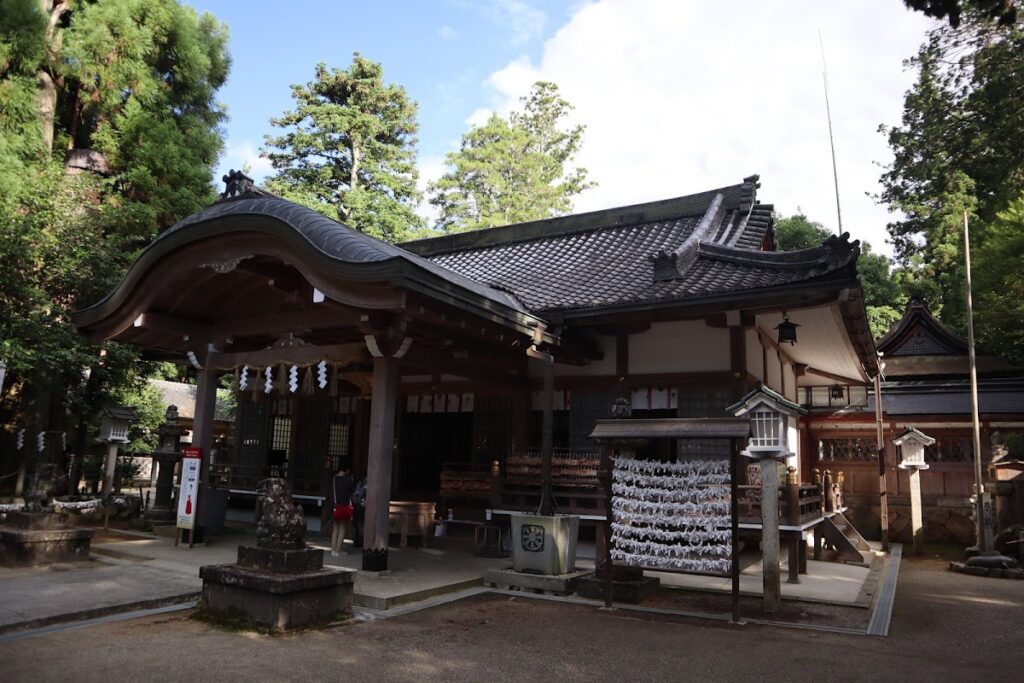
Omura Shrine, located in Abo, Iga City, Mie Prefecture, is an ancient shrine in Iga Province, listed in the Engishiki Jinmyocho (a list of shrines compiled in the Heian period). It is said to have been founded in 767 AD (Jingo-Keiun 1), boasting a history of over 1,250 years. The main hall, built in 1587 AD (Tensho 15) during the Momoyama period, is a magnificent Momoyama-style building with a hipped roof and cypress bark roofing, and is designated as a National Important Cultural Property.
The enshrined deity is Yamato Takeru no Mikoto, who has been revered for many years as the guardian deity of the region. A large camphor tree stands on the shrine grounds, a beloved symbol of the area.
Highlights and Cultural Properties
National Important Cultural Property “Hoden”
The greatest highlight of Omura Shrine is the Hoden (former main hall), a nationally designated Important Cultural Property. This building preserves the style of its construction in 1587, and its paintings, carvings, and colors remain almost completely intact from the time of its construction, making it an extremely valuable example for understanding shrine main halls of the Momoyama period. Its elegant form, with its hipped roof and cypress bark roofing, continues to fascinate visitors.
Earthquake-Proof “Kanameishi” (Keystone)
Within the shrine grounds is a sacred stone called “Kanameishi” (Keystone). This stone is said to protect against earthquakes, and many worshippers from all over Japan visit it as a guardian deity against earthquakes. Legend says that the keystone has deep roots in the ground, holding down a giant catfish believed to cause earthquakes. Locally, it’s also called the “Catfish Stone” and is worshipped as an object of prayer for earthquake protection.
Japan’s Three Great Unusual Bells: The “Insect-Eaten Bell”
Omura Shrine houses the “Insect-Eaten Bell,” one of Japan’s three great unusual bells. Named for its unique pattern resembling insect damage, its unusual appearance attracts the interest of many worshippers.
Annual Events and Festivals
Omura Shrine holds various festivals every year. The Autumn Festival, in particular, is an important local event, held grandly every October. During this festival, local people gather, traditional Shinto rituals are performed, and the shrine grounds are bustling with worshippers.
In spring, cherry blossoms bloom, creating a beautiful landscape along with the large camphor tree on the shrine grounds. The shrine grounds, which display different expressions with each season, offer new discoveries with every visit.
Access and Visiting Information
Location: 1555 Abo, Iga City, Mie Prefecture
Access:
- Approximately 15 minutes by car from JR Kansai Main Line “Sanagu Station”
- Approximately 20 minutes by car from Meihan National Highway “Ueno IC”
Parking: Visitor parking available on the shrine grounds
Visiting Hours: Grounds are freely accessible (Shrine office is usually open from 9:00 to 17:00)
Inquiries: Omura Shrine Office
Omura Shrine, Omura City, Nagasaki Prefecture | Prefectural Shrine Dedicated to the Founder of the Domain
History and Origin
Omura Shrine, located in Omura City, Nagasaki Prefecture, is a shrine situated on the site of the main keep of Kushima Castle (Omura Castle), the residence of the Omura Domain. Its former shrine rank was Prefectural Shrine, and it is one of the shrines dedicated to the founder of a domain that became popular from the late Edo period to the early Meiji period.
The shrine’s founding dates back to 1805 (Bunka 2), when Omura Sumiyoshi, the 28th head of the Omura family and the 10th lord of the Omura domain, enshrined the spirits of Fujiwara Sumitomo, considered the distant ancestor of the Omura clan, and his relatives as Goryo-gu Daimyojin in the mountains of Ikedayama. Initially called Goryo-sha, it was renamed Tokiwa Shrine in 1870 (Meiji 3) when twelve successive lords and domain heads of the Omura family were enshrined there. Later, in 1884 (Meiji 17), it was moved to its current location on the site of the former main keep of Kushima Castle and renamed Omura Shrine.
Deities Enshrined
Omura Shrine enshrines Fujiwara Kamatari, Fujiwara Sumitomo, and successive lords and domain heads of the Omura family. The Omura family is a prestigious family descended from the Fujiwara clan and is revered for their significant contributions to the development of this region.
Located within Omura Park
Omura Shrine is located within Omura Park and is known as a famous cherry blossom viewing spot. In spring, approximately 2,000 cherry trees bloom, and it has been selected as one of “Japan’s Top 100 Cherry Blossom Viewing Spots.” There are also cherry trees within the shrine grounds, making it a popular spot for wedding pre-shoots.
Exorcism with the Exorcism Stone
Omura Shrine features a unique method of worship called the “Exorcism Stone.” Worshippers receive an exorcism ball, pray intently, and then throw it at the Exorcism Stone to break it. It is believed that this breaks negative energy and wards off misfortune. This hands-on exorcism is popular with many visitors.
Omura’s Lucky Charm Spot: “Three Shrine Pilgrimage”
In Omura City, the “Three Shrine Pilgrimage,” which involves visiting the city’s major shrines including Omura Shrine, is recommended as a lucky charm tour. Each shrine offers different blessings, and you can gain a deeper understanding of the region’s history and culture.
Access and Visiting Information
Location: 1-chome, Kushima, Omura City, Nagasaki Prefecture
Access:
- Approximately 15 minutes on foot from JR Omura Line “Omura Station”
- Approximately 10 minutes by car from Nagasaki Expressway “Omura IC”
Parking: Omura Park parking lot is available
Visiting Hours: Grounds are freely accessible
Inquiries: Omura Shrine Office
Omura Shrine in Yamaguchi City | A Shrine Dedicated to Omura Masujiro
History and Origin
Omura Shrine, located in Chusenshi, Yamaguchi City, is a shrine dedicated to Omura Masujiro, a military scholar of the late Edo period and a hidden contributor to the Meiji Restoration. It is located north of Nagasawa Pond, next to the Chusenshi Local History Museum.
Omura Masujiro was from Chusenshi and is known as the founder of Japan’s modern military system. His childhood name was Murata Sotaro, later changed to Ryoan, then Zouroku, and finally to Omura Masujiro. He spearheaded military reforms in the Choshu Domain and played a crucial role in the Meiji Restoration.
The Achievements of Omura Masujiro
Omura Masujiro studied Western military technology and made significant contributions to Japan’s modernization. He led the Choshu Domain’s army during the Boshin War and, as Vice Minister of Military Affairs in the Meiji government, played a vital role in the establishment of the army. He was also involved in the founding of the Tokyo Shokonsha, the predecessor of the Yasukuni Shrine in Tokyo, and his contributions are immeasurable.
Location of the Shrine and Surrounding Facilities
The original shrine was located near Masujiro’s grave in the mountains about 500 meters north, but it has now been moved to a more accessible location. At the adjacent Chusenshi Local History Museum, you can learn more about the life and achievements of Omura Masujiro.
Access and Visiting Information
Location: Chusenshi, Yamaguchi City, Yamaguchi Prefecture
Access:
- Approximately 10 minutes by car from JR Sanyo Main Line “Yotsuji Station”
- Approximately 15 minutes by car from Chugoku Expressway “Ogori IC”
Parking: Parking is available at the Chusenshi Local History Museum.
Visiting Hours: Grounds are freely accessible.
Inquiries: Yamaguchi Tourism Convention Association
Etiquette and Manners for Visiting Omura Shrine
Basic Visiting Etiquette
When visiting a shrine, please observe the following basic etiquette:
- Bow before passing through the torii gate: As a sign of respect before entering the sacred area, bow before the torii gate.
- Purify yourself at the water basin: Purify your left hand, right hand, and mouth in that order, and finally your left hand.
- Avoid the center of the approach: The center of the approach is considered the path of the gods, so walk along the side. 4. Two Bows, Two Claps, One Bow: In front of the main hall, bow twice, clap twice, and finally bow once.
Methods of Making a Wish
At Omura Shrine in Iga City, Mie Prefecture, making a wish at the Kanameishi (foundation stone) is particularly famous. When praying for protection from earthquakes or for the safety of your family, pray wholeheartedly in front of the Kanameishi. At Omura Shrine in Omura City, Nagasaki Prefecture, there is a ritual for warding off evil using the Yakuwariishi (evil-breaking stone). Experiencing the unique worship methods of each shrine will lead to a deeper faith experience.
Nearby Tourist Spots and Events
Around Iga City, Mie Prefecture
When visiting Omura Shrine, we recommend visiting other tourist spots in Iga City. There are many facilities where you can experience history and culture, such as Iga Ueno Castle, the Iga-ryu Ninja Museum, and the Danjiri Hall. You can also visit an Iga ware pottery kiln and experience traditional crafts.
Around Omura City, Nagasaki Prefecture
Omura Park is known as a famous cherry blossom viewing spot, and the “Omura Flower Festival” is held there in spring. The view overlooking Omura Bay is also beautiful, and you can enjoy a scenic drive along the coast. Nagasaki Airport is nearby, making access convenient.
Around Yamaguchi City
Yamaguchi City boasts numerous historical buildings, including the Rurikoji Five-Storied Pagoda, the Joeiji Sesshu Garden, and the Yamaguchi Xavier Memorial Cathedral. Yuda Onsen is also nearby, allowing you to relax and unwind in the hot springs after your visit.
Goshuin (Shrine Seals) and Amulets
About Goshuin (Shrine Seals)
Each Omura Shrine offers Goshuin. Goshuin are cherished as proof of your visit and as a way to forge a connection with the shrine. Bring your Goshuincho (seal book) and politely request one at the shrine office. Reception hours are usually 9:00 AM to 5:00 PM, but these may vary depending on the shrine, so it is recommended to check in advance.
Amulets and Souvenirs
At Omura Shrine in Iga City, Mie Prefecture, they offer amulets for earthquake protection, while at Omura Shrine in Omura City, Nagasaki Prefecture, they offer amulets for good fortune and protection against evil. Each shrine has its own unique offerings that reflect its characteristics. Receiving an amulet as a memento of your visit or as daily protection is a good idea.
Seasonal Attractions
Spring at Omura Shrine
Spring is cherry blossom season. Omura Park, where Omura Shrine is located in Omura City, Nagasaki Prefecture, boasts approximately 2,000 cherry trees in full bloom and has been selected as one of “Japan’s Top 100 Cherry Blossom Viewing Spots.” The cherry blossoms at Omura Shrine in Iga City, Mie Prefecture, are also beautiful, making a spring visit particularly special.
Summer at Omura Shrine
Summer is a season of beautiful fresh greenery. The large camphor trees on the shrine grounds provide cool shade, making visits pleasant even on hot days. Summer festivals and Shinto rituals such as the Summer Purification Ceremony are also held.
Autumn at Omura Shrine
Autumn is the season of autumn leaves and autumn festivals. Every October, Omura Shrine in Iga City, Mie Prefecture, holds a grand autumn festival, attracting local residents. The trees on the shrine grounds change color, creating a beautiful landscape.
Winter at Omura Shrine
Winter is enveloped in a sacred atmosphere of tranquility. Many worshippers visit for Hatsumode (first shrine visit of the year) to pray for the new year. In areas with snowfall, the snow-covered shrine grounds also possess a unique charm.
Cultural Value of Omura Shrine
Value as a Historical Building
The treasure hall of Omura Shrine in Iga City, Mie Prefecture, is a nationally designated Important Cultural Property, preserving the characteristics of Momoyama period shrine architecture. Its elegant form with a hipped roof and cypress bark roofing, exquisite carvings, and the preservation of the original colors make it a valuable building that holds an important position in architectural history.
Value as a Place of Worship
Omura Shrine in Mie Prefecture, a shrine listed in the Engishiki (an ancient Japanese legal code), has long been a center of local faith. Omura Shrine in Nagasaki Prefecture enshrines the founder of the domain and symbolizes regional identity. Omura Shrine in Yamaguchi City honors those who contributed to the Meiji Restoration. Each shrine inherits local faith and history in its own unique way.
Inheritance of Regional Culture
Each Omura Shrine preserves its regional traditional culture through annual events and festivals. Events such as the autumn festival strengthen community bonds and serve as a platform for the transmission of culture across generations.
Summary | Through Visiting Omura Shrines
Omura Shrines throughout Japan each possess their own unique history and characteristics, playing an important role as centers of regional culture and faith. From the ancient Engishiki-listed shrine in Iga City, Mie Prefecture, to the shrine in Omura City, Nagasaki Prefecture, dedicated to the founder of the domain, and the shrine in Yamaguchi City dedicated to Omura Masujiro, visiting these shrines allows one to feel the diversity and depth of Japanese history.
Each shrine in Omura offers unique attractions, such as the earthquake-resistant foundation stone, the insect-eaten bell (one of Japan’s three most unusual bells), the beautiful Momoyama-style treasure hall, and the opportunity to experience exorcism using the evil-breaking stone. Purifying your heart, making a wish, and experiencing the local history and culture through worship will be a valuable experience for us living in the modern age.
The shrine grounds show different expressions with each season, along with annual events and festivals, and the warm faith of the local people. A visit to Omura Shrine is not merely a sightseeing tour, but a profound experience of touching upon Japan’s spiritual culture. We encourage you to visit and experience the unique charm of each Omura Shrine.
Check the official website and tourist information sites for the latest information, including access methods and events, to enjoy a fulfilling pilgrimage.

