Complete Guide to Ryōsenji Temple | Thorough Explanation of History, Rose Garden, Important Cultural Properties, and Access Information
There are several temples named “Ryōsenji” throughout Japan, each with its own unique history and cultural properties. This article provides a detailed explanation of Ryōsenji temples nationwide, including the particularly famous ones in Nara Prefecture, Tokushima Prefecture, and Nagano Prefecture, as well as those in Mie, Shizuoka, and Oita Prefectures.
Ryōsenji Temple in Nara City, Nara Prefecture – An Ancient Temple Where Rose Gardens and National Treasures Harmonize
History and Origin of Ryōsenji Temple
Located in Tomio, Nara City, Ryōsenji Temple is an ancient temple founded in 736 AD by the imperial decree of Emperor Shōmu. It was founded by the renowned monk Gyōki, who also contributed to the construction of the Great Buddha at Tōdaiji Temple. According to temple tradition, Emperor Shomu had a dream in which the long-nosed immortal appeared. He sent Gyoki to Mount Tomi to pray, and the emperor’s illness was cured.
Deeply moved by this miraculous event, Emperor Shomu ordered Gyoki to construct a large temple in 734 AD. Two years later, in 734 AD, the temple was completed. It is said that Bodhisena, an Indian Brahmin monk who visited Japan, suggested that the temple be named “Reizanji” (meaning “Sacred Mountain Temple”) because “the topography of Mount Tomi resembles Vulture Peak (Ryōjusen) in India.”
Its official name is “Yamato Province, Tomiyama, Hanataka, Reizanji,” and it remains an independent temple of the Shingon sect to this day.
National Treasure Main Hall and Important Cultural Properties
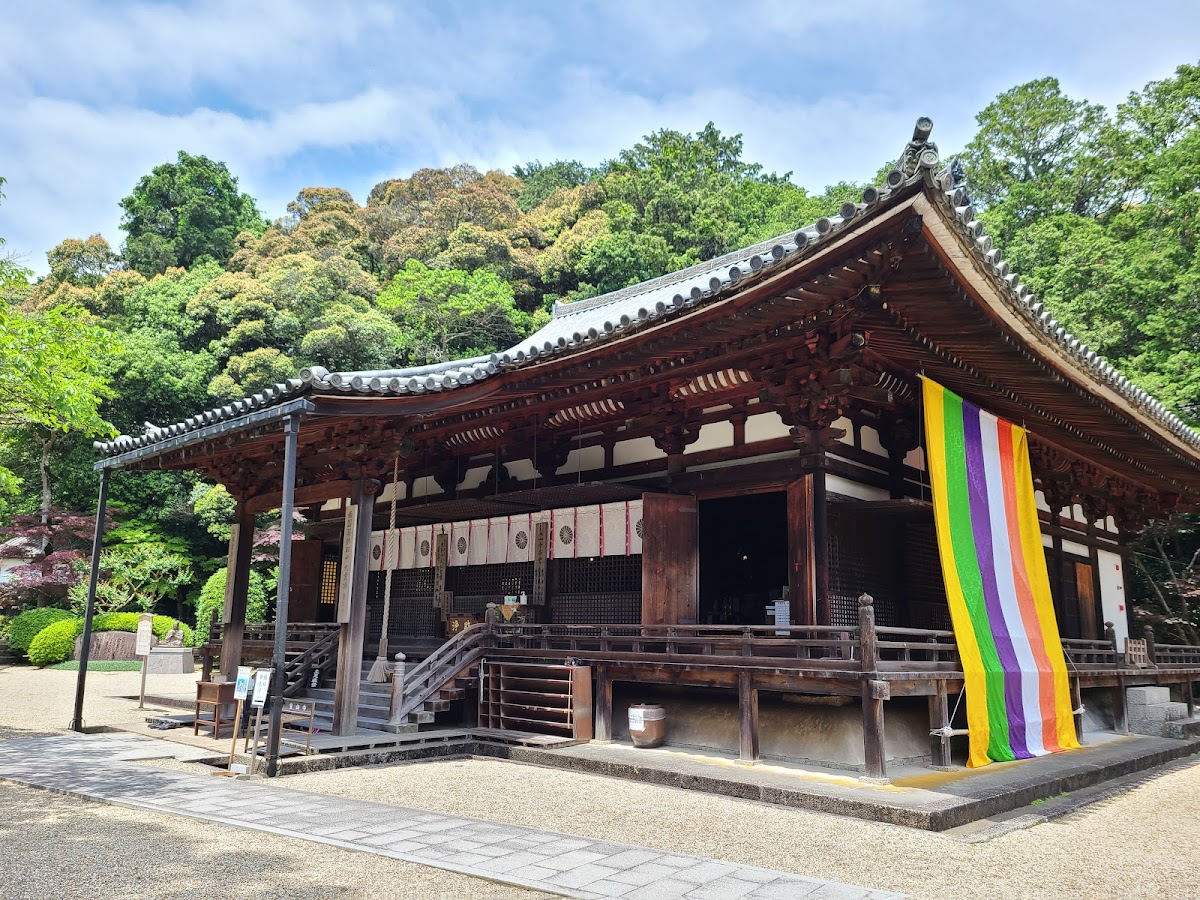
The greatest highlight of Ryōzenji Temple is its Main Hall (National Treasure), rebuilt in 1283 during the Kamakura period. This magnificent building, with its hipped roof and tiled roof, is a valuable example of Kamakura-period architecture. Inside the main hall are enshrined the Yakushi Triad (Important Cultural Property), dating from the Fujiwara period. The central seated statue of Yakushi Nyorai is flanked by Nikko Bosatsu and Gekko Bosatsu.
In addition, Ryōzenji Temple houses many other Important Cultural Properties:
- Three-Storied Pagoda (Important Cultural Property): Muromachi period architecture
- Bell Tower (Important Cultural Property): Muromachi period architecture
- Eleven-Headed Kannon Statue (Important Cultural Property)
- Over 30 Treasures
These cultural properties represent the culmination of the faith and art that Ryōzenji Temple has cultivated throughout its long history.
Rose Garden for World Peace
An essential part of discussing Ryosenji Temple is its rose garden, opened in 1957 with the hope of world peace. Approximately 2,000 rose bushes of about 200 varieties are planted on a vast 1,200-tsubo (approximately 4,000 square meters) site.
The rose garden is at its best twice a year: in spring (mid-May to late June) and autumn (mid-October to late November). The sight of the colorful roses in full bloom is breathtaking, and the seemingly mismatched combination of a temple and roses creates a unique atmosphere. There is also a tea room within the rose garden, where visitors can enjoy tea while admiring the roses.
The roses, cultivated with prayers for world peace, soothe the hearts of visitors and quietly speak of the preciousness of peace.
Annual Events and Exhibition of Hidden Buddhist Treasures
Ryōzenji Temple holds various events throughout the year:
- Exhibition of Hidden Buddhist Treasures: Held in conjunction with the rose seasons of spring and autumn, this is a rare opportunity to view temple treasures that are normally not open to the public.
- Herbal Baths and Medicinal Baths: As Ryōzenji Temple enshrines Yakushi Nyorai (Medicine Buddha), it also holds events involving medicinal baths using medicinal herbs.
- Events Related to the Genpei War: Ryōzenji Temple has ties to the history of the Genpei War, and related religious ceremonies are held.
These events are a unique attraction of Ryōzenji Temple, which accepts visitors year-round.
Visiting Hours, Admission Fees, and Access Information
Visiting Hours
- Regular Hours: 10:00 AM – 5:00 PM
- Extended hours during rose season
- Open year-round
Admission Fees
- Temple Grounds and Main Hall: Free
- Rose Garden: Adults 600 yen, Elementary and Junior High School Students 300 yen (during rose season)
- Exhibition of Secret Buddhist Treasures: Additional fee
Access
- Immediately accessible from the Ryōzenji bus stop (Nara Kotsu bus) from Tomio Station on the Kintetsu Nara Line
- By Car: Approximately 10 minutes from the Nakamachi Interchange on the Daini-Hanna Expressway
- Parking: Free parking available
Please check the official website for detailed maps and access information.
Ryōzenji Temple, Naruto City, Tokushima Prefecture – The First Temple of the Shikoku 88 Temple Pilgrimage
As the Starting Point of the Shikoku Pilgrimage
Located in Ōasa-chō, Naruto City, Tokushima Prefecture, Ryōzenji Temple is known as the first temple of the Shikoku 88 Temple Pilgrimage. Its official name is “Chikuwa-zan Ichijōin Ryōzenji,” and it belongs to the Kōyasan Shingon sect.
Pilgrims beginning the Shikoku Pilgrimage prepare their pilgrimage supplies, such as white robes, straw hats, and walking sticks, at Ryōzenji Temple, starting their pilgrimage in Awa Province, the “dojo of awakening.” Therefore, many pilgrims from all over Japan visit throughout the year, and the temple grounds are filled with a unique vibrancy.
History and Legends of Ryōzenji Temple
Ryōzenji Temple is said to have been founded during the Tenpyō era (729-749), and it is believed to have been established by Gyōki at the behest of Emperor Shōmu. It is said that when Kobo Daishi Kukai visited in 815, he had a vision of Shakyamuni Buddha preaching on Mount Gridhrakuta in India, a sacred mountain of Shakyamuni, and named this place Ryōzenji (Ryōzen Temple).
During the Tenshō era (1573-1592), many temple buildings were destroyed by fire during an invasion by Chōsokabe Motochika, but they were later rebuilt, and the current main hall dates from the mid-Edo period. The temple has overcome numerous hardships, including the collapse of the pagoda in 1891, to reach its present state.
Pilgrims’ Songs and Faith
Each temple on the Shikoku Pilgrimage has its own traditional song called a “Goeika.” The Goeika of Ryōzenji Temple is:
“Having come before the Buddha of Ryōzen, all my sins vanish.”
This song expresses the belief that by coming before the Buddha of Ryōzen, all the sins of one’s life are erased. Many pilgrims sing this song, solidifying their resolve for their new journey.
Highlights of the Temple Grounds
- Main Hall: Houses the principal image, Shakyamuni Buddha.
- Daishi Hall: Dedicates Kobo Daishi.
- Tahōtō Pagoda: A symbolic landmark of the temple grounds.
- Niomon Gate: Powerful Nio statues welcome visitors.
The temple grounds also have a shop selling pilgrimage supplies, serving as a gateway to the Shikoku Pilgrimage.
Access and Visiting Information
Access
- Approximately 10 minutes on foot from JR Kotoku Line “Bando Station”
- Approximately 5 minutes by car from Kobe-Awaji-Naruto Expressway “Naruto IC”
- Parking: Free parking available (approximately 50 regular cars)
Visiting Hours
- 7:00 AM – 5:00 PM (Temple Office)
- Temple grounds are open 24 hours a day for worship
Reizanji Temple, Nagano City, Nagano Prefecture – Telling the History of Iizuna Shugendo
From the Foot of Mt. Reizenji to Naganuma
Reizanji Temple in Nagano City is a temple belonging to the Chizan branch of the Shingon sect. Originally located at the foot of Mt. Reizenji, which is connected to the northern side of Mt. Iizuna, it flourished as a Shugendo temple, so much so that it was called “Tendai’s Togakushi, Shingon’s Iizuna Reizenji.”
However, during the Sengoku period, the temple was destroyed by the Takeda forces’ invasion. It was then rebuilt as “Ryōzenji” at Hōjuin Temple in Naganuma, Nagano City, which was one of its branch temples. Although the temple declined due to repeated floods and other disasters, it continues to exist as a center of local faith.
The Tradition of Shugendō
Ryōzenji Temple is a temple that strongly preserves the tradition of Shugendō. The history of Shugendō, linked to the Iizuna faith, still influences the temple’s events and forms of worship today. It is a valuable temple that conveys a unique religious culture where mountain worship and esoteric Buddhism are fused.
Ryōzenji Temple in Iga City, Mie Prefecture – An Ōbaku Zen Temple Associated with Dengyo Daishi
An Ancient Temple Nestled on the Mountainside of Mt. Ryōzen
Located in Shimotsuge, Iga City, Mie Prefecture, Ryōzenji Temple is an Ōbaku Zen temple said to have been founded by Dengyo Daishi Saichō. In ancient times, this temple stood on the summit of Mount Reizan and boasted seven main halls, attracting many worshippers.
Although the temple buildings were destroyed by fire during the Tensho Iga Rebellion (1579), the principal image, the Eleven-Faced Kannon Bodhisattva, which was the only thing to survive, is still enshrined here. The temple houses numerous treasures, and the area around the approach is lined with stone Buddha statues, creating a charming and atmospheric setting.
Temple Grounds in Harmony with Nature
Within the temple grounds stands a large Ginkgo biloba, a natural monument of Mie Prefecture, which displays magnificent yellow foliage in autumn. Approximately 500 cherry trees are planted around the temple and along the forest road, making it a popular cherry blossom viewing spot in spring.
Rest areas and walking trails are also provided, making it a popular starting point for hikers to climb Mount Reizan. This temple, where history and nature harmonize, is a representative temple of the Iga region.
Reizanji Temple in Shizuoka Prefecture – One of the Seven Kannon Temples of Suruga
Reizanji Temple in Shimizu Ward, Shizuoka City
Reizanji Temple, located in Shimizu Ward, Shizuoka City, is said to have been founded in 749 during the Nara period by Gyoki. The main hall, rebuilt in 1756 during the Edo period, features a hip-and-gable roof and copper roofing. The principal image, a Thousand-Armed Kannon Bodhisattva, one of the Seven Kannon Temples of Suruga associated with Gyoki, is enshrined in a shrine.
This Thousand-Armed Kannon Bodhisattva is a hidden Buddha image that is only unveiled every 15 years, with a substitute Kannon statue standing in front of it. Many believers eagerly await the next unveiling, making it a center of local faith.
Reizanji Temple in Numazu City
There is also a Reizanji Temple in Numazu City, Shizuoka Prefecture, commonly known as “Reizanji.” This temple belongs to the Eiheiji branch of the Soto Zen sect. It was formerly a Shingon Buddhist temple, but its founding date is unknown due to the loss of its records in a fire in 1748.
According to legend, it was founded by imperial decree during the time when this area was part of Izu Province.
Reizanji Temple, Oita City, Oita Prefecture – Eighth Temple of the Kyushu Saigoku Pilgrimage
Located in Okagawa, Oita City, Oita Prefecture, Reizanji Temple belongs to the Tendai sect and its official name is “Hiraizan Reizanji.” As the eighth temple of the Kyushu Saigoku Pilgrimage, it is a popular destination for pilgrims throughout the Kyushu region.
From the temple grounds, one can enjoy a panoramic view of Oita city, and find peace of mind in a tranquil environment.
The Origin and Commonalities of the Name “Ryōzenji”
What many Ryōzenji temples throughout Japan have in common is that their names are derived from “Ryōzen,” meaning a sacred mountain, or from Mount Gridhrakuta in India, where Shakyamuni Buddha is said to have preached.
Both the Ryōzenji temple in Nara and the Ryōzenji temple in Shikoku have traditions that Bodhisena or Kūkai (Kūkai) named them after noticing their similarity to Mount Gridhrakuta. This can be seen as a naming convention that reflects the longing and reverence for sacred sites in India as Buddhism was introduced to Japan and developed uniquely in various regions.
How to Enjoy Visiting Ryōzenji Temples
Seasonal Attractions
Spring
- Nara Ryōzenji Temple: Spring roses in the rose garden (mid-May to late June)
- Mie Ryōzenji Temple: Approximately 500 cherry trees
- Exhibition of hidden Buddhist statues and treasures
Autumn
- Nara Ryōzenji Temple: Autumn roses in the rose garden (mid-October to late November)
- Mie Ryōzenji Temple: Yellowing ginkgo leaves
- Harmony of autumn leaves and cultural properties
Year-Round
- Shikoku Ryōzenji Temple: Visited by pilgrims year-round as the starting point of the Shikoku pilgrimage
- Viewing of the main halls and important cultural properties at each temple
About Cemeteries and Perpetual Memorial Services
Several Ryōzenji Temples, including Ryōzenji Temple in Nara, offer cemeteries and perpetual memorial services. The cemeteries, surrounded by roses, provide a peaceful environment for remembering loved ones. Please contact each temple directly for details.
Summary: The Diversity and Charm of Ryōzenji Temples
Temples bearing the name “Ryōzenji” are scattered throughout Japan, each fostering its own unique history and culture. Nara’s Ryōzenji Temple, with its distinctive combination of a national treasure main hall and rose garden, prays for world peace, while Shikoku’s Ryōzenji Temple welcomes many pilgrims as the starting point for the 88-temple pilgrimage.
The Ryōzenji temples in Nagano, Mie, Shizuoka, and Oita also function as important places of worship in their respective regions, housing valuable cultural assets. With diverse sects including Shugendō, Tendai, Shingon, Ōbaku, and Sōtō Zen, they embody the richness of Japanese Buddhism.
Visiting hours, admission fees, and access methods vary by temple, so it is recommended to check the official website, map, and access information before visiting. Many temples are open year-round, making them appealing for spontaneous visits.
The beauty of the rose garden, the solemnity of the important cultural properties, the history as a pilgrimage route, and the compassionate expressions of the Buddhist statues such as the Yakushi Triad and the Eleven-faced Kannon—by visiting Ryōzenji Temple, you can feel firsthand the profoundness of Japanese Buddhist culture and the prayers for world peace.