Dainenji Temple (Sakurai City, Nara Prefecture) Complete Guide | Exploring the History of the Awako Jizo and the Yuzu Nembutsu Sect
Dainenji Temple, quietly nestled in Daifuku, Sakurai City, Nara Prefecture, is a historic temple belonging to the Yuzu Nembutsu sect. Despite being located in a residential area, it is known for enshrining the uniquely decorated “Awako Jizo” statue, and has attracted the faith of the local community. This article provides detailed information you should know before visiting Dainenji Temple, including its history, highlights, and access methods.
Basic Information about Dainenji Temple
Temple Overview
Temple Name: Dainenji Temple
Mountain Name: Kyokurozan
Sect: Yuzu Nembutsu Sect
Principal Image: Amida Buddha
Founding: 1692 (Genroku 5)
Location: 738 Daifuku, Sakurai City, Nara Prefecture
Dainenji Temple is a relatively new temple, founded in 1692 during the early Edo period. However, the Awako Jizo statue enshrined on the temple grounds is an ancient Buddha bearing the inscription of 1333, making it a valuable cultural asset with nearly 700 years of history.
About the Yuzu Nembutsu Sect
The Yuzu Nembutsu Sect is a branch of Pure Land Buddhism founded in 1124 during the late Heian period by Ryōnin Shōnin. “Yūzū” represents the teaching of “One person reciting the Buddha’s name reaches all people, and all people reciting the Buddha’s name returns to one person,” a principle known as “One person becomes all people, all people become one person, one practice becomes all practice, and all practices become one practice.”
The head temple is Dainenbutsu-ji Temple in Hirano-ku, Osaka City, and it has approximately 360 temples throughout Japan. Several Yūzū Nenbutsu sect temples exist in Nara Prefecture, and Dainen-ji Temple is one of them, serving as a center of local faith.
History of Dainen-ji Temple
Founding History
Dainen-ji Temple was founded in 1692 (Genroku 5). It is believed to have been established in the mid-Edo period as a base for missionary work of the Yūzū Nenbutsu sect in the Ōfuku district of Sakurai City. At that time, Ōfuku Village was located along the Hatsuse Highway (Yokodōji) and was a transportation hub where people traveling to Ise Shrine and Hase-dera Temple passed through.
Relocation of the Awako Jizo
The Awako Jizo, the most distinctive feature of Dainenji Temple, was originally enshrined in a different location. It was located in a Jizo hall at a place called “U-Ochida,” the northeast corner where the Hatsuse Road (Yokoodo) and Tachibana Road intersected.
Motoori Norinaga, a scholar of Japanese classics during the Edo period, also visited this Jizo in 1769 (Meiwa 6) on his journey from Ise to Yoshino, and recorded the following in his *Sugagasa Nikki* (Diary of a Straw Hat):
“This is the main road leading from a place called Yagi to Sakurai. Passing through villages such as Yokouchi, one can see Daifuku Village to the right. A little further on, there is a Jizo hall in a street corner.” (Entry for March 11, Meiwa 9)
Later, due to road widening and regional development, this precious Jizo was relocated to the grounds of Dainenji Temple, where it remains today. The exact date of the relocation is unknown, but it is estimated to have occurred sometime between the Meiji and Taisho periods.
Connection to the Community
Dainenji Temple has served as the family temple for the Daifuku district of Sakurai City, performing funeral rites and annual events for local residents. Even today, it remains a deeply rooted community temple, holding memorial services such as the Obon (Buddhist festival) and Higan (equinox) services.
The Charm of the Awako Jizo
Unique Appearance
The most distinctive feature of the Awako Jizo is its unique appearance, which resembles a white mask. The face is painted white, giving it the appearance of wearing makeup. This “makeup” is a form of worship known as “Kesho Jizo” (makeup Jizo), and is thought to have been applied as a prayer or a symbol of faith.
The Jizo Bodhisattva statue is approximately 1 meter tall and is a stone standing statue. Although some parts are weathered, an inscription from 1333 (Genko 3) remains, confirming that it was created during the late Kamakura period to the Nanboku-cho period.
Origin of the Name of Awako Jizo
There are several theories regarding the origin of the name “Awako,” but the most plausible theory is that it comes from the place name where the Jizo statue was once enshrined. Another theory suggests it was named because the white makeup resembles foam.
In the local area, it is affectionately known as “Awako Jizo-san,” and people have visited to pray for the healthy growth of their children and the safety of their families.
Layout of the Jizo Hall
The Awako Jizo is enshrined in a Jizo Hall facing south, to the left of the entrance to the Dainenji Temple grounds. Although a small hall, it is carefully maintained, and flowers and incense are always offered.
Stone lanterns and memorial towers are also placed in front of the Jizo Hall, creating an atmosphere befitting a place of worship.
Highlights of Dainenji Temple
Main Hall and Principal Image
The main hall of Dainenji Temple is a traditional wooden Buddhist temple building. The main image of Amida Buddha is enshrined here, and the temple is adorned with solemn decorations based on the teachings of the Yuzu Nembutsu sect.
The Yuzu Nembutsu sect emphasizes the chanting of “Namu Amida Butsu,” and the main hall carefully preserves chanting slips and records of deceased persons.
Atmosphere of the Temple Grounds
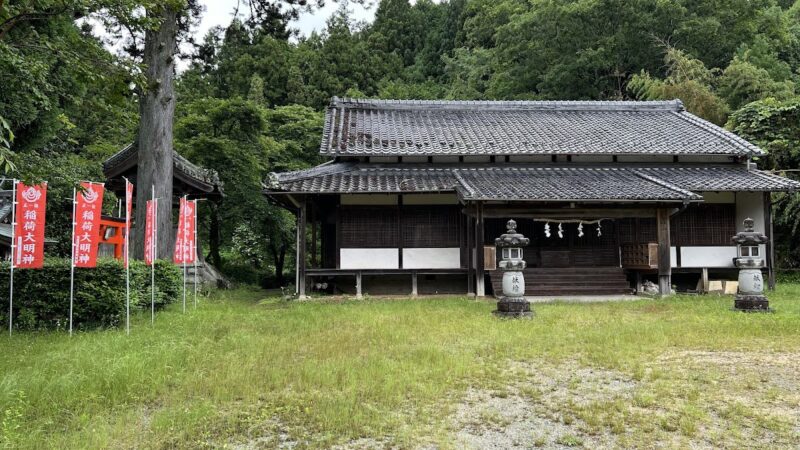
Dainenji Temple is located in a residential area of Daifuku, Sakurai City, but stepping onto the temple grounds envelops you in a tranquil atmosphere. Although not particularly large, the well-maintained grounds are clean and welcoming to visitors.
Seasonal flowers are planted on the grounds, allowing visitors to enjoy the beauty of each season, such as cherry blossoms in spring and hydrangeas in early summer.
Stone Sculptures
Besides the Awako Jizo statue, several stone sculptures from the Edo period to the modern era remain on the temple grounds. These include gravestones, memorial towers, and stone lanterns, conveying the history of the region.
These stone structures suggest that Dainenji Temple has long been a cherished place of worship for the local people.
Historical Background of Sakurai City and Surrounding Area
A Key Point on the Hatsuse Road
The Daifuku district of Sakurai City, where Dainenji Temple is located, has flourished as a transportation hub since ancient times. The Hatsuse Road (Yokoodo) was a major ancient road that ran east-west through the Nara Basin and was also used as a pilgrimage route to Ise Grand Shrine.
Furthermore, because it was located near the intersection with the Tachibana Road, which ran north-south, it was a place where people and goods frequently traveled, and many travelers came and went. It is thought that the Awako Jizo statue was placed at a crossroads on the road because it functioned as a place to pray for safe travels.
Temple and Shrine Culture of Sakurai City
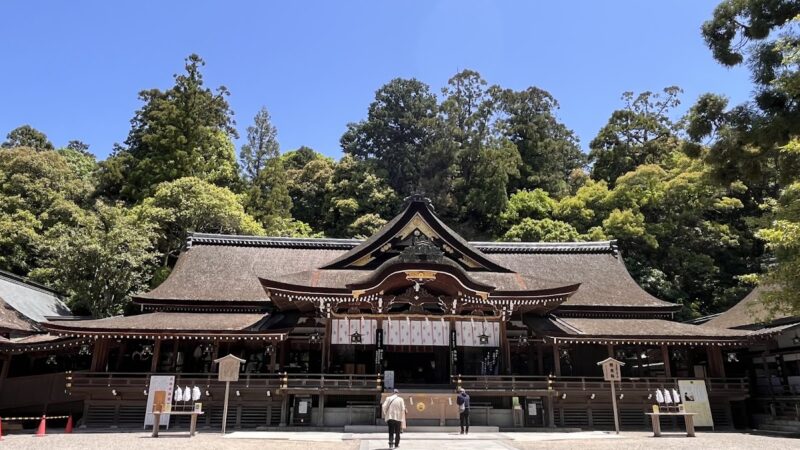
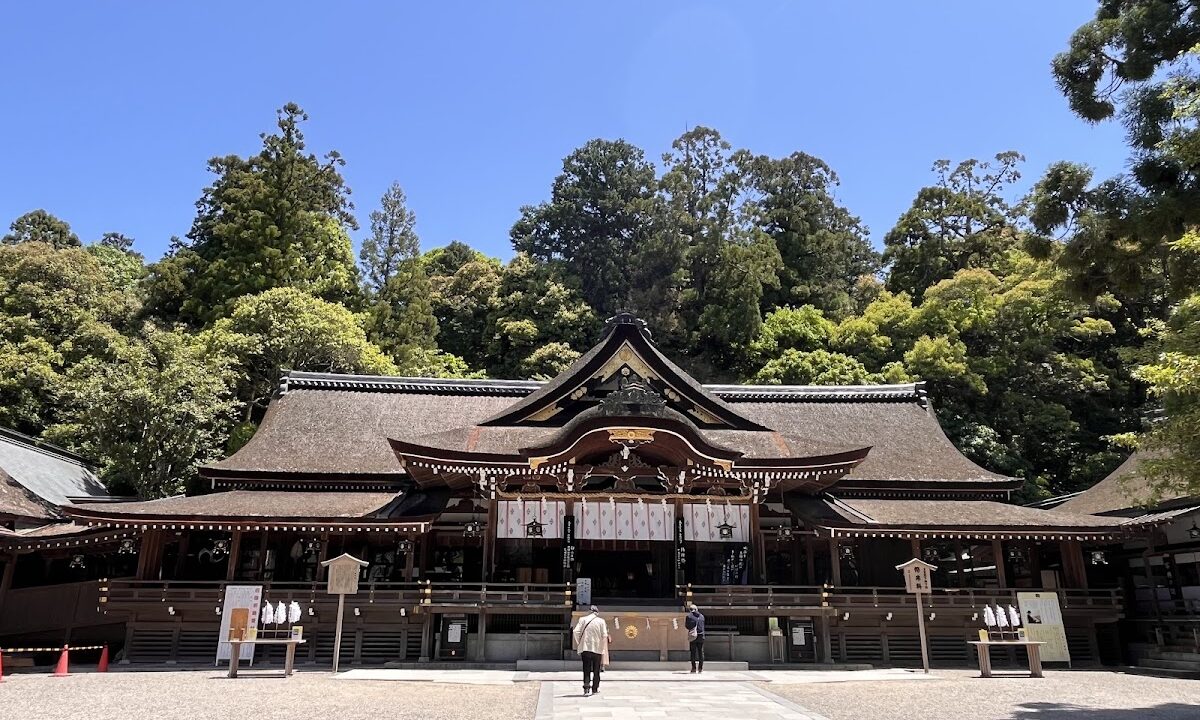
Sakurai City is home to many nationally renowned temples and shrines, including Omiwa Shrine (Miwa Myojin), considered one of the oldest shrines in Japan, as well as Hase-dera Temple and Tanzan Shrine. It has a history of developing as a center of faith since ancient times.
While Dainenji Temple is smaller than these larger temples and shrines, it has played a unique role as a place of worship deeply rooted in the community. While many temples of various sects exist in Nara Prefecture, temples of the Yuzu Nembutsu sect are relatively few, making Dainenji Temple a valuable presence in that respect.
Other Temples in Sakurai City
Besides Dainenji Temple, there are many other temples in Sakurai City.
- Hase-dera Temple: The head temple of the Buzan branch of Shingon Buddhism, known as the “Temple of Flowers”
- Abe Monjuin Temple: A temple revered as one of Japan’s three most important Monju temples
- Shorin-ji Temple: Famous for its National Treasure, the Eleven-Headed Kannon Standing Statue
- Genbin-an Hermitage: A quiet hermitage located along the Yamanobe-no-michi trail
Visiting these temples together will allow you to gain a deeper understanding of Sakurai City’s rich Buddhist culture.
Access and Visiting Information
Access by Train
Nearest Station: JR Manyo Mahoroba Line (Sakurai Line) “Makimuku Station”
Distance from Station: Approximately 1.2km (approximately 15 minutes on foot)
Other stations such as “Yanagimoto Station” and “Miwa Station” are also within walking distance, but both are more than 1km away.
Access by Car
Major Roads: Use National Route 169 and Prefectural Route 50 (Hase Kaido).
Parking: There is no dedicated parking lot on the temple grounds, but there may be some street parking available nearby. However, as it is a residential area, consideration should be given to avoiding disturbing the neighbors.
Visiting Hours
Dainenji Temple is a temple for parishioners and is not open all the time. While entry to the temple grounds is possible, it is recommended to contact the temple in advance if you wish to view the main hall.
For general worship, it is appropriate to visit during daylight hours.
Admission Fee
There is no admission fee. Please offer a small donation as a token of your appreciation.
Nearby Tourist Attractions
When visiting Dainenji Temple, we recommend also visiting the following nearby attractions:
Omiwa Shrine (Miwa Myojin)
Distance: Approximately 2km
One of the oldest shrines in Japan, with Mount Miwa as its sacred object.
Hase-dera Temple
Distance: Approximately 5km
The head temple of the Buzan branch of Shingon Buddhism. Famous for its peonies.
Yamanobe-no-michi Road
One of Japan’s oldest roads. An ancient road stretching from Omiwa Shrine to Isonokami Shrine.
Sakurai City Buried Cultural Properties Center
Distance: Approximately 3km
Exhibits the results of archaeological excavations in Sakurai City.
Annual Events at Dainenji Temple
Main Buddhist Services
Dainenji Temple, as a temple for its parishioners, holds the following annual events:
- Spring and Autumn Equinox Services: March and September
- Segaki Service: August (Obon)
- Annual Memorial Services: As needed
These services are primarily for parishioners, but may be open to the general public. Please contact the temple directly for details.
Jizo Bon Festival
In the Kansai region, it is customary to hold the Jizo Bon Festival around August 23rd and 24th. Dainenji Temple may also hold a Jizo Bon Festival centered around the Awako Jizo statue. This is a ceremony to pray for the healthy growth of local children.
Guidelines for Visiting Dainenji Temple
Temple Visiting Manners
Dainenji Temple is a small temple located in a residential area. Please pay attention to the following points when visiting.
- Be quiet: As this is a residential area, please refrain from speaking loudly.
- Be clean: Please take all your trash with you.
- Photography: Photography is permitted within the temple grounds, but please refrain from taking pictures inside the main hall or the Jizo hall.
- Parking: Please park in a location that will not inconvenience nearby residents.
Etiquette for Worship
- Bow at the temple gate (entrance).
- If there is a water basin, purify your hands.
- Clasp your hands together and bow towards the main hall.
- Clasp your hands together and bow to the Awako Jizo statue.
- Offer your donation.
- Quietly exit and bow at the temple gate.
The Teachings of the Yuzu Nembutsu Sect and Dainenji Temple
Practice of Yuzu Nembutsu
The Yuzu Nembutsu sect teaches that by chanting “Namu Amida Butsu,” one can attain rebirth in the Pure Land through the power of Amida Buddha’s original vow. A distinctive feature is the concept of “Yuzu,” which states that one person’s recitation of the Buddha’s name (Nembutsu) benefits all, and the recitation of the Buddha’s name by all returns to one person.
This teaching emphasizes not only individual practice but also the practice of Nembutsu within the entire community, which aligns with the approach of Dainenji Temple, a temple deeply rooted in the local community.
Issuance of Nembutsu Talismans
Temples of the Yuzu Nembutsu sect sometimes issue talismans called “Yuzu Nembutsu Talismans.” These are intended to bring the merits of Nembutsu back into the home, and Dainenji Temple may also issue them.
Dainenji Temple and the Local Community
The Danka System and Temple Management
Dainenji Temple is a danka temple, supported by local parishioners. The danka system originates from the temple registration system of the Edo period, and even today, many temples are maintained through the support of their parishioners.
Dainenji Temple is also operated through membership fees and offerings from its parishioners, which are used for the maintenance of the main hall and temple grounds.
Preservation of Local Culture
Dainenji Temple is not merely a religious facility, but also a place for preserving the history and culture of the region. It plays a vital role in protecting valuable cultural assets, such as the Awako Jizo statue, and passing them on to future generations.
In recent years, maintaining small temples in rural areas has become difficult due to declining birth rates, an aging population, and depopulation. However, the cultural value of community-based temples like Dainenji Temple is extremely high, and its preservation and utilization are urgently needed.
The Position of Dainenji Temple in Sakurai City’s Religious Culture
Coexistence of Diverse Sects
Sakurai City is home to temples of various sects, including Shingon, Jodo, Jodo Shinshu, Soto, and Rinzai. Among them, Dainenji Temple, belonging to the Yuzu Nembutsu sect, stands out as a relatively rare temple of this sect, exhibiting a unique presence.
Even within Nara Prefecture as a whole, Yuzu Nembutsu temples are limited, making Dainenji Temple a precious and valuable example.
The Tradition of Jizo Worship
As exemplified by the Awako Jizo statue, Dainenji Temple is a center of Jizo worship. Jizo Bodhisattva has been widely revered as an object of popular faith, especially as the guardian deity of children.
Many other Jizo statues are enshrined in Sakurai City, preserving the local tradition of Jizo worship.
Summary: The Significance of Visiting Dainenji Temple
Dainenji Temple in Sakurai City, Nara Prefecture, though small in scale, is a valuable temple that preserves the Awako Jizo statue, which has a history of nearly 700 years, and transmits the teachings of the Yuzu Nembutsu sect.
While many tourists visit large temples and shrines like Hase-dera Temple and Omiwa Shrine, the true essence of Japanese Buddhist culture breathes in small, community-based temples like Dainenji Temple. The sight of the Awako Jizo statue, which has received the prayers of local people for hundreds of years in a quiet residential area, will leave a deep impression on visitors.
When you visit Sakurai City, be sure to stop by Dainenji Temple and experience a part of Japan’s regional Buddhist culture. The Awako Jizo statue, adorned with white makeup, will quietly but surely welcome you.
Travelers of old who traversed the Hatsuse Road surely clasped their hands together before this Jizo statue, praying for safe journeys. We, living in the modern age, can also feel the continuity of faith that transcends time by quieting our hearts and offering prayers in the same way.
Dainenji Temple is a hidden cultural treasure that Sakurai City, Nara Prefecture, is proud of, and a temple well worth visiting. Spend a peaceful moment in this small temple where history and faith breathe.