
Complete Guide to Sakurai Shrine | A Thorough Explanation of the History and Benefits of Each Shrine in Itoshima, Sakai, and Sakurai City, Fukuoka Prefecture
A search for “Sakurai Shrine” reveals several shrines scattered throughout Japan. Each has its own unique history and beliefs, and is beloved by many worshippers. This article comprehensively explains the history, benefits, and worship information of the particularly famous Sakurai Shrine in Itoshima City, Fukuoka Prefecture, the Sakurai Shrine in Sakai City, Osaka Prefecture, and the group of shrines located in Sakurai City, Nara Prefecture.
The Charm and History of Sakurai Shrine in Itoshima City, Fukuoka Prefecture
The Founding and History of Sakurai Shrine
Located in Shima Sakurai, Itoshima City, Fukuoka Prefecture, Sakurai Shrine is a historical shrine founded in 1632 (Kanei 9) during the early Edo period by Lord Kuroda Tadayuki, the second lord of the Fukuoka domain. Its origin is said to stem from the opening of the “Iwato Cave” during a great rain in 1610 (Keicho 15), when a divine spirit appeared. The Itoshima Peninsula has flourished since ancient times as a gateway for exchange with the continent, and remains a historically important region with many ancient burial mounds scattered throughout. Sakurai Shrine is located at the northern tip of the Itoshima Peninsula and has been revered since ancient times as a deity of purity and purification.
Layout and Characteristics of Sakurai Shrine
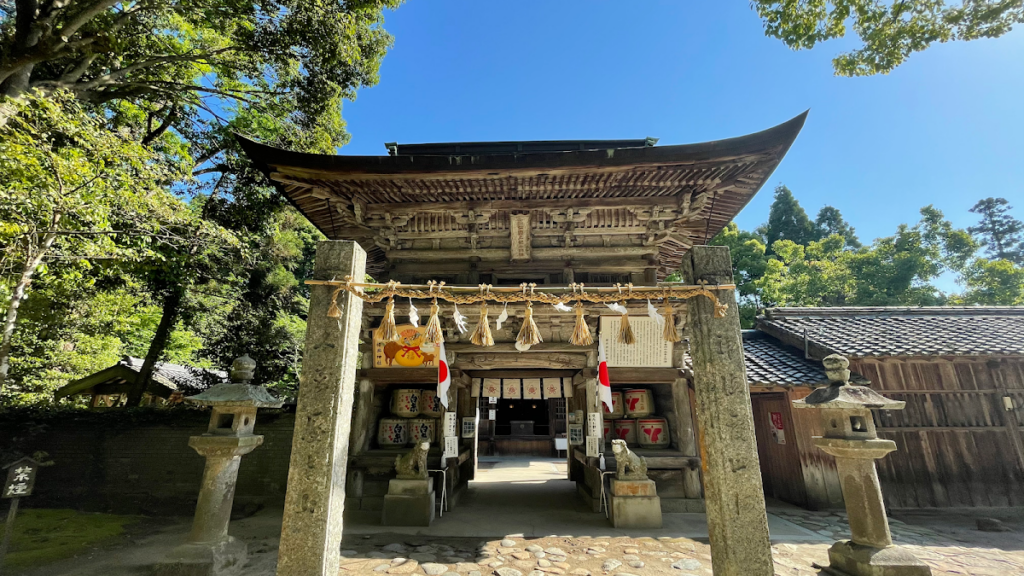
The most distinctive feature of Sakurai Shrine is its unique layout, with a Iwato-miya (a shrine with a protective structure built over a burial mound) in the foreground, and the main hall, worship hall, and gate tower arranged in front of it. This arrangement is a rare and valuable form not seen in other shrines, and it conveys an ancient form of worship to the present day.
The shrine grounds are enveloped in tranquility, creating a sacred space surrounded by abundant nature. Even just walking along the approach to the shrine evokes a refreshing feeling that cleanses the soul, which is one of the reasons why so many worshippers visit.
Relationship with Sakurai Grand Shrine
Equally important to Sakurai Shrine is Sakurai Grand Shrine. Both shrines are located on the same grounds and have functioned as the center of faith in Itoshima. Sakurai Grand Shrine is a shrine dedicated to the deities of Ise Grand Shrine and is beloved by the local people.
It is believed that visiting both shrines together brings deeper blessings, and many worshippers have the custom of visiting both.
Blessings and Prayers at Sakurai Shrine
Sakurai Shrine is known as the deity of purification and is believed to offer the following blessings:
- Protection from Evil and Disaster: Purifying oneself from defilement and protecting oneself from misfortune
- Good Fortune and Prosperity: Opening new paths and attracting good fortune
- Family Safety: Protecting the peace and health of one’s family
- Traffic Safety: Praying for safe travels
- Matchmaking: Blessings for finding a good partner
The shrine accepts various prayers and prayers, and many people visit at important life milestones and when making important decisions. Wedding ceremonies are also held here, and it is popular with couples who wish for a Shinto wedding ceremony.
Annual Events at Sakurai Shrine
Sakurai Shrine holds various festivals and ceremonies throughout the year. The main annual events include the following:
- New Year’s Day Festival (January 1st): Celebrating the start of the new year
- Setsubun Festival (February): Praying for protection from evil and for good fortune
- Spring Grand Festival: Celebrating the arrival of spring
- Summer Purification Ceremony (June 30th): Purifying oneself of the impurities accumulated over the past six months
- Autumn Grand Festival: Expressing gratitude for the harvest
- Year-End Purification Ceremony (December 31st): Purifying oneself of the impurities accumulated over the past year
By participating in these festivals, you can experience traditional Japanese culture and gain a deeper sense of faith.
Access to Sakurai Shrine
Location: Sakurai, Shima, Itoshima City, Fukuoka Prefecture
Transportation Access:
- Approximately 30 minutes by Showa Bus “Keya Line” from JR Chikuhi Line “Chikuzen-Maebaru Station,” get off at “Sakurai” bus stop, then approximately 10 minutes on foot.
- Approximately 40 minutes by car from Fukuoka City (approximately 15 minutes from Nishi-Kyushu Expressway “Maebaru IC”)
- Parking: Available (Free)
Itoshima is a popular area where you can enjoy sightseeing along with visiting the shrine, boasting beautiful coastlines and many stylish cafes.
Sakurai Shrine (Kamiwadani Hachimangu) in Sakai City, Osaka Prefecture
History and Origins of Sakurai Shrine in Sakai City
Sakurai Shrine, located in Katazō, Minami-ku, Sakai City, Osaka Prefecture, is a Shikinaisha (a shrine listed in the Engishiki) and a prestigious shrine with the former rank of Fusha (a prefectural shrine). It is also known as “Kamiwadani Hachimangu”.
The exact founding date is unknown, but it is believed to have originated when the Sakurai clan, who resided in this region, enshrined their ancestor, Takenouchi no Sukune (Takenouchi no Sukune). In 597 AD (the 5th year of Emperor Suiko’s reign), the Hachiman Shrine was merged with this shrine, and the current deities were enshrined.
It flourished as the principal guardian shrine of Kamigami-go, Otori-gun, Izumi Province, but suffered a tragic fate in 1577 when it was destroyed by fire during Oda Nobunaga’s campaign, with only the worship hall and main sanctuary remaining.
The National Treasure Worship Hall and its Architectural Value
The most distinctive feature of Sakurai Shrine in Sakai City is its worship hall, which is the only National Treasure in Sakai City. This worship hall is a split worship hall style, featuring a central earthen-floored passageway called a “medō” (horse path), and is a prime example of early Kamakura period architecture.
The split-haiden style is a particularly prized form of shrine architecture, reflecting the high level of architectural skill and deep faith of the time. Its designation as a National Treasure further demonstrates its high historical and cultural value.
Many history enthusiasts and architecture fans visit specifically to admire the architecture, allowing them to fully appreciate the beauty of Kamakura-period architecture in the tranquil grounds.
Deities and Blessings
Sakurai Shrine in Sakai City enshrines the following deities:
- Takeuchi no Sukune: God of longevity and prosperity
- Emperor Ojin (Hachiman): National protection, lasting military fortune
- Empress Jingu: Safe childbirth, child-rearing
The blessings bestowed by these deities include prayers for longevity, family prosperity, prayers for safe childbirth, and protection of children.
Traditional Performing Arts and Festivals
Sakurai Shrine preserves traditional festivals, which play an important role as a regional cultural asset. Especially during the autumn festival, traditional performing arts passed down through the region are offered, attracting many worshippers.
Access to Sakurai Shrine, Sakai City
Location: Katazō, Minami-ku, Sakai City, Osaka Prefecture
Transportation Access:
- Approximately 20 minutes by Nankai Bus from Izumigaoka Station on the Senboku Rapid Railway
- Approximately 15 minutes by car from Sakai IC on the Hanwa Expressway
- Parking: Available
Shrines in Sakurai City, Nara Prefecture
Characteristics of Shrines in Sakurai City
Sakurai City, Nara Prefecture, is a region where many historically significant shrines are concentrated, including Ōmiwa Shrine, considered to be the oldest shrine in Japan. Sakurai City has 63 registered shrines and temples, preserving its history as a center of ancient Japanese faith.
Major Shrines in Sakurai City
Omiwa Shrine
Considered one of the oldest shrines in Japan, it has a unique form of worship with Mount Miwa as its sacred object. It lacks a main hall, and the style of worshiping Mount Miwa from the worship hall preserves the form of primitive Shinto.
Tanzan Shrine
This shrine enshrines Fujiwara no Kamatari, a central figure in the Taika Reforms, and is known for the beauty of its autumn foliage. The magnificent shrine complex, sometimes called the “Nikko of Kansai,” is a must-see.
Hase-dera Temple
The head temple of the Buzan branch of Shingon Buddhism, it has long been a place of worship as a sacred site for Kannon. It is beautiful with flowers throughout the seasons, and is especially famous for its peonies.
The Charm of Visiting Shrines in Sakurai City
Sakurai City is also known as the “Land of the Gods,” and is home to numerous places associated with myths appearing in the Kojiki and Nihon Shoki. This is a valuable region where you can experience Japanese mythology and history firsthand by visiting shrines.
Collecting Goshuin (shrine stamps) is also popular, and you can receive unique stamps at each shrine. There are many attractive spots for collectors, with cute designs and carefully handwritten Goshuin.
Access to Sakurai City
Transportation Access:
- JR Sakurai Line “Sakurai Station” is the gateway
- Kintetsu Osaka Line “Sakurai Station” is also accessible
- Approximately 1 hour from Osaka city
- Approximately 1 hour 30 minutes from Kyoto city
Etiquette and Manners for Visiting Sakurai Shrine
Basic Etiquette for Worship
There are basic manners for visiting shrines. Please keep the following points in mind and strive for a sincere visit.
How to Pass Through the Torii Gate
The torii gate is the entrance to the sacred area. Bow before passing through, and avoid walking in the center of the path (the center is considered the path of the gods).
Procedure for Washing Hands
- Take the ladle with your right hand and wash your left hand.
- Switch the ladle to your left hand and wash your right hand.
- Switch the ladle back to your right hand, receive water in your left hand, and rinse your mouth.
- Wash your left hand again.
- Hold the ladle upright, wash the handle, and return it to its original position.
Procedure for Bowing
The basic procedure is “two bows, two claps, one bow.”
- Bow deeply twice.
- Clap your hands twice at chest height.
- Finally, bow deeply once.
Attire and Items to Bring When Visiting a Shrine
There are no specific dress code requirements, but it is desirable to wear clothing that reflects the sacred nature of the place.
- Clean and neat clothing
- Avoid excessive exposure
- Formal attire such as a suit is desirable for formal visits.
Recommended items to bring include an offering, a stamp book (if you wish to receive a stamp), and a camera (only in areas where photography is permitted).
How to Obtain a Goshuin (Shrine/Temple Stamp)
A Goshuin is a stamp received as proof of your visit. Please observe the following etiquette:
- Always receive a Goshuin after offering your prayers.
- Prepare a Goshuincho (stamp book) (notebooks are not acceptable).
- Check the shrine office’s opening hours.
- Prepare the offering fee (usually 300-500 yen).
- Request the stamp using polite language.
Tourist Spots Around Sakurai Shrine
Fukuoka/Itoshima Area
When visiting Sakurai Shrine, you can also enjoy the beautiful nature and tourist spots of Itoshima.
Futamigaura’s Meotoiwa (Married Couple Rocks)
Approximately 10 minutes by car from Sakurai Shrine. The Meotoiwa, floating in the sea, is a representative scenic spot of Itoshima, and the beauty of the sunset is especially exceptional.
Stylish Cafes in Itoshima
Many stylish cafes are scattered along the coast, where you can enjoy dishes made with fresh seafood and local ingredients.
Keya no Omon
One of Japan’s three largest basalt caves, this massive sea cave created by nature is truly breathtaking.
Sakai City Area
Numerous historical sites in Sakai City are located around Sakurai Shrine.
Mozu Kofun Group
A group of ancient burial mounds registered as a World Heritage Site. Huge burial mounds, including the tomb of Emperor Nintoku, are scattered throughout the area.
Sakai City Museum
A museum where you can learn about Sakai’s history and culture, with a rich collection of materials from the Kofun period to modern times.
Nara/Sakurai City Area
Yamanobe no Michi
An ancient road considered to be the oldest road in Japan, a hiking course that stretches from Omiwa Shrine to Isonokami Shrine.
Makimuku Ruins
An archaeological site considered a strong candidate for the location of Yamatai-koku, offering a glimpse into the romance of ancient history.
Seasons and Highlights of Sakurai Shrine
Spring at Sakurai Shrine
In spring, cherry blossoms bloom in abundance at Sakurai Shrines throughout Japan. The contrast between the cherry blossoms in the shrine grounds and the blue sea is particularly beautiful at Sakurai Shrine in Itoshima, attracting many visitors. The Spring Grand Festival is also held, celebrating the start of a new season.
Summer at Sakurai Shrine
In summer, the greenery deepens, and the shrine grounds are enveloped in a cool, refreshing atmosphere. During the Summer Purification Ceremony, a ritual of passing through a ring of reeds takes place, purifying oneself of the impurities accumulated over the past six months and praying for good health and protection from illness for the remaining half of the year.
Autumn at Sakurai Shrine
Autumn is an important season for the grand festivals held at each shrine. Festivals expressing gratitude for the harvest are held, and traditional local performing arts are offered. The autumn foliage is also beautiful, and the shrines in Sakurai City, Nara Prefecture, offer particularly magnificent views of the autumn leaves.
Sakurai Shrine in Winter
The shrine grounds, enveloped in the silence of winter, exude an even more sacred atmosphere. This is an important time, marking the end of the year with the Great Purification Ceremony and welcoming the New Year with the New Year’s Day Festival.
Summary: What You Gain from Visiting Sakurai Shrine
Sakurai Shrines throughout Japan each possess their own unique history and beliefs, offering various blessings and peace of mind to visitors.
At Sakurai Shrine in Itoshima City, Fukuoka Prefecture, you can purify your mind and body amidst beautiful nature and gain the strength to take a new step forward. At Sakurai Shrine in Sakai City, Osaka Prefecture, you can feel the weight of history while touching the precious cultural asset of the National Treasure worship hall. And in Sakurai City, Nara Prefecture, you can experience the world of Japanese mythology and ancient forms of faith.
Whichever Sakurai Shrine you visit, you will feel the depth of Japanese traditional culture and faith, and spend a special time away from everyday life. We encourage you to visit a Sakurai Shrine and gain peace of mind and renewed vitality.
Visiting a shrine is not merely sightseeing; it’s a precious opportunity to reflect on yourself and cultivate a sense of gratitude. By observing proper etiquette and visiting with a reverent heart, you can receive deeper blessings and a greater sense of inner fulfillment.

