Tenaga Shrine Complete Guide | A Thorough Explanation of Deities, Blessings, History, Goshuin (Shrine Seals), and Access Information
Tenaga Shrine, located on Mt. Chausu in Suwa City, Nagano Prefecture, is a historical shrine that has long been revered as a subsidiary shrine of Suwa Grand Shrine’s Upper Shrine. Known as the guardian deity of the Kamisuwa area on the eastern side of Lake Suwa, and also associated with the legend of the long-armed and long-legged giants, this guide provides a detailed explanation of the shrine, including its deities, blessings, history, highlights within the grounds, goshuin (shrine seals), and access information.
Table of Contents
- What is Tenaga Shrine?
- Deities and Beliefs
- History of Tenaga Shrine
- Highlights of the Shrine Grounds
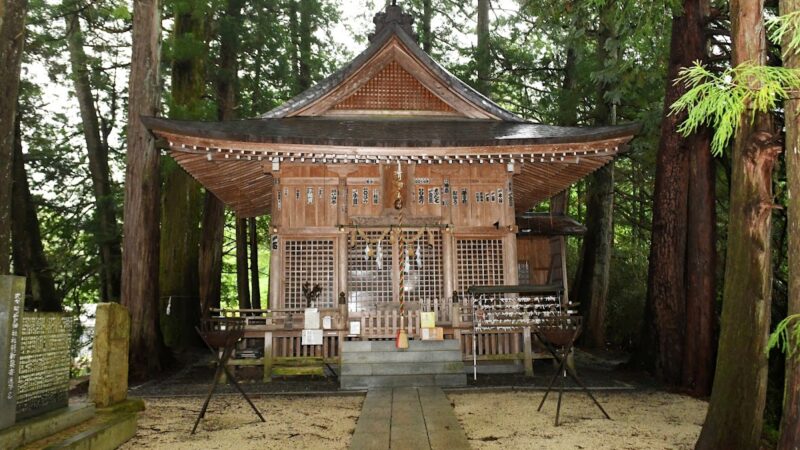
- Subsidiary Shrines
- Main Festivals and Annual Events
- Cultural Properties
- Benefits and Points for Visiting
- Goshuin (Shrine Seal) Information
- Local Information and Access
- Relationship with Ashinaga Shrine
- Frequently Asked Questions
What is Tenaga Shrine?
Tenaga Shrine is a shrine located at 9556 Chausuyama, Kamisuwa, Suwa City, Nagano Prefecture. Its former shrine rank was Prefectural Shrine, and it is currently designated as a Special Shrine by the Association of Shinto Shrines. As a subsidiary shrine of Suwa Grand Shrine’s Upper Shrine, it is the guardian shrine of Shimosawahara-go, Suwa District, Shinano Province, and is affectionately known as “Tenaga-sama” by the local people.
Located on the slopes of Mt. Chausu, on a hill overlooking Lake Suwa, the shrine is known as a scenic spot offering panoramic views of Lake Suwa and the town of Suwa. While within walking distance of Kami-Suwa Station, it maintains a sacred atmosphere enveloped in a tranquil forest.
Deities and Beliefs
Main Deity: Tenazuchi-no-Mikoto
The deity enshrined at Tenaga Shrine is Tenazuchi-no-Mikoto. This deity plays an important role in Japanese mythology and has the following mythological background:
- Mother Goddess in the Susanoo and Yamata no Orochi Myth: Tenazuchi-no-Mikoto is known as the mother goddess of Kushinadahime, who was saved by Susanoo-no-Mikoto from being sacrificed to Yamata no Orochi.
- Relationship with Suwa Grand Shrine: Considered the ancestral deity of Takeminakata-no-kami, the enshrined deity of Suwa Grand Shrine, this deity holds an important position in Suwa faith.
- Relationship with Consort Deity: The husband deity, Ashinazuchi-no-mikoto, is enshrined at the nearby Ashinaga Shrine. Tenaga Shrine and Ashinaga Shrine are worshipped as a pair of shrines dedicated to a married couple.
Worship as Tenagahiko-no-kami
Also known as “Tenagahiko-no-kami,” this deity also has the characteristic of being a deity accompanying Takeminakata-no-kami, the enshrined deity of Suwa Grand Shrine. This belief is unique to the Suwa region and has played an important role within the faith sphere centered around Suwa Grand Shrine.
History of Tenaga Shrine
Ancient Beliefs
The origins of Tenaga Shrine are ancient, and while the details are unclear, the area east of Lake Suwa is dotted with Paleolithic and Jomon period ruins, suggesting a history of people living there and offering prayers to the local deities since ancient times.
This shrine, situated in a sacred area called Tenaga no Mori, has been revered by local residents as the tutelary deity of the Shimosuwahara region (the Kamisuwa area excluding Yamato and Kowada).
Guardian Deity of Kuwahara-go
In ancient times, the Suwa region was divided into areas called Kuwahara-go, consisting of Kamisuwahara and Shimosuwahara. Tenaga Shrine served as the guardian deity of Shimosuwahara-go, while Ashinaga Shrine served as the guardian deity of Kamisuwahara, each playing a role in protecting their respective areas.
Although this regional division differs from the current administrative divisions, the role that Tenaga Shrine has played as the center of local faith remains unchanged.
Development Since the Early Modern Period
During the Edo period, it received protection from the Suwa Domain and developed as a center of local faith. Under the Meiji era’s shrine system, it was ranked as a prefectural shrine, establishing its status as a major shrine in the region.
Currently, it is designated as a special shrine by the Association of Shinto Shrines and is positioned as one of the important shrines in the Suwa region.
Highlights of the Shrine Grounds
Approach and Stone Steps
Visiting Tenaga Shrine begins with climbing a long flight of stone steps. Because the shrine is situated on the mountainside of Chausuyama, the steps leading to the grounds are both a challenge and a process of purification for worshippers. As you climb the steps, you gradually leave the hustle and bustle of everyday life behind and experience a sense of being enveloped in a sacred atmosphere.
Worship Hall and Main Sanctuary
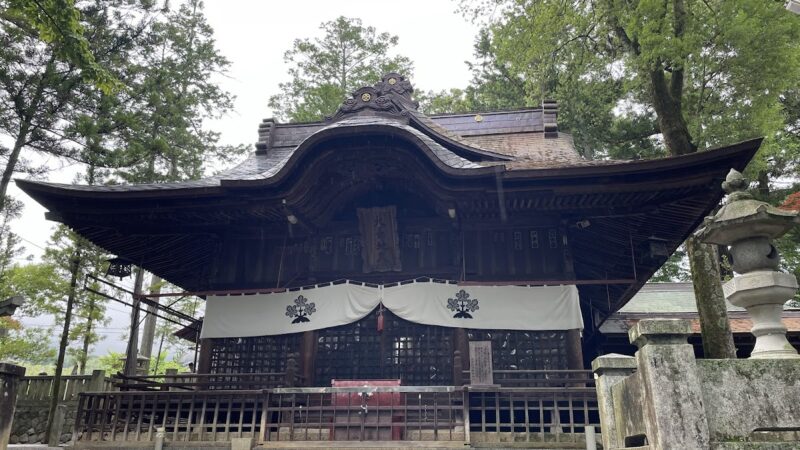
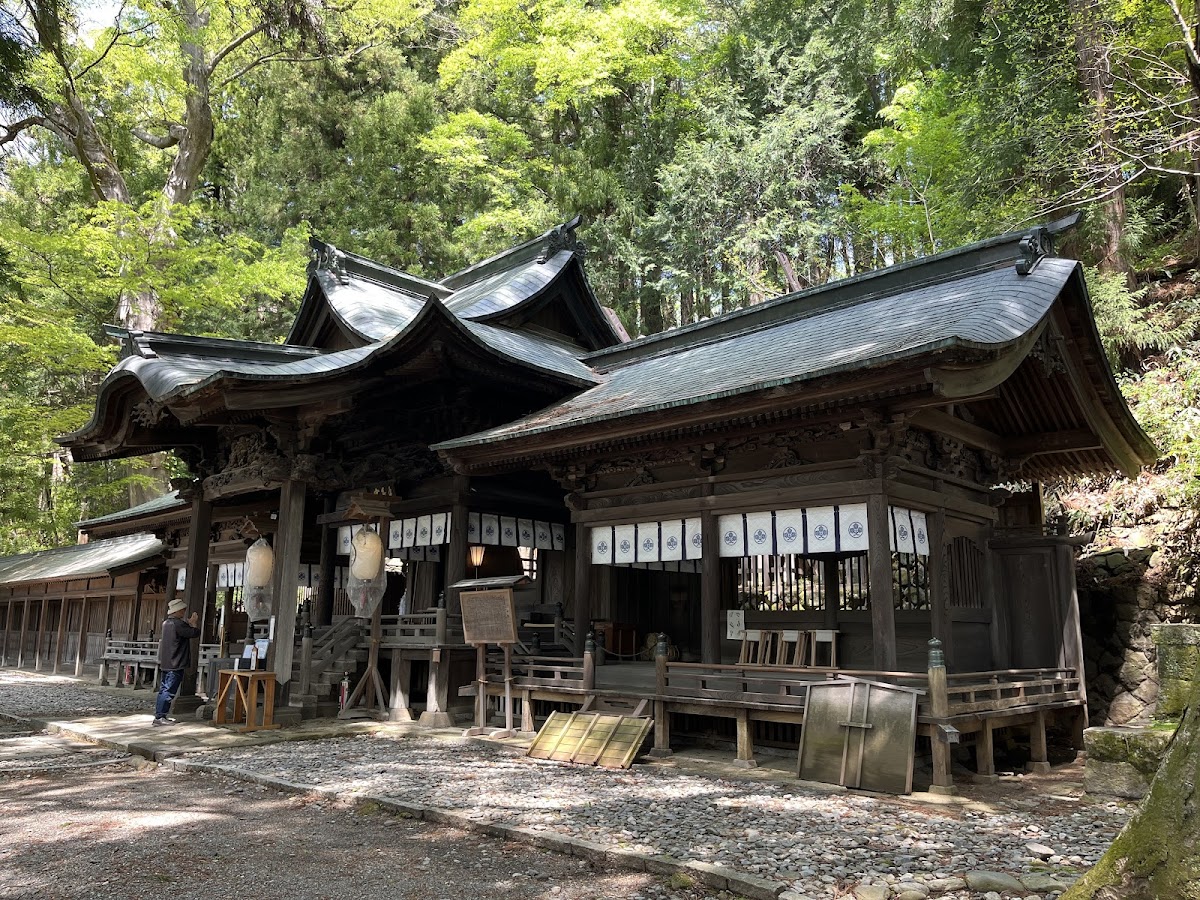
The worship hall is where worshippers offer their prayers and features traditional shrine architecture. Located behind it, the main sanctuary is a valuable structure that showcases the characteristics of shrine architecture in the Suwa region.
Interestingly, the shrine’s orientation is not towards Suwa Grand Shrine’s Upper Shrine (approximately 6 km north), but rather southwest. Since the Lower Shrine is to the south and Lake Suwa is to the west, this orientation, which does not directly face either direction, is thought to reflect unique religious practices and geographical reasons.
Former Main Hall
In addition to the current main hall, the former main hall remains on the shrine grounds and is preserved as a historically valuable structure. This former main hall is a precious cultural asset that conveys the architectural style of the Edo period.
Sculptures by Tachikawa Washiro Tomimune
The shrine buildings of Tenaga Shrine feature carvings by Tachikawa Washiro Tomimune, a leading shrine carpenter and sculptor of the Suwa region. The Tachikawa school was a group of shrine carpenters and sculptors active mainly in Shinshu from the late Edo period to the Meiji era, and their exquisite carving techniques are highly regarded.
The carvings at Tenaga Shrine showcase the finest techniques of the Tachikawa school, with designs of dragons, lions, flowers, and birds adorning the shrine buildings.
Views from the Shrine Grounds
Taking advantage of its location on the slopes of Mt. Chausu, the shrine grounds offer views of Lake Suwa, the townscape of Suwa, and, on clear days, even the Yatsugatake mountain range and the Southern Alps. This view is one of the major attractions of visiting Tenaga Shrine.
Subsidiary Shrines
In addition to the main shrine, Tenaga Shrine has several subsidiary shrines. Each of these small shrines has its own history of faith and has received the prayers of the local people.
The main subsidiary shrines enshrine local guardian deities, gods of industry, and gods of learning, functioning as shrines that respond to a variety of wishes.
Main Festivals and Annual Events
Annual Festival
Tenaga Shrine’s Annual Festival is the most important festival of the year, featuring traditional Shinto rituals such as a portable shrine procession and the dedication of Kagura (sacred dance). The local community comes together to support the festival, expressing gratitude to the local deity and praying for the prosperity of the region.
Setsubun Festival
On February 3rd, Setsubun, the Setsubun Festival is held, where rituals such as bean-throwing are performed to ward off evil spirits and pray for good health throughout the year. Limited edition Goshuin (temple/shrine stamps) are sometimes distributed during this period.
New Year’s Goshuin
A limited edition New Year’s Goshuin is distributed in the new year. Available only until Setsubun (February 3rd), it can also be ordered by mail, making it popular with visitors from afar. It costs 1,000 yen including shipping; please inquire directly with the shrine for details.
Other Annual Events
- New Year’s Day Festival (January 1st)
- Spring Grand Festival
- Summer Purification Ceremony
- Autumn Grand Festival
- Shichi-Go-San Festival
And other seasonal festivals are held throughout the year.
Cultural Properties
Former Main Hall (City-Designated Cultural Property)
The former main hall of Tenaga Shrine is a designated cultural property of Suwa City and is a valuable structure that preserves the style of Edo period shrine architecture. Its construction date and techniques provide important information for understanding the religious practices and architectural technology of the time.
Tachikawa-ryu Sculpture
The aforementioned sculptures by Tachikawa Washiro Tomimoto are also of high cultural value and are highly regarded as a testament to the finest craftsmanship of shrine carpenters in the Suwa region.
Benefits and Points for Visiting
Main Benefits
Tenaga Shrine is believed to offer the following benefits:
- Family Safety: Due to Tenanuchi-no-Mikoto’s role as a mother goddess protecting her daughter, she is believed to protect the safety of the family.
- Prosperity of Descendants: As a deity worshipped as a married couple, she is believed to grant blessings for fertility and safe childbirth.
- Matchmaking: As a pair of married deities with Ashinaga Shrine, she is believed to grant blessings for successful relationships.
- Protection from Evil: Due to the myth of her protecting against Yamata no Orochi, she is believed to protect against disasters.
- Abundant Harvest: As the guardian deity of the region, she is believed to protect agriculture.
Points to Note When Visiting
- Visiting Both Tenanuchi Shrine and Ashinaga Shrine: It is believed that visiting both Tenanuchi Shrine and Ashinaga Shrine, which enshrine a married couple of deities, will bring greater blessings.
- Climbing the Stone Steps Carefully: Consider the long stone steps as a process of purifying your mind and body, and climb slowly.
- Enjoying the View from the Shrine Grounds: The view overlooking Lake Suwa has a calming effect on the mind. 4. Experiencing the Changing Seasons: The shrine grounds, surrounded by the Tenaga Forest, offer a chance to appreciate the beauty of nature throughout the four seasons.
Goshuin (Shrine Seal) Information
Regular Goshuin
At Tenaga Shrine, you can receive a goshuin at the shrine office.
- Reception Hours: 8:30 AM – 4:00 PM
- Goshuin Fee: 500 yen
- Location: Shrine Office
Limited Edition Goshuin
The New Year’s New Year’s Goshuin is available for a limited time until Setsubun (February 3rd). Its design and calligraphy differ from the usual, making it popular among collectors.
Mail order is also available for 1,000 yen including shipping. For details, please inquire via email, fax, or phone (0266-52-1007).
Goshuincho (Shrine Seal Book)
Original goshuincho are also available, featuring designs unique to Tenaga Shrine.
Local Information & Access
Basic Information
- Official Name: Tenaga Shrine
- Address: 9556 Chausuyama, Kamisuwa, Suwa City, Nagano Prefecture 392-0012
- Phone Number: 0266-52-1007
- Visiting Hours: Regular worship only (24-hour worship available)
- Shrine Office Reception Hours: 8:30 AM – 4:00 PM
- Admission Fee: None (Free)
- Parking: Available (Free, limited spaces)
Access by Train
Approximately 15-20 minutes on foot from Kamisuwa Station on the JR Chuo Main Line
Exit the east exit of Kamisuwa Station and head east, away from Lake Suwa. After passing through the residential area and arriving at the foot of Chausuyama, follow the signs to the entrance of the Tenaga Shrine approach.
Although it’s a bit of a walk from the station, it’s a popular route for many visitors, offering a pleasant stroll through the streets of Suwa.
Access by Car
Approximately 10 minutes from the Suwa Interchange on the Chuo Expressway
After exiting the Suwa Interchange, take National Route 20 towards Suwa city center. Follow the signs towards Chausuyama.
There is parking near the shrine grounds, but spaces are limited, so during busy periods such as New Year’s visits and festivals, we recommend using public transportation.
Nearby Attractions
- Ashinaga Shrine: A pair of shrines within walking distance. Visiting both shrines is recommended:
- Suwa Grand Shrine Upper Shrine Main Sanctuary: Approximately 15 minutes by car, the center of Suwa faith
- Lake Suwa: Approximately 15 minutes on foot, one of Japan’s most representative scenic spots
- Katakura-kan: A hot spring facility designated as a National Important Cultural Property
- Suwa City Museum of Art: A place to experience local art and culture
Relationship with Ashinaga Shrine
Worship as a Married Couple
Tenaga Shrine and Ashinaga Shrine are worshipped as a pair of shrines dedicated to a married couple of deities. Tenaga Shrine enshrines Tenanuchi-no-Mikoto (the mother goddess), while Ashinaga Shrine enshrines Ashinanuchi-no-Mikoto (the father goddess), the consort god.
These two shrines are dedicated to a married couple of deities who appear together in the Yamata no Orochi myth, and the foundation of their faith lies in the parental love shown in protecting their daughter, Kushinadahime.
Legend of the Tenaga and Ashinaga Giants
The legend of the giants Tenaga and Ashinaga is passed down in the Suwa region.
The Long-Armed Giant is said to have possessed extremely long arms, allowing him to easily catch fish in Lake Suwa. Meanwhile, the Long-Legged Giant crossed Lake Suwa with his long legs, and the two lived together, cooperating with each other.
This legend symbolizes the importance of a couple utilizing each other’s strengths and working together, and is associated with blessings for matchmaking and marital harmony.
Significance of Visiting Both Shrines
Locally, they are affectionately known as “Tenaga-sama, Ashinaga-sama,” and it is believed that visiting both shrines strengthens the blessings for marital harmony, family safety, and successful relationships.
Since they are relatively close to each other, we highly recommend visiting both shrines if you have the time.
Summary of the Charms of Tenaga Shrine
Tenaga Shrine, as a subsidiary shrine of Suwa Grand Shrine’s Upper Shrine and as the guardian shrine of Shimosawahara-go, Suwa-gun, Shinano Province, has long been revered by the local people.
Dedicated to the mother goddess Tenanuchi-no-Mikoto, and deeply connected to Japanese mythology, the worship of this pair of deities, a counterpart to Ashinaga Shrine, continues to captivate many hearts today.
With its location on the slopes of Mt. Chausu, offering stunning views of Lake Suwa, exquisite Tachikawa-ryu carvings, and the tranquil atmosphere of its grounds nestled in a forest, Tenaga Shrine boasts numerous attractions well worth a visit.
Its convenient location within walking distance of Kami-Suwa Station makes it a must-visit shrine when in Suwa. The sacred atmosphere and beautiful scenery awaiting visitors after climbing the long stone steps will leave a lasting impression.
Frequently Asked Questions (FAQ)
Q1: Are there specific visiting hours for Tenaga Shrine?
A1: Tenaga Shrine is open 24 hours a day. However, if you wish to receive a Goshuin (shrine stamp) or other items, please visit during the shrine office’s reception hours (8:30 AM to 4:00 PM). While it’s possible to visit in the early morning or evening, we recommend visiting during daylight hours due to the stone steps.
Q2: Is there parking available?
A2: Yes, there is free parking near the shrine grounds, but spaces are limited. It may become full during busy periods such as New Year’s Day and festivals, so we recommend using public transportation. It’s about a 15-20 minute walk from Kami-Suwa Station.
Q3: Can I get a Goshuin (shrine stamp) by mail?
A3: We offer mail-order service for the New Year’s Goshuin (limited edition stamp from New Year’s Day to Setsubun). The cost is 1,000 yen including shipping, and you can apply by email, fax, or phone (0266-52-1007). For regular Goshuin, please pick them up directly at the shrine office.
Q4: I’d also like to visit Ashinaga Shrine. How far apart are they?
A4: Tenaga Shrine and Ashinaga Shrine are within walking distance of each other. Visiting both shrines is believed to enhance the blessings of the pair of shrines dedicated to the married couple deities, so if you have the time, we highly recommend visiting both.
Q5: Is photography allowed on the shrine grounds?
A5: Commemorative photos during general worship are permitted, but there are areas where photography is restricted, such as inside the main hall. Photography may also be prohibited during festivals, so please inquire at the shrine office if you have any questions. Please also be considerate of other worshippers.
Q6: What are the blessings of Tenaga Shrine?
A6: The main blessings include family safety, prosperity of descendants, matchmaking, protection from evil, and abundant harvests. In particular, because Tenanuchi-no-Mikoto is a mother goddess who protected her daughter, she is believed to protect family safety, and as a pair of married couple deities with Ashinaga Shrine, she is believed to bring blessings for successful relationships and marital harmony.
Q7: How many stone steps are there? I’m not very confident in my physical strength…
A7: Since the shrine is located on the mountainside of Mt. Chausu, you will need to climb a long flight of stone steps. There are quite a few steps, but it’s not a problem if you take breaks along the way and climb slowly. Consider the act of climbing the steps itself as a process of purifying your mind and body, and visit the shrine at a comfortable pace. There are handrails, so please use them to climb safely.
Q8: Please tell me about its relationship with Suwa Grand Shrine.
A8: Tenaga Shrine is a subsidiary shrine of the Suwa Grand Shrine’s Upper Shrine. The enshrined deity, Tenanuchi-no-Mikoto, is considered the ancestral deity of Takeminakata-no-Kami, the enshrined deity of Suwa Grand Shrine, and holds an important position in Suwa faith. He is also worshipped as “Tenagahiko-no-Kami,” a deity who accompanies Takeminakata-no-Kami.