Complete Guide to Toyokuni Shrine | A Thorough Explanation of its History and Blessings in Kyoto, Osaka, and Nagoya
What is Toyokuni Shrine?
Toyokuni Shrine is a shrine dedicated to Toyotomi Hideyoshi, who unified Japan during the Sengoku and Azuchi-Momoyama periods. Inspired by Hideyoshi’s life, from a peasant to a ruler, it is revered nationwide as a god of success and good fortune.
There are several Toyokuni Shrines throughout Japan, including the main ones in Higashiyama-ku, Kyoto (a special government-sponsored shrine), Osaka Castle Toyokuni Shrine within Osaka Castle, and Toyokuni Shrine in Nakamura-ku, Nagoya. Each has its own unique history and characteristics, and continues to attract many worshippers.
Hideyoshi ended his turbulent 62-year life at Fushimi Castle on August 18, 1598 (Keicho 3). In recognition of his achievements, he was buried on Higashiyama Amidagamine according to his will, and in the following year, Keicho 4 (1599), he was granted the divine title of “Toyokuni Daimyojin” by the Imperial Court and enshrined as a deity.
History and Charm of Toyokuni Shrine, Kyoto
From Founding to Abolition and Restoration
Toyokuni Shrine in Kyoto was founded in Keicho 4 (1599) on the slopes of Amidagamine. Initially boasting magnificent shrine buildings, reverence for Lord Hideyoshi spread throughout the country. However, after the fall of the Toyotomi family, in Genna 1 (1615), it was abolished by order of Tokugawa Ieyasu, and the shrine buildings were destroyed.
Approximately 250 years later, in Meiji 1 (1868), it was decided to restore the shrine by order of Emperor Meiji. In 1880 (Meiji 13), the shrine was rebuilt on its current site, the former site of the Hokoji Temple’s Great Buddha Hall, and was revived as a special government-supported shrine. Currently, it is a special shrine of the Association of Shinto Shrines and one of Kyoto’s representative shrines.
The Magnificent Appearance of the National Treasure, Karamon Gate
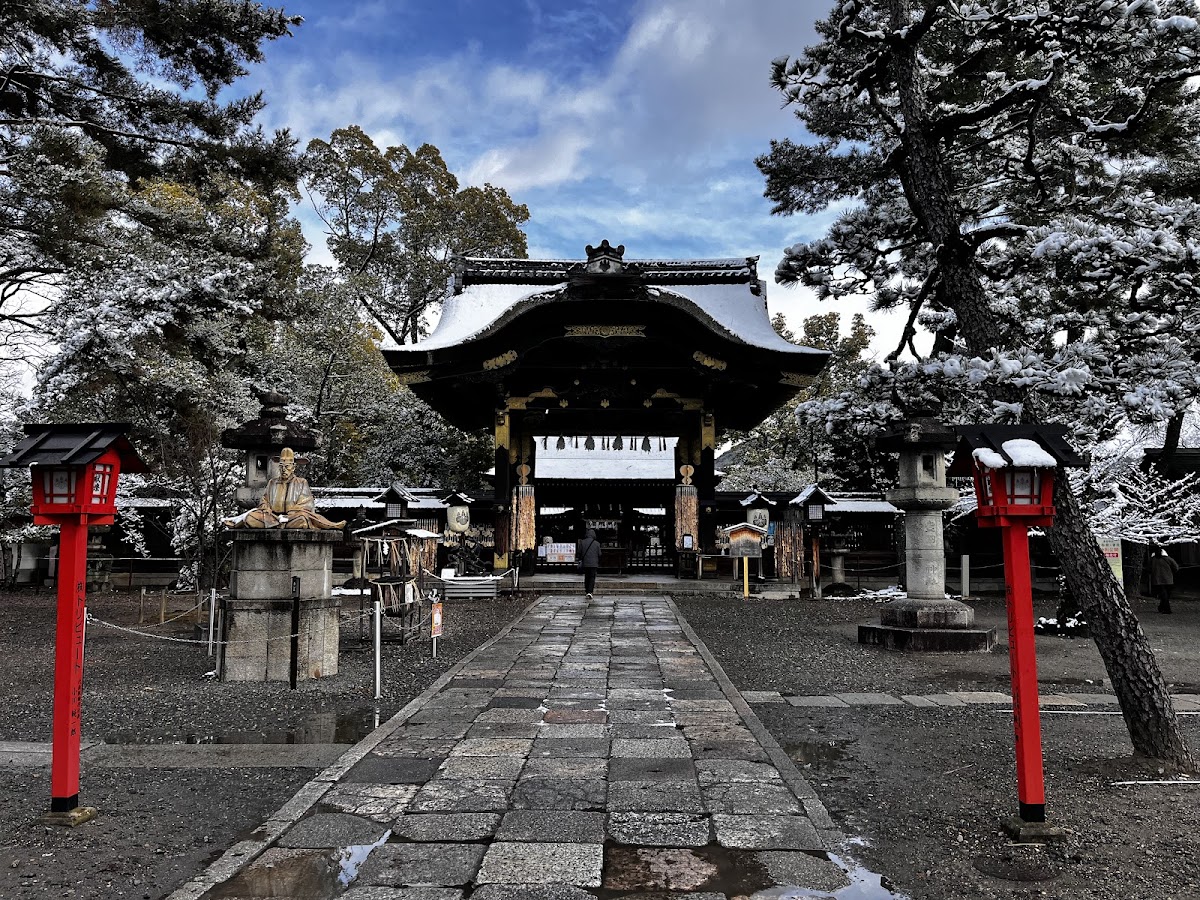
Adorning the front of Toyokuni Shrine is the Karamon Gate, designated as a National Treasure. This gate is said to have been relocated from Fushimi Castle and features a four-legged gate structure with a curved gable roof. The transoms and doors are adorned with magnificent carvings from the Momoyama period, showcasing the pinnacle of architectural technology of that era.
Decorated with gold leaf and vibrant colors, the Karamon Gate continues to fascinate visitors as a symbol of Toyotomi Hideyoshi’s splendor. Passing through the gate, one finds the main hall, dedicated to Lord Hideyoshi, standing quietly.
Teisho Shrine and Lady Kita-no-Mandokoro
Within the temple grounds is Teisho Shrine, dedicated to Lady Kita-no-Mandokoro, the principal wife of Lord Hideyoshi. Lady Kita-no-Mandokoro is known for her supportive role in Hideyoshi’s life and spent her later years at Kodai-ji Temple. Teisho Shrine is revered as a deity of successful marriages and is particularly popular among female worshippers.
It is believed that by paying homage to both Lord Hideyoshi and Lady Kita-no-Mandokoro, one can receive blessings for both career advancement and successful marriages, and many worshippers visit both shrines.
Toyokuni Mausoleum and Amidagamine
At the summit of Amidagamine, a detached temple ground, lies the tomb of Lord Hideyoshi, known as Toyokuni Mausoleum. The climb to the summit, approximately 196 meters above sea level, requires a certain level of physical strength, but the view from the top offers a spectacular panorama of Kyoto city.
The path leading to Toyokuni Shrine can be considered a pilgrimage route, allowing one to reflect on the life of Lord Hideyoshi. A special ceremony is held annually on August 18th, the anniversary of his death.
Important Cultural Properties and Treasures
Toyokuni Shrine houses numerous valuable treasures. Among them, the most famous is the important cultural property, the “Toyokuni Festival Screen”. This six-panel screen depicts the Toyokuni Festival held in 1604 in detail, serving as a valuable historical document conveying the grandeur of the festival at the time.
The shrine also possesses the “Honebami Toushirou”, a sword popular among sword enthusiasts. This famous sword is said to have belonged to Toyotomi Hideyoshi and is sometimes displayed at exhibitions held seasonally.
Annual Events at Toyokuni Shrine, Kyoto
Various events are held annually at Toyokuni Shrine in Kyoto.
- Annual Festival (September 18th & 19th): The most important festival commemorating the virtues of Lord Hideyoshi
- Tea Offering Festival: A festival in which tea is offered to Lord Hideyoshi, who loved the tea ceremony
- Monthly Festival: A regular festival held on the 18th of each month
- Great Purification Ceremony: A Shinto ritual held in June and December to purify sins and impurities
Especially during the Annual Festival, various offerings and ceremonies are held on the temple grounds, attracting many worshippers.
Access Information (Kyoto)
Location: 530 Yamatooji Shomen Chaya-cho, Higashiyama-ku, Kyoto City, Kyoto Prefecture
Transportation Access:
- Approximately 5 minutes on foot from the Kyoto City Bus stop “Museum Sanjusangen-do-mae”
- Approximately 10 minutes on foot from Keihan Railway’s Shichijo Station
- Approximately 15 minutes by city bus from JR Kyoto Station
Visiting Hours: Grounds are freely accessible (the Treasure Hall has specific opening hours)
Features of Osaka Castle Toyokuni Shrine
A Shrine Located Within Osaka Castle
Osaka Castle Toyokuni Shrine is located directly in front of the Sakuramon Gate within Osaka Castle. It enshrines three deities: Toyotomi Hideyoshi, Toyotomi Hideyori, and Toyotomi Hidenaga. Because it is located within the grounds of Osaka Castle, built by Hideyoshi, it holds special significance as a place associated with the Toyotomi family.
Benefits for Career Advancement and Good Fortune
Inspired by the life of Hideyoshi, who rose from a farmer to ruler of Japan, this shrine is widely revered as a god of career advancement and good fortune. Many worshippers, including business professionals and students preparing for exams, visit the shrine hoping for significant progress in their lives.
Located in the heart of Osaka, a major commercial city, it also sees many business owners praying for business prosperity and success.
Combining with Osaka Castle Sightseeing
Its convenient location, allowing for a visit in conjunction with sightseeing at Osaka Castle’s main tower, is another attractive feature. You can enjoy history and nature simultaneously while strolling through Osaka Castle Park. The shrine grounds, which show different expressions with each season—cherry blossoms in spring and autumn leaves in fall—are also popular as a photography spot.
Access Information (Osaka)
Location: 2-1 Osaka Castle, Chuo-ku, Osaka City, Osaka Prefecture
Transportation Access:
- Approximately 15-minute walk from Tanimachi 4-chome Station on the Osaka Municipal Subway Tanimachi Line and Chuo Line
- Approximately 15-minute walk from Morinomiya Station or Osakajo-Koen Station on the JR Osaka Loop Line
- Approximately 20-minute walk from Tenmabashi Station on the Keihan Railway
Visiting Hours: Grounds are freely accessible
Nagoya – Toyokuni Shrine and Nakamura Park
A Shrine Built on the Birthplace of Toyotomi Hideyoshi
Toyokuni Shrine in Nakamura-ku, Nagoya City, is a shrine built on the site believed to be the birthplace of Toyotomi Hideyoshi. It was established in its current location in 1885 (Meiji 18) through the strong will of local residents. The shrine was created amidst the growing movement to honor Hideyoshi after the end of the Edo period and the beginning of the Meiji era.
Integrated Development with Nakamura Park
In February 1901 (Meiji 34), land surrounding the shrine grounds was donated to Aichi Prefecture by volunteers who planned the construction of Toyokuni Shrine. Under the prefecture’s leadership, Nakamura Park, the oldest park in Nagoya City, was created.
Within the park are large pine trees planted by Emperor Taisho during his visit as Crown Prince, and a commemorative statue marking the birth of the first Nakamura Kanzaburo. It is a beloved place of relaxation for local residents.
Nakamura’s Grand Torii Gate
At the entrance to Nakamura Park stands a magnificent torii gate known as “Nakamura’s Grand Torii Gate.” This gate marks the beginning of the approach to Toyokuni Shrine and is a prominent landmark visible from afar.
Events at Nagoya’s Toyokuni Shrine
Nagoya’s Toyokuni Shrine also holds various events throughout the year.
- Annual Festival: The largest annual festival commemorating Lord Hideyoshi
- Monthly Festival: A regular monthly festival
- Great Purification Ceremony: A Shinto ritual held twice a year to purify sins and impurities
- Seasonal Festivals: New Year’s visit, Setsubun festival, etc.
As a shrine deeply rooted in the community, many events beloved by local residents are held here.
Access Information (Nagoya)
Location: Kinoshita-yashiki, Nakamura-cho, Nakamura-ku, Nagoya City, Aichi Prefecture
Transportation Access:
- Approximately 10 minutes on foot from Nakamura-koen Station on the Higashiyama Subway Line
- Immediately after alighting at Nakamura-koen bus stop
- Approximately 20 minutes by city bus from Meitetsu Nagoya Station on the Meitetsu Nagoya Main Line
Visiting Hours: Grounds are freely accessible
Benefits and Faith of Toyokuni Shrine
God of Success and Good Fortune
The greatest benefit of Toyokuni Shrine is success and good fortune. Born into a poor farming family in Nakamura, Owari Province, Hideyoshi served Oda Nobunaga, and through his talent and hard work, gradually rose through the ranks, eventually becoming Regent and Grand Minister.
This rags-to-riches story continues to inspire courage and hope in many people today. Worshippers from all over Japan visit the shrine, hoping for advancements in life, such as finding employment, promotions, and business success.
Faith for a Good Marriage
Especially at Toyokuni Shrine in Kyoto, due to its connection with Teisho Shrine, which enshrines Kita-no-Mandokoro One, the shrine is widely known for its blessings of a good marriage. The bond between Hideyoshi and One remained strong even in the turbulent Sengoku period.
Many worshippers pray for success in love, marriage, and marital harmony, and couples are often seen visiting the shrine.
Business Prosperity and Success
Due to Hideyoshi’s economic policies, the shrine is also revered for its blessings of business prosperity and success. In recognition of Lord Hideyoshi’s achievements in revitalizing economic activity through initiatives such as the Taiko Land Survey and the promotion of free markets, business owners and merchants continue to visit the shrines.
Goshuin (Shrine Seals) and Gifts
Goshuin Information
Each Toyokuni Shrine offers unique goshuin (shrine seals). At the Kyoto Toyokuni Shrine, in addition to the regular goshuin, seasonal special goshuin are sometimes distributed.
In recent years, collaborative goshuin projects with Kodai-ji Temple have also been implemented, increasing the enjoyment of visiting multiple shrines and temples. Each shrine also offers its own original goshuin notebook, with those featuring the five-seven paulownia crest, the family crest of Lord Hideyoshi and the Toyotomi family, being particularly popular.
Gifts
Various gifts are available at each Toyokuni Shrine.
- Career Advancement Charm: A charm for career advancement and good fortune.
- Victory Charm: A charm for success in competitions and passing exams.
- Matchmaking Charm: A charm for finding a good partner.
- Thousand Gourd Charm: A votive offering featuring the gourd, a symbol of Lord Hideyoshi.
- Ema (Votive Tablet): A votive tablet on which to write wishes and offer them.
The offerings featuring the Thousand Gourd Charm are particularly popular as a unique feature of Lord Hideyoshi.
About Prayers
Various prayers are available at Toyokuni Shrine.
Main Types of Prayers
- Prayer for Career Advancement and Good Fortune
- Prayer for Business Prosperity
- Prayer for Passing Exams
- Prayer for Finding a Good Partner
- Prayer for Family Safety
- Prayer for Company Prosperity
- Prayer for Protection from Evil
If you wish to have a prayer performed, it is recommended that you inquire with each shrine in advance. Especially for prayers for company prosperity, advance reservations may be required.
Points to Note When Visiting Toyokuni Shrine
Etiquette for Visiting Shrines
When visiting Toyokuni Shrine, please follow the general etiquette of visiting a shrine.
- Bow before passing through the torii gate.
- Cleanse your hands and mouth at the water basin.
- Bow twice, clap twice, and bow once before the main hall.
- Silently recite your wish.
- Bow once more and leave.
At Toyokuni Shrine in Kyoto, visiting the Teisho Shrine after visiting the main hall makes for a more fulfilling visit.
Recommended Time to Visit
Toyokuni Shrine is open year-round, but there are particularly recommended times.
- January (First Shrine Visit of the Year): Praying for good fortune in the new year.
- Spring (Cherry Blossom Season): The cherry blossoms in the shrine grounds and surrounding area are beautiful.
- September (Annual Festival): The most important festival period.
- Autumn (Autumn Leaves Season): The autumn leaves in Kyoto and Osaka Castle Park are at their peak.
Each season offers a different charm, and you’ll discover something new every time you visit.
Nearby Tourist Attractions
In Kyoto:
- Sanjusangen-do Temple (5-minute walk)
- Kyoto National Museum (5-minute walk)
- Kiyomizu-dera Temple (20-minute walk)
- Kodai-ji Temple (15-minute walk)
In Osaka:
- Osaka Castle Tower
- Osaka Castle Park
- Osaka Museum of History
In Nagoya:
- Nakamura Park
- Hideyoshi & Kiyomasa Memorial Museum
- Nagoya Castle (approx. 30 minutes by city bus)
Nationwide Toyokuni Shrine Network
Shrines dedicated to Toyotomi Hideyoshi exist throughout Japan, in addition to the three major shrines in Kyoto, Osaka, and Nagoya.
Other Major Toyokuni Shrines
- Nagahama Toyokuni Shrine (Nagahama City, Shiga Prefecture): Located in Nagahama, where Lord Hideyoshi served as lord of the castle.
- Shusse Inari Shrine (Kyoto City): An outlying subsidiary shrine of Toyokuni Shrine.
These shrines also attract reverence for Lord Hideyoshi in their respective regions, and the number of visitors enjoying a tour of Toyokuni Shrines is increasing.
The Life and Achievements of Toyotomi Hideyoshi
A Story of Rise to Power
Toyotomi Hideyoshi was born in 1537 in Nakamura, Owari Province (present-day Nakamura Ward, Nagoya City). His childhood name was Hiyoshimaru, and he grew up as the son of a poor farmer.
In his youth, Hideyoshi moved from one job to another before coming to serve Oda Nobunaga. His talent, quick wit, and above all, his charismatic personality gradually earned him Nobunaga’s trust.
The Road to Unification
After Nobunaga’s death in the Honnō-ji Incident, Hideyoshi returned to Kyoto in the Chūgoku Grand Return and defeated Akechi Mitsuhide. He then overcame conflicts with Shibata Katsuie and Tokugawa Ieyasu, and in 1590, he destroyed the Hōjō clan in the Siege of Odawara, finally achieving the unification of Japan.
Appointed as Regent and Grand Minister, Hideyoshi implemented policies such as the Taikō Land Survey and the Sword Hunt Edict, laying the foundation for early modern Japan.
Contribution to Culture
Hideyoshi was not only a military commander but also a man of culture. He was famous for his love of the tea ceremony and his strong ties to Sen no Rikyū. Furthermore, he left behind magnificent castle architecture, such as Osaka Castle and Fushimi Castle, making a significant contribution to the development of Momoyama culture.
The Present and Future of Toyokuni Shrine
Significance in the Modern Age
Today, Toyokuni Shrine is not merely a historical building, but functions as a shrine of significant meaning for modern people. In today’s society, often described as one of inequality, the story of Hideyoshi, who rose to the top despite his social status, continues to give hope to many people.
Preservation and Public Access to Cultural Properties
At Toyokuni Shrine in Kyoto, efforts are made to preserve the national treasure Karamon Gate and other important cultural properties, while regularly holding exhibitions of treasures and opening them to the public. The exhibition of famous swords such as “Honebami Toushirou” is highly popular among history and sword enthusiasts.
Collaboration with the Community
Like Toyokuni Shrine in Nagoya, shrines integrated with local parks play an important role as places of relaxation for local residents. They also serve as places to strengthen community bonds through festivals and events.
Value as a Tourism Resource
Toyokuni Shrines in Kyoto and Osaka are also important tourism resources that attract tourists from both Japan and abroad. As a shrine that blends historical value, beautiful architecture, and a belief in its blessings, it will undoubtedly continue to welcome many visitors in the future.
Summary
Toyokuni Shrine is a shrine dedicated to Toyotomi Hideyoshi, who rose from a farmer to a ruler of Japan, and is revered throughout Japan as a shrine for career advancement and good fortune. Centered around the three major shrines in Kyoto, Osaka, and Nagoya, each has its own unique history and characteristics, bestowing blessings upon many visitors.
There are many sights to see, including the national treasure Karamon Gate, important cultural property treasures, the Teisho Shrine dedicated to Kita-no-Mandokoro One, and Toyokuni-byo, the mausoleum of Hideyoshi. As a deity that grants various wishes such as career advancement, successful relationships, and business prosperity, its faith remains strong even today, and it is bustling with many visitors throughout the year.
Feeling the history while praying for your own advancement, a visit to Toyokuni Shrine will surely bring new vitality to your life. If you’re visiting Kyoto, Osaka, or Nagoya, be sure to stop by Toyokuni Shrine.