Daikanki-ji Temple (Kyoto Prefecture) Complete Guide | History, Highlights, Access, and Relationship with Daishoji Temple
Daikanki-ji Temple, located along Teramachi Street in Kamigyo Ward, Kyoto City, is a temple not widely known to the general public, but it is an important temple with deep ties to Daishoji Temple, which has ties to the Imperial family. As an independent Rinzai Zen temple, it has played a role in commemorating the successive generations of nuns. This article provides a detailed guide to Daikanki-ji Temple, including its history, highlights, access methods, and its special relationship with Daishoji Temple.
What is Daikanki-ji Temple? | Basic Information and Overview
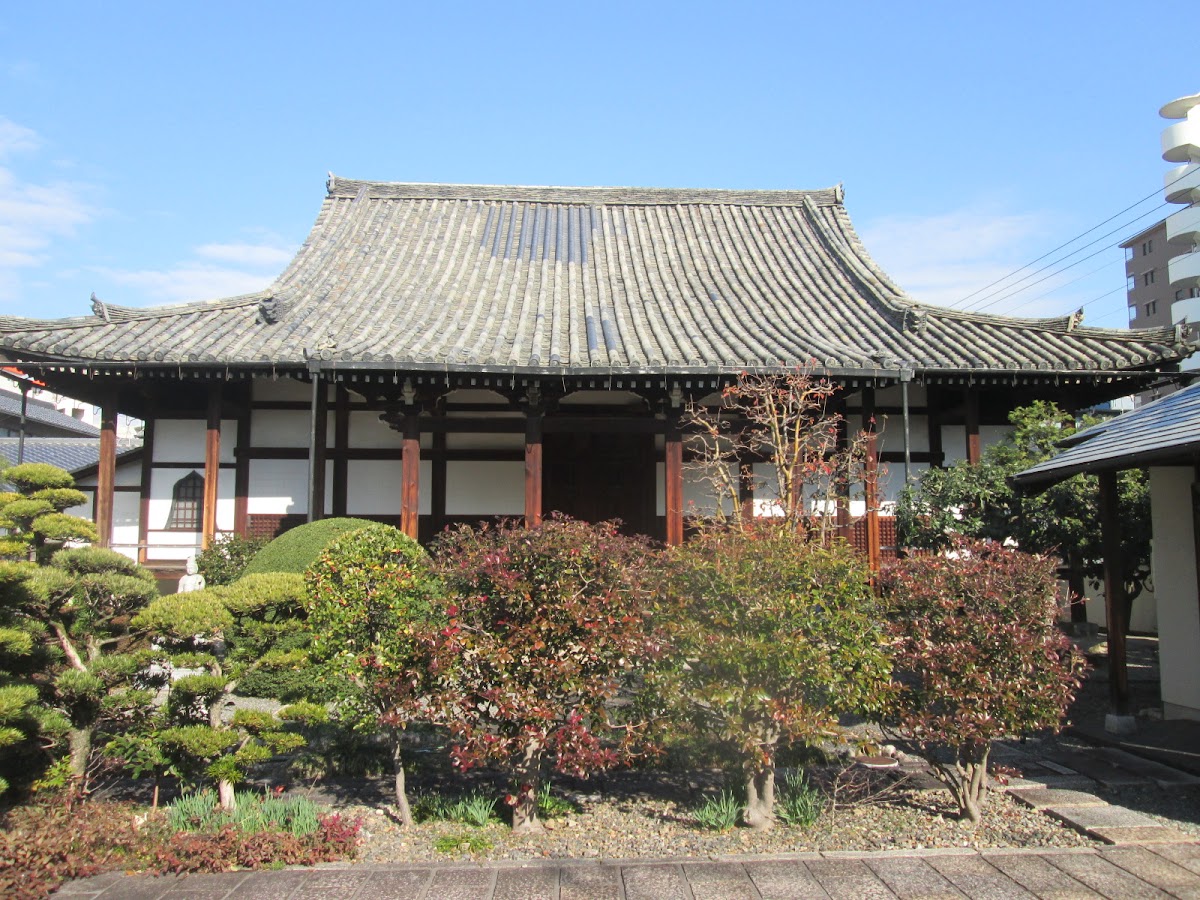
Daikanki-ji Temple is an independent Rinzai Zen temple located in Tsuruyama-cho, Kamigyo Ward, Kyoto City. Situated in a residential area facing Teramachi Street, east of Shokoku-ji Temple, it is characterized by its modest appearance, resembling an ordinary house at first glance.
Basic Temple Data
- Official Name: Daikanki-ji Temple
- Sect: Rinzai Zen Independent (Originally Rinzai Zen)
- Temple Rank: Nunnery
- Location: 3 Tsuruyama-cho, 5-chome, Teramachi-dori Imadegawa-agaru, Kamigyo-ku, Kyoto City, Kyoto Prefecture
- Phone Number: 075-211-8779
- Visiting Hours: Not open to the public (General public visits are usually not permitted)
Daikanki-ji Temple holds a special position among Kyoto’s temples as the family temple enshrining successive abbots of Daishoji Temple, which was known as “Otera Gosho” (Imperial Temple Palace).
History of Daikanki-ji Temple | From Founding to the Present
Mystery and Various Theories Regarding the Founding
There are no clear records regarding the founding of Daikanki-ji Temple, and several theories exist. The main theories are as follows:
Theory of Founding by Kintan (Kōshō Zenji)
According to the *Yamashiro Meishōshi* (Record of Famous Places in Yamashiro), which quotes the *Gidō Oshō Goroku* (Sayings of Abbot Gidō), the temple was founded by Kintan (Kōshō Zenji), a monk of the Muromachi period. Kintan is known as a high-ranking priest of the Rinzai sect and a figure who dedicated himself to the restoration of many temples.
Theory of the Musō Soseki Dharma Lineage
Another tradition states that the temple inherited the Dharma lineage of Musō Soseki (Musō Kokushi), a Zen monk who was active from the Kamakura period to the Nanboku-chō period. Musō Soseki was a high-ranking priest who founded temples such as Tenryū-ji and Saihō-ji (Koke-dera), and being connected to his lineage held great authority for a temple.
Theory of Origin in Kankiji-machi
Due to its connection with the place name, there is also a theory that the temple originated in a place formerly called Kankiji-machi.
History of Medieval Changes and Relocations
The most significant turning point in the history of Daikanki-ji Temple was the Ōnin War (1467-1477). Like many temples in Kyoto, Daikanki-ji was destroyed by fire during this conflict.
Initially, Daikanki-ji is believed to have been located near Hanshū-in Temple, north of Senbon Imadegawa, in what is now the western part of Kamigyo Ward. However, during the reconstruction process after the Ōnin War, the temple was forced to relocate.
Relocation during the Tenbun Era (1532-1555)
After being destroyed by fire, it was relocated to the east of Jōfuku-ji Temple during the Tenbun era. This period coincided with the turbulent Sengoku period, a time of significant change in Kyoto’s urban structure.
Further Relocation during the Tenshō Era (1573-1592)
Furthermore, during the Tenshō era, a period of reconstruction of Kyoto by Toyotomi Hideyoshi, it was relocated to its current location along Teramachi Street. This relocation is believed to have been part of the urban planning implemented by Hideyoshi, known as the “Tensho Land Division.” Teramachi Street, as its name suggests, was a street where many temples were gathered, and Daikanki-ji Temple also settled in its current location at this time.
Relationship with Daishoji Monzeki
An essential aspect of Daikanki-ji Temple’s history is its deep relationship with Daishoji Monzeki.
Daishoji Temple was the highest-ranking nunnery among Kyoto’s monzeki temples, and was a highly prestigious temple also known as “Goten-gosho” (Imperial Temple Palace). It served as a monzeki temple, where imperial princesses and daughters of regent families entered the temple, a role it maintained from the Muromachi period to the Meiji era.
Daikanki-ji Temple came to serve as the family temple, managing the burial grounds of successive nunneries of Daishoji Temple. Although Daishoji Temple itself declined due to the anti-Buddhist movement of the Meiji era, the burial grounds of the successive monzeki are still under the management of the Imperial Household Agency, and Daikanki-ji Temple continues to protect them.
Highlights of Daikanki-ji Temple | Features of the Temple Grounds
Daikanki-ji Temple is usually closed to the public, but here are some of its distinctive features.
Modest Gate and Temple Grounds
The entrance to Daikanki-ji Temple, facing Teramachi Street, is an old wooden gate with a lock, giving it a modest appearance that resembles the gate of a private house. This reflects its character as a nunnery and the spirit of Zen Buddhist temples that value tranquility.
The temple grounds, nestled between residential areas, are not particularly large, but they feature a well-maintained garden and main hall.
Mausoleum of Successive Daishoji Monzeki
The most important feature of Daikanki-ji Temple is the mausoleum of successive nuns of Daishoji Monzeki. This mausoleum is under the management of the Imperial Household Agency and is not open to the public.
On the anniversaries of the deaths of the imperial princess nuns, a private memorial service called “Shoshinsai” is held by the Imperial Household Agency. This ritual continues to this day, preserving the historical connection between the Imperial family and the temple.
The cemetery contains the remains of successive abbots from the Muromachi to Edo periods, making it a valuable historical site in Kyoto’s religious and Imperial history.
Main Hall and Buddhist Statues
The main hall houses the principal image of Buddha, but details are not publicly available, so only limited information is available. As a Rinzai Zen temple, it is believed to possess Zen-style Buddhist statues and Zen paintings.
Access | How to Get to Daikanki-ji Temple
Daikanki-ji Temple is located along Teramachi Street in Kamigyo Ward, Kyoto City, and is accessible by several means of transportation.
Access by Train
Kyoto Municipal Subway Karasuma Line
- Approximately 9 minutes on foot from Exit 1 of Kuramaguchi Station (nearest station)
- Approximately 12 minutes on foot from Imadegawa Station
If coming from Kuramaguchi Station, exit the station, head east, and then head north along Teramachi Street to reach the temple.
Eizan Electric Railway Eizan Main Line
- Approximately 15 minutes on foot from Demachiyanagi Station
From Demachiyanagi Station, cross the Kamo River and head west, then proceed north along Teramachi Street.
Access by Bus
If using Kyoto City Buses, the “Kawaramachi Imadegawa” or “Demachiyanagi Station” bus stops are convenient. From there, it’s approximately a 10-15 minute walk north along Teramachi Street.
Access by Car and Parking
Daikanki-ji Temple does not have its own parking lot. If visiting by car, you will need to use a nearby coin-operated parking lot. However, the roads around Teramachi Street are narrow and parking is limited, so using public transportation is recommended.
Landmarks in the Area
Daikanki-ji Temple is located east of Shokoku-ji Temple, near Tsuruyama Children’s Park. These landmarks will make it easier to find when walking along Teramachi Street.
Visiting Information | Points to Note When Visiting
About Visiting
Daikanki-ji Temple is basically a private temple. Since it does not normally accept general visitors, only the exterior can be viewed.
- Admission Fee: None (due to being private)
- Visiting Hours: Not disclosed
- Special Openings: Generally not held
Visiting Etiquette
Although it is a private temple, it is possible to quietly pay your respects from the gate. Please note the following:
- As it is located in a residential area, please visit quietly and without making noise.
- The area inside the gate is private property; do not enter without permission.
- Please take photographs from outside the gate, with consideration for the surroundings.
- As there are tombs managed by the Imperial Household Agency, please treat them with special respect.
About Daishoji Monzeki | Kyoto’s Nunnery
Understanding Daishoji Monzeki is important for understanding Daikanki-ji Temple.
What are Monzeki Temples?
Monzeki temples are high-ranking temples where the head priest (monzeki) is a member of the imperial family or a member of the regent family. In particular, several nunneries where imperial princesses entered the priesthood existed in Kyoto.
History and Status of Daishoji Temple
Daishoji Temple was ranked among the highest-ranking nunneries in Kyoto and was known by the nickname “Gotera Gosho” (Imperial Temple Palace). Founded during the Muromachi period, successive head priests were imperial princesses or daughters of the regent family.
Although Daishoji Temple declined as a temple after the Meiji Restoration, its historical value is still recognized, and the tombs of successive head priests are strictly managed by the Imperial Household Agency.
Role of Daikankiji Temple
Daikankiji Temple, as the family temple of the Daishoji head priests, has played an important role in protecting the tombs and performing memorial services. It continues this role today in cooperation with the Imperial Household Agency.
Nearby Tourist Attractions | Temples and Shrines to Visit Together
The area around Daikanki-ji Temple has many historical temples, shrines, and tourist attractions.
Shokoku-ji Temple
Located about a 10-minute walk west of Daikanki-ji Temple, this is the head temple of the Shokoku-ji branch of the Rinzai school of Zen Buddhism. Founded by Ashikaga Yoshimitsu, it is a prestigious temple, and Kinkaku-ji and Ginkaku-ji are also sub-temples of Shokoku-ji. There are many sights to see, including the main hall and the Hojo garden, and you can admire valuable cultural artifacts at the Jotenkaku Museum.
Rozan-ji Temple
Walking south along Teramachi Street, you will find Rozan-ji Temple, said to be the site of Murasaki Shikibu’s residence. Known as a place associated with The Tale of Genji, it is a temple known for its beautiful bellflower blossoms.
Shimogamo Shrine
Heading towards Demachiyanagi, you will find Shimogamo Shrine, a World Heritage Site. Surrounded by the primeval forest known as Tadasu no Mori, this ancient shrine is one of Kyoto’s representative tourist attractions.
Kyoto Imperial Garden
Heading west, you’ll find the vast Kyoto Imperial Garden. Former aristocratic residences have been developed into a park, where you can enjoy the beauty of nature throughout the seasons.
Kyoto’s Nunnery Culture and Daikanki-ji Temple
Historically, Kyoto has had many nunneries, which have shaped a unique culture.
Kyoto’s Monzeki Nunneries
Besides Daisho-ji Temple, Kyoto had several other monzeki nunneries, including Hokyo-ji, Donka-in, Reikan-ji, and Ensho-ji. These were collectively known as the “Five Monzeki Nunneries of Kyoto,” and while maintaining deep ties with the imperial family and aristocratic society, they functioned as religious and cultural centers for women.
The Social Role of Nunneries
From the medieval to the early modern period, nunneries were not merely religious institutions but also played an important role as places for women’s education and culture. Especially at monzeki temples, advanced education was provided, fostering cultures such as calligraphy, waka poetry, and tea ceremony.
The Position of Daikanki-ji Temple
Although Daikanki-ji Temple is not a monzeki temple itself, it has played an important role in nunnery culture as the family temple of Daisho-ji Temple, the highest-ranking nunnery monzeki temple. Its continued relationship with the Imperial Household Agency speaks to its historical importance.
Rinzai Zen and Zen Culture
Daikanki-ji Temple, as a Rinzai-style temple, inherits the traditions of Zen Buddhism.
Characteristics of Rinzai Zen
Rinzai Zen is a branch of Zen Buddhism founded by the Chinese Zen monk Linji Yixuan, and was introduced to Japan during the Kamakura period by Eisai. It is characterized by its practice using koans (Zen dialogues) and, due to its strong ties with the samurai class, it boasts many large temples in Kyoto and Kamakura.
Rinzai Zen Temples in Kyoto
Kyoto has a concentration of major Rinzai Zen temples, including Shokoku-ji, Tenryu-ji, Nanzen-ji, Kennin-ji, and Tofuku-ji. These temples, as centers of Zen culture, had a significant influence on the formation of Japanese culture, including gardens, architecture, painting, and calligraphy.
The Zen Character of Daikanki-ji Temple
Although Daikanki-ji Temple is currently an independent temple, its origins and traditions lie in the Rinzai school of Zen Buddhism. Its modest demeanor and emphasis on tranquility convey the spirituality of Zen temples to this day.
Relationship with the Imperial Household Agency | About the Seishin-sai Ceremony
One of the distinctive aspects of Daikanki-ji Temple is its close relationship with the Imperial Household Agency.
Burial Grounds Managed by the Imperial Household Agency
The burial grounds of successive abbots of Daisho-ji Temple have been under the management of the Imperial Household Agency since the Meiji era. This is because, as successive abbots were princesses or members of the imperial family, the burial grounds are treated as imperial family burial grounds.
Implementation of the Seishin-sai Ceremony
On the anniversaries of the deaths of the princess nuns, the Imperial Household Agency holds a ceremony called the “Seishin-sai Ceremony.” This ceremony is held privately, with Imperial Household Agency officials visiting Kyoto to conduct it. The Seishinsai festival is one of the traditional rituals of the Imperial Family, and Daikanki-ji Temple is involved by providing the venue and cooperating with the ceremony.
Significance in the Modern Era
This relationship with the Imperial Household Agency demonstrates that Daikanki-ji Temple is not merely a historical relic, but a “living” temple that is still functioning today. The continued relationship between the Imperial Family and the temple speaks to the profound depth of Kyoto’s temple culture.
Teramachi-dori Area, Kamigyo Ward, Kyoto City
Teramachi-dori, where Daikanki-ji Temple is located, is, as its name suggests, a street where temples are concentrated.
History of Teramachi-dori
Teramachi-dori was formed by Toyotomi Hideyoshi’s Kyoto reconstruction plan, “Tensho Land Division.” Hideyoshi aimed to make the area function as a defensive line by concentrating temples on the east side of Kyoto.
Temples on Teramachi-dori
Even today, many temples line Teramachi-dori. The area is home to a diverse mix of temples from various sects, including Jodo-shu, Jodo Shinshu, Nichiren-shu, and Rinzai-shu, embodying Kyoto’s religious diversity.
Characteristics of Kamigyo Ward
Kamigyo Ward, centered around the Kyoto Imperial Palace, retains the atmosphere of its former aristocratic district. The area where Daikanki-ji Temple is located is a quiet residential area, untouched by tourism, offering a glimpse into everyday Kyoto life.
Points to Note When Visiting Daikanki-ji Temple
Best Time to Visit
Daikanki-ji Temple is not open to the public, so there is no specific visiting season. However, if you plan to stroll around the area, the cherry blossom season in spring and the autumn foliage season are particularly beautiful and recommended.
Time Required
Viewing Daikanki-ji Temple itself only takes about 5-10 minutes, as it is only an exterior visit. However, it is recommended to combine your visit with other temples on Teramachi Street and other nearby tourist attractions.
Photography
Photography is permitted from outside the gate, but please be considerate of the neighbors, as it is a residential area. Furthermore, please treat the site with respect, keeping in mind that it contains tombs managed by the Imperial Household Agency.
Inquiries
Inquiries regarding visits can be made by phone (075-211-8779), but please understand that it is generally not open to the public.
Summary | The Charm and Value of Daikanki-ji Temple
Daikanki-ji Temple may appear to be a small, unassuming temple, but its history and role are special even within Kyoto’s temple culture.
As the family temple of Daishoji Monzeki, Kyoto’s highest-ranking nunnery, it has a history of protecting tombs associated with the Imperial family for over 400 years. Despite being destroyed by fire during the Onin War and relocated during the Tenbun and Tensho eras, it has continued to fulfill its role.
The fact that it still maintains a relationship with the Imperial Household Agency and performs the Seishinsai, an Imperial ritual, demonstrates that Daikanki-ji Temple is not merely a historical relic, but a temple that is still “alive.”
As it is a private temple, ordinary tourists cannot tour the interior. However, by walking along Teramachi Street and quietly offering a prayer in front of its unassuming gate, you can experience Kyoto’s deep history and culture.
When visiting Kyoto, paying attention not only to famous tourist spots but also to quiet temples like this will allow you to discover a deeper charm of the city. Daikanki-ji Temple can be said to be one of the temples that symbolizes the profound depth of Kyoto.