Daikeiji Temple (Kamakura City, Kanagawa Prefecture) Complete Guide | History, Cultural Properties, and Access Information
Daikeiji Temple, located in Terabun, Kamakura City, Kanagawa Prefecture, is a Rinzai Zen temple of the Engakuji school, founded in the late Kamakura period. Despite its convenient location just a 3-minute walk from Shonan-Fukasawa Station on the Shonan Monorail, this ancient temple maintains a tranquil atmosphere and is known as one of the important temples that convey the history of Kamakura to the present day. This article provides detailed information you should know before visiting, including the history, cultural properties, and access methods of Daikeiji Temple.
Basic Information about Daikeiji Temple
Daikeiji Temple is a Rinzai Zen temple of the Engakuji school, located at 1-5-8 Terabun, Kamakura City, Kanagawa Prefecture. Its mountain name is Reishozan, and it is currently also called Reishozan. The principal image is a statue of Shakyamuni Buddha, which is designated as an important cultural property of Kamakura City and is a valuable cultural asset that speaks to the historical value of the temple.
Sect and Head Temple
Daikeiji Temple belongs to the Engakuji branch of the Rinzai school of Zen Buddhism, and its head temple is Engakuji Temple, the second-ranked of the Five Great Zen Temples of Kamakura. The Rinzai school is a branch of Zen Buddhism, known for its emphasis on achieving enlightenment through seated meditation. As a branch temple of the Engakuji school, Daikeiji Temple has played an important role in preserving Kamakura’s Zen culture.
Location and Postal Code
- Address: 1-5-8 Terabun, Kamakura City, Kanagawa Prefecture
- Postal Code: 247-0064
The place name Terabun is thought to originate from the fact that many temples once existed in this area, and Daikeiji Temple is one of those historical temples that has continued to uphold its Buddhist traditions to this day.
History of Daikei-ji Temple
Founding and First Abbot
Daikei-ji Temple is said to have been founded during the Kōan era (1278-1287). This period was the late Kamakura period, immediately following the national crisis of the Mongol invasions (the Bun’ei and Kōan Wars). The first abbot was Zen Master Daikyū Shōnen, also known as Zen Master Butsugen, a highly respected monk. Daikyū Shōnen was a Zen monk who returned from Song Dynasty China and is known for his significant contributions to the development of Zen culture in Kamakura.
The principal image, a statue of Shakyamuni Buddha, bears the inscription “Original Vow Donor Nagai Kōroku,” indicating the deep involvement of the Nagai clan in its founding. The Nagai clan was a powerful vassal of the Kamakura Shogunate, and Daikei-ji Temple flourished under their patronage.
From the Kamakura Period to the Muromachi Period
Founded during the Kamakura period, Daikei-ji Temple received strong protection from the shogunate during the Muromachi period. During this time, Daikei-ji Temple, along with Zuizen-ji Temple in Nikaido, Kamakura, was honored to be included among the Ten Great Temples of the Kanto Region. The Ten Great Temples of Kanto referred to ten temples of a status second only to the Five Great Temples of Kamakura, demonstrating the importance of Daikei-ji Temple at the time.
During the Muromachi period, Daikei-ji Temple had several sub-temples (tatchu), and records show that some, such as Hogai-an, were sub-temples. A tatchu was a small temple built within the grounds of a larger temple, functioning as a retirement residence for high-ranking monks or a training ground for disciples.
From the Sengoku Period to the Edo Period
With the arrival of the Sengoku period (Warring States period), Daikei-ji Temple also experienced a period of decline due to the influence of the times. Like many temples in Kamakura, it lost its former glory due to destruction caused by war and economic hardship. However, during the Edo period, gradual restoration progressed, and the temple continued to function as a temple.
Records show that a high-ranking priest named Ketsuo Zeei dedicated himself to the reconstruction of Daikeiji Temple, and it continued to exist as a center of local faith throughout the Edo period.
Daikeiji Temple in the Modern Era
Despite being affected by the anti-Buddhist movement of the Meiji era, Daikeiji Temple survived thanks to the support of the local people. Currently, it is protected as a cultural property of Kamakura City and also functions as a local temple cemetery. With the opening of the Shonan Monorail, transportation has improved, making it an easily accessible temple for visitors.
Cultural Properties and Treasures of Daikeiji Temple
City-Designated Important Cultural Property: Shakyamuni Buddha Statue
The Shakyamuni Buddha statue, the principal image of Daikeiji Temple, is designated as an important cultural property of Kamakura City. This Buddha statue is thought to be from the Kamakura period and is a valuable example that well preserves the characteristics of Buddhist sculpture of that time. Inside the statue is an ink inscription reading “Hongan Danna Nagai Mitsuroku,” which is an important historical document indicating that the Nagai family was the patron (sponsor) at the time of the temple’s founding.
The Shakyamuni Buddha statue exhibits a typical form for a principal image of a Zen Buddhist temple, characterized by its calm and serene expression. It is highly regarded in art history as a masterpiece of Zen Buddhist sculpture from the Kamakura period.
City Natural Monument
Within the grounds of Daikeiji Temple are trees designated as natural monuments of Kamakura City. These ancient trees are living witnesses to the temple’s long history and are an important element in creating the tranquil atmosphere of the temple grounds. These trees have grown over hundreds of years, allowing visitors to feel the weight of history.
Other Temple Treasures
In addition to the principal image of Shakyamuni Buddha, Daikeiji Temple possesses various items related to successive chief priests and ancient documents. These temple treasures are not usually on public display, but they are important resources for studying the temple’s history. Furthermore, historical stone structures and gravestones remain within the temple grounds, providing clues to the history of Kamakura from the medieval to the early modern period.
Daikeiji Temple Grounds and Highlights
Temple Gate and Approach
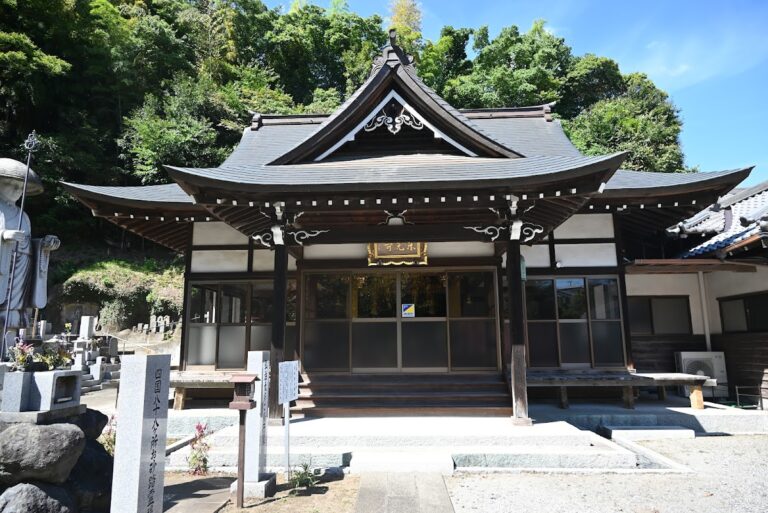
Despite its location just a 3-minute walk from Shonan-Fukasawa Station, Daikeiji Temple’s temple gate maintains a quiet and peaceful atmosphere. As you proceed along the approach, neatly maintained landscaping welcomes visitors. While not as large as many other temples in Kamakura, this contributes to a space that evokes a sense of tranquility and approachability.
Main Hall
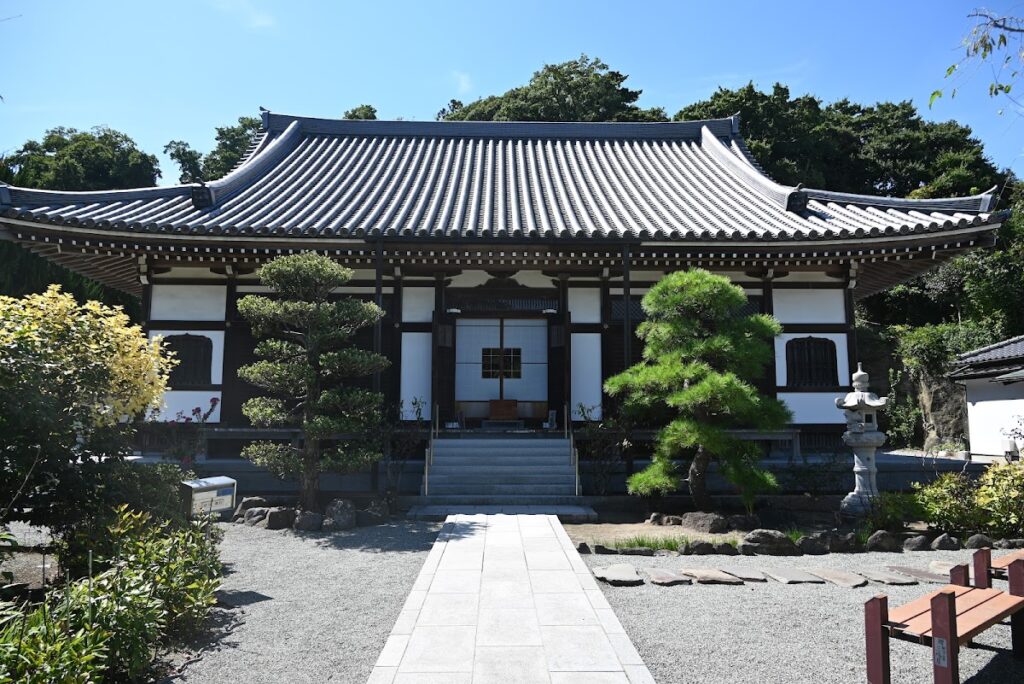
The main hall houses a statue of Shakyamuni Buddha, a designated important cultural property of the city. The simple yet dignified appearance of the main hall, typical of Zen temples, allows visitors to feel the spirit of Zen. The garden in front of the main hall is also well-maintained, allowing visitors to enjoy its seasonal beauty.
Cemetery
Daikeiji Temple also functions as a temple cemetery, continuing to play an important role as a family temple for the local community. The cemetery contains historical tombstones, which are valuable resources for understanding the history of this region.
Access Information
The most convenient way to access Daikeiji Temple is by using the Shonan Monorail. Below are detailed access instructions.
Access by Train
Using the Shonan Monorail
- Get off at Shonan-Fukasawa Station on the Shonan Monorail, approximately 3 minutes on foot
- Approximately 5 minutes from Ofuna Station to Shonan-Fukasawa Station
- Approximately 10 minutes from Enoshima Station to Shonan-Fukasawa Station
Shonan-Fukasawa Station is a station on the Shonan Monorail, located on the line connecting Ofuna Station and Enoshima Station. Daikeiji Temple is very close to the station, about a 3-minute walk, making it easy to find even for first-time visitors.
Access by JR Line
- Get off at Ofuna Station on the JR Tokaido Line, Yokosuka Line, or Negishi Line, then transfer to the Shonan Monorail.
- Ofuna Station is a major station served by multiple lines, offering excellent access from both Tokyo and Yokohama.
Access by Car
Using the Yokohama-Yokosuka Expressway
- Approximately 15 minutes from the Hino Interchange or Asahina Interchange.
Parking Information
- Please contact the temple directly in advance regarding the availability of a dedicated parking lot.
- There are coin-operated parking lots in the vicinity, but their number is limited, so we recommend using public transportation.
Access by Bus
While you can use local buses within Kamakura City, using the Shonan Monorail is more convenient and takes less time. If using the bus, you will need to walk from the nearest bus stop.
Notes for Visitors
Visiting Hours
While entry to the grounds of Daikeiji Temple is generally permitted, we recommend checking in advance regarding entry to the main hall. Like most temples, the best time to visit is from early morning until evening.
Manners and Attitude
Daikeiji Temple is a temple that still conducts religious activities and also has a cemetery. Please observe the following manners when visiting:
- Behave quietly on the temple grounds and be considerate of other visitors and parishioners.
- Take photographs only in designated areas; refrain from taking pictures inside the main hall or in the cemetery.
- Always take your trash with you.
- Do not touch or damage plants or buildings.
- If a religious service is taking place, be considerate and avoid disrupting it.
Attire
No special attire is required, but please dress appropriately and respectfully for a temple visit. Even in summer, it is best to avoid clothing that exposes too much skin.
Nearby Attractions
When visiting Daikeiji Temple, you can also visit other famous sights in the surrounding Kamakura area.
Engaku-ji Temple
Engaku-ji Temple, the head temple of Daikei-ji Temple, is a large temple boasting the second highest rank among the Five Great Zen Temples of Kamakura. Located a short walk from Kita-Kamakura Station, it possesses numerous cultural assets, including the National Treasure Shariden (reliquary hall). Engaku-ji Temple can be accessed from Daikei-ji Temple in approximately 20 minutes by transferring between the Shonan Monorail and the JR Line.
Kencho-ji Temple
Kencho-ji Temple, the first-ranked of the Five Great Zen Temples of Kamakura, is also a Rinzai Zen temple, like Daikei-ji Temple. Known as the oldest Zen temple in Japan, its vast grounds offer many points of interest.
Kamakura Daibutsu (Kōtoku-in Temple)
The Kamakura Daibutsu (Great Buddha of Kamakura), a representative tourist attraction of Kamakura, is also relatively close to Daikei-ji Temple. It can be accessed by transferring between the Shonan Monorail and the Enoden Line.
Enoshima Island
Enoshima Island can be reached on foot from Enoshima Station, the terminal station of the Shonan Monorail. Enjoying the Shonan sea after visiting Daikei-ji Temple is highly recommended.
Annual Events at Daikeiji Temple
As a Rinzai Zen temple, Daikeiji Temple observes traditional Zen Buddhist annual events.
Main Annual Events
- Gantan-e (New Year’s Day Ceremony): A Buddhist service to welcome the New Year
- Shakyamuni Buddha’s Birthday Ceremony (Hanamatsuri): April 8th, a Buddhist service celebrating the birth of Shakyamuni Buddha
- Urabon-e (Obon Festival): August, a Buddhist service for ancestors
- Kaisan-ki (Founder’s Memorial Service): A Buddhist service to commemorate the temple’s founder, Zen Master Daikyu Shonen
For specific dates of these events and whether public participation is permitted, please contact the temple directly.
The Position of Daikeiji Temple in Kamakura’s Temple Culture
While Kamakura has many ancient temples, Daikeiji Temple occupies a unique position among them. While not as well-known as the Five Great Zen Temples of Kamakura or the Ten Great Temples of Kamakura, Daikeiji Temple has a history of being counted among the Ten Great Temples of the Kanto region and continues to play an important role as a temple deeply rooted in the community.
Inheritance of Zen Culture
As a temple of the Engakuji branch of the Rinzai school of Zen Buddhism, Daikeiji Temple plays a role in preserving Kamakura’s Zen culture. Through activities such as Zen meditation sessions, it continues to transmit the teachings of Zen to people living in the modern age.
Engagement with the Local Community
Daikeiji Temple functions more as a local family temple than a tourist temple. As a center of faith for the local people and as a temple managing the cemetery, it continues to engage in activities closely connected to the community.
The Significance of Visiting Daikeiji Temple
Compared to the famous tourist temples of Kamakura, Daikeiji Temple is small in scale and does not attract many tourists. However, precisely because of this, it is a place where one can quietly feel history and experience the spirit of Zen.
A Window to History
Founded in the late Kamakura period and ranked among the ten major temples of the Kanto region during the Muromachi period, Daikei-ji Temple is a valuable institution that conveys the history of Kamakura to the present day. The inscription “Hongan Danna Nagai Mitsuroku” on the principal image of Shakyamuni Buddha is concrete evidence of the relationship between the Kamakura shogunate’s retainers and the temple, making it an important document in historical research.
A Meditation Space in Silence
Unlike the famous temples of Kamakura, which are bustling with tourists, Daikei-ji Temple maintains a tranquil environment. In this silence, you can slowly reflect on yourself and have time to calm your mind. It is especially recommended for those who want to experience the authentic atmosphere of a Zen temple.
Buddhist Art of the Kamakura Period
The Shakyamuni Buddha statue, a designated important cultural property of the city, is a masterpiece of Buddhist sculpture from the Kamakura period. It retains many of the characteristics of Zen Buddhist sculpture from this era, making it a worthwhile work for art lovers.
Summary
Daikeiji Temple, located in Kamakura City, Kanagawa Prefecture, is an ancient temple of the Rinzai sect, Engakuji branch, founded during the Koan era (1278-1287). Its founder was Daikyu Shonen (Butsugen Zenji), and its principal image is a statue of Shakyamuni Buddha designated as an important cultural property of Kamakura City. The inscription “Hongan Danna Nagai Mitsuroku” tells the story of its founding history.
Daikeiji Temple, which once flourished as an important temple, even being ranked among the ten major temples of the Kanto region during the Muromachi period, now quietly continues to uphold its traditions as a temple deeply rooted in the community. Despite its convenient location just a 3-minute walk from Shonan-Fukasawa Station on the Shonan Monorail, it maintains a tranquil environment away from the hustle and bustle, making it an ideal place to experience the spirit of Zen.
When visiting Kamakura, why not visit not only the famous tourist temples, but also ancient temples like Daikeiji Temple that are deeply rooted in the community? There, you’ll find the true face of Kamakura, one not found in tourist guidebooks. You can spend time quietly refining your mind while feeling the weight of history.
Daikeiji Temple is a hidden gem in Kamakura, boasting a long history dating back to the Kamakura period and possessing valuable cultural assets, including a statue of Shakyamuni Buddha designated as a city-designated important cultural property. With easy access, it’s a temple you should definitely visit as a new discovery during your Kamakura sightseeing.