About Tokoji Temple (Kamakura City, Kanagawa Prefecture)
Tokoji Temple is a Shingon Buddhist temple of the Koyasan sect located at 1-7-6 Terabun, Kamakura City, Kanagawa Prefecture. Its official name is “Tenshozan Yakuoin Tokoji,” and it is said to have been founded in 1431. Located in a quiet residential area away from the hustle and bustle of Kamakura Station, it is characterized by its tranquil atmosphere, unlike other temples in Kamakura that are crowded with tourists.
Tokoji Temple (Tokoji) is a Shingon Buddhist temple of the Koyasan sect located at 1-7-6 Terabun, Kamakura City, Kanagawa Prefecture. ## Basic Information about Tokoji Temple
Location: 1-7-6 Terabun, Kamakura City, Kanagawa Prefecture 247-0064
Sect: Koyasan Shingon Buddhism
Mountain Name: Tenshozan
Temple Name: Yakuoin
Founded: Eikyo 3 (1431)
Restorer and Founder: Hoin Reihan
Telephone Number: 0467-46-7464 (Togakuji Temple)
Postal Code: 247-0064
Tokoji Temple is conveniently located about a 5-minute walk from Shonan Fukasawa Station on the Shonan Monorail, yet boasts a tranquil temple grounds.
History and Origins of Tokoji Temple
Founding and Medieval History
Tokoji Temple is believed to have been founded in Eikyo 3 (1431). This period corresponds to the mid-Muromachi period, a time when Kamakura was under the influence of the Kanto Kanrei (governor of the Kanto region) and the Kamakura Kubo (shogun). While there are few historical records detailing the temple’s founding, the name of Hoin Reihan is associated with its restoration and founding.
Relationship with the Koyasan Shingon Sect
Tokoji Temple belongs to the Koyasan Shingon sect. The Shingon sect is a branch of esoteric Buddhism founded by Kobo Daishi Kukai, with Koyasan Kongobu-ji Temple as its head temple. Many Shingon temples exist in Kamakura, and Tokoji Temple is one of them, attracting local faith.
A characteristic of the Shingon sect is its emphasis on ascetic practices and rituals based on the teachings of esoteric Buddhism, and this tradition is carried on at Tokoji Temple.
Historical Background of the Terabun District
The Terabun district of Kamakura City, where Tokoji Temple is located, literally means “temple land.” This region was home to numerous temples from the medieval to early modern periods, and was a thriving center of Buddhist culture. Even today, temples such as Tokoji Temple are scattered throughout the area, preserving a historical atmosphere.
Tokoji Temple: Highlights and Grounds Guide
The Charm of its Quiet Grounds
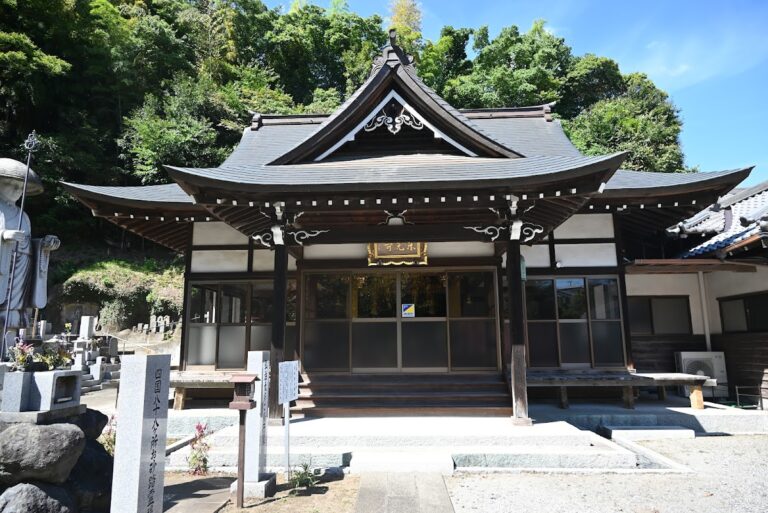
The greatest charm of Tokoji Temple lies in its tranquility. Unlike the major tourist temples of Kamakura, it is rarely crowded with tourists. Therefore, you can visit and worship at your own pace. The grounds are well-maintained, offering a peaceful space surrounded by seasonal flowers and greenery.
Kamakura-Style Yagura
Several yagura (horizontal cave tombs unique to the Kamakura period) remain on the temple grounds. Yagura are burial sites carved into the cliffs of tuffaceous sandstone, a characteristic topography of Kamakura, and are important historical sites that evoke the essence of Kamakura. The yagura at Tokoji Temple are well-preserved, allowing you to experience the history of medieval Kamakura firsthand.
Main Hall and Buddhist Statues
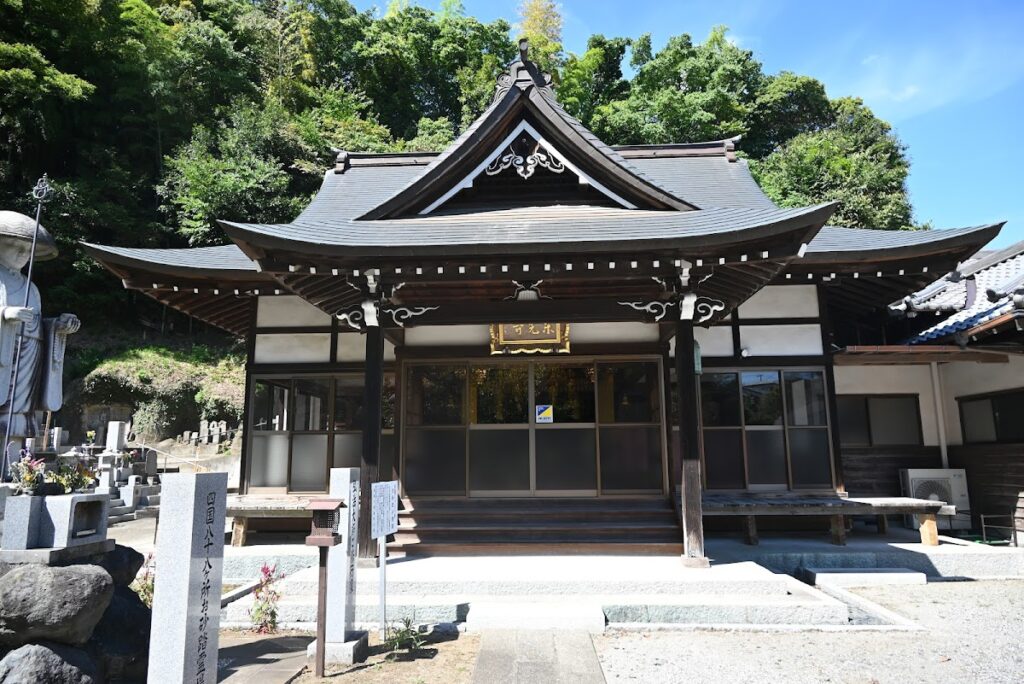
Tokoji Temple’s main hall, while relatively small, possesses the solemnity expected of a Shingon Buddhist temple. While the principal image and Buddhist statues inside may not always be open to the public, the temple’s history and tradition can be felt even from its exterior.
Tokoji Temple’s Goshuin (Temple Stamp) Information
How to Obtain a Goshuin
Tokoji Temple’s goshuin is issued at Tokakuji Temple. Tokakuji Temple is located in the same Terabun district as Tokoji Temple and is responsible for managing the goshuin.
Goshuin Issuance Location: Tokakuji Temple
Contact Information: 0467-46-7464 (Tokakuji Temple)
Those wishing to obtain a goshuin are advised to call ahead to confirm before visiting. Bring your goshuin book and make a polite request.
How to Enjoy Goshuin Pilgrimage
Kamakura has many temples and shrines, and goshuin pilgrimage is a popular activity. The temple tour in the Terabun district, including Tokoji Temple, is known as a route that allows you to experience a quiet, less-saturated Kamakura. Visiting Tokakuji Temple, Tokoji Temple, and the surrounding temples allows you to experience Kamakura’s diverse Buddhist culture.
How to access Tokoji Temple
Access by train
The most convenient way to get to Tokoji Temple is by using the Shonan Monorail.
Nearest station: Shonan Monorail “Shonan-Fukasawa Station”
Travel time from station: Approximately 5 minutes on foot
Other nearest stations: Shonan Monorail “Shonan-Machiya Station” (approximately 10 minutes on foot), “Fujimicho Station” (approximately 15 minutes on foot)
Directions from Shonan-Fukasawa Station
- Exit Shonan-Fukasawa Station
- Head northwest along the road in front of the station
- After passing through the residential area, you will arrive at Tokoji Temple in about 5 minutes.
The Shonan Monorail connects Ofuna Station and Enoshima, and offers scenic views from the train windows. ## Access by Bus
You can also take a bus from JR Kamakura Station or Ofuna Station.
From Kamakura Station: Take the Keikyu Bus bound for “Fukasawa,” get off at the “Terabun” bus stop, and walk for about 3 minutes.
From Ofuna Station: You can use Keikyu Bus or Kanagawa Chuo Kotsu Bus.
Bus schedules and frequency vary depending on the season and day of the week, so it is recommended to check in advance.
Access by Car and Parking
If visiting by car, it is about 15 minutes from the Asahina IC on the Yokohama-Yokosuka Expressway, or about 20 minutes from the Hino IC. However, there is a high possibility that Tokoji Temple does not have its own parking lot, so it is recommended to use nearby coin parking or public transportation.
Map and Location
Tokoji Temple is located slightly northwest of the center of Kamakura City, in a residential area. Searching for “1-7-6 Terabun, Kamakura City, Kanagawa Prefecture” on your smartphone’s map app will easily show you the exact location and route from your current location.
Attractions around Tokoji Temple
Tokakuji Temple
Tokakuji Temple, which also serves as the Tokoji Temple’s goshuin (temple stamp) office, is a Jodo sect temple within walking distance. Known for its azaleas, it offers beautiful flowers in spring.
Temple Tour in the Terabun Area
Several other temples are scattered throughout the Terabun area. Because it’s an area with few tourists, it’s ideal for those who want to enjoy a quiet temple tour. It’s recommended to check a list of nearby temples beforehand and take your time exploring.
Around the Fukasawa Community Center
Around Shonan-Fukasawa Station, you’ll find the Fukasawa Community Center and a shopping street, allowing you to experience local life and culture. It’s a place where you can feel the everyday life of Kamakura before it becomes a touristy area.
Etiquette and Manners for Visiting Tokoji Temple
Basic Manners for Visiting Temples
When visiting a temple, please observe the following manners. 1. Be Quiet: Please be quiet on the temple grounds and avoid disturbing other visitors.
- Photography: Photography inside the main hall and of Buddha statues may be prohibited. Please check before taking pictures.
- Attire: Avoid revealing clothing and visit in modest attire.
- Offering: Offer your donation sincerely and quietly clasp your hands together in prayer.
- Plants on the Temple Grounds: Please be careful not to touch or break flowers or trees.
Shingon Buddhist Worship Etiquette
Shingon Buddhist temples follow the following worship etiquette:
- Bow at the temple gate before entering the grounds.
- Cleanse your hands and mouth at the water basin.
- Join your hands in prayer in front of the main hall and chant “Namu Daishi Henjo Kongo” (Devotion to Kobo Daishi).
- Bow quietly and exit.
Visiting Hours and Precautions
While Tokoji Temple’s grounds are generally open to the public, prior confirmation may be necessary for viewing the main hall. Also, visits may not be possible during religious services or events, so it is recommended to contact the temple in advance if you plan to visit on a special day.
About Koyasan Shingon Buddhism
History and Teachings of Shingon Buddhism
Shingon Buddhism is a sect of esoteric Buddhism introduced to Japan from China by Kobo Daishi Kukai (774-835). “Shingon” means the true words of Buddha, and the aim is to attain Buddhahood in this body by chanting mantras.
Relationship with Koyasan
Koyasan Shingon Buddhism is a branch of Shingon Buddhism with Kongobu-ji Temple on Mount Koya in Wakayama Prefecture as its head temple. Mount Koya, founded by Kukai, has a history of over 1200 years as a sacred site of Japanese Buddhism, and is still visited by many monks and pilgrims today.
Characteristics of Shingon Buddhism
- Esoteric Buddhism: The transmission of secret teachings from master to disciple
- Attaining Buddhahood in this Life: Aiming to become a Buddha in this very body
- Mandala: An iconographic representation of the Buddhist world
- Goma: A ritual to burn away worldly desires by burning fire
- Shingon: The practice of chanting the words of Buddha
Buddhist Culture of Kamakura and Toko-ji Temple
Characteristics of Kamakura Buddhism
The Kamakura period (1185-1333) was a time of great development for Japanese Buddhism. New Buddhist sects such as Zen, Jodo, and Nichiren Buddhism emerged and spread among the samurai class and commoners. Kamakura boasts many famous temples, including Kencho-ji, Engaku-ji, and Hase-dera, each with its own unique history and culture.
The Position of Toko-ji Temple
Toko-ji Temple is not a large temple like the Five Great Zen Temples of Kamakura, but it has played an important role as a place of faith rooted in the community. Because it is not a tourist temple, it has preserved its original form as a temple, and is valuable as a place where one can quietly contemplate faith.
Yagura and Kamakura Culture
The yagura (cave tombs) remaining at Toko-ji Temple are a unique cultural heritage of Kamakura. Kamakura’s topography is surrounded by mountains on three sides, and because there is little flat land, cliffs were dug and used as burial grounds and warehouses. Yagura were built from the Kamakura period to the Muromachi period, and thousands still remain in the city today.
Best Season to Visit Tokoji Temple
Spring (March-May)
Spring is the season of beautiful fresh greenery and the sprouting of plants within the temple grounds. Visiting nearby temples such as Tokakuji Temple during the cherry blossom and azalea seasons is highly recommended. The weather is mild and ideal for visiting.
Summer (June-August)
During the rainy season, hydrangeas are beautiful, and the entire Kamakura area is adorned with flowers. Summer brings lush greenery, and the quiet temple grounds offer a refreshing respite. However, remember to take precautions against the heat and stay hydrated.
Autumn (September-November)
Autumn is the season of autumn leaves, and the trees within the temple grounds change color. With fewer tourists at Tokoji Temple, you can quietly enjoy the autumn scenery. The weather is stable, making it perfect for a stroll.
Winter (December-February)
Winter has the fewest visitors, offering an even quieter atmosphere. While the cold is severe, visiting in the crisp, clear air will be a special experience. You can also quietly visit the temple for the first shrine visit of the New Year together with the local people.
Tokoji Temple and Cemetery/Burial Park Information
Tokoji Temple as a Temple Cemetery
Tokoji Temple has a temple cemetery, and it may be possible for the general public to own a burial plot. As a Shingon Buddhist temple cemetery, traditional Buddhist burials are performed.
Considering Cemetery Use
If you are considering using a burial plot at Tokoji Temple, please check the following points:
- Restrictions on sect (whether conversion to Koyasan Shingon Buddhism is required)
- Availability of vacant plots
- Perpetual use fees and management fees
- Regulations regarding gravestones
- Accessibility
For details, we recommend contacting Tokoji Temple or Tokakuji Temple directly. The phone number is 0467-46-7464 (Tokakuji Temple).
About Tree Burial
In recent years, tree burial, which does not use traditional gravestones, has been attracting attention. Tree burial is a burial method that emphasizes returning to nature, and a tree serves as a grave marker instead of a gravestone. To find out if tree burial is possible at Tokoji Temple, you need to check directly with the temple.
Model Courses for Visiting Kamakura Temples
In-Depth Course in the Terabun Area
This course allows you to enjoy a quiet Kamakura with fewer tourists.
- Shonan Monorail Shonan-Fukasawa Station (Start)
- Tokoji Temple (Visit and view the yagura)
- Tokakuji Temple (Get a temple stamp and admire the azaleas)
- Stroll through the surrounding temples
- Take a break in the shopping street in the Fukasawa area
Estimated time: Approximately 2-3 hours
Course to Enjoy Northern Kamakura
This course combines Tokoji Temple with famous sights in northern Kamakura.
- JR Ofuna Station (Start)
- Ofuna Kannon
- Take the Shonan Monorail to Shonan-Fukasawa Station
- Visit Tokoji Temple
- Visit Tokakuji Temple
- Take the monorail towards Enoshima
Estimated time: Approximately half a day
Useful information when visiting Tokoji Temple
Nearby Restaurants
The Terabun area is a residential area, so there are not many restaurants. We recommend eating near Shonan-Fukasawa Station or Ofuna Station.
Nearby Convenience Stores and Restrooms
There are convenience stores near Shonan-Fukasawa Station. There may not be restrooms on the temple grounds, so it’s best to use the restrooms at the station.
Luggage Storage and Coin Lockers
Ofuna Station has coin lockers, but Shonan-Fukasawa Station has limited availability. If you have large luggage, use the lockers at Ofuna Station or leave it at your accommodation before visiting.
Utilizing Smartphone Apps
- Map App: You can easily find the location by searching for “Tokoji Temple, Kamakura City” on Google Maps, etc.
- Transit Guide App: You can check the Shonan Monorail timetable and fares.
- Goshuin App: An app that allows you to manage your goshuin (temple stamp) records is also convenient.
Summary: The Charm of Tokoji Temple
Tokoji Temple is an ancient temple of the Koyasan Shingon sect located in Terabun, Kamakura City, Kanagawa Prefecture. Despite its long history, founded in 1431, its greatest charm lies in its quiet atmosphere, unspoiled by tourism.
The temple grounds, with their remaining Kamakura-style yagura (cave tombs), are a valuable place to feel the history of the Middle Ages up close, making it ideal for those who want to escape the hustle and bustle and worship at a leisurely pace. Its convenient access, just a 5-minute walk from Shonan-Fukasawa Station, is another attractive feature.
Goshuin are available at Tokakuji Temple, and by visiting the surrounding temples together, you can discover “another Kamakura” not found in tourist guides. Experiencing the Shingon Buddhist faith and spending time in quiet contemplation will be a valuable experience that allows you to escape the hustle and bustle of modern life.
When visiting Kamakura, be sure to visit not only the famous temples but also local temples like Tokoji Temple. There, you will find the true essence of a temple and the deep history and culture of Kamakura quietly thriving.