Complete Guide to Saikoji Temple (Sakurai City, Nara Prefecture) | History, Access, and Surrounding Area Information for Shinshu Kōshō-ha Temples
Saikoji Temple, located in Ōfuku, Sakurai City, Nara Prefecture, is a historic temple belonging to the Shinshu Kōshō-ha sect. This article provides a detailed explanation of Saikoji Temple, from its basic information and history to access methods and information on surrounding temples. This information will be useful for those visiting Sakurai City or planning a temple tour.
Basic Information on Saikoji Temple
Saikoji Temple is a Shinshu Kōshō-ha temple located in the Ōfuku district of Sakurai City, Nara Prefecture. Below is detailed basic information.
Location and Contact Information
- Address: 714, Oaza Daifuku, Sakurai City, Nara Prefecture 633-0067
- Sect: Shinshu Kōshō-ha
- Mountain Name: (According to records)
- Principal Image: Amida Buddha (Principal image of Shinshu Kōshō-ha)
About Shinshu Kōshō-ha
Shinshu Kōshō-ha is a branch of Jōdo Shinshū Buddhism, and its head temple is Kōshō-ji Temple in Shimogyo-ku, Kyoto City. It is a sect that inherits the teachings of Shinran Shōnin, believes in the original vow of Amida Buddha, and aspires to rebirth in the Pure Land by chanting the Nembutsu.
The following are some of the characteristics of the Shinshu Kōshō-ha sect:
- The teaching of salvation through the power of others: A doctrine that salvation is achieved not through one’s own efforts, but through the power of Amida Buddha’s original vow.
- Lay-centered faith: The belief that all people are equally saved, regardless of whether they are ordained or lay.
- The practice of Nembutsu: The practice of chanting “Namu Amida Butsu” in daily life.
Saiko-ji Temple plays an important role in the Daifuku district of Sakurai City as a temple that transmits the teachings of the Shinshu Kōshō-ha sect to the community.
History and Cultural Background of the Daifuku District, Sakurai City
The Daifuku district of Sakurai City, where Saiko-ji Temple is located, is situated in the central part of the Nara Basin and has been a region where people have lived since ancient times.
Historical Importance of Sakurai City
Sakurai City is known for the ruins of “Makimuku,” which is considered to be the oldest city in Japan. Sakurai City has flourished as a transportation hub since ancient times, and many temples and shrines have been built there.
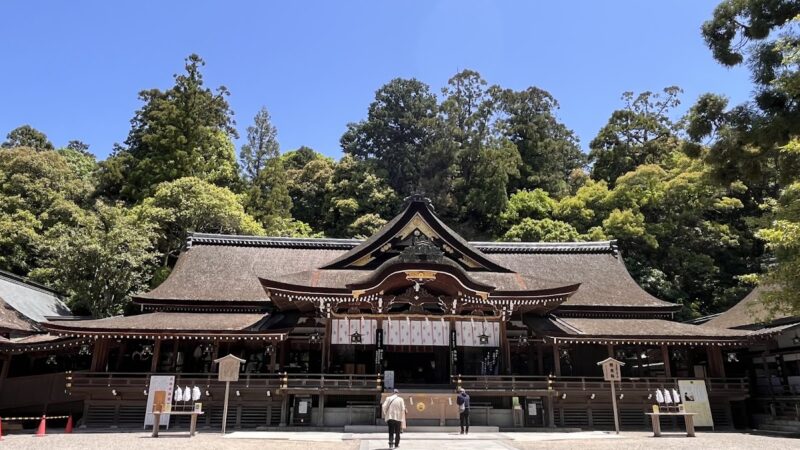
- Omiwa Shrine: One of the oldest shrines in Japan
- Hase-dera Temple: The head temple of the Buzan branch of Shingon Buddhism
- Tanzan Shrine: A shrine dedicated to Fujiwara no Kamatari
With this historical background, Saiko-ji Temple has a long history as a center of faith for the local people in Sakurai City.
Characteristics of the Daifuku District
The Daifuku district is located in the northern part of Sakurai City and is a quiet residential area centered on agriculture. While housing development has progressed in recent years, the traditional rural landscape remains, and a community centered around the temple is maintained.
How to Access Saiko-ji Temple
We will provide detailed information on how to access Saiko-ji Temple.
Access by Public Transportation
By Train:
- Nearest Station: Kintetsu Osaka Line, “Sakurai Station”
- Distance from Sakurai Station: Approximately 3.5 km
- Travel Time: Approximately 45 minutes on foot, approximately 10 minutes by taxi
By Bus:
You can also take a Nara Kotsu bus from Sakurai Station. Get off at the “Daifuku” bus stop and it’s a few minutes’ walk from there. However, bus services may be limited, so please check the timetable in advance.
Access by Car
Route from Major Roads:
- National Route 165: Head north from Sakurai city center towards the Daifuku area.
- National Route 169: Head south from Nara City towards Daifuku in Sakurai City.
Parking: There may be parking spaces on or around the temple grounds, but it is recommended to check before visiting.
Landmarks in the Area
The Daifuku area is a mixed residential and agricultural area, so we recommend using a car navigation system or map app. Entering the postal code “633-0067” and the address “714 Daifuku, Sakurai City, Nara Prefecture” will display the exact location.
History and Origins of Saikoji Temple
While records of the exact founding date of Saikoji Temple are limited, it has developed as a temple of the Shinshu Kōshō sect and as a center of Jodo Shinshu faith in the region.
Spread of Jodo Shinshu in Nara Prefecture
Jodo Shinshu is a Buddhist sect founded by Shinran Shonin during the Kamakura period. While Nara Prefecture had long been home to Nanto Buddhism (such as the Kegon and Hossō sects), Jodo Shinshu also spread as a new form of Buddhism after the Kamakura period.
In the Nara Basin, including Sakurai City, the teachings of Jodo Shinshu were embraced, mainly by farmers and merchants, and Shinshu temples were established throughout the region. Saikoji Temple is considered one such example, having supported the faith of the local people.
Establishment of the Shinshu Kōshō-ha
Kōshōji Temple, the head temple of the Shinshu Kōshō-ha, was originally part of Honganji Temple, but it gained independence from the Edo period to the Meiji period. In 1876 (Meiji 9), it officially became an independent Shinshu Kōshō-ha, a sect with branch temples throughout Japan.
Saikoji Temple, as a branch temple of the Shinshu Kōshō-ha, has maintained its connection with the head temple while developing religious activities in the region.
Architecture and Grounds of Saikoji Temple
The architectural style of Shinshu temples is generally centered around the main hall. Saikoji Temple, as a temple of the Shinshu Kōshō-ha, is thought to have the following characteristics:
Characteristics of the Main Hall
The main hall of a Shinshu temple is characterized by the enshrinement of Amida Buddha as the principal image, and is divided into an inner sanctuary and an outer sanctuary.
- Inner Sanctuary: The space where the principal image of Amida Buddha is enshrined.
- Outer Sanctuary: The space where worshippers sit.
- Side Room: Sometimes where images of Shinran Shonin or successive heads of the sect are enshrined.
Facilities on the Temple Grounds
Typical Shinshu temples have the following facilities:
- Main Hall: The central building where religious services and ceremonies are held.
- Priest’s Quarters: The living quarters of the head priest.
- Bell Tower: The building where the temple bell is hung.
- Temple Gate: The entrance to the temple.
For details about the specific architecture and grounds of Saikoji Temple, you can experience its atmosphere by actually visiting.
Main Events and Religious Services Held at Saikoji Temple
Shinshu Kosei-ha temples hold various religious services and events throughout the year. It is believed that the following events are also held at Saikoji Temple.
Regular Memorial Services
Ho-on-ko (Memorial Service):
- The most important memorial service commemorating the death anniversary of Shinran Shonin (28th November in the old lunar calendar, around January 16th in the new calendar).
- Local followers gather to praise the virtues of the saint.
Eitaikyo (Perpetual Sutra Recitation):
- A memorial service aimed at honoring ancestors.
- Often held in spring and autumn.
Obon Memorial Service:
- A Buddhist event to welcome and honor ancestors.
- Held from August 13th to 16th.
Annual Events
Shusho-e (New Year’s Service):
- A memorial service held to welcome the New Year.
- Held from January 1st to 3rd.
Higan-e (Equinox Service):
- A memorial service centered around the spring and autumn equinoxes.
- Vows of Ancestor Worship and Devotion to Buddhist Practice
These events are important occasions for local parishioners and temple members to gather, playing a role in deepening the connection between the temple and the community.
Pilgrimage to Temples and Sacred Sites in and around Sakurai City
Sakurai City is an area in Nara Prefecture with a particularly high concentration of temples and shrines. When visiting Saikoji Temple, visiting the surrounding temples as well will provide a deeper understanding of Buddhist culture.
Major Temples in Sakurai City
Hase-dera Temple:
- Head temple of the Buzan branch of the Shingon sect
- Known as the “Temple of Flowers,” especially famous for its peonies and autumn leaves
- Principal image: Eleven-faced Kannon Bodhisattva standing statue (Important Cultural Property)
- Approximately 20 minutes by car from Saiko-ji Temple
Abe Monju-in Temple:
- A temple of the Kegon sect
- Known as one of the three most important Monju temples in Japan
- Principal image: Monju Bodhisattva riding a lion statue (National Treasure)
- Approximately 15 minutes by car from Saiko-ji Temple
Shorin-ji Temple:
- A temple of the Muroji branch of the Shingon sect
- Known for its National Treasure, the Eleven-faced Kannon Bodhisattva standing statue
- Approximately 10 minutes by car from Saiko-ji Temple
Omiwa Shrine:
- One of the oldest shrines in Japan
- A shrine with Mount Miwa as its sacred object
- Approximately 15 minutes by car from Saiko-ji Temple
The Eighty-Eight Sacred Sites of Northern Yamato
Northern Nara Prefecture lies a pilgrimage route known as the “Eighty-Eight Sacred Sites of Northern Yamato.” This route, modeled after the Shikoku Eighty-Eight Sacred Sites, includes temples in Nara City, Ikoma City, Sakurai City, Tenri City, and other areas.
Sakurai City also has several temples, and it’s possible to visit temples around Saikoji Temple as part of the pilgrimage. Pilgrimages are popular among many believers as a journey to seek inner peace.
Shinshu Temples in Sakurai City
Besides Saikoji Temple, several other Shinshu temples exist in Sakurai City. Visiting temples that share the same Shinshu teachings allows one to experience the spread of Jodo Shinshu Buddhism in the region.
Saikoji Temple and the Local Community
Temples are not merely religious institutions; they also play a central role in the local community. Saikoji Temple is believed to play the following roles in the Daifuku district of Sakurai City:
Relationship with Temple Members and Parishioners
In Shinshu temples, believers are called “monto” (parishioners). The monto of Saikoji Temple cooperate in the maintenance and management of the temple and the operation of its events, maintaining a deep connection with the temple.
- Participation in Buddhist Services: Participation in Buddhist services such as Hoonko and Eitaikyo
- Temple Maintenance: Cooperation in cleaning activities and repairs
- Consultation on Buddhist Matters: Consultation service for funerals and memorial services
Involvement in Local Events
Temples sometimes have connections with local traditional events and festivals. They also play a role in passing on local history and culture to future generations.
Social Contribution Activities
In recent years, many temples have been focusing on social contribution activities. These include holding children’s cafeterias, monitoring the elderly, and organizing cultural courses, demonstrating community contributions that transcend religious boundaries.
Manners and Etiquette for Visiting Saikoji Temple
When visiting a temple, it is important to observe basic manners. Below are some guidelines for visiting Saikoji Temple.
Basic Manners for Visiting
Attire:
- Clean and subdued clothing is preferred.
- Avoid revealing clothing.
- Remove hats and sunglasses inside the main hall.
Worship Etiquette:
- Bow at the temple gate before entering the grounds.
- Clasp your hands together and bow in front of the main hall.
- In Shin Buddhism, it is common to recite “Namu Amida Butsu” (Homage to Amida Buddha).
- Exit quietly.
Photography:
- Permission may be required to take photographs inside the main hall.
- Be considerate of other visitors.
- Follow the temple’s instructions regarding photography on the temple grounds.
Regarding Offerings and Donations
Some Shin Buddhism temples do not have offering boxes. This is based on the doctrine of “believing in the original vow of Amida Buddha,” rather than the idea of “having one’s wishes granted by Buddha.”
If you wish to make a donation, please follow the temple’s instructions or hand it directly to the head priest at the temple’s living quarters.
Tourist Attractions Around Saikoji Temple
When visiting Saikoji Temple, you can also enjoy the surrounding tourist attractions.
Historical Tourist Spots
Makimuku Ruins:
- A site considered a candidate for the location of Yamatai-koku
- A must-see spot for ancient history fans
- Approximately 10 minutes by car from Saikoji Temple
Hashihaka Kofun:
- A keyhole-shaped burial mound approximately 280m in length
- Some believe it to be the tomb of Queen Himiko
- Approximately 10 minutes by car from Saikoji Temple
Natural Landscapes
Mount Miwa:
- The sacred object of worship at Omiwa Shrine
- Climbing is possible (permission required)
- Approximately 15 minutes by car from Saikoji Temple
Sakurai City Buried Cultural Properties Center:
- Exhibits artifacts unearthed from the Makimuku Ruins and other sites
- Ideal for learning about ancient history
- Approximately 10 minutes by car from Saikoji Temple
Gourmet Food & Local Products
Miwa Somen Noodles:
- A local specialty of the Miwa district of Sakurai City
- One of Japan’s three major types of somen noodles
- Numerous manufacturers and restaurants are located within the city.
Persimmon Leaf Sushi:
- A local dish from Nara Prefecture
- Available for purchase at specialty stores in Sakurai City
About Columbariums and Perpetual Memorial Services
In recent years, due to the declining birthrate, aging population, and the rise of nuclear families, the number of cases where it is difficult to pass on graves is increasing. Therefore, interest in columbariums and perpetual memorial services is growing.
What is a Columbarium?
A columbarium is a building or facility for housing cremated remains. Compared to traditional cemeteries, these have the following features:
Advantages:
- Visits are possible regardless of weather
- Less burden of cleaning and maintenance
- Easily accessible even in urban areas
- May be less expensive than traditional cemeteries
Types:
- Locker-type: Individual burial spaces are provided
- Altar-type: Remains are placed in an altar-like format
- Automated transport-type: Remains are automatically transported to the visitation space using an IC card, etc.
- Communal burial-type: Remains are placed together with the remains of others
What is perpetual memorial service?
Perpetual memorial service is a system where a temple takes responsibility for performing perpetual memorial services. It is suitable for those who have no descendants or successors to their graves.
Features:
- No successor required, as the temple manages and performs memorial services.
- Annual management fees are often not required.
- Remains may be interred together or individually.
Saikoji Temple’s Services
Saikoji Temple is believed to provide consultation regarding funerals, memorial services, and interment for its parishioners and followers. For details, we recommend contacting the temple directly.
The Teachings of the Shinshu Kōshō School and Modern Society
The teachings of Jōdo Shinshū continue to provide spiritual support to many people in modern society.
The Meaning of “Tariki Hongan”
The term “Tariki Hongan” is sometimes used in modern times to mean “relying on others,” but its original meaning is different.
Original Meaning:
- “Other Power” = The power of Amida Buddha’s original vow
- The teaching that ordinary people who cannot attain enlightenment by their own power are saved by the power of the Buddha
- It emphasizes the importance of having humility and gratitude
The Significance of Nembutsu
The nembutsu “Namu Amida Butsu” is not merely a mantra, but a phrase expressing devotion to Amida Buddha.
- “Namu” = I take refuge, I entrust myself to you
- “Amida Butsu” = The Buddha with boundless light and life
It is believed that by chanting the nembutsu in daily life, one can attain peace of mind.
The Role of Shin Buddhism in Modern Times
In today’s stressful society, the teachings of Shin Buddhism hold the following significance:
- Acceptance as it is: Not striving for perfection and acknowledging one’s weaknesses
- A Heart of Gratitude: Having a sense of gratitude for daily life
- Spirit of Equality: The teaching that all people are equally saved
Saikoji Temple also plays a role in conveying these teachings to people in modern times.
The Future and Challenges of Saikoji Temple
Saikoji Temple faces challenges similar to those faced by temples throughout Japan.
Declining Birthrate, Aging Population, and Declining Number of Parishioners
In rural temples, the aging and declining number of parishioners is a serious problem. The younger generation is also increasingly moving away from religion, making it difficult to maintain temples in many cases.
Deterioration of Buildings
Historical temple architecture requires regular repairs. However, due to the decline in parishioners, many temples are finding it difficult to secure the funds for repairs.
New Initiatives
Meanwhile, many temples are starting new initiatives:
- Information Dissemination via Social Media and Websites: Reaching younger generations
- Temple Cafes and Cultural Lectures: Providing opportunities to visit temples casually
- Holding End-of-Life Planning Seminars: Responding to modern needs
- Online Memorial Services: Popularized due to the COVID-19 pandemic
Saikoji Temple is also expected to develop activities that are in line with the times while preserving its traditions.
Summary: The Charm of Saikoji Temple and a Recommendation to Visit
Located in Daifuku, Sakurai City, Nara Prefecture, Saikoji Temple is a Shinshu Kōshō-ha temple that has supported the faith of the local people. While not a flashy tourist temple, it is a temple deeply rooted in the community, offering a quiet and peaceful atmosphere for worship.
Sakurai City is a treasure trove of ancient history, with many famous temples and shrines such as Hase-dera Temple and Ōmiwa Shrine. When visiting these tourist spots, visiting temples like Saikoji Temple, which are places of daily faith for the local people, will allow you to understand Nara’s religious culture more deeply. The teachings of the Shinshu Kōshō-ha sect, such as “reliance on the power of others” and “recitation of the Buddha’s name,” remain meaningful to many people seeking inner peace in modern society. Visiting Saikoji Temple may provide an opportunity to reflect on these teachings and re-examine your daily life.
When visiting Sakurai City, we highly recommend stopping by Saikoji Temple and spending some time in its tranquil grounds to find peace of mind. For detailed information about the temple and its events, we suggest contacting them in advance.
While there are many temples named “Saikoji” throughout Japan, each possesses unique characteristics reflecting the history and culture of its region. Saikoji Temple in Sakurai City, Nara Prefecture, as a temple deeply rooted in the Daifuku district, will undoubtedly continue to be a spiritual haven for people.