Complete Guide to Kōgō Hachiman Shrine (Mihara City, Hiroshima Prefecture) | History, Goshuin (Shrine Seals), and Deep Connection with Kobayakawa Takakage
Located in Sunami, Mihara City, Hiroshima Prefecture, Kōgō Hachiman Shrine is a historic shrine established in 1424 (Ōei 31), having been invited from Otokoyama Hachiman (Iwashimizu Hachiman) in Yamashiro Province. It boasts a history of being visited by the renowned Sengoku period general Kobayakawa Takakage, who prayed for victory before the Battle of Itsukushima and later donated funds for the reconstruction of the shrine after his victory. It remains a center of local faith, welcoming many worshippers even today.
This article will comprehensively cover the charm of Kōgō Hachiman Shrine, including its detailed history, enshrined deities, goshuin information, access methods, and its deep connection with Kobayakawa Takakage.
Basic Information on Kōgō Hachiman Shrine
Location: 2-6-27 Sunami-Nishi, Mihara City, Hiroshima Prefecture
Nearest Station: Approximately 5 minutes on foot from Sunami Station on the JR Kure Line
Parking: Available (several spaces on the shrine grounds)
Shrine Office: Available
Main Deities Enshrined: Emperor Ōjin (Hachiman Ōkami), Ichikishimahime-no-Mikoto (Itsukushima Daimyōjin), and others
Founded: Ōei 31 (1424)
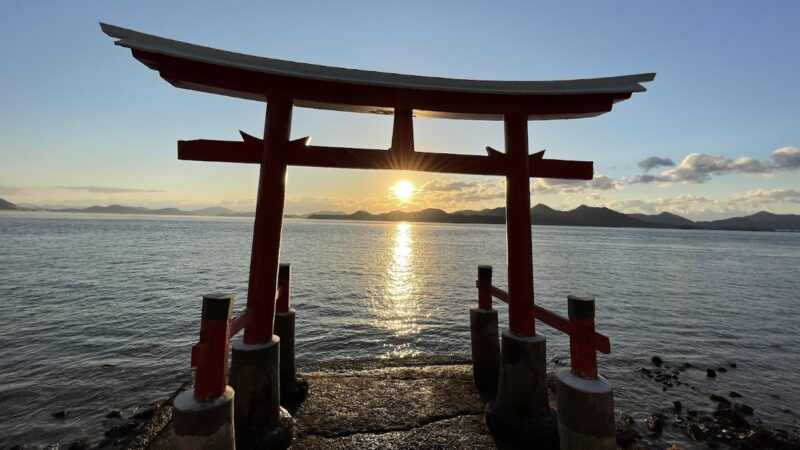
The shrine features a distinctive landscape with its first torii gate standing along National Route 185 and stairs extending over the JR Kure Line tracks. As the guardian shrine of the Sunami area, it is affectionately known locally as “Sunami no Hachiman-san.”
History of Kōgō Hachiman Shrine
Founding during the Ōei Era and the Invitation from Otokoyama Hachiman Shrine in Yamashiro Province
The founding of Kōgō Hachiman Shrine dates back to Ōei 31 (1424). According to shrine tradition, it began with the invitation of Hachiman Ōkami from Otokoyama Hachiman Shrine in Yamashiro Province, that is, Iwashimizu Hachiman Shrine (Iwashimizu Hachiman).
The Ōei era was the time of the Muromachi Shogunate, a period when Hachiman worship spread throughout Japan. Hachiman was revered as the guardian deity of samurai families, and the invitation of Hachiman deities was popular in various regions. In the area of Suwa, Hachiman Ōkami was enshrined to pray for the peace and prosperity of the region.
Invitation of Itsukushima Daimyōjin during the Eishō Era
In Eishō 2 (1505), a major change occurred at our shrine. The deity Itsukushima Daimyojin was invited from Itsukushima Shrine, the principal guardian shrine of this province (Aki Province), and enshrined together with Hachiman.
This is an extremely rare form of worship. Normally, Hachiman shrines enshrine only Hachiman, or enshrine him together with other Hachiman deities. However, Empress Hachiman Shrine developed a unique faith by enshrining Itsukushima Daimyojin, the guardian deity of the sea, alongside Hachiman.
This is thought to be related to the fact that Suwa was a port town facing the Seto Inland Sea and a crucial point for maritime traffic. The Hachiman faith, which prays for lasting military fortune, and the Itsukushima faith, which prays for safe voyages and protection at sea, merged, giving rise to a form of worship that reflects the characteristics of the region.
Kobayakawa Takakage and the Battle of Itsukushima
The most important event in the history of Empress Hachiman Shrine is its connection to Kobayakawa Takakage, a famous general of the Sengoku period.
In 1556 (Koji 2), the Battle of Itsukushima broke out. This battle, fought between Mori Motonari and Kobayakawa Takakage and Sue Harukata, was a crucial battle that determined the supremacy of the Chugoku region.
Before setting out, Kobayakawa Takakage visited the Empress Hachiman Shrine to pray for victory. Hachiman, the god of war, and Itsukushima Daimyojin, the guardian deity of the Mori clan, received Takakage’s prayers.
As a result, the Battle of Itsukushima ended in a great victory for the Mori side. Sue Harukata was defeated and killed, and the Mori clan established their position as the rulers of the Chugoku region.
Reconstruction and Donation of the Shrine by Kobayakawa Takakage
The year after the victory, in Koji Bingchen (1556), Kobayakawa Takakage made a donation for the reconstruction of the Empress Hachiman Shrine as a token of gratitude for the victory. This donation resulted in the shrine being splendidly renovated, greatly enhancing the shrine’s status.
Shrine records list Maruyama Uemonjo Toshikiyo as the principal donor. The Maruyama family continued to serve as priests for several generations, and their descendants settled in the area and continued to protect the shrine. Through the donations of Kobayakawa Takakage and the dedication of the Maruyama family, the Empress Hachiman Shrine established a firm position as the center of faith in the Suwa region.
Developments after the Edo Period
During the Edo period, along with the development of Mihara Castle town, the Empress Hachiman Shrine also played an important role as the local tutelary shrine. Suwa flourished as a port town of the Mihara domain, and people engaged in shipping and fishing prayed to Itsukushima Daimyojin for safe voyages.
After the Meiji-era separation of Shinto and Buddhism, and into modern times, the Empress Hachiman Shrine continued to be a spiritual pillar of the local community. Even today, prayers for family safety, Shichi-Go-San (a traditional Japanese rite of passage for children), and protection against misfortune are offered, and it remains beloved by the local people.
Deities and Divine Virtues
Emperor Ōjin (Hachiman Ōkami)
Emperor Ōjin, the 15th Emperor of Japan, is enshrined as Hachiman-sama in Hachiman shrines throughout Japan. He is worshipped as a god of military success, victory in competitions, and national protection, and was particularly revered by samurai families.
At Kōgō Hachiman Shrine, Emperor Ōjin occupies a central position as the principal deity.
Ichikishimahime-no-Mikoto (Itsukushima Daimyōjin)
Ichikishimahime-no-Mikoto, the principal deity of Itsukushima Shrine, is known as the guardian deity of the sea and the god of traffic safety. She is also worshipped as a goddess of beauty and is believed to grant blessings for improvement in performing arts and successful marriages.
In the Suwa area facing the Seto Inland Sea, she has attracted the faith of people praying for maritime safety and abundant catches.
Other Deities
In connection with Hachiman worship, it is believed that Empress Jingū and Emperor Chūai are also enshrined. These deities unite to protect the peace and security of the region and the wishes of worshippers.
Main Divine Blessings
- Family Safety: Health and peaceful living for the family
- Protection from Evil: Warding off misfortune and ensuring pure days
- Shichi-Go-San (7-5-3 Festival): Healthy growth of children
- Long-lasting Military Fortune: Success in competitions
- Maritime Safety: Safe voyages and abundant catches
- Business Prosperity: Development and prosperity of businesses
Highlights of the Shrine Grounds
First Torii Gate and Approach
The first torii gate, standing along National Route 185, is a landmark indicating the presence of the Empress Hachiman Shrine. Passing through the gate, a staircase continues, crossing the JR Kure Line railway tracks.
This staircase over the tracks is one of the shrine’s distinctive features. Walking along the approach while listening to the sound of passing trains is a unique experience rarely found elsewhere.
Shrine Buildings
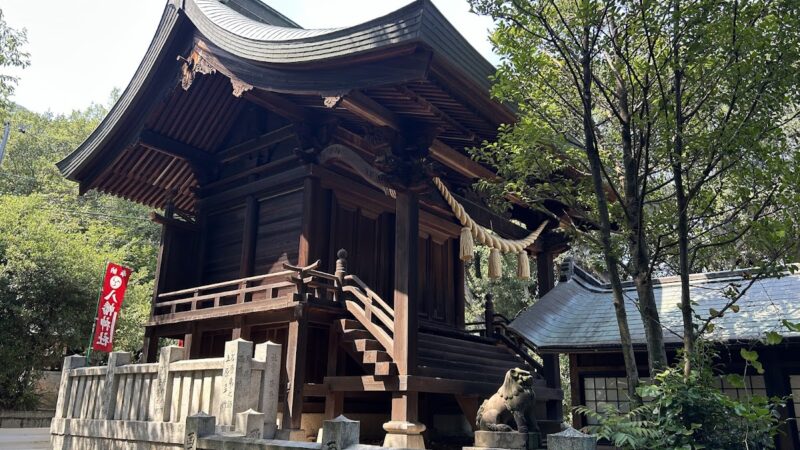
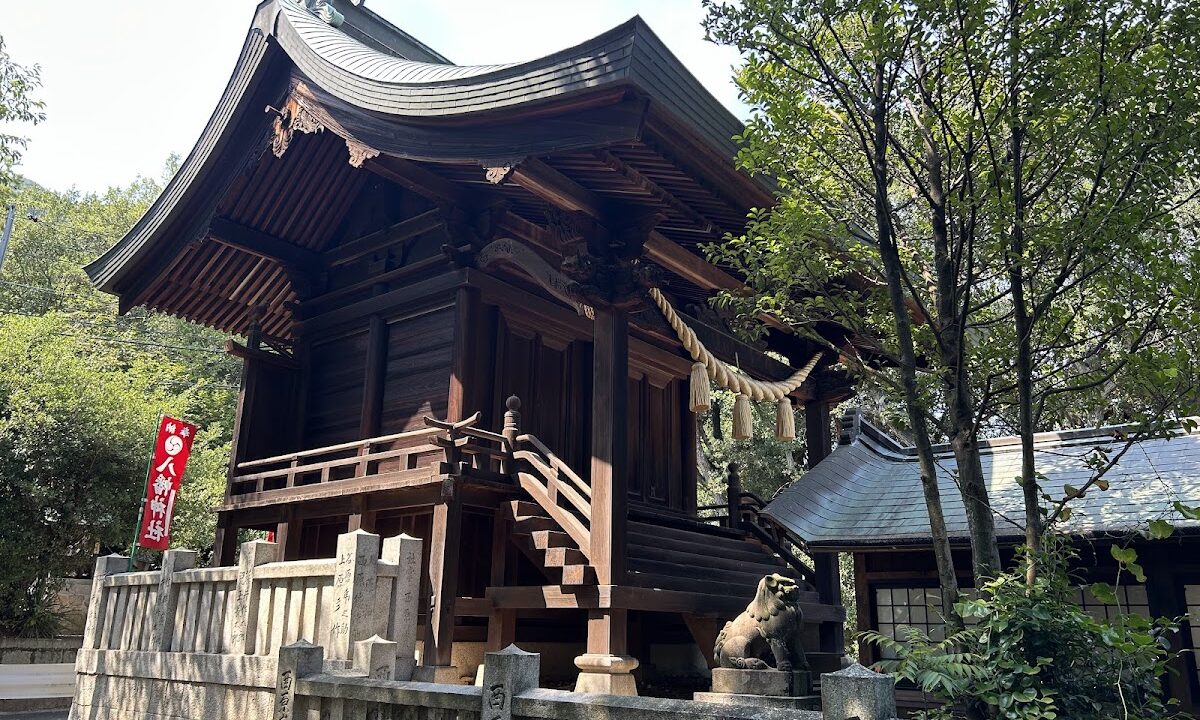
The shrine buildings, which were rebuilt through a donation from Kobayakawa Takakage, have maintained their dignity despite being restored over time. Both the main hall and the worship hall preserve the traditional style of shrine architecture.
Shrine Precincts and Cultural Assets
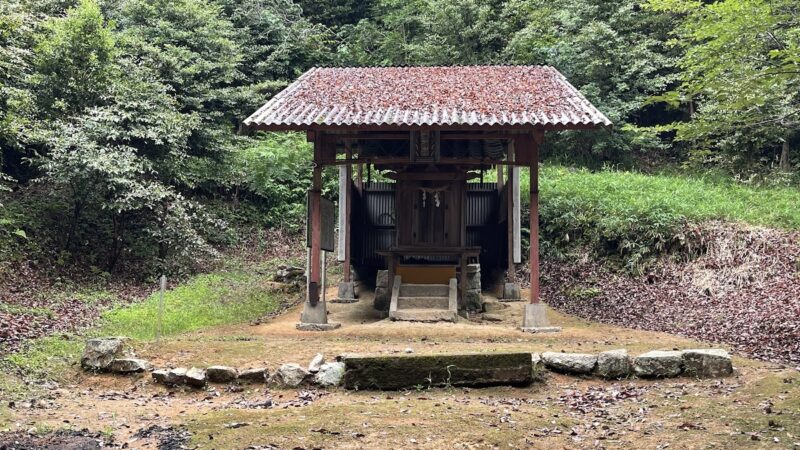
Besides the main shrine, several small shrines and stone monuments are scattered throughout the grounds. These are carefully preserved as valuable cultural assets that convey the history of the region.
Goshuin (Shrine Seal) and Goshuincho (Shrine Seal Book) Information
About Goshuin
Kōgō Hachiman Shrine offers goshuin to visitors.
Location of Issuance: Shrine Office
Hours of Issuance: Usually 9:00 AM to 5:00 PM (Advance confirmation is recommended as staff may be absent)
Offering Fee: Usually around 300-500 yen
The goshuin features the calligraphy of “Kōgō Hachiman Shrine” and the shrine’s seal. It is characterized by its simple yet powerful brushstrokes.
Goshuincho (Stamp Book)
Please check with the shrine office upon arrival regarding the availability of the shrine’s original goshuincho. Visiting nearby shrines for goshuin stamps is also popular, and many visitors can be seen visiting temples and shrines within Mihara City.
Manners for Receiving a Goshuin Stamp
- Complete your prayers first, then go to the shrine office.
- Greet politely and request a goshuin stamp.
- Open your goshuincho and hand it over.
- Wait quietly while the stamp is being written.
- Express your gratitude with heartfelt thanks.
A goshuin stamp is proof of your visit, not a stamp rally. Remember to show respect to the gods and pray with sincerity.
Access Information
Access by Train
Approximately 5 minutes on foot from Suwa Station on the JR Kure Line
Suwa Station is about 10 minutes from Mihara Station on the Kure Line. Exit the station and head towards National Route 185. Walk along the railway tracks, and you will see the first torii gate. It’s very close to the station, making it easily accessible by train.
Travel time from major stations:
- From Hiroshima Station: Take the JR Sanyo Main Line to Mihara Station (approx. 50 minutes), then transfer to the Kure Line to Sunami Station (approx. 10 minutes)
- From Fukuyama Station: Take the JR Sanyo Main Line to Mihara Station (approx. 20 minutes), then transfer to the Kure Line to Sunami Station (approx. 10 minutes)
Access by car
Approximately 15 minutes from the Mihara-Kui Interchange on the Sanyo Expressway
After exiting the interchange, head south on National Route 185 towards Sunami. You will see a torii gate along the highway.
Parking: There are several parking spaces on the temple grounds (free).
*Please refrain from parking for extended periods, as these are for visitors only.
Nearby Tourist Attractions
- Mihara Castle Ruins: Remains of a coastal castle built by Kobayakawa Takakage
- Buttsuji Temple: A famous Rinzai Zen temple and a popular spot for viewing autumn foliage
- Fudekageyama Mountain: An observation point offering panoramic views of the Seto Inland Sea
- Mihara Shinmei no Sato Roadside Station: A roadside station offering local specialties
Annual Events and Festivals
Grand Festival
The Grand Festival, held every autumn, is the most important festival of the Empress Hachiman Shrine. Traditional rituals such as the procession of portable shrines and the dedication of Kagura (sacred dance) are performed, attracting people from the local community.
New Year’s Visit
Many worshippers visit the shrine in the new year to pray for safety and well-being for their families throughout the year. The shrine grounds are bustling with worshippers from New Year’s Day through the third day.
Shichi-Go-San (7-5-3 Festival)
During the autumn Shichi-Go-San season, families visit the shrine to pray for the healthy growth of their children. The shrine office accepts Shichi-Go-San prayers.
Other Events
- Setsubun Festival
- Summer Purification Ceremony
- Monthly Festival
Please contact the shrine directly for detailed dates.
Points and Manners for Visiting a Shrine
Etiquette for Visiting a Shrine
- Bow before passing through the torii gate.
- Purify yourself at the water basin.: Hold the ladle in your right hand and wash your left hand → Switch to your left hand and wash your right hand → Return to your right hand, receive water in your left hand and rinse your mouth → Hold the ladle upright and wash the handle.
- At the front of the main hall.: Place your offering → Bow twice, clap twice, and bow once.
- Bow at the torii gate when leaving.
Photography
Photography is generally permitted on the shrine grounds, but please note the following:
- Photography may be prohibited in sacred areas such as inside the main hall.
- Do not disturb other worshippers.
- Remember to show respect to the gods.
Attire
Everyday clothing is acceptable for visiting a shrine, but if you are receiving prayers, please keep the following in mind:
- Wear clean and presentable clothing.
- Avoid revealing clothing.
- Remove hats and sunglasses on the shrine grounds.
The Deep Connection Between Empress Hachiman Shrine and Kobayakawa Takakage
Kobayakawa Takakage was born the third son of Mori Motonari and inherited the Kobayakawa family, becoming a renowned general who led the Seto Inland Sea navy. He built Mihara Castle and made a significant contribution to the development of the region.
The fact that Takakage prayed for victory at Empress Hachiman Shrine before the Battle of Itsukushima indicates that this shrine was an important place of worship even then. Takakage likely chose this shrine because it enshrined both Hachiman, the god of war, and Itsukushima Daimyojin, revered by the Mori clan.
His post-victory donations and reconstruction of the shrine buildings demonstrate the depth of Takakage’s faith and his gratitude to the gods. This event enhanced Empress Hachiman Shrine’s reputation as a shrine associated with the Kobayakawa clan and as a shrine renowned for its miraculous powers in granting victory prayers.
Even today, many people visit the shrine before important competitions or new challenges, a practice rooted in this historical anecdote of prayer for victory.
The Role of Kōgō Hachiman Shrine in the Community
As the guardian shrine of the Sunami district, Kōgō Hachiman Shrine is a central presence in the local community.
A Place of Faith
It is a place of prayer for important life events such as family safety, protection from evil, and Shichi-Go-San (a traditional Japanese rite of passage for children). Especially during New Year’s and festivals, many residents gather, strengthening community bonds around the shrine.
Inheritance of History and Culture
With a history of nearly 600 years since its founding during the Ōei era, Kōgō Hachiman Shrine is a valuable presence that conveys the history and culture of the region. Its connection to Kobayakawa Takakage and its unique form of worship, which enshrines both Hachiman and Itsukushima Daimyōjin, can be considered a cultural heritage unique to this region.
Value as a Tourist Resource
In recent years, tourists interested in history and shrines and temples have also begun to visit. An increasing number of people visit Kōgō Hachiman Shrine as part of historical walks visiting the Mihara Castle ruins and places associated with Kobayakawa Takakage.
Summary: The Charm of Kōgō Hachiman Shrine
Located in Sunami, Mihara City, Hiroshima Prefecture, Kōgō Hachiman Shrine boasts a history of nearly 600 years since its founding in 1424 (Ōei 31).
Historical Value: Beginning with the enshrinement of a deity from Otokoyama Hachiman Shrine in Yamashiro Province, it established a unique form of worship by also enshrining Itsukushima Daimyōjin in 1505 (Eishō 2). The history of Kobayakawa Takakage praying for victory before the Battle of Itsukushima and donating to the reconstruction of the shrine after his victory speaks to the high status of this shrine.
Characteristics of the Faith: The unusual form of enshrining both Hachiman-sama and Itsukushima Daimyōjin, a god of war and a guardian deity of the sea, reflects the regional characteristics of Sunami as a port town and a strategically important location.
Ease of Access: Located approximately 5 minutes on foot from JR Sunami Station, the shrine is easily accessible by both train and car. The shrine boasts a unique landscape, with a torii gate along National Route 185 and a path leading to the shrine that crosses the JR Kure Line railway tracks.
Connection to the Community: Affectionately known as “Sunami Hachiman-san” by the locals, it continues to function as a place of daily worship for family safety, Shichi-Go-San (a traditional Japanese rite of passage for children), and protection against misfortune.
When visiting Mihara City, be sure to stop by Kōgō Hachiman Shrine. The time spent quietly praying in this historic shrine, where Kobayakawa Takakage offered his prayers, will surely be a memorable experience. Sunami Hachiman-san, where the weight of history and the warmth of the community coexist, awaits you.