Entsuji Temple (Gifu Prefecture, Ogaki City) Complete Guide | History, Highlights, Access, and Perpetual Memorial Service Information
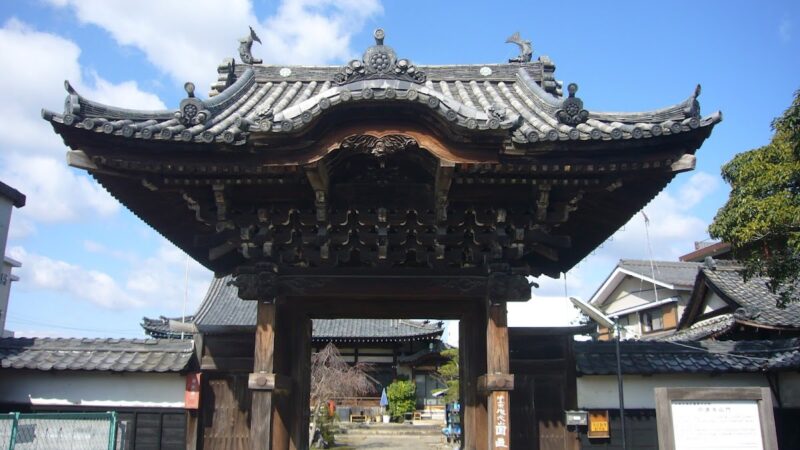
Located in Nishisoto-cho, Ogaki City, Gifu Prefecture, Entsuji Temple is a historic Jodo sect temple boasting over 400 years of history as the family temple of the Toda clan, the lords of the Ogaki domain. Situated in a tranquil environment along the Suimon River, the temple grounds feature a magnificent four-pillar gate and main hall, and are known as an important temple that conveys the history of Ogaki to the present day.
This article comprehensively explains information useful for those considering visiting or using Entsuji Temple, including its detailed history, highlights within the temple grounds, access methods, and cemetery information such as perpetual memorial graves and tree burials.
Basic Information about Entsuji Temple
Official Name: Kyokkozan Entsuji
Sect: Jodo-shu (Pure Land Buddhism)
Principal Image: Amida Buddha
Address: 1-32-1 Nishisotogawa-cho, Ogaki City, Gifu Prefecture
Chief Priest: Matsuno Hidenari
Founded: Keicho 6 (1601)
Founder: Toda Ujitsune
Entsuji Temple is located in the heart of Ogaki City, near the Ogaki City Hall, and within walking distance of the Oku no Hosomichi Musubi no Chi Memorial Museum. Situated in a tranquil environment along the Suimon River, it is easily accessible for sightseeing and worship.
The History of Entsuji Temple | 400 Years with the Toda Clan
Founding and the Zeze Period (1601-)
The history of Entsuji Temple dates back to 1601, when Toda Ujitsune was the lord of the Zeze Domain in Omi Province (present-day Otsu City, Shiga Prefecture). Toda Ujitsune enjoyed the deep trust of Tokugawa Ieyasu and was granted the Zeze Domain with a 70,000 koku stipend after the Battle of Sekigahara. At this time, Ujitsune built Entsuji Temple in Zezegasaki, making it the Toda family’s ancestral temple.
Toda Ujitsune served as a close confidant of Tokugawa Ieyasu and was an important daimyo who contributed to laying the foundation of the Edo Shogunate. The founding of Entsuji Temple was intended to pray for the prosperity and peace of the Toda family.
Relocation to Amagasaki (1616-)
In 1616 (Genna 2), Toda Ujitsune was transferred to the Amagasaki Domain in Settsu Province (present-day Amagasaki City, Hyogo Prefecture) with a 50,000 koku stipend. This was a result of his achievements in the Siege of Osaka. Along with this transfer, Entsuji Temple also relocated to Amagasaki.
During his time in Amagasaki, Entsuji Temple continued its role as the Toda family’s ancestral temple and became a spiritual pillar for the lord. This example of a temple relocating along with the lord demonstrates the close relationship between daimyo families and their ancestral temples at the time.
Relocation and Development to Ogaki (1635-)
In 1635 (Kanei 12), Toda Ujitsune was transferred to the Ogaki Domain in Mino Province with an increased stipend of 100,000 koku. This was a result of his contributions to the shogunate, including the reconstruction of Osaka Castle in 1633 (Kanei 10) and the suppression of the Shimabara Rebellion in 1637 (Kanei 14). Upon his transfer to Ogaki, Ujitsugu invited the third abbot of Entsuji Temple in Amagasaki, Sen’yo Shonin, and founded a new Entsuji Temple on the west side of Ogaki Castle. This is the present-day Entsuji Temple. Its location also served as a defensive base for Ogaki Castle and functioned as a western defense for the castle town.
From then on, Entsuji Temple served as the family temple of the Toda clan, the lords of the Ogaki Domain, and stood alongside the Toda family until the Meiji Restoration. The Toda family ruled the Ogaki Domain for 11 generations, and the tombs of successive lords are located at Entsuji Temple.
Entsuji Temple in the Modern Era
After the Meiji Restoration, the Ogaki Domain ceased to exist due to the abolition of the feudal system and the establishment of prefectures. However, Entsuji Temple survived as a Jodo sect temple and continues to be a place of worship for the local people to this day. Even now, it carefully preserves its history as the Toda family’s ancestral temple and plays an important role as a historical heritage of Ogaki.
Entsuji Temple Grounds and Highlights
Four-Pillar Gate (Main Gate)
The first thing that catches the eye upon visiting Entsuji Temple is the magnificent four-pillar gate. This gate is an architectural structure befitting the family temple of the lord of the Ogaki domain, and its imposing structure is impressive. Nio statues are placed on either side of the gate, welcoming visitors.
The style of the four-pillar gate retains many characteristics of Edo period temple architecture and is of architectural historical value. Passing through the gate, a well-ordered temple grounds unfolds, with a path leading to the main hall.
Main Hall
The main hall is a magnificent building with a large temple complex, possessing the dignity of a Jodo sect temple. Inside, the principal image, Amida Buddha, is enshrined, and daily religious services and memorial services are held.
The architectural style of the main hall follows the typical form of Edo period Jodo sect temples, with a clearly separated inner and outer sanctuary. The ceiling is adorned with intricate decorations, evoking the prosperity of the past.
Burial Grounds of the Toda Family
Within the temple grounds are the burial grounds of the Toda family, the successive lords of the Ogaki Domain, where 11 generations of lords and their families rest. The burial grounds are enveloped in a solemn atmosphere and are a valuable historical site that preserves the style of Edo-period daimyo tombs.
The tombstones are inscribed with the posthumous names and years of death of each lord, allowing visitors to trace the history of the Ogaki Domain. It is a valuable resource for history enthusiasts and local history researchers.
Garden and Temple Grounds Atmosphere
Entsuji Temple boasts a well-maintained garden, where visitors can enjoy the beauty of each season. Many visitors come, especially during the cherry blossom season in spring and the autumn foliage season.
Located facing the Suimon River, it offers a peaceful environment for worship while listening to the gentle murmur of the river. Despite being in an urban area, Entsuji Temple maintains a tranquil atmosphere, which is part of its charm.
How to Access Entsuji Temple
Access by Public Transportation
From JR Tokaido Main Line/Yoro Railway “Ogaki Station”
- Approximately 15 minutes on foot
- From the south exit of Ogaki Station, head west along the Suimon River; the temple is located past Ogaki City Hall.
- Approximately 5 minutes by taxi
Using Meihan Kintetsu Bus
- Get off at the “City Hall” bus stop, approximately 3 minutes on foot
- Buses run from Ogaki Station to various destinations
Access by Car
From Meishin Expressway
- Approximately 10 minutes from Ogaki IC
- Via National Route 21 to Ogaki city center
From Tokai Loop Expressway
- Approximately 15 minutes from Ogaki West IC
Parking Information
There is parking space for visitors on the temple grounds, but the number of spaces is limited, so we recommend using public transportation whenever possible. There are also coin-operated parking lots nearby.
Nearby Tourist Attractions
The following tourist attractions are located near Entsuji Temple and can be visited together:
- Oku no Hosomichi Musubi no Chi Memorial Museum: Approximately 10 minutes on foot
- Ogaki Castle: Approximately 15 minutes on foot
- Suimon River Promenade: Very close by
- Ogaki City Local History Museum: Approximately 10 minutes on foot
Information on Entsuji Temple’s Perpetual Memorial Graves, Tree Burials, and Columbariums
Features of Perpetual Memorial Graves
Entsuji Temple offers perpetual memorial graves that meet modern needs. Perpetual memorial graves are suitable for those who have no successors to their graves or who do not want to burden their descendants.
Benefits of Perpetual Memorial Graves
- The temple takes responsibility for perpetual memorial services and management.
- No need to erect a tombstone, reducing costs.
- No or low annual maintenance fees.
- Often open to all religions and denominations.
- No worries about becoming an unclaimed body.
Choice between Individual and Communal Graves
Entsuji Temple’s perpetual memorial service offers the choice between individual and communal graves.
Individual Graves
For a set period (generally until the 13th or 33rd anniversary of death), the remains are placed individually. After that, they are moved to a communal grave. Recommended for those who wish to individually commemorate the deceased or who want to have a private grave for a certain period.
Communal Graves
This format involves burial together with the remains of others from the beginning. It is the most cost-effective option and suitable for those who desire a simple memorial service.
About Tree Burials
Tree burials are a nature-oriented memorial service where a tree serves as a grave marker instead of a tombstone. Entsuji Temple also offers tree burials, which have the following characteristics:
- Fulfills the wish to return to nature
- Reduces costs as there is no need for a tombstone
- An environmentally friendly method of memorial service
- Allows you to experience the changing seasons
Use of Columbariums
Columbariums are indoor facilities for storing cremated remains. They are characterized by the ability to visit regardless of the weather and their meticulous maintenance.
Advantages of Columbariums
- Easy to visit even in rainy weather because they are indoors
- Clean and well-maintained
- Often located in easily accessible places
- No need for a cemetery plot
Estimated Costs
The cost of perpetual memorial graves and tree burials varies depending on the plan chosen and the period of interment. The general cost estimates are as follows:
- Communal Grave: Approximately 100,000 to 300,000 yen
- Individual Grave (for a limited period): Approximately 300,000 to 800,000 yen
- Tree Burial: Approximately 200,000 to 600,000 yen
- Columbarium: Approximately 300,000 to 1,000,000 yen
For specific costs and available plans, we recommend contacting Entsuji Temple directly.
Flow of Visit Reservation and Interment
Visit Reservation
If you are considering using a perpetual memorial grave or tree burial, we recommend making a visit reservation first. You can actually see the atmosphere of the temple grounds and receive detailed explanations from the head priest or staff.
Process until Interment
- Inquiry/Visit Reservation: Contact by phone or email
- On-site Visit: Check the temple grounds and memorial graves, and receive detailed explanations.
- Plan Selection: Choose from individual graves, communal graves, tree burials, etc.
- Contract Procedures: Submit necessary documents and pay fees.
- Determination of Interment Date: Schedule with the head priest.
- Interment Ceremony: Interment with chanting of sutras and memorial services.
Support for Grave Closure
Entsuji Temple accepts reburials (grave closure) from other cemeteries. We provide consultation for those who can no longer manage graves located far away, or those who have no successors to maintain their graves.
Grave closure requires administrative procedures, but Entsuji Temple provides support for issuing necessary documents and handling the procedures.
Comparison with Other Temples and Cemeteries in Ogaki City
There are several other temples and cemeteries in Ogaki City besides Entsuji Temple.
Ogaki City Municipal Hagoromo Cemetery
This is a public cemetery operated by Ogaki City, and is open to people of all religions. Located approximately 15 minutes by car from Entsuji Temple, it offers general burial plots and perpetual memorial graves on its vast grounds.
Daigenji Temple
This is a Rinzai Zen temple located in Ogaki City, offering columbariums and tree burials. While it belongs to a different sect than Entsuji Temple, it is also a historically significant temple.
Points to Consider
- Sect: If you wish to become a member of the Jodo sect, Entsuji Temple is suitable.
- Location: Entsuji Temple has an advantage in terms of accessibility from Ogaki Station.
- History: For those who wish to choose a historical temple associated with the Toda family, Entsuji Temple is recommended.
- Cost: Costs vary depending on the facility, so it is recommended to compare several options.
Annual Events and Memorial Services at Entsuji Temple
Main Annual Events
As a Jodo sect temple, Entsuji Temple holds the following annual events.
- Shushōe: January, New Year’s memorial service
- Shunki Higan-e: March, Spring equinox memorial service
- Hanamatsuri: April 8th, Celebrating the birth of Buddha
- Obon Memorial Service: August, Memorial service for ancestors
- Autumn equinox-e: September, Autumn equinox memorial service
- Jūya Memorial Service: October, Important memorial service of the Jodo sect
Application for Memorial Services
Individual memorial services, such as annual memorial services and monthly memorial services, are also accepted. It is necessary to contact the temple in advance to arrange a date.
Points to Note and Manners When Visiting Entsuji Temple
Visiting Manners
- Dress Code: Please wear clean clothing when visiting the temple. For memorial services, semi-formal attire is preferred.
- Photography: Photography is generally permitted within the temple grounds, but consideration is needed when photographing graves or inside the main hall.
- Quietness: Please remain quiet within the temple grounds and be considerate of other visitors.
- Smoking and Eating: Please refrain from smoking or eating within the temple grounds.
Visiting Hours
General visits should be made during daylight hours. For memorial services or consultations, it is recommended to contact the temple in advance to confirm visiting hours.
Cultural Assets and Historical Value of Entsuji Temple
Value as Historical Resources
Entsuji Temple is a valuable historical site that conveys the history of the Ogaki Domain. The graves of the 11 generations of Toda family lords are important resources for understanding the appearance of a daimyo family’s ancestral temple during the Edo period.
In local history research in Ogaki City, the records and epitaphs of Entsuji Temple are used as primary sources and contribute to local history education.
Architectural Value
The buildings, including the four-pillar gate and the main hall, retain many characteristics of Edo period temple architecture and are of historical architectural value. They are a typical example of temple architecture in the Ogaki castle town and are a subject of research.
Ogaki City and Entsuji Temple | Connection with the Community
Community Hub
Entsuji Temple is not merely a tourist spot; it also serves as a place of worship and a community hub for local residents. It cooperates with local traditional events and cultural activities, becoming an important element in shaping Ogaki City’s cultural landscape.
Entsuji Temple as a Tourist Resource
In Ogaki City, which is focusing on tourism promotion as the “final destination of the Oku no Hosomichi (Narrow Road to the Deep North),” Entsuji Temple is an important historical tourist resource. It is incorporated into the walking course along the Suimon River and attracts many tourists.
Summary | The Charm and Use of Entsuji Temple
Entsuji Temple in Ogaki City, Gifu Prefecture, is an ancient Jodo sect temple with a history of over 400 years. As the family temple of successive generations of the Toda clan, the lords of the Ogaki domain, it is a valuable temple that conveys the history of Ogaki to the present day.
Main Charms of Entsuji Temple
- Deep historical ties with the Toda clan, the lords of the Ogaki domain
- Prestigious grounds with a magnificent four-pillar gate and main hall
- Excellent access, within walking distance of Ogaki Station
- Quiet and peaceful environment along the Suimon River
- Modern memorial service options such as perpetual memorial graves and tree burials
Recommended for those who:
- Are interested in the history of Ogaki
- Want to learn about the history of the Toda family and the Ogaki domain
- Are considering perpetual memorial graves or tree burials
- Are worried about the issue of successors for their family graves
- Want to enjoy strolling around the Suimon River area
Entsuji Temple combines the value of a historical temple with the flexibility to meet modern memorial service needs. If you are considering visiting or using the perpetual memorial service at Entsuji Temple, we highly recommend that you visit the site and experience its atmosphere for yourself.
For detailed information and to make a reservation for a visit, we recommend contacting Entsuji Temple directly. Entsuji Temple, where you can feel the history and culture of Ogaki City while offering a peaceful and serene experience, is a temple well worth visiting.