Bodaiji Temple (Gose City, Nara Prefecture) Complete Guide | History and Access Information for the Ancient Temple Associated with Gyoki
Located in Fushimi, Gose City, Nara Prefecture, Bodaiji Temple is a Shingon Buddhist temple of the Koyasan sect associated with Gyoki Bodhisattva, a high-ranking priest of the Nara period. This ancient temple, nestled at the foot of Mount Katsuragi, once flourished as a training ground called “Bodaiin” and is also known as a sacred site where Taicho Daishi of Mount Hakusan underwent ascetic training. This article comprehensively explains everything you need to know before visiting Bodaiji Temple, from its history and highlights to visiting information and access methods.
History and Origins of Bodaiji Temple
Founding in the Nara Period and Gyoki Bodhisattva
The origins of Bodaiji Temple date back to the Nara period, during the reign of Emperor Shomu. It is said that the renowned priest and high-ranking priest Gyoki Bodhisattva, who dedicated himself to the relief of the people and social work, stayed in this area and established the training ground “Bodaiin.” Gyōki was a Buddhist monk who contributed to the spread of Buddhism and the development of social infrastructure by constructing temples, bridges, and reservoirs throughout Japan. He was also deeply involved in the construction of the Great Buddha of Tōdai-ji Temple and played an important role in the history of Japanese Buddhism. Bodai-ji Temple is one of the many training halls founded by Gyōki and has attracted worshippers since the Nara period.
The Legend of Taichō Daishi’s Training and Healing from Smallpox
A noteworthy aspect of Bodai-in Temple’s history is its connection to Taichō Daishi, known as a great virtuous figure of Echizen Province and of Mount Hakusan. Taichō was a pioneering figure of Shugendō (mountain asceticism) who was active from the Nara period to the early Heian period and is known as the founder of the Hakusan faith.
It is said that Taichō Daishi trained at Bodai-in Temple and practiced the Eleven-Faced Kannon ritual. As a result of this training, he demonstrated miraculous powers in quelling the smallpox epidemic that was prevalent at the time, and for this achievement, he was granted the rank of Daishi (Great Master). This anecdote indicates that Bodai-in Temple functioned not merely as a place of ascetic training, but also as a sacred site for healing illnesses and warding off disasters.
Changes Since the Heian Period
During the Heian period, influenced by Kobo Daishi Kukai, it strengthened its character as a training ground for Shingon Esoteric Buddhism. Many monks visited it as a place for pilgrimage and prayer, and it is believed to have played an important role as a base for Katsuragi Shugendo (mountain asceticism).
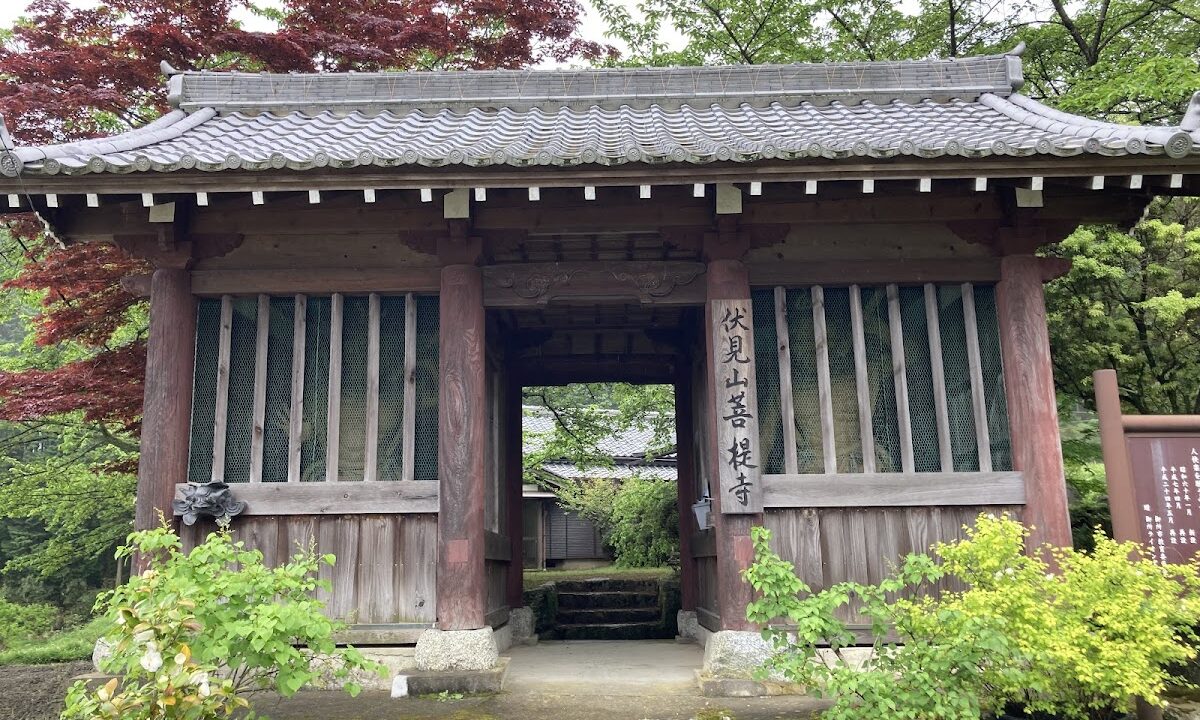
From the medieval to the early modern period, it faced periods of devastation several times due to wars and fires, but each time it was restored with the support of local faith. During the Edo period, temple buildings such as the Niomon Gate were constructed, and it began to function as a local family temple.
A Family Temple in Modern Times
After the Meiji Restoration, it faced the threat of ruin again due to the anti-Buddhist movement and the wars of the Showa era. However, after the war, restoration progressed thanks to the efforts of local residents and parishioners. Currently, it quietly continues to uphold the Dharma as a temple belonging to the Koyasan Shingon sect.
Although the temple grounds have lost some of their former grandeur, they exude the dignity and historical weight of an ancient temple, offering tranquility to visitors.
Highlights of Bodaiji Temple
Atmosphere of the Temple Grounds
Bodaiji Temple’s grounds are a tranquil space surrounded by nature at the foot of Mount Katsuragi. While not large in scale, the grounds, surrounded by ancient trees, possess a unique spiritual atmosphere, allowing one to feel the weight of history dating back to the Nara period.
One of its charms is that it is not crowded with tourists, allowing for a peaceful visit. Visitors can enjoy the changing scenery of nature throughout the seasons, with particularly beautiful views during the fresh green season and the autumn foliage season.
Main Hall and Principal Image
The current main hall is a relatively new building, but it houses historically significant Buddhist statues. The temple has deep ties to Kannon worship, stemming from the Eleven-Faced Kannon ritual performed by Taicho Daishi.
Stone steps lead to the main hall, and the spatial arrangement from the approach to the main hall is designed to gradually purify the hearts of visitors.
Stone Sculptures that Tell a Story of History
Stone Buddhas and monuments dating from the Edo period to the Showa period are scattered throughout the temple grounds, telling the story of the temple’s long history. These stone sculptures are valuable cultural assets that convey the deep faith of the local people.
Some of the older stone Buddhas, in particular, retain a serene expression despite the effects of weathering, conveying a sense of timeless compassion.
Surrounding Natural Environment
The Fushimi district of Gose City, where the temple is located, is a rural area spreading at the foot of Mt. Katsuragi. The surrounding area is a rural landscape, preserving the original scenery of Yamato that has continued since ancient times.
A stream flows near the temple, seasonal flowers bloom, and the sounds of wild birds can be heard, making it a naturally rich environment. It is an ideal place for those who want to escape the hustle and bustle of the city and spend time in peace.
Annual Events and Seasonal Occasions of the Family Temple
Spring Events
In spring, temple parishioners and local residents participate in cleaning activities, keeping the temple grounds tidy. During cherry blossom season, the temple grounds and surrounding areas bloom beautifully, creating a peaceful place for cherry blossom viewing.
Summer Events
In summer, memorial services such as the Segaki ceremony are held to honor ancestors. Cool breezes from the foot of Mt. Katsuragi blow through the temple grounds, making it a relatively comfortable environment even during the hot season.
Autumn Events
In autumn, the temple grounds are adorned with beautiful red and yellow leaves. Combined with the surrounding rural landscape during the harvest season, it offers a chance to enjoy the beauty of Japanese autumn.
Winter Events
In winter, memorial services for the end of the year and the beginning of the new year are held. Snow sometimes accumulates, and the temple grounds, enveloped in white, create a magical atmosphere.
Temple Culture in Gose City and the Role of Bodaiji Temple
Overview of Temples in Gose City
Gose City in Nara Prefecture has 73 temples, and is a region where Buddhist culture, which has continued since ancient times, remains strong. The Katsuragi region is also a sacred site of Shugendo (mountain asceticism), and there are many temples and shrines associated with En no Gyoja (En no Ozunu).
Bodaiji Temple, within this rich religious culture of Gose City, has its own unique historical value as a temple associated with Gyoki. Although not large in scale, its history dating back to the Nara period places it in an important position as a regional cultural heritage site.
Connection with Katsuragi Shugendo
The Katsuragi mountain range has long been known as a sacred site of Shugendo, and Shugendo routes connecting Mount Kongo, Mount Katsuragi, and Mount Futakami developed. Bodaiji Temple is also thought to have played a role as a training ground within this Katsuragi Shugendo network.
The legend that Taicho Daishi trained there can also be said to indicate a deep connection with Shugendo.
The Role of Family Temples in the Community
Today, family temples (bodaiji) serve as local family temples (parish temples), deeply connected to the community through funerals, memorial services, and ancestral worship. In rural areas experiencing depopulation, temples also play a vital role as a spiritual pillar for the community.
Visiting Information
Basic Information
Temple Name: Bodaiji Temple
Sect: Koyasan Shingon Buddhism
Address: 454 Fushimi, Gose City, Nara Prefecture
Phone Number: No information available (Please contact the Gose City Tourism Association, etc., when visiting)
Admission Fee: Free
Visiting Hours: Grounds are freely accessible (The interior of the main hall is usually closed to the public)
Parking: None (Use nearby roadside spaces; however, consideration must be given to avoid disturbing local residents)
Restrooms: Available
Precautions When Visiting
- To maintain a quiet environment on the temple grounds, please refrain from loud conversations.
- Photography is permitted, but it is considered good manners to refrain from photographing the interior of the main hall or the Buddha statues.
- Please take all your trash with you.
- As there is no parking, using public transportation or walking is recommended.
- As this is also a living space for local residents, please visit quietly.
Access Method
Access by Train and Bus
Nearest Station: Kintetsu Gosho Line “Kintetsu Gosho Station” or JR Wakayama Line “Gosho Station”
From the station, you can access the location in the following ways:
- By Local Bus
- Take a Nara Kotsu bus from Gosho Station and get off at the “Fushimi” bus stop, then walk for about 5 minutes.
- Bus service is limited, so please check the timetable in advance.
- By Taxi
- Approximately 10 minutes by taxi from Gosho Station.
- The fare is approximately 1,500 yen (estimate).
- On Foot
- Approximately 40 minutes on foot from Gosho Station (approximately 3 km).
- Enjoy a walk while taking in the rural scenery.
Access by Car
From Expressway:
- Approximately 15 minutes from Minami-Hanna Expressway “Katsuragi IC”
- Approximately 30 minutes from Nishi-Meihan Expressway “Kashiwara IC” via National Route 165
Car Navigation Setting:
- Address Search: 454 Fushimi, Gose City, Nara Prefecture
- Phone number search: Not available
- Nearby facilities: Fushimi Community Center and other landmarks are recommended.
Parking Information:
There is no dedicated parking lot. Street parking inconveniences local residents, so we recommend using public transportation whenever possible. If you must visit by car, please consider parking in a public parking lot within Gose City and traveling on foot or by taxi.
Combining with Nearby Tourist Attractions
When visiting Bodaiji Temple, it’s efficient to combine it with other tourist spots in Gose City:
- Katsuragi Hitokotonushi Shrine: An ancient shrine known for its belief in granting single wishes (approx. 10 minutes by car)
- Takamahiko Shrine: An ancient shrine considered to be the site of the Takamagahara legend (approx. 15 minutes by car)
- Kuhonji Temple: A Jodo sect temple famous for its thousand stone Buddha statues (approx. 5 minutes by car)
- Kamokimi no Yu: A natural hot spring facility, perfect for relaxing after visiting the temple (approx. 10 minutes by car)
Attractions Around Bodaiji Temple
Historical Background of Gose City
Gose City flourished in ancient times as the base of the Katsuragi clan. Mount Katsuragi, which appears in the Kojiki and Nihon Shoki, is also known as the setting for myths.
The city has many Kofun period ruins, making it a region where you can experience the history of ancient Japan firsthand. Knowing this historical background will deepen your understanding and appreciation when visiting Bodaiji Temple.
Katsuragi Ancient Road
Near Bodaiji Temple lies an old road called the “Katsuragi Ancient Road.” This historic road connected settlements at the foot of Mount Katsuragi and was an important transportation route from ancient times to the Middle Ages.
Currently, it is maintained as a hiking trail, allowing you to walk through rural landscapes, old townscapes, and temples and shrines. A tour of the temples and shrines along the Katsuragi Ancient Road, including Bodaiji Temple, is a popular route for history enthusiasts.
Local Specialties
Gose City has long been a thriving agricultural area. It is particularly famous for its persimmon cultivation, and “Gose Persimmons” are known for their high quality. When visiting in autumn, purchasing fresh persimmons at a local farmers’ market is highly recommended.
Also, wild vegetables harvested at the foot of Mount Katsuragi, and locally produced miso and soy sauce are highly regarded.
Best Season for Visiting Your Family Temple
Spring (March-May)
In the season of fresh greenery, the temple grounds are enveloped in beautiful green. During the cherry blossom season (late March-early April), you can also enjoy the surrounding cherry blossoms. The weather is mild, making it an ideal season for strolling.
Summer (June-August)
During the rainy season, hydrangeas are beautiful, and in summer, the temple is enveloped in deep green. The cool breeze from the foot of Mt. Katsuragi is pleasant, making it a good place to escape the heat of the city. However, insect repellent is necessary.
Autumn (September-November)
This is the most recommended season. The autumn leaves are beautiful, and the surrounding rural landscape shines in golden hues. The weather is stable, making it ideal for hiking and strolling. It is also the harvest season for Goshogaki persimmons, allowing you to enjoy local delicacies.
Winter (December-February)
The temple grounds, enveloped in the silence of winter, possess a dignified beauty. Snow sometimes accumulates, making a visit amidst a snowy landscape a truly special experience. However, warm clothing is essential.
A Journey Following in the Footsteps of Gyōki and His Bodhi Temple
Temples Associated with Gyōki in Nara Prefecture
Gyōki is said to have founded many temples throughout his life. There are numerous temples associated with Gyōki in Nara Prefecture, and his Bodhi Temple is one of them.
As a journey tracing Gyōki’s footsteps, we recommend visiting the following temples:
- Kikōji Temple (Nara City): The temple where Gyōki spent his later years
- Chikurinji Temple (Ikoma City): An ancient temple said to have been founded by Gyōki
- Kumeji Temple (Kashihara City): The temple where Gyōki practiced asceticism
By visiting these temples along with his Bodhi Temple, you can truly appreciate the achievements of Gyōki, a high-ranking priest of the Nara period, and the spread of his faith.
Mount Katsuragi, a Sacred Site of Shugendo
Mount Katsuragi, visible from Bodaiji Temple, is known as a sacred mountain where En no Gyoja, the founder of Shugendo, practiced asceticism. From the summit, you can enjoy a panoramic view of the Yamato Basin, and on clear days, you can even see as far as Osaka Bay.
Mount Katsuragi is accessible by ropeway, and you can enjoy the changing seasons, from azaleas in spring to pampas grass in autumn. Combining a visit to Bodaiji Temple with a climb up Mount Katsuragi will make for a fulfilling day.
Guidelines for Visiting Your Family Temple
Basic Manners for Visiting Temples
- Bow at the Temple Gate: When entering the temple grounds, bow at the temple gate before entering.
- Proper Hand-Washing Etiquette: If there is a hand-washing station, cleanse your hands and mouth.
- Worship at the Main Hall: Join your hands in prayer in front of the main hall and offer your prayers quietly.
- Respect: Be quiet on the temple grounds and avoid disturbing other visitors.
- Bow Upon Departure: When leaving the temple grounds, it is polite to turn around and bow.
Shingon Buddhism Worship Etiquette
Your family temple is a temple of the Koyasan Shingon sect. In Shingon Buddhism, the following is the proper way to worship:
- Join your hands in prayer and bow.
- Offer your monetary donation.
- If there is a gong or bell, ring it gently.
- Join your hands again in prayer and sincerely chant “Namu Daishi Henjo Kongo” (a phrase of devotion to Kobo Daishi).
- While still holding your hands together in prayer, silently convey your wish.
- Join your hands in prayer and bow.
Photography Etiquette
- While photography of the temple grounds is generally permitted, please refrain from photographing the interior of the main hall or the Buddha statues.
- Please be considerate and avoid including other worshippers in your photos.
- Avoid using tripods as they may obstruct other worshippers.
- Absolutely do not take photos in areas where photography is prohibited.
Summary: The Charm and Significance of Visiting Bodaiji Temple
Bodaiji Temple in Fushimi, Gose City, Nara Prefecture, is a historically significant Koyasan Shingon Buddhist temple, originating from “Bodaiin,” a training hall founded by the renowned Nara period monk, Gyoki Bosatsu. Although not large in scale, this sacred site boasts a history of nearly 1300 years and is known as the training ground of the monk Taichō Daishi.
Away from the hustle and bustle of modern times, the quiet temple grounds offer a time for calming the mind and reflecting on oneself. Visiting this ancient temple, surrounded by the rich nature at the foot of Mount Katsuragi, will be a valuable experience, tracing the footsteps of ancient Japanese Buddhism and reflecting on the faith of our ancestors.
When visiting Gose City, be sure to visit Bodaiji Temple and feel the weight of history that has continued since the Nara period and the spiritual atmosphere that permeates the silence. Access is somewhat inconvenient, but that is precisely why it retains its tranquility and offers a special experience that only visitors can enjoy.
Combining a visit with a stroll along the nearby Katsuragi Ancient Road or a tour of other historical sites in Gose City will allow you to gain a deeper understanding of the history and culture of ancient Yamato.