Fukumiya Shrine (Yamanashi Prefecture, Yamanashi City) Complete Guide | History, Deities, Subsidiary Shrines, and Access Information
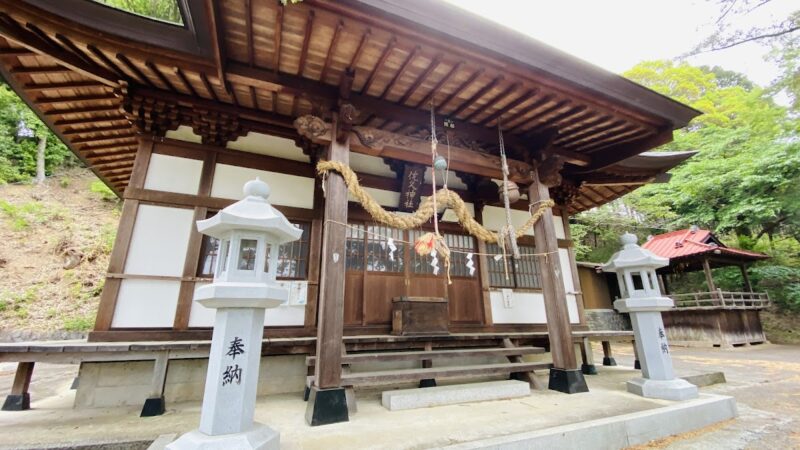
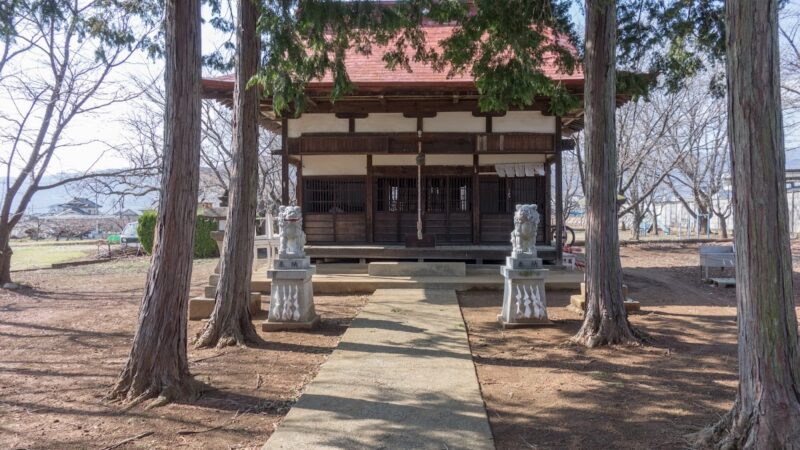
Fukumiya Shrine (Fukunomiya Shrine), located in Shōtokuji, Yamanashi City, Yamanashi Prefecture, is a venerable shrine that has been cherished by the local people for centuries. It holds the status of a former village shrine and has a history of serving as the guardian deity of the local economy. This article provides a detailed introduction to Fukumiya Shrine, based on information from the Yamanashi Prefectural Shrine Association, covering its history, deities, subsidiary shrines, blessings, and access information useful for visitors.
Basic Information on Fukumiya Shrine
Fukumiya Shrine is pronounced “Fukunomiya Jinja” or “Fukumiya Jinja,” and is officially written as “Fukunomiya Shrine.” Located in the Shōtokuji district, slightly north of the center of Yamanashi City, it has been preserved to this day as a center of faith for the local residents.
Location and Shrine Rank
- Location: 1569 Shōtokuji, Yamanashi City, Yamanashi Prefecture
- Former Shrine Rank: Village Shrine
- Affiliation with the Shrine Association: Under the jurisdiction of the Yamanashi Prefectural Shrine Association
The former village shrine rank indicates that it was positioned as a central shrine in the village under the modern shrine ranking system of the Meiji era. This can be seen as evidence of its important role in the local community.
History and Origins of Fukumiya Shrine
Origin as a Market God
The most distinctive aspect of Fukumiya Shrine’s history lies in its function as a market god. A market god is a deity that protects markets and commercial activities, and has been revered as an object of prayer for business prosperity and the development of the local economy.
According to records of the Yamanashi Prefectural Shrine Association, Fukumiya Shrine once flourished as a major shrine and possessed many sacred fields (farmland that served as a source of income for the shrine). This fact indicates that Fukumiya Shrine had considerable influence in the region at that time.
Changes During the Keicho Era
The Keicho era (1596-1615) was the period when Tokugawa Ieyasu established the Edo Shogunate. During this time, the rice fields of Fukumiya Shrine became public land (directly controlled by the shogunate or feudal domain) and came to be called “Miyata.” This place name still remains in Yamanashi City today, serving as a valuable trace indicating the historical scope of Fukumiya Shrine’s influence.
While the conversion of the sacred rice fields to public land might seem like a financial blow to the shrine, it simultaneously meant that it came under the protection of the shogunate or feudal domain, potentially bringing a different form of stability.
Typhoon Damage and Shrine Grounds Renovation in Meiji 34
In Meiji 34 (1901), Fukumiya Shrine was hit by a major typhoon, causing damage to trees on its grounds. Afterward, plum trees were planted on the grounds, and they remain a part of the beautiful scenery today.
In spring, the plum blossoms bloom in profusion, becoming a seasonal spectacle that delights visitors. This plum tree has been cherished by the local people as a symbol of recovery and regeneration from disaster.
Dedication during the Showa Era
In January 1985 (Showa 60), a children’s portable shrine was dedicated for the local children. This is a manifestation of the desire for community unity and the transmission of faith to the next generation. It is possible that this portable shrine is still used during festivals today.
Deities and Blessings
Main Deity
While the official records of the Yamanashi Prefectural Shrine Association contain detailed information about the main deity of Fukumiya Shrine, given its character as a city shrine, it is believed that the deities enshrined here are those of business prosperity, abundant harvests, and regional peace.
Expected Benefits
The benefits you can expect from visiting Fukumiya Shrine include the following:
- Business Prosperity: Due to its history as a city shrine, prayers are offered for success in commercial activities.
- Regional Peace and Security: As a village shrine, it protects the peace and development of the entire region.
- Abundant Harvest: Having once possessed sacred rice fields, prayers are offered for a bountiful harvest.
- Family Safety: It watches over the safety of the daily lives of local residents.
Numerous Subsidiary Shrines
Within the grounds of Fukumiya Shrine, several subsidiary shrines are enshrined, serving as objects of diverse faiths. According to records of the Yamanashi Prefectural Shrine Association, the following subsidiary shrines have been confirmed:
Shiratori Shrine (Yamato Takeru no Mikoto)
Shiratori Shrine, dedicated to Yamato Takeru no Mikoto, is enshrined within the grounds. Yamato Takeru no Mikoto is a legendary prince appearing in the Kojiki and Nihon Shoki, revered as a symbol of bravery and loyalty.
The name Shiratori Shrine originates from the legend that Yamato Takeru transformed into a white swan after his death and flew away. It is believed to bring good fortune in competitions, military success, and safe travels.
Tengu Shrine (Oyamatsumi-no-Mikoto)
The Tengu Shrine, dedicated to Oyamatsumi-no-Mikoto, is one of the shrines within the grounds. Oyamatsumi-no-Mikoto is known as the god of mountains and the sea, and holds a particularly important position in mountain worship.
The name Tengu Shrine suggests a form of worship linked to mountain asceticism, and can be seen as a reflection of the unique faith of the mountainous region of Yamanashi Prefecture.
Toso Shrine (Wazura-no-Okami)
The Toso Shrine, dedicated to Wazura-no-Okami, is a shrine within the grounds where prayers are offered for protection against epidemics, especially smallpox.
From the Edo period to the Meiji period, smallpox was a terrifying disease for people. The existence of the Smallpox Shrine is a valuable cultural heritage that tells the story of how earnestly people at that time prayed for recovery from the disease. Today, it is visited as a place of worship for general recovery from illness and for prayers for good health.
Dōsojin Shrine (Sarutahiko-no-Mikoto)
A Dōsojin Shrine, dedicated to Sarutahiko-no-Mikoto, is also located within the shrine grounds. Sarutahiko-no-Mikoto is known as the god of guidance and safe travel, and is also believed to bring blessings for matchmaking and traffic safety.
Dōsojin shrines are often enshrined at village boundaries and crossroads, and have served as a barrier to protect against evil from outside. The presence of a Dōsojin Shrine within the grounds indicates that Fukumiya Shrine plays a comprehensive role as a guardian deity of the region.
Diversity of Faith Shown by the Shrine Precincts
Looking at the composition of the shrine precincts of Fukumiya Shrine, we can see that a truly diverse range of beliefs are concentrated there, including those of a warrior god, a mountain god, a god of protection against disease, and a god of roads. This indicates that Fukumiya Shrine has functioned not only as a place of worship for a single object, but also as a comprehensive place of prayer that accommodates the various wishes of the local residents.
Features and Highlights of the Shrine Precincts
Size of the Shrine Grounds
According to records of the Yamanashi Prefectural Shrine Association, the grounds of Fukumiya Shrine are “six tan, nine se, and ten tsubo.” This corresponds to approximately 6,600 square meters (approximately 2,000 tsubo), indicating that it has relatively large grounds for a village shrine.
This size reflects its history as a once-flourishing grand shrine and its status as a shrine with numerous shrine precincts.
Plum Trees and Seasonal Scenery
The plum trees planted after the typhoon damage of 1901 (Meiji 34) remain an important scenic element of the shrine grounds. In early spring, the plum blossoms bloom in profusion, allowing visitors to feel the changing seasons.
Plum blossoms have a deep connection to Sugawara no Michizane, the god of learning, and are considered auspicious plants as part of the “pine, bamboo, and plum” trio. The plum trees at Fukumiya Shrine are not merely ornamental trees; they hold special significance as symbols of recovery and regeneration from disaster.
Characteristics as Tax-Exempt Land
Records mention “tax-exempt land.” Tax-exempt land refers to land exempt from taxes, and the grounds of shrines and temples were generally considered tax-exempt land. This indicates that religious facilities had a public character and held a special position in the local community.
Position in Yamanashi City’s Shrine Culture
Within the Group of Shrines in Yamanashi City
In addition to Fukumiya Shrine, many other shrines are located in Yamanashi City. Shrines such as Oimata Kubohachiman Shrine, Hakusan Shrine, Hachioji Shrine, and Tobio Daijinja Shrine are scattered throughout the city, each with its own unique history and beliefs, and Fukumiya Shrine plays a part in this group. Among the shrines belonging to the Yamanashi Prefectural Shrine Association, Fukumiya Shrine stands out for its unique characteristic as a “market deity.” Its role as a guardian deity of commerce is considered invaluable in an agricultural region.
Relationship with the Local Community
As evidenced by the record of the children’s portable shrine being dedicated in 1985, Fukumiya Shrine has functioned as a central presence in the local community. Through festivals and events, it has become a place for intergenerational exchange, strengthening community bonds.
Even today, it remains a beloved place of worship for local residents during important life events such as New Year’s visits, Shichi-Go-San (a traditional rite of passage for children), and exorcisms.
Access Information
Location
Address: 1569 Shōtokuji, Yamanashi City, Yamanashi Prefecture 405-0033
Access by Car
- From Katsunuma IC on the Chuo Expressway: Approximately 15 minutes
- From Ichinomiya-Misaka IC on the Chuo Expressway: Approximately 20 minutes
- Parking: There may be parking spaces for visitors on the temple grounds or nearby (prior confirmation recommended)
Access by Public Transportation
- From Yamanashi-shi Station on the JR Chuo Main Line: Approximately 10 minutes by taxi, or by local bus
- Local Bus: Yamanashi City buses and other services are available, but the number of services may be limited, so checking the timetable in advance is recommended.
Nearby Tourist Attractions
Yamanashi City has many other attractions besides Fukumiya Shrine:
- Ōimata Kubohachiman Shrine: An ancient shrine with a main hall designated as a National Important Cultural Property
- Sashideiso Otakeyama Shrine: Known as a shrine with a panoramic view, it’s a spectacular spot offering a breathtaking vista of the Kofu Basin.
- Fuefukigawa Fruit Park: A popular tourist facility featuring orchards and observation decks.
- Nishizawa Valley: A scenic spot home to the Nanatsugama Godan Falls, selected as one of Japan’s Top 100 Waterfalls.
Combining a visit to Fukumiya Shrine with a sightseeing route to enjoy the nature and history of Yamanashi City is highly recommended.
Etiquette and Manners for Visiting a Shrine
Basic Etiquette for Visiting a Shrine
When visiting Fukumiya Shrine, please observe the following basic etiquette:
- Bow before passing through the torii gate: This is a sign of respect before entering the sacred area.
- Avoid walking in the center of the path: The center of the path is considered the path of the gods.
- Purify yourself at the water basin: If there is a water basin, purify your hands and mouth.
- Etiquette in front of the main hall: Two bows, two claps, and one bow is the basic procedure.
Visiting Subsidiary Shrines
Fukumiya Shrine has several subsidiary shrines. If you have time, visiting each of these shrines will make your visit more respectful. Understanding the deities and blessings of each shrine and paying particular attention to the deity that best suits your wishes is also recommended.
Regarding Photography
Photography is generally permitted on the shrine grounds, but please note the following:
- Photography may be prohibited inside the main hall and worship hall.
- Please be considerate of other worshippers.
- Remember that this is a sacred place and behave respectfully.
Annual Events at Fukumiya Shrine
Annual Grand Festival
Like many shrines, Fukumiya Shrine is believed to hold an annual grand festival. The grand festival is the most important festival for the shrine, providing an opportunity for local residents to gather and offer thanks and prayers to the gods.
The children’s portable shrine, donated in 1985 (Showa 60), is likely used during this festival. The sight of local children carrying the shrine and parading through the shrine grounds and surrounding area is significant in terms of the transmission of traditional culture.
First Shrine Visit of the New Year
The first shrine visit of the New Year is an important event to pray for safety and peace throughout the year. Fukumiya Shrine, as a place of first shrine visit for local residents, undoubtedly welcomes many worshippers every year.
Visiting Fukumiya Shrine, which has the character of a city shrine, is especially meaningful for those praying for business prosperity and success.
Other Annual Events
The following annual events are commonly held at shrines:
- Spring Festival/Autumn Festival: Prayers for a bountiful harvest and peace in the community
- Nagoshi no Harae (Summer Purification Ceremony): Prayers for purifying oneself of the impurities accumulated over the past six months and for safety in the remaining half of the year
- Shichi-Go-San (Seven-Five-Three Festival): Celebration of children’s growth and prayers for their healthy development
- Exorcism Prayer: Prayers for protection from misfortune for those in their unlucky years
For specific dates and details, it is recommended to check with the Yamanashi Prefectural Shrine Association or local information.
Yamanashi Prefecture’s Shrine Culture and Fukumiya Shrine
Characteristics of Shrine Worship in Yamanashi Prefecture
Yamanashi Prefecture is a sacred land home to Mount Fuji, and has a long history of mountain worship. Many nationally renowned shrines, such as Asama Shrine, Takeda Shrine, and Kanazakura Shrine, are located within the prefecture.
Unlike these large-scale shrines, Fukumiya Shrine has played a unique role as a village shrine deeply rooted in the local community. Its deep connection with local residents, something absent in large-scale tourist shrines, is arguably its greatest characteristic.
Cultural Value of City God Worship
The history of Fukumiya Shrine functioning as a city god is significant when considering the commercial history of Yamanashi Prefecture. In an agricultural-centered society, the existence of a shrine protecting commercial activities is evidence of the diversity of the regional economy.
Even today, for people praying for business prosperity and success, Fukumiya Shrine, with its history as a city god, can be a special place of worship.
Relationship with the Yamanashi Prefectural Association of Shinto Shrines
Fukumiya Shrine belongs to the Yamanashi Prefectural Association of Shinto Shrines and is positioned as a member of the prefectural shrine network. The Yamanashi Prefectural Association of Shinto Shrines is a comprehensive organization for shrines in the prefecture, working on shrine maintenance, the continuation of rituals, and the training of Shinto priests.
Accurate information regarding Fukumiya Shrine can be found on the official website of the Yamanashi Prefectural Association of Shinto Shrines. We recommend checking the latest information before visiting.
A Recommendation for Visiting Fukumiya Shrine
Recommended for the following people
Fukumiya Shrine is especially recommended for the following people:
- Those wishing for business prosperity: Fukumiya Shrine, with its history as the city’s guardian deity, is ideal for praying for business success.
- Those interested in local history: As a shrine with a history dating back to the Keicho era, you can experience the history of Yamanashi City firsthand.
- Those who want to worship in peace: Unlike large tourist shrines, you can worship in a calm atmosphere.
- Those who want to enjoy visiting subsidiary shrines: You can visit a variety of subsidiary shrines, including Shiratori Shrine, Tengu Shrine, Toso Shrine, and Doso Shrine.
- Those who want to enjoy plum blossoms: In early spring, the plum blossoms on the shrine grounds bloom beautifully.
Mindset when visiting
Visiting a shrine is not simply a place to make wishes. It is also an opportunity to give thanks for daily safety and to calm your mind through dialogue with the gods. When visiting Fukumiya Shrine, we recommend keeping the following in mind:
- Be grateful: Before making a wish, first express gratitude for your daily safety and well-being.
- Worship with humility: Remember to show respect to the deities.
- Feel the harmony with nature: Open your heart to the plum trees, other trees, and the natural environment within the shrine grounds.
- Reflect on the history of the region: Pay respect to the faith that has been preserved throughout its long history.
Summary: The Charm of Fukumiya Shrine
Located in Shōtoku-ji, Yamanashi City, Yamanashi Prefecture, Fukumiya Shrine is a former village shrine that has continued to preserve faith deeply rooted in the community. From its unique history as a city shrine, its transformations since the Keichō era, its recovery from typhoon damage in the Meiji era, to the dedication of children’s portable shrines in the Showa era, the shrine’s journey through time comes to life.
With its diverse grounds encompassing various subsidiary shrines such as Shiratori Shrine, Tengu Shrine, Toso Shrine, and Doso Shrine, Fukumiya Shrine has functioned as a comprehensive place of prayer, accommodating the diverse wishes of its visitors. It offers blessings closely related to people’s lives, including business prosperity, military success, recovery from illness, and safe travels.
Unlike large-scale tourist shrines, Fukumiya Shrine’s charm lies in its tranquil atmosphere, characteristic of a community-oriented shrine, allowing for a peaceful and unhurried visit. When visiting Yamanashi City, be sure to stop by Fukumiya Shrine and experience the atmosphere of faith nurtured by its long history.
As one of the shrines belonging to the Yamanashi Prefectural Shrine Association, Fukumiya Shrine will continue to walk hand in hand with the local people. The shrine’s attitude of preserving tradition while adapting to the new era demonstrates the underlying strength of Japanese shrine culture.