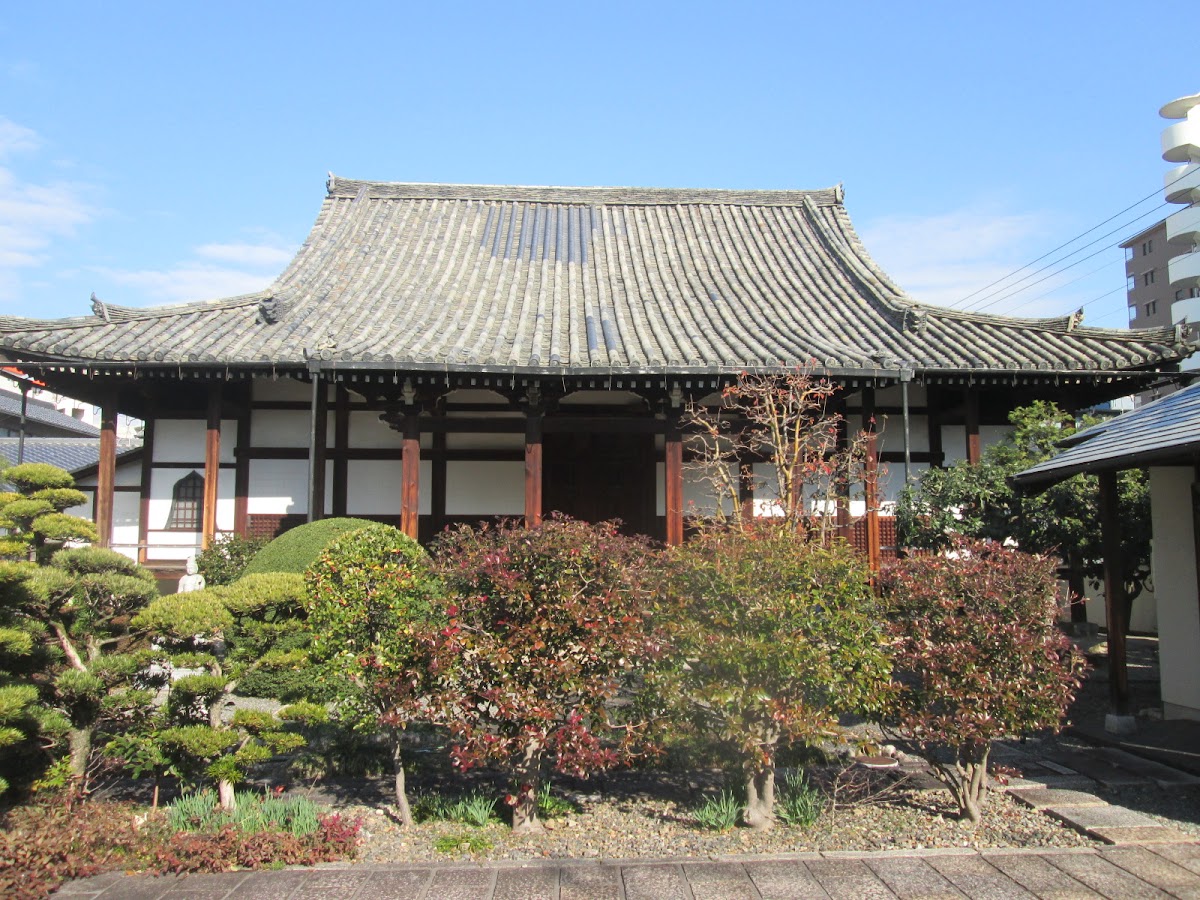
Fushimi Inari Taisha Main Hall
The main hall of Fushimi Inari Taisha is a historic shrine that was rebuilt in 1499 (Meio 8) after being destroyed in the Onin War, and is designated as a National Important Cultural Property. As the head shrine of Inari worship, it is the central presence for approximately 30,000 Inari shrines nationwide.
Architectural Style and Characteristics of the Main Hall
The main hall is built in the Gokensha Nagare-zukuri architectural style, characterized by its cypress bark roof. The front is five bays (approximately 9 meters) wide and is highly regarded as an excellent example of Muromachi period shrine architecture.
The contrast between the vermilion pillars and white walls is beautiful, and the details are adorned with intricate carvings. The dragon carving on the front of the hall is particularly magnificent and a point to be sure to notice when visiting.
Deities Enshrined and History
The following five deities are enshrined in the main hall.
- Ukanomitama-no-Okami – Lower Shrine (Central)
- Satahiko-no-Okami – Middle Shrine
- Omiyanome-no-Okami – Upper Shrine
- Tanaka-no-Okami – Lower Shrine Subsidiary Shrine
- Shino-no-Okami – Middle Shrine Subsidiary Shrine
It is said that the origin of Fushimi Inari Taisha dates back to 711 AD (Wado 4), when Hata no Irogu enshrined the gods on the three peaks of Mt. Inari, giving it a history of over 1300 years.
Points for Worship
Correct Way to Worship
To worship at the main shrine of Fushimi Inari Taisha, follow these steps:
1. Purify yourself at the water basin
Purify your body and mind at the water basin in front of the main shrine.
- Take the ladle with your right hand and purify your left hand.
- Switch the ladle to your left hand and purify your right hand.
- Switch the ladle back to your right hand, receive water in your left hand, and rinse your mouth.
- Purify your left hand again.
- Hold the ladle upright, purify the handle, and return it to its original position.
2. Worship at the Main Shrine
- Bow slightly in front of the offering box.
- Gently place your offering in the box.
- Ring the bell (if there is a bell rope).
- Worship using the two bows, two claps, one bow method.
- Bow deeply twice.
- Clap twice.
- Bow deeply once.
- Take a few steps back, bow once, and leave.
Best Time to Visit
- Early Morning (6:00-8:00)**: Fewer people, allowing for a quiet visit. The main shrine, illuminated by the morning sun, is beautiful.
- Weekday mornings: Relatively uncrowded, allowing for a peaceful visit.
- Times to avoid: 10:00-15:00 on weekends and holidays is extremely crowded.
During the New Year’s visit period (January 1st-3rd), hundreds of thousands of people visit, so visiting from mid-January onwards is recommended.
Points of interest around the main shrine
Outer Worship Hall (Dance Hall)
A vermilion-painted building located in front of the main shrine, where rituals and Kagura (sacred dance) are performed.
Inner Worship Hall
Located behind the Outer Worship Hall and in front of the main shrine, it is used for formal worship and prayers.
Tamayama Inari Shrine
A subsidiary shrine located east of the main shrine, known for its blessings of business prosperity.
Blessings and Faith
Main Blessings
The following blessings are believed to be bestowed at the main shrine of Fushimi Inari Taisha.
Abundant Harvest and Business Prosperity
Inari is originally the god of rice. The name “Inari” originates from “Inari” (rice harvest), and the god has been revered as an agricultural deity. In modern times, it is revered as a god of business prosperity and development, attracting the faith of business owners and merchants.
Specific Example: Many long-established restaurants and shops in Kyoto continue to visit the main shrine on the 1st and 15th of each month.
Family Safety and Safe Childbirth
Omiyanome-no-Okami is also known as a guardian deity of women and is believed to bring blessings for family harmony and safe childbirth.
Fulfillment of Wishes
Because five deities are enshrined here, it is believed that various wishes will be granted.
Amulets and Gifts
Various amulets and talismans are available at the gift shop near the main shrine.
- Business Prosperity Amulet: A vermilion coin-shaped amulet, praying for business prosperity.
- Layered Fortune Amulet: A beautiful amulet with layered colors, for the fulfillment of all wishes.
- Rice Ear Amulet: An amulet for a bountiful harvest and family safety.
- Sacred Arrow: A lucky charm for warding off evil and bringing good fortune.
The offering fee is approximately 500-1,000 yen.
Goshuin (Shrine Seal)
The Goshuin for the main shrine can be obtained at the Goshuin reception desk to the right after entering the main gate. The offering fee is 500 yen. The words “Homage” and the red seal of Fushimi Inari Taisha will be stamped on it. Special Goshuin may be given out during New Year’s and festival periods.
Access Information
Access by Train
Using the JR Nara Line
- Get off at JR Inari Station, short walk (approx. 1 minute)
- 2 stops from Kyoto Station, approx. 5 minutes, fare 150 yen
- Most convenient access method
- The entrance to the shrine grounds is right in front of the station exit
Using the Keihan Railway
- Get off at Keihan Fushimi Inari Station, approx. 5 minute walk
- approx. 10 minutes from Keihan Gion Shijo Station, fare 210 yen
- Convenient access from the Higashiyama area
Access by Bus
Kyoto City Bus
- Get off at South 5 Line “Inari Taisha-mae” stop, short walk
- approx. 15 minutes from Kyoto Station, fare 230 yen
- Due to limited bus service, using the train is recommended
Keihan Bus
- Get off at South 3 Line “Inari Taisha-mae” stop, short walk
Access by Car and Parking
Parking Information
There is free parking on the temple grounds, but spaces are limited.
- Capacity: Approximately 170 cars
- Operating Hours: 24 hours
- Fee: Free
- Note: Often full during the New Year period, weekends, and holidays
Nearby Paid Parking
- Times Fushimi Inari: 3-minute walk, 200 yen for 30 minutes
- Kyoto City Fukakusa Parking: 8-minute walk, 300 yen for 1 hour
We strongly recommend using public transportation on weekends, holidays, and during peak tourist seasons.
Comparison of Access from Kyoto Station
| Transportation | Travel Time | Fare | Recommendation Level |
|———|———|——|———-|
| JR Nara Line | Approx. 5 minutes | 150 yen | ★★★★★ |
| City Bus South 5 Line | Approx. 15 minutes | 230 yen | ★★☆☆☆ |
| Taxi | Approx. 10 minutes | Approx. 1,000 yen | ★★★☆☆ |
| Walking | Approx. 40 minutes | Free | ★☆☆☆☆ |
Visiting Information
Visiting Hours
The grounds of Fushimi Inari Taisha Shrine are open 24 hours for worship. However, there are time restrictions for the amulet office and prayer reception.
- Amulet Reception: 7:00-18:00 (Hours may vary depending on the season)
- Prayer Reception: 8:30-16:30
- Formal Worship at the Main Shrine: Reservation required, 9:00-16:00
Admission Fee
Free. You can freely visit all areas of the shrine grounds.
Estimated Time Required
- Visiting the Main Shrine only: 30 minutes
- To the Senbon Torii (Thousand Torii Gates): 1 hour
- To the Okusha Worship Hall: 1 hour 30 minutes
- Walking around Inariyama Mountain: 2-3 hours
Annual Events and Festivals
Various festivals are held at the Main Shrine throughout the year.
Main Festivals
- January 1st: Saitansai – A festival celebrating the New Year
- First Horse Day of February: Hatsuuma Taisai – The most important festival celebrating the day Inari Okami descended
- Around April 20th: Inari Matsuri – The procession of the five portable shrines, including the Shinkosai and Kankosai ceremonies
- June 10th: Tauesai – A Shinto ritual praying for a bountiful harvest
- November 8th: Hitakisai – The burning of fire skewers collected from all over Japan
While you can visit the shrine in a special atmosphere on the day of the festival, crowds are expected.
Summary
The main hall of Fushimi Inari Taisha is the center of Inari worship with a 1300-year history. You can receive blessings for business prosperity, family safety, and more in the beautiful shrine buildings, which are designated as Important Cultural Properties.
Its excellent accessibility, just a 1-minute walk from JR Inari Station, is also a major attraction. We recommend visiting early in the morning to enjoy the peaceful atmosphere. Combine this with a visit to the Senbon Torii (thousand torii gates) and a climb up Mount Inari for a fulfilling pilgrimage experience.