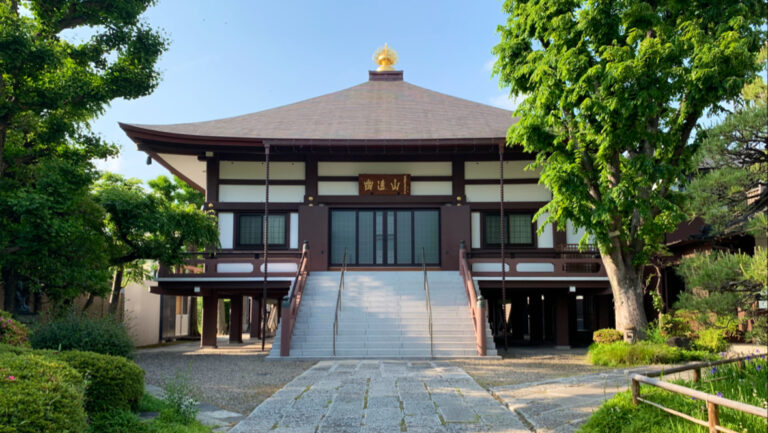
Genshinji Temple: A Complete Guide to the History and Highlights of this Jodo Sect Temple in Fukagawa, Koto Ward
Genshinji Temple is a Jodo sect temple located in Fukagawa, Koto Ward, Tokyo. Founded in the early Edo period, it is a historical temple that plays an important role in conveying the culture and history of the Fukagawa area. This article provides detailed information you should know before visiting, from the history of Genshinji Temple to its cultural assets and access methods.
Overview of Genshinji Temple
Genshinji Temple, officially known as “Yūenzan Rishōin Genshinji,” is a Jodo sect temple. It is registered as the 230th temple of the Tokyo Diocese and is one of the important centers of the Jodo sect.
Basic Information
- Location: 2-15-20 Fukagawa, Koto-ku, Tokyo
- Sect: Jodo-shu (Pure Land Buddhism)
- Mountain Name: Yuenzan
- Temple Name: Rishōin
- Principal Image: Amida Buddha
- Founder: Kanrensha Honyo Genko Tanshin Shōnin
- Founder: Rishōin (Wife of Ina Tadazumi, the Kantō District Governor)
- Established: Kan’ei 6 (1629)
History of Genshinji Temple
Circumstances of Establishment
Genshinji Temple was established in Kan’ei 6 (1629). The founder was Rishōin, the wife of Ina Tadazumi, who held the important position of Kantō District Governor in the Edo Shogunate. The Ina family is a prestigious family descended from Ina Tadatsugu, who served Tokugawa Ieyasu. They are known for their long-standing contributions to flood control and land reclamation projects as regional governors of the Kanto region.
The temple’s founder was the Kanrensha Hon’yo Genko Tanshin Shonin, who played a key role in spreading the teachings of the Jodo sect in the Fukagawa area. The temple’s name, “Genshinji,” is believed to derive from the founder’s posthumous Buddhist name.
Relocation from Fukagawa Shimosaga-cho to the Current Location
Genshinji Temple was originally founded in Fukagawa Shimosaga-cho (near present-day Saga, Koto Ward, Tokyo). This area was part of the Fukagawa district, which was developed in the early Edo period, and was a thriving fishing town.
However, just 12 years after its founding, in 1641 (Kanei 18), it relocated to its current location in Fukagawa Teramachi (present-day Fukagawa 2-chome, Koto Ward). This relocation is believed to have been part of the urban planning for the Fukagawa district. In the early Edo period, the shogunate systematically planned the placement of temples and shrines, forming temple districts that also served as firebreaks.
Donation of Temple Grounds
When the temple relocated to its current location, the temple grounds were donated by a man named Aikawa Shinbei. While Aikawa Shinbei’s detailed background is unclear, he is presumed to have been an influential figure involved in the development of the Fukagawa area. This donation allowed Genshinji Temple to establish the foundation it maintains to this day.
From the Edo Period to the Present
Throughout the Edo period, Genshinji Temple played a central role in local faith as a Jodo sect temple in the Fukagawa area. Overcoming numerous difficulties, including the anti-Buddhist movement after the Meiji Restoration, the Great Kanto Earthquake, and the damage of World War II, it has continued to uphold its religious traditions to this day.
Cultural Properties and Highlights of Genshinji Temple
Wooden Amida Triad Statue
The wooden Amida Triad statue owned by Genshinji Temple is designated as a registered cultural property of Koto Ward. The Amida Triad is a typical arrangement for the principal image of a Jodo sect temple, featuring Amida Buddha in the center, Kannon Bodhisattva on the right, and Seishi Bodhisattva on the left.
This triad statue clearly demonstrates the characteristics of Buddhist sculpture from the Edo period and is a valuable resource for understanding the religious practices and artistic styles of that time.
Bronze Dōsei (made by Nishimura Izumi-no-kami)
Another important cultural property of Genshinji Temple is the bronze dōsei (dōsei fusegane). This was made by a metal caster named Nishimura Izumi-no-kami and is designated as a registered cultural property of Koto Ward.
The dōsei is a type of percussion instrument used in Buddhist rituals, used to keep rhythm during chanting. Nishimura Izumi-no-kami was a renowned metal caster of the Edo period, and his works are highly regarded both technically and artistically.
The Large Ginkgo Tree on the Temple Grounds
Genshinji Temple is known for its magnificent ginkgo tree on its grounds. This magnificent tree, which exudes a strong presence regardless of the season, turns golden in autumn, becoming a symbol of autumn in Fukagawa. While its exact age is unknown, it is a beloved ancient tree that has witnessed the history of the temple, and is cherished by local residents.
Cemetery and Notable Figures
Genshinji Temple is the resting place of many people from the Edo period to the present day. It houses the graves of people who lived in the Fukagawa area, including the temple’s founder, Rishoin, making it an important place that tells the story of the region’s history.
The temple cemetery showcases the evolution of tombstone styles from the Edo period to modern times, making it a valuable resource for studying Edo commoner culture.
Goshuin (Temple Seals) and Temple Events
About Goshuin (Temple Seals)
You can receive a Goshuin at Genshinji Temple. As befits a Jodo sect temple, the Goshuin features a Sanskrit character representing Amida Buddha and the temple’s name in calligraphy. Those wishing to receive a Goshuin are advised to contact the temple in advance to confirm the available times.
Annual Events
As a Jodo sect temple, Genshinji Temple holds various memorial services and events throughout the year. In particular, the memorial service for Honen Shonin, the founder of the Jodo sect, and the Obon (Buddhist festival) Segaki (feeding of hungry ghosts) service are important events that attract many parishioners.
Access
Public transportation is the most convenient way to access Genshinji Temple.
Access by Train
- Tokyo Metro Tozai Line “Monzen-Nakacho Station”: Approximately 5-6 minutes on foot from Exit 6
- Toei Oedo Line “Monzen-Nakacho Station”: Approximately 5-6 minutes on foot from Exit 6
- Toei Oedo Line “Kiyosumi-Shirakawa Station”: Approximately 10 minutes on foot
Monzen-Nakacho Station is the nearest station. From the station, head towards the residential area of the Fukagawa district, opposite to the direction of Fukagawa Fudodo Temple and Tomioka Hachimangu Shrine.
Walking Route
Exit from Exit 6 of Monzen-Nakacho Station, cross Eitai-dori Street, and head towards Fukagawa 2-chome. While located in a residential area, the surrounding area is a temple district with several temples such as Zorinji, Eizenji, and Shogakuji, making it a great place for temple hopping.
Access by Car
If using the Metropolitan Expressway, the nearest exits are Hakozaki IC or Kiba IC. However, the area around the temple is a residential area with narrow roads, so it is recommended to check with the temple in advance regarding the availability of dedicated parking.
Nearby Attractions
When visiting Genshinji Temple, it is recommended to also visit other attractions in the Fukagawa area.
Fukagawa Fudodo Temple
A Shingon Buddhist temple located right next to Monzen-Nakacho Station, and the Tokyo branch temple of Naritasan Shinshoji Temple. It is bustling with many worshippers on the 28th of each month.
Tomioka Hachimangu Shrine
A shrine known for the “Fukagawa Hachiman Festival,” one of the three major Edo festivals. It also has strong ties to sumo wrestling, and the grounds contain monuments to Yokozuna (grand champion) sumo wrestlers.
Fukagawa Edo Museum
A museum recreating the townscape of Fukagawa during the Edo period, allowing visitors to experience the daily life of ordinary people at that time.
Kiyosumi Garden
A strolling garden with a pond and trees, built during the Meiji era, designated as a scenic spot in Tokyo. Visitors can enjoy the scenery of each season.
History and Temple Town Culture of the Fukagawa Area
The Fukagawa area, where Genshinji Temple is located, was developed in the early Edo period. Originally a low-lying wetland near the sea, it was developed into a town through land reclamation and flood control after Tokugawa Ieyasu’s entry into Edo.
The name Fukagawa is said to originate from Fukagawa Hachiroemon, who developed the area. Throughout the Edo period, it prospered through fishing, timber yards, and warehousing, playing an important role as “Edo’s kitchen.”
The formation of temple districts was part of the Edo shogunate’s urban planning. By concentrating temples, the districts served as both firebreaks and centers of religion and culture. Fukagawa Teramachi, including Genshinji Temple, is a valuable area that preserves the history of this Edo urban planning.
The Teachings of the Jodo Sect and Genshinji Temple
The Jodo sect, to which Genshinji Temple belongs, is a Buddhist sect founded by the Kamakura period monk Honen Shonin (1133-1212). It teaches that by chanting “Namu Amida Butsu,” anyone can equally receive salvation from Amida Buddha and attain rebirth in the Pure Land.
Honen Shonin gained support from a wide range of people, from nobles to commoners, by presenting an easy-to-understand practical method—simply chanting the Buddha’s name—rather than complex ascetic practices or scholarship. During the Edo period, it received patronage from the Tokugawa family and spread throughout Japan.
Genshinji Temple, based on the teachings of the Jodo sect, supports the religious lives of its parishioners and continues to transmit the teachings of Nembutsu through memorial services and ceremonies.
Genshinji Temple in the Modern Era
Genshinji Temple in the modern era maintains its role as a traditional temple while also valuing its connection with the local community. While based on the danka (parishioner) system, it also welcomes general visitors, attracting those interested in the history and culture of the Fukagawa area.
In recent years, it is said that the temple is considering offering memorial services that meet modern needs, such as perpetual memorial services and tree burials. Amidst declining birth rates, an aging population, and the rise of nuclear families, these initiatives are attracting attention as new options for those who find traditional burial plot management difficult.
Points to Note and Manners When Visiting Genshinji Temple
When visiting Genshinji Temple, please note the following points.
Temple Visiting Etiquette
- Remember that temples are places of worship; please pray quietly.
- It is advisable to obtain permission in advance before taking photographs in the main hall.
- Please refrain from smoking or eating on the temple grounds.
- Do not enter the cemetery area without permission.
Visiting Hours
Temple opening hours and service times may vary. Especially if you wish to receive a temple stamp (Goshuin) or would like more detailed explanations, it is recommended to contact the temple by phone in advance to confirm.
Dress Code
There are no specific dress code requirements, but please dress appropriately and respectfully for a place of worship.
Summary
Genshinji Temple is a Jodo sect temple founded in 1629 during the early Edo period, with a history of approximately 400 years. The wife of Ina Tadayoshi, the Kanto regional governor, founded the temple and spread the teachings of Jodo sect in the Fukagawa area. Genshinji Temple houses valuable cultural assets, including a wooden statue of Amida Triad and a bronze gong, both registered cultural properties of Koto Ward, preserving the history and culture of the Fukagawa area.
Its convenient location, just a 5-minute walk from Monzen-Nakacho Station, is another attractive feature. Visiting it along with nearby attractions such as Fukagawa Fudodo Temple and Tomioka Hachimangu Shrine allows for a deeper understanding of the history and culture of the Fukagawa area.
Genshinji Temple quietly preserves its Buddhist teachings in the Fukagawa district, where Edo-era downtown culture still thrives. By experiencing its history, cultural assets, and the teachings of the Jodo sect, we, living in the modern age, are sure to gain many insights and lessons. When strolling through Fukagawa, be sure to visit Genshinji Temple.