Hachiman Asami Shrine Complete Guide | History, Goshuin (Shrine Seal), and Access Information for Beppu Onsen’s Guardian Shrine
Hachiman Asami Shrine, located on a hill in Beppu City, Oita Prefecture, is a venerable shrine with a history of over 800 years, serving as the guardian shrine of Beppu Onsen. Founded by Otomo Yoshinao during the Kamakura period, the shrine boasts many attractions, including grounds offering panoramic views of Beppu City, a sacred camphor tree over a thousand years old, and the famous “Married Couple Cedar” known as a power spot for matchmaking.
This article comprehensively introduces information you should know before visiting Hachiman Asami Shrine, including its history, enshrined deities, highlights of the grounds, goshuin information, and access methods.
What is Hachiman Asami Shrine?
Hachiman Asami Shrine is a shrine located in Asami 2-chome, Beppu City, Oita Prefecture, also known as “Asami Hachiman-gu.” Its former shrine rank was Prefectural Shrine, and it is currently designated as a Special Shrine by the Association of Shinto Shrines. As the guardian deity of Beppu Onsen, this is a representative shrine of Beppu, attracting many worshippers not only from the local area but also from outside the prefecture and even from overseas.
From the shrine grounds, you can enjoy a panoramic view of Beppu city, and it is also known as a spectacular viewpoint where you can see Beppu Bay and the distant mountains. In Beppu, a hot spring resort town, it is said that “for physical healing, visit Beppu Onsen, and for spiritual healing, visit Hachiman Asami Shrine,” and there is a constant stream of people visiting for both sightseeing and worship.
History of Hachiman Asami Shrine
Circumstances of its Founding
Hachiman Asami Shrine was founded in Kenkyu 7 (1196). On January 11th of that year, Lord Otomo Yoshinao, who was appointed as the governor of both Buzen and Bungo provinces and as the Chinzei Bugyo (military governor of Kyushu) by the Kamakura Shogunate, came to this area. It is said that on June 11th of the same year, Lord Otomo Yoshinao, who entered Bungo Province from Hamawakiura, Hayami District (present-day Hamawaki, Beppu City), established the Hachiman Asami Shrine by inviting the deity from Tsurugaoka Hachimangu Shrine in Kamakura.
The Otomo clan was a powerful retainer of the Kamakura Shogunate and a warrior who enjoyed the deep trust of Minamoto no Yoritomo. Tsurugaoka Hachimangu Shrine was revered as the tutelary deity of the Minamoto clan, and it is thought that Lord Otomo Yoshinao’s inviting the Hachiman deity to his base of operations in Bungo Province also served to demonstrate the legitimacy of his samurai government.
Changes in Shrine Location
Initially, the Hachiman Asami Shrine was located in Ryugaoka (present-day Otohara area). However, in 1348, the shrine grounds collapsed due to the eruption of Mount Tsurumi (Tsurumi-dake). Following this disaster, the shrine was relocated to its current location in the Asami area.
Beppu is located at the foot of Mount Tsurumi, an active volcano, and has coexisted with volcanic activity since ancient times. The relocation of the shrine is also deeply connected to the region’s topography and natural environment.
From the Edo Period to the Present
During the Edo period, the shrine buildings were rebuilt three times: during the Kanbun era (1661-1673), the Genroku era (1688-1704), and the Bunka era (1804-1818). This reflects the development of the Beppu region and the deep faith of its residents.
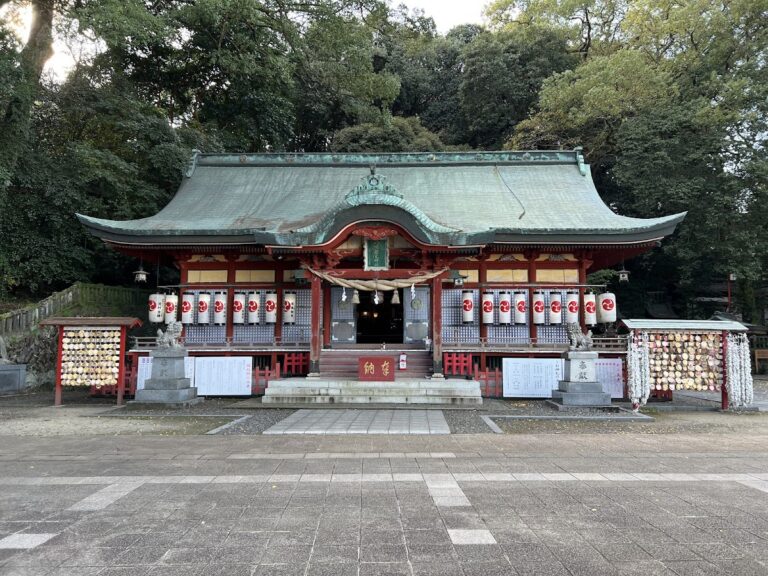
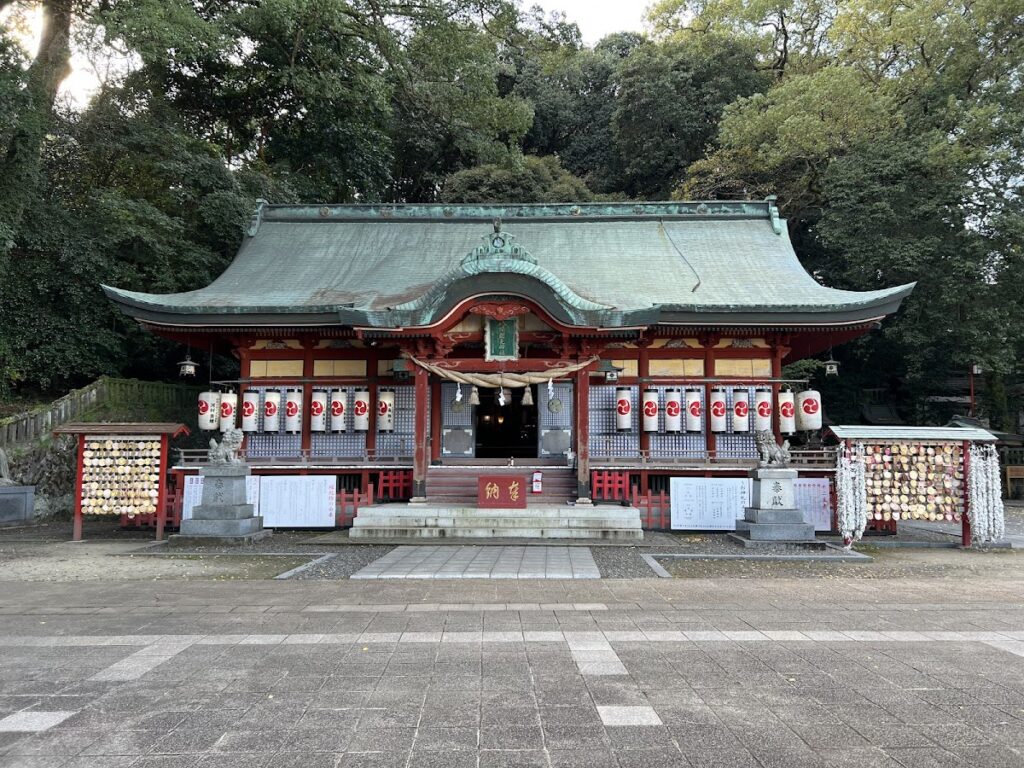
The current shrine building was renovated and refurbished in 1922 (Taisho 11) by the renowned local master carpenter, Sakuhachi Arakane. It is a valuable structure that preserves the traditional style of shrine architecture while utilizing the architectural techniques of the Taisho era.
After World War II, the Onsen Shrine, the guardian deity of Beppu Onsen, was enshrined together with the current shrine, making it the de facto guardian shrine of Beppu Onsen. This merger gave Hachiman Asami Shrine not only the characteristics of a war god but also the role of a guardian deity of hot springs, establishing its position as a spiritual pillar of Beppu, a hot spring city.
Deities and Divine Virtues
The following deities are enshrined at Hachiman Asami Shrine:
Main Deities
- Ōsazaki no Mikoto – Emperor Nintoku
- Homudawake no Mikoto – Emperor Ōjin
- Tarashinakatsuhiko no Mikoto – Emperor Chūai
- Okinagatarashihime no Mikoto – Empress Jingū
Other Deities
With the merger of the Onsen Shrine, deities protecting hot springs are also enshrined, bringing the total number of enshrined deities to seven.
Divine Virtues
The divine virtues of Hachiman Asami Shrine are diverse.
- National Peace and Security, Protection from Misfortune and Good Fortune – Hachiman is known as a god of war and is worshipped as a god who wards off disaster and protects the country.
- Victory and Career Advancement – As the tutelary deity of the Minamoto clan, Hachiman has the divine virtue of granting long-lasting military fortune and victory.
- Matchmaking and Marital Harmony – The twin cedar trees on the shrine grounds are known as a power spot for matchmaking.
- Protection of Hot Springs and Prayer for Health – The shrine enshrines a hot spring deity and protects the blessings of hot springs and health.
- Business Prosperity and Industrial Development – As the guardian deity of the region, it watches over the development of industry.
Highlights on the Shrine Grounds
The Sacred Camphor Tree
The most impressive feature of Hachiman Asami Shrine is the sacred camphor tree that stands tall on the shrine grounds. This camphor tree is estimated to be over 1,000 years old, standing approximately 30 meters tall with a trunk circumference of about 11 meters, making it one of the largest trees in Japan.
This magnificent camphor tree is believed to have taken root in this area even before the shrine was founded, and has watched over the history of Beppu for centuries. Its overwhelming presence evokes a sense of nature’s greatness and sacredness in visitors. The vitality emanating from the entire tree makes it a popular power spot, and many worshippers clasp their hands together before the sacred tree, feeling its energy.
Married Couple Cedar (Power Spot for Matchmaking)
Two cedar trees stand side by side along the main approach to the shrine and are known as the “Married Couple Cedar.” These two cedars are connected at the base, resembling a married couple holding hands, and are revered as a symbol of matchmaking and marital harmony.
Young worshippers hoping for success in love and couples praying for marital harmony can be seen making wishes in front of the Married Couple Cedar. Often featured on social media as a “Beppu power spot for matchmaking,” it’s a popular spot for couples and groups of women.
Atmosphere of the Shrine and Grounds
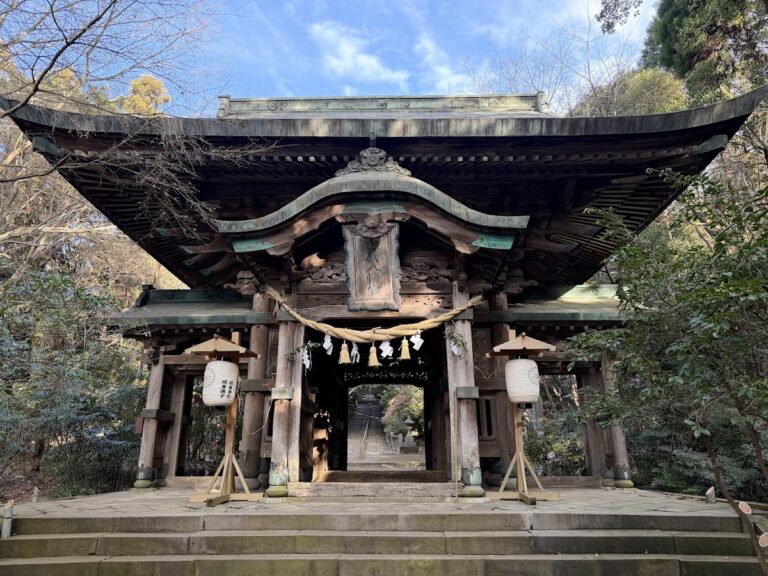
The shrine building, rebuilt in 1922 (Taisho 11), still conveys the beauty of traditional shrine architecture. The meticulous work of local master carpenter Sakuhachi Arakane is evident throughout, and the detailed decorations and woodworking techniques are truly impressive.
The shrine grounds are located on a hill, so there are stairs leading to the shrine, but the view from the grounds is magnificent, offering panoramic views of Beppu city, Beppu Bay, and even Shikoku in the distance on some days. The scenery is especially stunning on clear mornings and evenings, making it a popular spot for photography.
The grounds are enveloped in a tranquil atmosphere, providing a peaceful space despite being in an urban area. It’s a popular place not only for worship but also for strolling and refreshing oneself.
Goshuin (Shrine Seal) Information
In addition to the regular goshuin, seasonal goshuin are also available at Hachiman Asami Shrine. ### Standard Goshuin (Shrine Seal)
The standard goshuin features a simple yet dignified design with the calligraphy and red seal of “Hachiman Asami Shrine.” The offering fee is usually around 300-500 yen.
Seasonal Limited Edition Goshuin
Hachiman Asami Shrine offers limited edition goshuin designs for each season, making them popular with goshuin collectors and visitors. They feature colorful and beautiful designs inspired by seasonal motifs such as cherry blossoms in spring, fresh greenery in summer, autumn leaves in fall, and snowscapes in winter.
The official Instagram account (@asamijinja) regularly posts the latest information on limited edition goshuin, so it’s recommended to check it before your visit.
Goshuincho (Shrine Seal Book)
Hachiman Asami Shrine also offers original goshuincho. Multiple designs are available, including those featuring the large camphor tree and the shrine buildings.
Reception Hours for the Shrine Office
The hours for receiving Goshuin (shrine stamps) are usually from 9:00 AM to around 5:00 PM, but these may vary depending on festivals and events. If you wish to be sure to receive one, it is recommended to contact the shrine in advance.
Amulets and Souvenirs
Hachiman Asami Shrine offers a variety of amulets and souvenirs.
- Exorcism Amulet – For those in their unlucky year or those seeking protection from misfortune
- Matchmaking Amulet – A matchmaking amulet related to the “Married Couple Cedar” trees
- Health Amulet – Receive the divine blessings of the shrine’s guardian deity of hot springs
- Traffic Safety Amulet – Pray for safe driving and safe travels
- Academic Success Amulet – For students taking exams or those wishing for academic improvement
- Business Prosperity Amulet – Pray for business development
Please note that Hachiman Asami Shrine does not, in principle, offer amulets or souvenirs online. If you wish to receive them by mail, you must contact the shrine directly.
Annual Events and Festivals
Hachiman Asami Shrine holds various festivals and events throughout the year.
Main Annual Events
- January 1st – New Year’s Day Festival
- February 3rd – Setsubun Festival
- Spring – Spring Grand Festival
- July – Summer Purification Ceremony
- Autumn – Autumn Grand Festival (Most Important Festival)
- November – Shichi-Go-San Festival
- December 31st – Year-End Purification Ceremony, New Year’s Eve Festival
The Autumn Grand Festival, in particular, is a grand festival involving the entire community, featuring a portable shrine procession and dedication ceremonies. It’s a Beppu autumn tradition that attracts not only local residents but also many tourists.
Access and Transportation Information
Address
15-19, Asami 2-chome, Beppu City, Oita Prefecture 874-0845
Access by Train
Approximately 15-20 minutes on foot from JR Nippo Main Line “Beppu Station”. It is located on a hill in the city center, south of Beppu Station. While it is a gentle uphill climb from the station, it is possible to walk to the shrine.
Access by Bus
If using a local bus from Beppu Station, get off at the “Asami” bus stop and walk for approximately 5 minutes. Several bus routes, including Kamei Bus, operate on this route.
Access by Car
- Approximately 10 minutes from Oita Expressway “Beppu IC”
- Approximately 5 minutes from the center of Beppu city
When searching with a car navigation system, please search for “Hachiman Asami Shrine” or the address.
Parking
The shrine has a parking lot for visitors. Approximately 30 regular-sized cars can be parked. Parking is free of charge.
During peak seasons such as the first three days of the New Year and the Autumn Grand Festival, the parking lot may become full. In such cases, we recommend using nearby paid parking lots or public transportation.
Accessibility Information
Yawata Asami Shrine is located on a hill, so you will need to climb stairs to reach the grounds. Those using wheelchairs or with mobility issues are advised to contact the shrine in advance. They may be able to assist you with the route from the parking lot to the shrine grounds and with instructions on how to worship.
The shrine grounds are paved with stones, making it relatively easy to walk on in sunny weather, but some areas can become slippery in rainy weather, so caution is advised.
Manners and Points for Visiting a Shrine
Etiquette for Visiting a Shrine
- Bow before passing through the torii gate – As a sign of respect before entering the sacred area.
- Purify yourself at the water basin – Purify your left hand, then your right hand, then your mouth.
- Avoid walking in the center of the path – The center is considered the path of the gods.
- Worship in front of the main hall – Two bows, two claps, and one bow is the basic form.
- Walk around the shrine grounds – Visit points of interest such as the sacred tree and the twin cedar trees.
- Bow again at the torii gate when leaving – With gratitude.
Photography
Photography is generally permitted on the shrine grounds, but consideration should be given to avoiding disturbing other worshippers or during religious ceremonies. Photography inside the shrine buildings may be prohibited, so please check before taking pictures.
Attire
While there are no strict dress code regulations, since the shrine is a sacred place, it is advisable to avoid overly casual or revealing clothing.
Nearby Tourist Attractions
Numerous of Beppu’s most famous tourist attractions are located around Hachiman Asami Shrine.
Beppu Hot Springs
Within walking distance of the shrine are Hamawaki Onsen and Beppu Onsen, two of Beppu’s eight hot springs. Relaxing in a hot spring after visiting the shrine is a unique Beppu experience that offers both mental and physical healing.
Beppu Hell Tour
Approximately 10-15 minutes by car is the “Hell Tour,” a representative tourist attraction of Beppu. You can visit unique hot springs such as Umi Jigoku (Sea Hell), Chinoike Jigoku (Blood Pond Hell), and Shiraike Jigoku (White Pond Hell).
Beppu Tower
Beppu Tower, a landmark of Beppu city, is also nearby. From the observation deck, you can enjoy panoramic views of Beppu Bay and the city.
Takegawara Onsen
A representative public bathhouse in Beppu, known for its retro atmosphere. You can also enjoy sand baths.
Accommodation and Gourmet Information in Beppu
Recommended Accommodations
Beppu is a hot spring resort with numerous accommodation options. From luxury ryokans (traditional Japanese inns) to business hotels and guesthouses, you can choose according to your budget and purpose. Especially from hot spring ryokans along the coast, you can enjoy spectacular views of Beppu Bay.
Beppu Gourmet
- Toriten – Beppu and Oita’s specialty chicken tempura
- Jigoku-mushi Ryori – Local cuisine cooked using hot spring steam
- Seki Aji/Seki Saba – High-grade fish from the Bungo Channel
- Dango-jiru – Oita’s local cuisine
- Ryukyu – Pickled fish rice bowl
There are also many restaurants scattered around the shrine, allowing you to enjoy a meal after visiting the shrine.
Model Course Including a Visit to Hachiman Asami Shrine
Half-Day Course (Morning)
- 9:00 – Arrive at JR Beppu Station
- 9:15 – Walk to Hachiman Asami Shrine
- 9:30-10:30 – Visit Hachiman Asami Shrine, stroll around the grounds, and receive a Goshuin (shrine stamp)
- 11:00-12:00 – Stop by a hot spring in Beppu Onsen town
- 12:00-13:00 – Have Toriten (chicken tempura) lunch at a local restaurant
Full-Day Course
- 9:00 – Arrive at Beppu Station
- 9:30-10:30 – Visit Hachiman Asami Shrine
- 11:00-12:30 – Beppu Hell Tour (Umi Jigoku, Oniishi Bozu Jigoku, etc.)
- 12:30-13:30 – Lunch featuring Jigoku-mushi (hell-steamed) cuisine
- 14:00-15:00 – Sand bath experience at Takegawara Onsen
- 15:30-16:30 – Stroll around Beppu city center and purchase souvenirs
- 17:00 – Departure from Beppu Station
Contact Information
Hachiman Asami Shrine
- Address: 2-15-19 Asami, Beppu City, Oita Prefecture 874-0845
- Phone: 0977-23-1408 (Main contact number)
- Official Website: http://www.asami.or.jp/
- Instagram: @asamijinja
For details regarding mail-order amulets, prayer reservations, etc., please contact the shrine directly.
Summary
Hachiman Asami Shrine is a shrine deeply loved by the local people as the guardian shrine of Beppu Onsen, with a history of over 800 years. From its founding in the Kamakura period to the present day, this shrine has watched over the development of Beppu.
The sacred camphor tree, over a thousand years old, exudes an overwhelming presence, and the twin cedar trees attract many visitors as a power spot for matchmaking. The view of Beppu city from the shrine grounds is also magnificent, making it a place where you can refresh both mind and body.
Seasonal limited-edition goshuin (shrine stamps) and festivals held throughout the year are also part of its charm. When you visit Beppu, not only will you heal your body in the hot springs, but you should also visit Hachiman Asami Shrine to find healing for your soul. As the saying goes, “Heal your body at Beppu Onsen, heal your soul at Hachiman Asami Shrine,” you will be able to spend a fulfilling time unique to Beppu.
Its convenient location, within walking distance of Beppu Station, is also a major attraction. When sightseeing in Beppu, be sure to visit Hachiman Asami Shrine and experience its history and sacred atmosphere.