
Hachiman Shrine (Iizaka-machi, Fukushima City, Fukushima Prefecture) Complete Guide | The Sacred Site of the Minamoto no Yoshiie Legend and the Iizaka Fighting Festival
Hachiman Shrine, located in Hachiman, Iizaka-machi, Fukushima City, Fukushima Prefecture, is an ancient shrine with nearly a thousand years of history as the guardian deity of Iizaka Onsen (hot springs). It is said to have been established by Minamoto no Yoshiie in the late Heian period, in the 4th year of Tenki (1056). The “Iizaka Fighting Festival,” held every October, is nationally known as one of Japan’s three major fighting festivals. This article provides a detailed explanation of everything you need to know before visiting Hachiman Shrine, including its history, enshrined deities, cultural properties, festivals, and access methods.
History and Origins of Hachiman Shrine
Legend of Founding by Minamoto no Yoshiie
The founding of Hachiman Shrine, the guardian shrine of Iizaka-machi, is ancient, and although the exact date is unknown, according to shrine tradition, it dates back to the late Heian period, in the 4th year of Tenki (1056). In this year, when Minamoto no Yoshiie, who was campaigning in Oshu during the Later Three Years’ War, passed through this area, he saw eight long, trailing clouds in the sky. The sight resembled the white flag of the Minamoto clan fluttering in the sky, and Yoshiie believed it to be a sign of victory from Hachiman, his guardian deity. It is said that he then enshrined Hachiman here to pray for victory.
This legend demonstrates the deep connection between the Minamoto clan and Hachiman. Hachiman has long been revered as a god of war by samurai families, and was particularly important to the Minamoto clan as their tutelary deity. Minamoto no Yoshiie’s enshrinement of Hachiman in this area marked the beginning of the establishment of war god worship in Iizaka.
Construction of the Shrine by Sato Motoharu
Around the Yowa era (1181), Sato Shoji Motoharu, the lord of Otori Castle, transferred a divided spirit from Usa Hachiman Shrine in Buzen Province and constructed a shrine. Usa Hachimangu Shrine is the head shrine of all Hachiman shrines nationwide, and the fact that a branch shrine was directly established there speaks to the high status of Hachiman shrines. Sato Motoharu, as the Shinobu Shoji (governor of Shinobu), was a highly influential figure in the region and considered Hachiman shrine important as a place of prayer for the Sato family.
Initially, the shrine building was located within the grounds of Otori Castle, but in 1710 (Hoei 7), it was relocated and rebuilt at its current location. The shrine building constructed at that time still exists today, and it is a valuable cultural asset that conveys the characteristics of shrine architecture from the mid-Edo period.
Reverence by Successive Lords
Throughout the Edo period, Hachiman shrines attracted the faith of local residents as the guardian shrine of Iizaka, and were also revered by successive lords. Rulers, including the lord of the Fukushima domain, protected Hachiman shrines as a spiritual pillar of the region, providing support for the maintenance of the shrine buildings and festivals. Through this patronage, Hachiman shrines established their position as a central shrine in the Iizaka region.
Deities and Divine Virtues
Emperor Ojin (Homutawake-no-Mikoto)
The deity enshrined at Hachiman Shrine is Homutawake-no-Mikoto, also known as Emperor Ojin, the 15th emperor of Japan. Emperor Ojin was deified as Hachiman-shin and is widely worshipped as a god of war and archery. He is also known as a god of good fortune in competitions, protection from evil, and national peace, and was particularly revered in samurai society.
Characteristics of Hachiman Worship
Hachiman worship is known as a typical example of syncretism of Shinto and Buddhism, and was deeply intertwined with Buddhism. Hachiman-ji Temple (Enzoin), located near Iizaka Hachiman Shrine, formerly served as the shrine’s chief temple, overseeing its rituals. Although the separation of Shinto and Buddhism occurred during the Meiji era, the two remain adjacent to each other, allowing us to feel the remnants of the former syncretism.
Spread of Faith
Hachiman Shrine is not only worshipped as a god of military fortune and victory, but has also been cherished as a place that receives prayers for all aspects of life of local residents, including abundant harvests, business prosperity, and family safety. Visitors to Iizaka Onsen also have a custom of visiting the shrine to pray for safe travels and recovery from illness, and it also serves as a guardian deity of the hot spring area.
Highlights of the Shrine and Grounds
Main Hall (Fukushima City Designated Tangible Cultural Property)
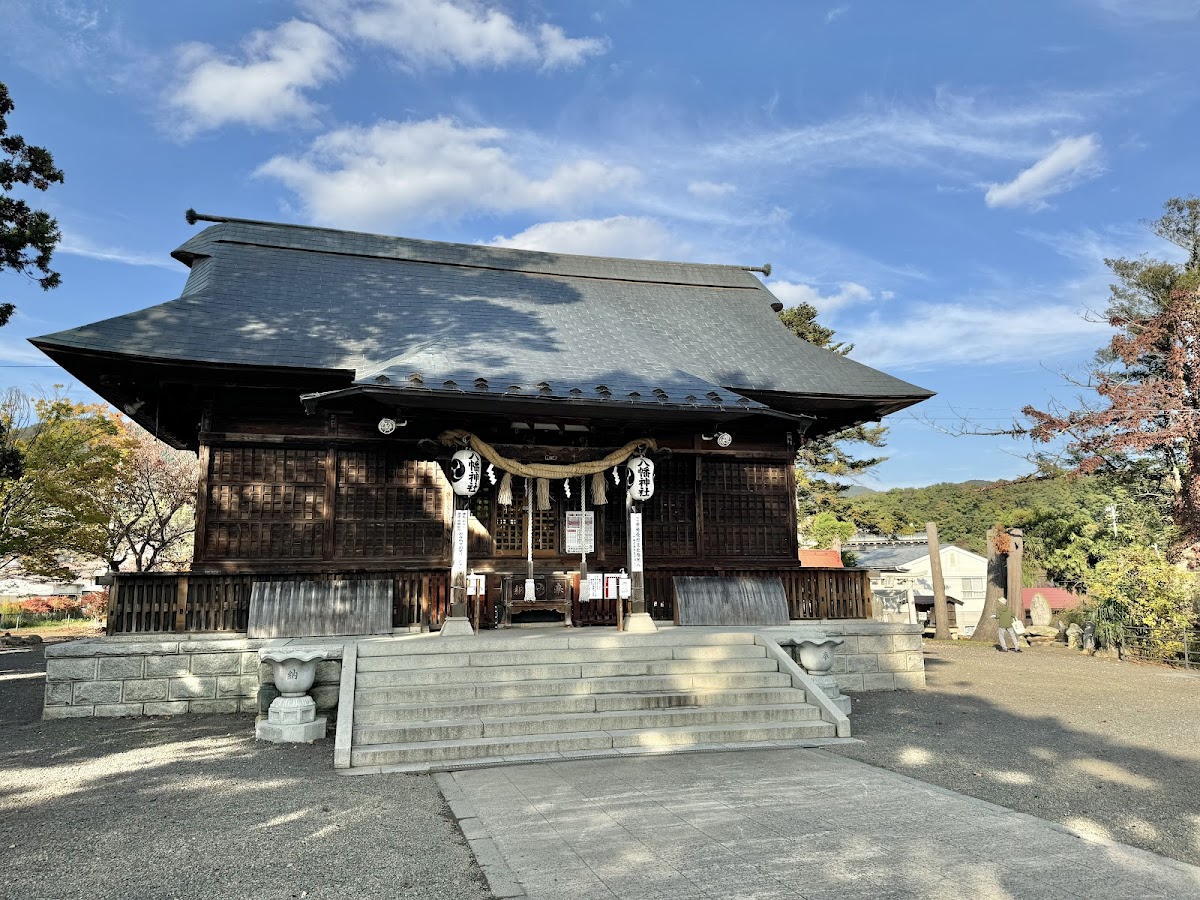
The current shrine building was rebuilt in 1710 (Hoei 7) and is registered as a Fukushima City Designated Tangible Cultural Property. It strongly retains the architectural style of shrines from the mid-Edo period, and features intricate carvings and decorations. The carvings on the front of the hall are particularly magnificent, with designs of dragons, lions, flowers, and birds demonstrating the high level of craftsmanship of the time.
The main shrine is built in the Sangensha Nagare-zukuri style, with a copper-plated roof. The contrast between the vermilion pillars and white walls is beautiful, instilling a sense of solemnity in worshippers. Although over 300 years have passed since its construction, it remains in excellent condition thanks to proper maintenance, making it a valuable legacy that conveys the architectural techniques and religious history of the Edo period.
Worship Hall and Shrine Grounds
The worship hall is located in front of the main shrine and is where worshippers offer their prayers. The spacious area becomes bustling with many worshippers during major festivals. The grounds include facilities such as a purification fountain, shrine office, and Kagura hall, providing all the necessary functions of a shrine.
Despite being located in the heart of the Iizaka Onsen hot spring resort area, the shrine grounds maintain a tranquil atmosphere. Climbing the stone steps of the approach leads to a sacred space far removed from the hustle and bustle of everyday life. There are also large trees on the grounds, some estimated to be several hundred years old, giving a sense of its long history.
Stone Monuments and Memorials
The shrine grounds are dotted with stone monuments and memorials from various eras, telling the story of Hachiman Shrine’s history. In particular, the votive monuments from the Edo and Meiji periods are valuable historical materials that reveal the state of faith and the local community at the time.
Iizaka Fighting Festival | The Power of One of Japan’s Three Great Fighting Festivals
Festival Overview and History
The most distinctive feature of Hachiman Shrine is that it is the stage for the “Iizaka Fighting Festival,” held annually around the first Saturday of October. Officially called the “Iizaka Hachiman Shrine Grand Festival,” this festival is considered one of Japan’s three great fighting festivals and is known nationwide for its intensity and power.
The origin of the festival is uncertain, but it is believed that its current form was established at least by the Edo period. The name “fighting festival” comes from the clash of portable shrines that takes place at the festival’s climax, and this magnificent event is the festival’s greatest highlight.
Festival Flow and Highlights
The Iizaka Kenka Festival is held over three days. The first day is the eve of the festival, with drum floats from each neighborhood parading through the streets. On the second day, the main festival, six drum floats enter the Hachiman Shrine, where a fierce “fight” unfolds as they clash. The final day is the post-festival, featuring a procession of portable shrines and float parades.
The biggest highlight is the “Miyairi” (entering the shrine) on the night of the main festival. Drum floats from each neighborhood gather in the shrine grounds and clash violently. The sight of these multi-ton floats colliding is breathtaking, with the creaking of wood and the shouts of the bearers echoing through the night sky. This intensity is the reason it’s called the “fighting festival,” and it’s its greatest attraction, captivating spectators.
Positioning as one of Japan’s Three Great Fighting Festivals
The Iizaka Fighting Festival is considered one of Japan’s three great fighting festivals, along with the Kazariyama Bayashi Festival (Odate City, Akita Prefecture) and the Niihama Taiko Festival (Niihama City, Ehime Prefecture) (though there are various theories). Each festival has its own unique characteristics, but the Iizaka Fighting Festival is characterized by the fierce clashes of the taiko drum floats and the post-festival socializing that takes advantage of its location in a hot spring town.
During the festival, Iizaka Onsen (hot spring resort) is bustling with tourists, and accommodations are fully booked. Enjoying a soak in the hot springs after watching the festival is a unique charm of Iizaka.
Participating in and Viewing the Festival
The Iizaka Fighting Festival is a traditional event primarily run by local residents, but tourists are welcome to watch. Especially during the main festival’s procession into the shrine, many spectators gather, so arriving early is recommended to secure a good viewing spot. The shrine grounds become crowded, so it’s important to view the festival safely.
In recent years, photos and videos documenting the festival have spread on social media, attracting attention from younger generations. The Iizaka Kenka Festival, which continues to showcase new attractions while preserving tradition, will undoubtedly be passed down as a treasure of the region.
Goshuin (Shrine Seal) and Visiting Information
Issuance of Goshuin
Goshuin are available at Hachiman Shrine. The shrine office is usually open from 9:00 to 17:00, but since priests may not always be present, it is recommended to call ahead to confirm if you wish to receive a goshuin. The goshuin features the calligraphy of “Iizaka Hachiman Shrine” and the shrine’s seal, and is a popular memento for many visitors.
Goshuin notebooks are also available, including designs unique to this shrine, such as those featuring motifs from the Iizaka Kenka Festival. For those who enjoy collecting goshuin, Hachiman Shrine is one of the important pilgrimage spots in Fukushima City.
Manners and Etiquette for Visiting a Shrine
The basic etiquette for visiting a shrine is to bow before passing through the torii gate, and to walk along the path avoiding the center. After purifying your hands and mouth at the water basin, proceed to the main hall, offer your donation, and perform the ritual of two bows, two claps, and one bow. The same etiquette can be followed at Hachiman shrines.
The shrine grounds are a sacred place, so please avoid making loud noises or entering restricted areas. Photography is generally permitted, but be aware that there are areas where photography is prohibited, such as inside the main hall.
Access and Surrounding Information
Basic Information
Address: 1 (or 6-1) Hachiman, Iizaka-machi, Fukushima City, Fukushima Prefecture
Phone Number: 024-542-2560
Visiting Hours: Grounds are freely accessible (Shrine office is open from 9:00 to 17:00)
Parking: Available (limited number of spaces, may be unavailable during festivals)
Access by Train
Approximately 5-10 minutes on foot from Iizaka Onsen Station on the Fukushima Kotsu Iizaka Line. The journey from Fukushima Station to Iizaka Onsen Station takes about 20 minutes, with trains running every 15-30 minutes during the day. Upon exiting Iizaka Onsen Station and heading towards the center of the hot spring town, you will see the torii gate of Hachiman Shrine.
There are also guide signs around Iizaka Onsen Station, so even first-time visitors should be able to arrive without getting lost. Enjoying a stroll through the hot spring town on your way to the shrine is also recommended.
Access by Car
It’s about a 10-minute drive from the Fukushima Iizaka Interchange on the Tohoku Expressway. Take National Route 13 to enter the Iizaka Onsen hot spring town, where the shrine is located in the heart of the town. If using a car navigation system, searching for “Iizaka Hachiman Shrine” or its phone number will provide accurate directions.
There is a parking lot adjacent to the shrine, but spaces are limited and may be full during festivals and on weekends. In that case, please use the public parking lot in Iizaka Onsen and walk to the shrine.
Nearby Tourist Attractions
Several attractive tourist spots in Iizaka Onsen are scattered around Hachiman Shrine.
Sabakoyu: This is the oldest public bathhouse in Iizaka Onsen, located about a 5-minute walk from Hachiman Shrine. It’s known for its hot spring water and is popular with both locals and tourists. Soaking in the hot springs after visiting the shrine is a unique Iizaka experience.
Former Horikiri Residence: This facility is a former residence of the Horikiri family, known as wealthy farmers and merchants. It’s about a 7-minute walk from Hachiman Shrine. It’s a valuable cultural asset that retains the architectural style of the Meiji era, and its beautiful garden is also a highlight. Admission is free, and you can enjoy a footbath.
Palce Iizaka: This is a tourist information hub in Iizaka Onsen, convenient for obtaining tourist information and taking a break. There’s also a section selling local specialties, making it ideal for souvenir shopping.
Hachiman-ji Temple (Enzo-in): This is a Shingon sect Buzan-ha temple located next to Hachiman Shrine. It was formerly the shrine’s head temple. It’s an ancient temple said to have been founded during the Tenpyo era (757-764), where you can feel the history of Shinto-Buddhist syncretism.
About Iizaka Onsen
Iizaka Onsen is a historic hot spring resort, counted as one of the “Three Famous Hot Springs of Oshu,” along with Akiu Onsen and Naruko Onsen in Miyagi Prefecture. The area was already known as a hot spring resort around the 2nd century, and a legend remains that Yamato Takeru no Mikoto stopped there during his eastern expedition.
Matsuo Basho also visited Iizaka Onsen during his journey on the “Oku no Hosomichi” (Narrow Road to the Deep North), and historical sites associated with Basho are scattered throughout the hot spring town. The spring water is a simple hot spring, said to be effective for neuralgia, muscle pain, and joint pain.
The hot spring town has nine public bathhouses, each offering a different atmosphere. There are also numerous inns and hotels, many of which accept day-trip bathers. A sightseeing plan combining a visit to Hachiman Shrine and a hot spring bath is a classic itinerary when visiting Iizaka.
Annual Events and Festivals
Main Annual Events
In addition to the Iizaka Fighting Festival, various festivals are held throughout the year at Hachiman Shrine.
New Year’s Day Festival (January 1st): A festival celebrating the New Year, attracting many first-time visitors. Many tourists staying at Iizaka Onsen also visit the shrine for Hatsumode (first shrine visit of the year), making the grounds lively.
Setsubun Festival (around February 3rd): Beans are scattered, and prayers are offered for protection against evil. This is a traditional event with many local residents participating.
Spring Festival: A spring festival praying for a bountiful harvest.
Summer Purification Ceremony (June 30th): A Shinto ritual to purify oneself of the impurities accumulated over the past six months and pray for good health for the remaining half of the year.
Autumn Grand Festival (3 days including the first Saturday of October): The largest festival, known as the Iizaka Fighting Festival.
Niiname-sai Festival (November 23rd): A festival expressing gratitude for the harvest.
Great Purification Ceremony (December 31st): A year-end Shinto ritual to purify oneself of the impurities accumulated over the past year.
These festivals are passed down as important events that convey the region’s traditions and beliefs to the present day.
Cultural Value and Role of Hachiman Shrine in the Community
Value as a Cultural Property
The shrine buildings of Hachiman Shrine are valuable cultural properties that preserve the shrine architecture of the mid-Edo period. They are protected as a Fukushima City-designated tangible cultural property and are maintained in good condition through regular upkeep. Their academic value is recognized from various perspectives, including architectural style, carving techniques, and decorative designs, making them indispensable for understanding the region’s history.
Center of the Community
Hachiman Shrine is not merely a place of worship; it also plays a central role in the local community. Festivals, including the Iizaka Fighting Festival, provide opportunities for residents of all generations to cooperate, strengthening community bonds.
In particular, the preparation and operation of the Iizaka Fighting Festival are primarily carried out by local organizations centered around neighborhood associations, serving as a place for passing on traditions to younger generations. Through the festival, a sense of attachment to the region is fostered, creating a positive cycle of strengthened community cohesion. ### Value as a Tourism Resource
The Hachiman Shrine and the Iizaka Fighting Festival are important tourist resources for Iizaka Onsen. They attract many tourists not only for their hot springs but also as a place to experience history and culture. Especially during the festival period, visitors come from all over Japan, making a significant contribution to the local economy.
In recent years, the number of foreign tourists has also increased, and the area is gaining international attention as a place to experience traditional Japanese culture. Efforts are being made to improve the reception system, including the development of multilingual information pamphlets.
Recommended Plan for Visiting Hachiman Shrine
Day Trip Plan
Morning: Take the Iizaka Line from Fukushima Station to Iizaka Onsen Station (approx. 20 minutes) → Visit Hachiman Shrine (30 minutes to 1 hour) → Visit the Former Horikiri Residence and enjoy a footbath (1 hour)
Afternoon: Take a bath at Sabako-yu or another public bath (30 minutes to 1 hour) → Stroll through the hot spring town and have lunch (1 to 2 hours) → Purchase souvenirs at Palce Iizaka → Return home
This plan allows you to efficiently visit Hachiman Shrine and the main spots of Iizaka Onsen in half a day to a full day.
Accommodation Plan
Staying overnight in Iizaka Onsen allows you to enjoy your shrine visit and hot springs at a more leisurely pace. We recommend checking in in the evening, soaking in the hot springs, and visiting Hachiman Shrine the next morning. The quiet shrine grounds in the early morning offer a different, more sacred atmosphere than during the day.
If you choose to stay overnight, consider using a ryokan or hotel in Iizaka Onsen. Many accommodations are within walking distance of Hachiman Shrine, and you can also enjoy strolling through the hot spring town.
Festival Viewing Plan
If you plan to see the Iizaka Kenka Festival, it’s important to book your accommodation early. Accommodations fill up quickly during the festival period, so booking several months in advance is recommended.
The main procession to the shrine takes place at night, so it’s common to stroll through the hot spring town during the day and then secure a viewing spot around the shrine in the evening. If you want to experience the festival’s excitement up close, arrive early to secure a good viewing location. However, be extremely careful of safety as the floats collide violently.
Summary
Hachiman Shrine in Iizaka-machi, Fukushima City, Fukushima Prefecture, is a historical shrine said to have been established by Minamoto no Yoshiie in the late Heian period. The shrine building, rebuilt in 1710, is protected as a Fukushima City designated tangible cultural property and preserves the architectural style of the Edo period.
Its most distinctive feature is that it is the stage for the “Iizaka Kenka Festival,” held every October. This festival, considered one of Japan’s three greatest fighting festivals, is a magnificent event where drum floats clash violently, attracting many spectators from all over the country.
Its privileged location in Iizaka Onsen is also a major draw, allowing visitors to enjoy sightseeing that combines shrine visits with hot spring bathing. There are many other attractions nearby, such as the former Horikiri Residence and Sabako-yu hot spring, making it possible to spend a full day exploring.
With easy access—approximately a 5-10 minute walk from Iizaka Onsen Station on the Fukushima Kotsu Iizaka Line—it’s a must-visit spot for anyone sightseeing in Fukushima. Goshuin (shrine stamps) are also available, making it a great choice for those who enjoy visiting shrines.
Hachiman Shrine boasts a variety of attractions: the legend of Minamoto no Yoshiie, the excitement of the Iizaka Fighting Festival, Edo-period shrine buildings, and hot springs. When visiting Iizaka Onsen, be sure to visit this shrine steeped in history and tradition.


