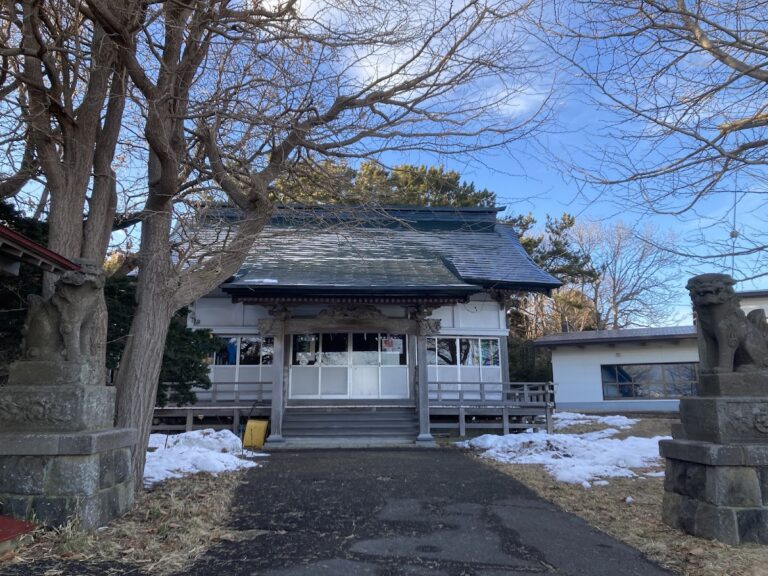
Hachiman Shrine (Shinori-cho, Hakodate City, Hokkaido) Complete Guide | History, Deities, and Access Information
Hachiman Shrine, located in Shinori-cho, Hakodate City, Hokkaido, is a shrine that has been revered as the local guardian deity for many years. It holds the status of a former village shrine and is still carefully maintained by 162 parishioners. This article provides a detailed introduction to Hachiman Shrine, including its history, enshrined deities, features of the grounds, and information on visiting.
Basic Information on Hachiman Shrine (Shinori-cho)
Location and Contact Information
Location: 239 Shinori-cho, Hakodate City, Hokkaido 042-0923
Phone Number: 0138-58-2044
Shinori-cho is located in the eastern part of Hakodate City and is a historical area facing the Pacific Ocean. Hachiman Shrine has long served as a central presence in the local community, a spiritual pillar for the residents.
Shrine Rank and Historical Positioning
Hachiman Shrine (Shinori-cho) is a shrine with the rank of Former Village Shrine. A village shrine refers to a shrine designated as the guardian shrine of a village under the modern shrine ranking system of the Meiji era. This rank indicates the importance of the shrine to the local community and speaks to the historical and cultural value of Hachiman Shrine in Shinori-cho.
Belonging to the Hokkaido Shrine Association, and as a formally recognized shrine, it continues to support local faith while preserving Shinto traditions.
About the Deity Enshrined: Hondawake-no-Mikoto
About Hondawake-no-Mikoto
The enshrined deity of Hachiman Shrine (Shinori-cho) is Hondawake-no-Mikoto. Hondawake-no-Mikoto is the divine name of Emperor Ojin, the 15th emperor, and is a deity widely worshipped as Hachiman-sama at Hachiman shrines throughout Japan.
Characteristics of Hachiman Faith
Hachiman-sama holds a particularly important position in Japanese Shinto. This faith has the following characteristics:
Character as a God of War: As the tutelary deity of the Minamoto clan, he was deeply revered by samurai families and is known as a god of military fortune and victory.
God of National Protection: Due to his history as Emperor Ojin, he is also revered as a god who protects national security and regional peace.
God of Agriculture and Industry: He is also worshipped as a god of regional development, abundant harvests, and industrial promotion.
God of Protection from Misfortune and Good Fortune: He is also cherished as a god who protects people from various calamities and brings good fortune and prosperity.
Many worshippers visit the Hachiman Shrine in Shinori-cho seeking these divine blessings.
Annual Festival and Events
Annual Festival: August 15th
The annual festival of Hachiman Shrine (Shinori-cho) is held every year on August 15th. The annual festival is the most important religious ceremony at the shrine and the most grandly performed ritual of the year.
Held on August 15th, coinciding with the Obon period, it brings together many parishioners and local residents, including those returning home for the holidays. The festival includes a portable shrine procession and dedication ceremonies, serving as an important opportunity to strengthen community bonds.
Festival Culture of the Shinori Region
Shinori Town, located in eastern Hakodate City, has developed as a long-established fishing community. Therefore, beliefs related to the sea, such as prayers for maritime safety and abundant catches, are strongly reflected in the festivals of the Hachiman Shrine.
During the annual festival, dedication ceremonies by local children and traditional Kagura (sacred dance) performances are sometimes held, ensuring that the region’s culture is passed down through generations.
Features of the Shrine Building and Grounds
Shrine Building Style: Nagare-zukuri (Flowing Style)
The shrine building of Hachiman Shrine (Shinori-cho) is built in the Nagare-zukuri style. Nagare-zukuri is one of the most common styles in Japanese shrine architecture and has the following characteristics:
- The front of the roof extends long, forming an overhang.
- Characterized by the elegant curved lines of the roof.
- A practical structure that protects worshippers from rain and snow.
Even in Hokkaido’s harsh climate, this Nagare-zukuri structure is effective in protecting the shrine building from snow and wind and rain.
Size of the Grounds
Shrine Building Area: 29 tsubo (approximately 96 square meters)
Grounds Area: 396 tsubo (approximately 1,309 square meters)
The grounds area of 396 tsubo is a standard size for a village shrine and is an appropriate size for a local guardian shrine. The shrine grounds include the main hall, the worship hall, and facilities such as a purification fountain and the shrine office.
Atmosphere and Highlights of the Shrine Grounds
The grounds of Hachiman Shrine in Shinori-cho are enveloped in a tranquil and peaceful atmosphere. Although the surrounding area is residential, stepping onto the grounds evokes a sacred feeling.
The grounds are lined with ancient trees, allowing visitors to experience the changing seasons. In particular, the fresh greenery of spring, the deep green of summer, the autumn foliage, and the snowy winter landscapes offer beautiful scenery unique to Hokkaido.
Connections between the Shrine and the Community
Number of Parishioner Households: 162 Households
Hachiman Shrine (Shinori-cho) has 162 parishioner households. Parishioners are people who live in the area protected by the shrine and who believe in and support the shrine.
The size of 162 households reflects the characteristics of the Shinori-cho area. While smaller than large urban shrines, this allows for strong ties among parishioners, maintaining the shrine within a close-knit community.
As a Center of the Local Community
Hachiman Shrine is not merely a religious institution; it is a central presence in the Shinori-cho local community. Annual events, including the festival, provide valuable opportunities for local residents to gather and interact.
The shrine is maintained and managed by an organization centered around the parishioners’ representatives, with local residents cooperating in activities such as cleaning and preparing for festivals. Through these activities, community bonds are strengthened, fostering a sense of unity within the community.
Role in Modern Times
In today’s society, with its declining birthrate and aging population, the role of local shrines is changing. Hachiman Shrine (Shinori-cho) is no exception, but it continues to play an important role as a place for life rituals such as New Year’s visits, Shichi-Go-San (a traditional rite of passage for children), and exorcisms, as well as a place to pass on the history and culture of the region.
Access and Visiting Information
Access by Public Transportation
Using Hakodate Bus:
- Take a Hakodate Bus from JR Hakodate Station
- Travel time: Approximately 35 minutes
- Get off at the “Shinori” bus stop
- Approximately 3 minutes on foot from the bus stop
Buses from Hakodate Station towards Shinori travel east along National Route 278. Since bus service is limited, it is recommended to check the Hakodate Bus timetable in advance.
Access by Car
If traveling by car from central Hakodate:
- Head east along National Route 278
- Travel time: Approximately 25-30 minutes from Hakodate Station
- Enter Shinori-cho and follow the signs
It is recommended to check parking availability before visiting. Especially on days with events such as festivals, surrounding roads may be congested.
Geographical Characteristics of Shinori Town
Shinori Town is located in the eastern part of Hakodate City, facing the Pacific Ocean. Formerly an independent fishing village, it is now incorporated into Hakodate City. Located near the coastline, it is a region with a strong history of fishing.
There are also historical sites nearby, such as the Shinori-kan ruins, making it a recommended place to visit in conjunction with a historical walk.
Points to Note When Visiting
Visiting Hours: While you can generally visit the shrine grounds freely, the issuance of Goshuin (shrine stamps) and prayers at the shrine office may have limited hours. It is recommended to check by phone in advance.
Dress Code: There are no specific dress code requirements, but modest attire that reflects the sacred nature of the place is desirable.
Manners: Please pray quietly on the shrine grounds and be considerate of other visitors. Photography is permitted, but there are areas where photography is restricted, such as inside the main hall.
Differences from Other Hachiman Shrines in Hakodate
Comparison with Hakodate Hachimangu Shrine
Besides the Hachiman Shrine in Shinori-cho, Hakodate City also has a famous shrine called “Hakodate Hachimangu Shrine” located in Yachigashira. Both are shrines based on the same Hachiman faith, but they have the following differences:
Hakodate Hachimangu Shrine:
- Positioned as the general guardian shrine of Hakodate City
- High rank as a former village shrine
- Long history, founded in 1445
- Large scale, attracting tens of thousands of visitors for New Year’s prayers
- Close to the city center, also known as a tourist spot
Hachiman Shrine (Shinori-cho):
- Community-oriented as the tutelary deity of Shinori-cho
- Rank as a former village shrine, serving as the guardian shrine of the region
- Rooted in a small community of 162 parishioners
- Quiet and peaceful worship environment
- Strongly preserves the history and culture of the region
Neither is superior to the other; each has different roles and characteristics. While Hakodate Hachimangu Shrine is a large-scale shrine that attracts the faith of the entire city, the Hachiman Shrine in Shinori-cho can be described as a warm, community-oriented shrine.
Hachiman Shrines in Hakodate City
In addition to the Hachiman Shrines in Shinori-cho and Yachigashira, there is also a Hachiman Shrine in Zenigame-cho. Furthermore, there are several Hachiman shrines within the Hakodate city area, including Kameda Hachimangu Shrine.
This indicates that Hachiman worship is widespread throughout Japan, and that in the history of the development and settlement of the Hakodate region, each area invited Hachiman as its own tutelary deity.
History of Shinori-cho and the Hachiman Shrine
Origin of the Place Name Shinori
The place name “Shinori” is believed to originate from the Ainu language. The most likely theory is that it comes from the Ainu words “Shinot” (true cape) or “Shi-not” (large cape). It is believed that this area was named after its cape-like topography, which juts out into the Pacific Ocean.
Historical Background of Shinori
Shinori is an area that has been inhabited since ancient times, and Jomon period ruins have been discovered there. Furthermore, in the Middle Ages, a manor house called “Shinori-kan” was built, serving as a center of the region.
From the Edo period to the Meiji period, it developed as a settlement centered on fishing. Herring fishing and kelp fishing were thriving, and the lives of people living in harmony with the sea continued.
Founding and Development of Hachiman Shrine
While detailed records of when the Hachiman Shrine in Shinori-cho was founded are limited, its designation as a village shrine indicates that it was a place of local worship even before the Meiji era.
In Shinori, a fishing settlement, Hachiman-sama was revered as the guardian deity of maritime safety and as an object of prayer for peace and prosperity in the region. The shrine developed in close connection with the lives of the local residents.
Hachiman Worship in Hokkaido
The Spread of Shrines to Hokkaido
The history of shrines in Hokkaido is relatively recent compared to Honshu. The construction of full-fledged shrines occurred from the late Edo period to the Meiji era, as Japanese migration progressed.
Because Hachiman worship was a widespread belief throughout Japan, many Hachiman shrines were established in Hokkaido. The settlers invited Hachiman from their hometown shrines and prayed for safety and prosperity in their new land.
Characteristics of Hachiman Shrines in Hokkaido
Hachiman shrines in Hokkaido have the following characteristics:
Connection to Settlement: Many Hachiman shrines were established during the settlement period as guardian deities of the region.
Connection to Fishing: Coastal Hachiman shrines tend to have a particularly strong emphasis on prayers for maritime safety and abundant catches.
Connection to Agriculture: In inland areas, the focus is on prayers for abundant harvests and agricultural development.
The Heart of the Local Community: In the difficult circumstances of pioneering, shrines served as a spiritual anchor for people and a place that strengthened community bonds.
The Hachiman Shrine in Shinori Town is situated within this context of Hachiman worship in Hokkaido.
Benefits and Faith of Visiting the Shrine
What You Can Pray for at Hachiman Shrine
At Hachiman Shrine (Shinori-cho), the following benefits are believed to be obtained through the divine virtues of Homudawake-no-Mikoto:
Family Safety: Protection of family health and peaceful living
Business Prosperity: Development of business and prosperity
Maritime Safety: Safe navigation for fishermen and vessels
Protection from Misfortune and Good Fortune: Warding off various calamities and inviting good fortune
Traffic Safety: In modern times, prayers for traffic safety, including for automobiles, are also offered
Academic Success: Improvement of children’s academic performance
Prayer for Good Relationships: To be blessed with good relationships
Life Rituals and Hachiman Shrine
At Hachiman Shrine, various rituals are performed at milestones in life:
First Shrine Visit: The first shrine visit after birth
Shichi-Go-San: A ceremony celebrating a child’s growth
Exorcism: Prayers for protection against misfortune during unlucky years
Prayers for safety: Prayers for traffic safety when purchasing a new car, etc.
Through these rituals, local residents interact with the shrine at various stages of their lives and pass on their faith.
Etiquette for visiting a shrine
Basic worship procedure
Here are the basic manners for visiting a Hachiman Shrine:
1. Bow before passing through the torii gate
Before entering the sacred area, bow before the torii gate. This is an act of respect to the gods.
2. How to walk along the approach to the shrine
The center of the approach is considered the path of the gods, so it is desirable to walk along the sides.
3. Purifying at the Water Basin
If there is a water basin, purify yourself using the following steps:
- Take the ladle with your right hand and purify your left hand.
- Switch the ladle to your left hand and purify your right hand.
- Switch the ladle back to your right hand, receive water in your left hand, and rinse your mouth.
- Purify your left hand once more.
- Hold the ladle upright, purify the handle, and return it to its original position.
4. Worship at the Main Hall
Worship in front of the main hall using the following procedure:
- Quietly place your offering in the offering box.
- Ring the bell if there is one.
- Two bows, two claps, one bow (bowing deeply twice, clapping twice, bowing deeply once).
- Make your wish quietly in your heart.
5. Bow Upon Exit
When you have finished your worship and are leaving through the torii gate, turn around and bow once.
Regarding Visiting in Winter
In Hokkaido, winter brings heavy snowfall, and the shrine grounds are covered in snow. When visiting during winter:
- Wear non-slip shoes
- Take sufficient precautions against the cold
- Watch your step
- Do not use the water basin if it is frozen
Please be mindful of safety when visiting the shrine.
Summary: A place of worship rooted in the community
Hachiman Shrine (Shinori-cho, Hakodate City, Hokkaido) has a long history as a former village shrine and is carefully preserved by 162 parishioners. It enshrines Homudawake-no-Mikoto as its main deity and plays a central role in the region’s faith and culture, centering on its annual festival on August 15th.
With its nagare-zukuri style shrine building and 396-tsubo (approximately 1,260 square meters) grounds, this shrine has a warm, community-oriented atmosphere that differs from the large shrines in Hakodate City. Rooted in the historic fishing village of Shinori-cho, it has supported the faith of people who live in harmony with the sea.
Located approximately 35 minutes by bus from JR Hakodate Station and a 3-minute walk from the Shinori bus stop, this shrine is easily accessible during your Hakodate sightseeing trip. In its quiet and peaceful environment, you can experience local history and culture and offer a serene prayer.
When visiting Hakodate, why not explore not only the famous tourist spots but also these locally rooted shrines? Hachiman Shrine (Shinori-cho) is a valuable resource for understanding the history of shrines in Hokkaido and their role within local communities.