Hachioji Shrine (Fuefuki City, Yamanashi Prefecture) Complete Guide | History, Deities, and Access Information
Hachioji Shrine, located in Hirose, Isawa-cho, Fuefuki City, Yamanashi Prefecture, is a historical shrine founded in the early Edo period, in the first year of the Genna era (1615). This article comprehensively introduces all the information you need to know before visiting Hachioji Shrine, including its detailed history, enshrined deities, highlights within the grounds, access methods, and surrounding area information.
Basic Information on Hachioji Shrine
Hachioji Shrine is located in the Hirose district of Isawa-cho, Fuefuki City, Yamanashi Prefecture, and has long been cherished as a center of local faith.
Location and Contact Information
- Address: 998 Hirose, Isawa-cho, Fuefuki City, Yamanashi Prefecture 406-0035
- Corporate Number: 4090005002401
- Jurisdiction: Yamanashi Prefectural Shrine Association
Deities Enshrined
The deities enshrined at Hachioji Shrine are deeply connected to the history of its founding. The name Hachioji is said to originate from the Hachioji faith of Gozu Tenno (identified with Susanoo-no-Mikoto) in Buddhism.
Shrine Rank and Status
This shrine has been revered by the people of the Hirose district as the local tutelary deity. It has a history dating back to the Edo period and has functioned as a spiritual pillar of the local community.
History and Origins of Hachioji Shrine
The history of Hachioji Shrine dates back to the early Edo period. According to the records of the Yamanashi Prefectural Shrine Association, there is an interesting story behind its founding.
History of Founding
Hachioji Shrine, founded on September 9, 1615 (Genna 1), has a deep connection to a man named Maruyama Yahei Mitsunao. Maruyama Mitsunao served the Tokugawa clan during the Tensho era (1573-1593) and resided in Koishiwa, Yatsushiro District.
In 1615, Mitsunao moved to Mizuguchi Village (present-day Hirose area), and on September 9th of the same year, he established a shrine beside his residence in Oyamada, calling it Chinju Hachioji. This is considered the beginning of the shrine. This period coincides with the time after Tokugawa Ieyasu established the Edo Shogunate, a time when society entered a period of stability.
Development during the Edo Period
After its founding, Hachioji Shrine continued to attract the faith of local people, and the construction of shrine buildings was carried out over the years.
- July, Hōreki 9 (1759): Shrine building construction
- March, Bunka 12 (1815): Shrine building construction
These records show that the shrine was maintained and developed throughout the Edo period. The two constructions of the shrine building, in particular, demonstrate the deep faith and financial support of the local residents.
History since the Meiji Era
Even after the Meiji-era separation of Shinto and Buddhism, Hachioji Shrine continued to exist as a local shrine, attracting the faith of the people of the Hirose district to this day.
Highlights of the Shrine Grounds
The grounds of Hachioji Shrine are enveloped in a tranquil atmosphere that evokes a sense of history.
Shrine Buildings
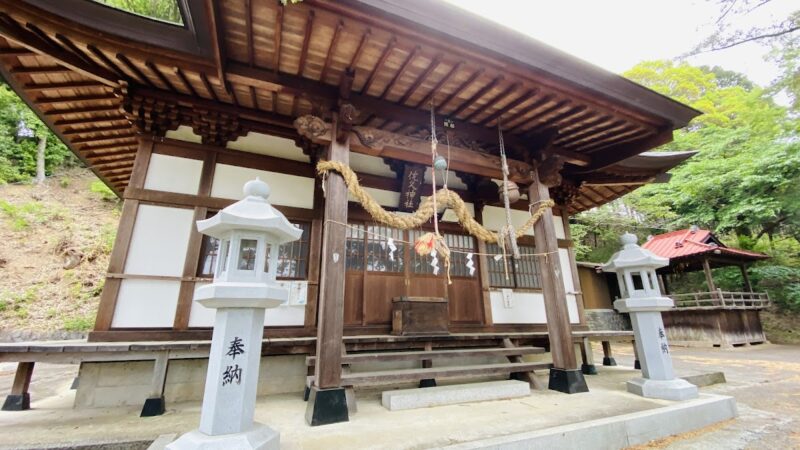
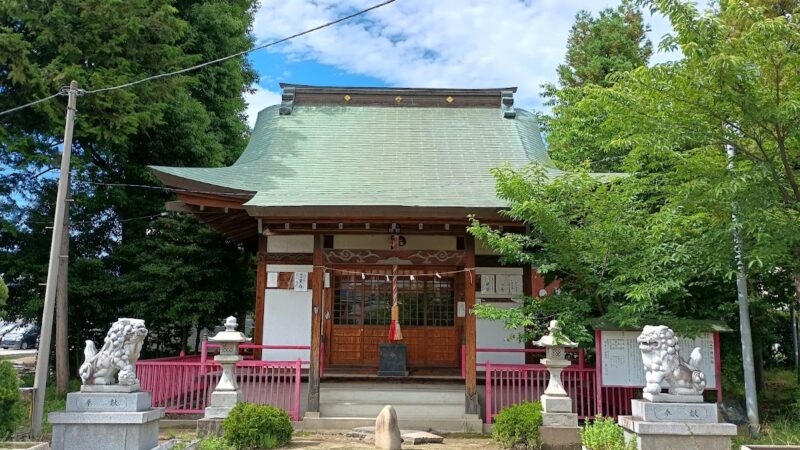
The current shrine buildings have an architectural style that inherits the traditions of Edo-period construction. The structure, consisting of a main hall and a worship hall, is characteristic of local shrine architecture.
Subsidiary Shrines
Besides the main hall, there may be smaller shrines enshrined within the grounds of Hachioji Shrine. Local shrines typically have subsidiary shrines within their grounds, such as Inari shrines and Tenjin shrines.
Sacred Trees and Natural Environment
Located in the naturally rich environment of Fuefuki City, Hachioji Shrine boasts ancient trees and seasonal flowers within its grounds, allowing visitors to enjoy the changing scenery throughout the seasons.
Annual Events and Festivals
Hachioji Shrine holds various Shinto rituals and festivals throughout the year.
Annual Grand Festival
The annual grand festival may be held around September 9th, the shrine’s founding date. The annual grand festival of a local shrine is an important event where local residents gather.
New Year’s Visit and New Year’s Festival
At the start of the new year, worshippers visit for their first shrine visit of the year, praying for peace and prosperity throughout the year.
Other Annual Events
- Spring Festival
- Autumn Festival
- Monthly Festival
These are some of the Shinto rituals performed according to the shrine’s calendar.
Access Information
Here’s how to get to Hachioji Shrine.
Access by Train
Nearest Station: JR Chuo Main Line “Isawa-Onsen Station”
- Walking from Isawa-Onsen Station: Approximately 20-25 minutes
- Taxi from Isawa-Onsen Station: Approximately 5-7 minutes
Access by Car
Via Chuo Expressway
- Approximately 10 minutes from Ichinomiya-Misaka IC
- Approximately 15 minutes from Katsunuma IC
Parking
Judging from the size of the shrine, there may be parking spaces for visitors on the grounds or nearby. However, parking for large vehicles may be difficult, so we recommend checking in advance.
Address (for car navigation)
998 Hirose, Isawa-cho, Fuefuki City, Yamanashi Prefecture 406-0035
History and Culture of Isawa-cho, Fuefuki City
Isawa-cho, Fuefuki City, where Hachioji Shrine is located, is known as one of Yamanashi Prefecture’s leading hot spring resorts.
Isawa Onsenkyo
Isawa Onsen is a relatively new hot spring resort, discovered in 1961, but it has now developed into the largest hot spring resort in Yamanashi Prefecture. When visiting Hachioji Shrine, you can also enjoy overnight stays or day trips to Isawa Onsen.
Region with Thriving Fruit Cultivation
Fuefuki City is nationally famous for its peach and grape production. Especially during the spring peach blossom season, a beautiful landscape unfolds, with the entire area dyed pink.
Historical Background
Isawa Town belonged to Yatsushiro District of Kai Province and has developed as the center of the Kofu Basin since ancient times. During the Sengoku period, it was part of the Takeda clan’s territory, and during the Edo period, it flourished as a post town on the Koshu Kaido road.
Surrounding Shrines and Temples
Besides Hachioji Shrine, many other shrines and temples are scattered around Isawa Town in Fuefuki City.
Isawa Hachimangu Shrine
This is a prestigious shrine known as the guardian shrine of the Isawa area. It’s about a 10-minute drive from Hachioji Shrine.
Saku Shrine
One of the main shrines in Isawa Town, it is a center of local faith.
Kumano Shrine (Kamihirai)
A shrine based on Kumano faith, located in the Kamihirai district of Isawa Town.
Suwa Shrine (Koishiwa)
A shrine of Suwa faith, enshrined in the Koishiwa district.
Shinmei Shrine
There are several Shinmei Shrines in Isawa Town, serving as a base for Ise faith, which enshrines Amaterasu Omikami.
Hie Shrine
One of the historical shrines in Isawa Town.
Mononobe Shrine
A shrine related to the Mononobe clan, it preserves the history of the region.
Manners and Etiquette for Visiting Shrines
We introduce basic manners when visiting a shrine.
How to Pass Through a Torii Gate
The torii gate is the entrance to the sacred area. Bow before passing through the torii gate, and walk along the path avoiding the center.
Ritual of Washing Hands
- Take the ladle with your right hand and wash your left hand.
- Switch the ladle to your left hand and wash your right hand.
- Switch the ladle back to your right hand, receive water in your left hand, and rinse your mouth.
- Wash your left hand again.
- Hold the ladle upright, wash the handle, and return it to its original position.
Ritual of Worship
Worship is performed using the general “two bows, two claps, one bow” ritual.
- Gently place your offering in the offering box.
- Ring the bell if there is one.
- Bow deeply twice.
- Clap your hands twice.
- Pray with your hands clasped together.
- Bow deeply once.
Hachioji Shrine and the Local Community
Hachioji Shrine is not merely a religious facility; it also plays a central role in the local community.
A Place to Foster Community Bonds
Through festivals and cleaning activities, it serves as a place for community residents to interact. Especially during events like the annual grand festival, intergenerational exchanges are fostered.
Preservation of Traditional Culture
Festivals and Shinto rituals at the shrine are important opportunities to pass on the region’s traditional culture to the next generation.
Spiritual Pillar
Visitors come to the shrine for important life events such as the first shrine visit for a newborn, Shichi-Go-San (a traditional rite of passage for children), and exorcism, making it a spiritual anchor for community residents.
Tourist Attractions in Fuefuki City
Here are some of the main tourist attractions in Fuefuki City that you might want to visit when you come to Hachioji Shrine.
Isawa Onsenkyo
The largest hot spring resort in Yamanashi Prefecture, with many hot spring inns and hotels. Day-trip bathing facilities are also abundant.
Fuefuki River Fruit Park
A park themed around Yamanashi’s fruits, offering a spectacular view of the Kofu Basin.
Monde Brewery
A facility where you can enjoy winery tours and tastings. You can experience Yamanashi’s wine culture.
Peach Blossoms and Peach Picking
In spring, peach blossoms bloom in abundance, and in summer, you can enjoy peach picking.
Grape Picking
Autumn is grape picking season, and many tourist farms are bustling with activity.
Hachioji Faith in Yamanashi Prefecture
The name Hachioji Shrine can be found in several areas within Yamanashi Prefecture.
Background of Hachioji Faith
Hachioji faith is a belief system that enshrines the eight princes of Gozu Tenno (Susanoo-no-Mikoto) in Buddhism. They have been worshipped as gods who ward off disease and misfortune.
Hachioji Shrines in Yamanashi Prefecture
Besides the Hachioji Shrine in Isawa-cho, Fuefuki City, there are Hachioji Shrines in various locations throughout the prefecture, including Fujikawaguchiko-cho. Each has its own unique history and origins.
Precautions When Visiting
We have summarized the points to note when visiting Hachioji Shrines.
Visiting Hours
Shrine visits are generally recommended during daytime hours. Please visit during daylight hours, from early morning to evening.
Dress Code
While there are no strict dress code regulations, modest attire that reflects the sacred nature of the place is desirable.
Photography
Photography is generally permitted within the shrine grounds, but it is considered good manners to refrain from taking photos inside the main hall or during religious ceremonies.
Respect
Please pray quietly within the shrine grounds and refrain from loud conversations or making noise.
About Goshuin (Shrine Seals)
Collecting Goshuin has become popular in recent years. For information regarding Goshuin at Hachioji Shrine, please contact the shrine directly or the Yamanashi Prefectural Shrine Association.
What is a Goshuin?
A Goshuin is a seal given as proof of visiting a shrine or temple. It is not merely a commemorative stamp, but something to be cherished as proof of a connection with the gods and Buddhas.
Manners for Receiving a Goshuin (Shrine Stamp)
- Always pray before receiving a Goshuin.
- Prepare a Goshuincho (stamp book).
- Prepare a donation (around 300-500 yen).
- Request politely.
Seasonal Highlights
Hachioji Shrine and the surrounding area have charm in every season.
Spring (March-May)
This is the season when peach blossoms are in full bloom, dyeing the entire city of Fuefuki pink. The scenery around the shrine is also beautiful, making it the perfect season for a visit.
Summer (June-August)
The fresh greenery is beautiful, and the trees on the shrine grounds are lush. There is a possibility of summer festivals and other events being held.
Autumn (September-November)
The annual festival may be held in September, the month of the shrine’s founding. Also, it is grape harvest season, and the surrounding orchards are bustling with activity.
Winter (December – February)
This is the season for New Year’s visits to shrines. Visiting a shrine in the crisp, clear air offers a refreshing and cleansing experience.
General Access to Fuefuki City
This section provides detailed information on how to access Fuefuki City, where Hachioji Shrine is located.
From Tokyo
- Train: Approximately 90 minutes from Shinjuku Station to Isawa-Onsen Station on the JR Chuo Main Line Limited Express
- Car: Approximately 90-120 minutes via the Chuo Expressway
From Nagoya
- Train: Approximately 3 hours on the JR Chuo Main Line
- Car: Approximately 3 hours via the Chuo Expressway
From Shizuoka
- Car: Approximately 2 hours via the Chubu Odan Expressway and Chuo Expressway
Summary
Hachioji Shrine, located in Hirose, Isawa-cho, Fuefuki City, Yamanashi Prefecture, is a historical shrine founded in 1615 (Genna 1). Founded by Maruyama Yahei Mitsunao, a figure who served the Tokugawa clan, Hachioji Shrine flourished throughout the Edo period as a center of local faith.
Records of two shrine building reconstructions, in 1759 (Hōreki 9) and 1815 (Bunka 12), remain, testifying to the deep faith of the local residents. Even today, it serves as the tutelary deity of the Hirose district and a spiritual pillar of the local community.
Located near the Isawa Onsen hot spring resort, it’s possible to combine a visit with a hot spring trip. Furthermore, you can enjoy a peaceful time of worship amidst the rich natural environment of Fuefuki City, famous for its peach and grape production.
When visiting Yamanashi Prefecture, be sure to visit Hachioji Shrine and experience the tranquil atmosphere of this shrine with over 400 years of history. You’ll be able to connect with the region’s history, culture, and the history of people’s faith.