Kumano Shrine (Narita, Misaka-cho, Fuefuki City, Yamanashi Prefecture) Complete Guide | History, Deities, and Access Information
Kumano Shrine, located in Narita, Misaka-cho, Fuefuki City, Yamanashi Prefecture, is a tutelary shrine long revered by the local people. This article comprehensively introduces useful information for those considering visiting Kumano Shrine, including its historical background, enshrined deities, features of the shrine grounds, information on the annual festival, and access methods.
Basic Information on Kumano Shrine
Location and Pronunciation
Location: 398 Narita, Misaka-cho, Fuefuki City, Yamanashi Prefecture 406-0801
Pronunciation: Yamanashi-ken, Fuefuki-shi, Misaka-cho, Narita
The Narita area of Misaka-cho is one of the historically significant areas in Fuefuki City, situated in a scenic location surrounded by orchards. Kumano Shrine has been a central place of worship in this Narita area, deeply intertwined with the lives of the local residents.
Deities Enshrined
The deity enshrined at Kumano Shrine is Kumano Kamuro no Mikoto. Kumano Kamuro no Mikoto is known as a deity deeply connected to the gods of the Kumano Sanzan (Three Grand Shrines of Kumano in Kishu).
In Kumano faith, the following three deities are generally worshipped as central figures:
- Kotosaka no Mikoto
- Hayatama no Mikoto
- Izanami no Mikoto
These deities are believed to bestow divine virtues such as purification and regeneration, family safety, and abundant harvests, and are worshipped as guardians of peace and prosperity in the region.
Founding and History of Kumano Shrine
Founding Date
Records indicate that Kumano Shrine was founded in 1179. This corresponds to the late Heian period, during the Genpei War. However, many details regarding the founding of the shrine remain unclear, and its history has been passed down through oral tradition and local legends.
Relationship with Kishu Kumano
While there are several Kumano shrines within Fuefuki City, the Kumano shrine in Yatsushiro-cho is said to have been invited from the territory of the Kishu Kumano shrine to Yatsushiro-sho in Kai Province during the Shucho era (around 686 AD). The Kumano shrine in Narita, Misaka-cho, is also considered to be one of the shrines stemming from this Kumano faith.
Kumano faith spread throughout Japan from the Heian period to the Kamakura period, and was particularly promoted by the samurai class and manor lords, who invited deities to various locations. In Kai Province (present-day Yamanashi Prefecture), Kumano faith was deeply ingrained, and many Kumano shrines were founded.
Relationship with the Takeda Clan
Some Kumano shrines in Fuefuki City bear the Takeda菱 crest on their worship halls, suggesting a connection to the prestigious Takeda clan of the Sengoku period. The Takeda clan is known as a Sengoku period daimyo (feudal lord) who ruled Kai Province, and they protected and maintained the shrines and temples within their territory.
It is possible that Kumano Shrine in Narita, Misaka Town, was also under the influence of the Takeda clan, and it is presumed to have played an important role as the guardian shrine of the region.
Features and Highlights of the Shrine Grounds
Structure of the Shrine Buildings
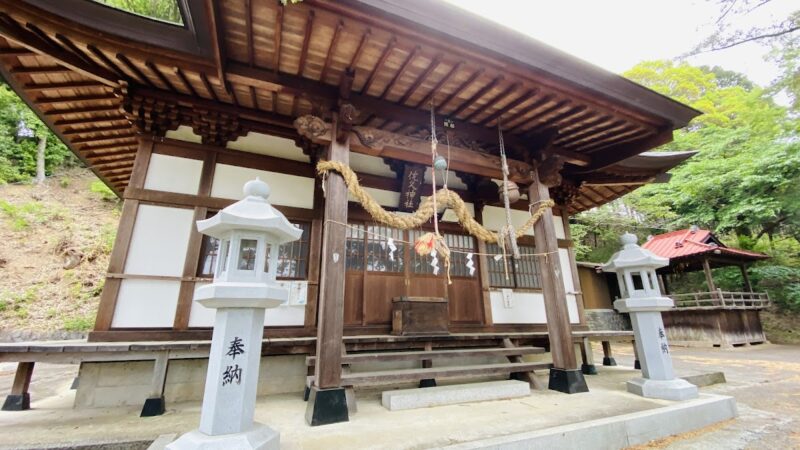
The grounds of Kumano Shrine have a calm atmosphere befitting a local guardian shrine. The layout of the shrine buildings, centered on the main hall and worship hall, maintains the style of traditional shrine architecture.
Sacred Trees and Natural Environment
Other Kumano Shrines in Fuefuki City have sacred trees such as large zelkova trees, Japanese umbrella pine, and ginkgo trees, some of which are hundreds of years old and designated as natural monuments by the city. These giant trees, living witnesses to the long history of the shrines, leave a deep impression on visitors.
At Kumano Shrine in Narita, Misaka Town, the grounds are lush with trees, allowing visitors to experience the changing seasons. It is especially worthwhile to visit during the spring when the new leaves are lush and the autumn leaves are vibrant, offering a peaceful place for worship.
Stone Sculptures and Votive Offerings
Within the shrine grounds remain stone sculptures such as stone lanterns and guardian lion-dogs donated from the Edo period to the Meiji period. These sculptures bear the names of the donors and the years in which they were donated, providing clues to how the local people supported the shrine.
Annual Festival and Regular Events
Annual Festival Schedule
Kumano Shrine’s annual festival is held on July 16th and March 25th. The annual festival is the most important festival for the shrine, a ceremony to express gratitude to the enshrined deity and pray for peace and prosperity in the region.
Connection to Local Festivals
In Fuefuki City, the annual festival of Asama Shrine, “Omiyuki-san,” is held on April 15th. In conjunction with this festival, a traditional event takes place where local children carry a portable shrine (mikoshi) to Ushikai Shrine and Kumano Shrine.
Such local festivals demonstrate that shrines are not merely places of worship, but also play a social role in strengthening community bonds. The experience of carrying the mikoshi provides children with an opportunity to learn about their attachment to their hometown and the importance of traditional culture.
Other Kumano Shrines in Fuefuki City
Besides the Kumano Shrine in Narita, Misaka-cho, Fuefuki City has several other Kumano Shrines. Each has its own unique history and characteristics, making them interesting for understanding the spread of Kumano faith.
Kumano Shrine (Yatsushiro-cho Kita)
Located in Yatsushiro-cho Kita, Kumano Shrine is an ancient shrine said to have been invited from the territory of Kumano Shrine in Kishu Province to Yatsushiro Manor in Kai Province around the Shucho era (circa 686 AD).
Shrine Treasure: “Chokan Kanmon”: The most distinctive feature of this shrine is the “Chokan Kanmon,” a shrine treasure. This is a manuscript compiled from the Kumano Shrine in Kii Province and is considered the only one of its kind in the prefecture.
The Chokan Kanmon is a valuable historical document that tells the story of the conflict between the provincial government (kokuga) and manors in the late Heian period, and is also important as a document that officially confirmed the difference in the deities worshipped at Kumano and Ise.
Natural Monuments: The sacred trees on the shrine grounds, a Japanese umbrella pine (Koyamaki) and a ginkgo tree (Iginchō), are designated as natural monuments by Fuefuki City, and their dignified appearance, several hundred years old, can be seen.
Takei Kumano Shrine and Yunoki Kumano Shrine
Within Fuefuki City, there are also Kumano Shrines located in the Takei and Yunoki districts.
Takei Kumano Shrine has a legend that Yamato Takeru no Mikoto rested here from Kachōyama during his campaign against the eastern barbarians and dedicated a bamboo quiver. It is an ancient shrine said to have been founded by Yamato Takeru no Mikoto, and is also said to be the site of the residence of his son, Waketakehiko no Ō.
It possesses a copper plate of the Twelve Shrines from the Edo period, which is a valuable cultural asset that conveys the history of Kumano faith.
Kumano Shrine (Kamihirai, Isawa-cho)
The Kumano Shrine located in Kamihirai, Isawa-cho, is about a 20-minute walk from the Kumano Shrine in Narita, Misaka-cho. Located a short distance into a residential area from the Kamihirai intersection, this shrine, though relatively small, is cherished as a place of worship for the local community.
Interestingly, this shrine does not have a torii gate. A stone lantern on the grounds bears an inscription from Kanpo 1 (1741), confirming its history dating back to the mid-Edo period.
Kumano Faith and Kai Province
The Spread of Kumano Faith
Kumano faith, centered around the Kumano Sanzan (Kumano Hongu Taisha, Kumano Hayatama Taisha, and Kumano Nachi Taisha) in Kii Province (present-day Wakayama Prefecture), spread throughout Japan from the Heian period.
Particularly from the late Heian period to the Kamakura period, pilgrimages to Kumano by members of the imperial family and nobility flourished, with so many pilgrims visiting that it was called **an ant-like pilgrimage to Kumano. Along with the spread of this faith, Kumano shrines were established in various locations, becoming centers of local faith.
Kumano Faith in Kai Province
Kumano faith was deeply ingrained in Kai Province (present-day Yamanashi Prefecture). Especially during the late Heian period, when the manorial system developed, manors belonging to the Kumano Shrine in Kishu were established within Kai Province, and it is believed that Kumano shrines were invited and enshrined there in connection with these.
Yatsushiro Manor was one of the important manors within Kai Province and was managed as a Kumano Shrine territory. The conflict between the provincial government and the manors, recorded in the “Chōkan Kanbun,” is valuable historical evidence illustrating the tension between central and local powers.
Divine Virtues of Kumano Shrine
The divine virtues you can receive by visiting Kumano Shrine include the following:
- Family Safety: Protecting the health and peace of your family
- Abundant Harvest: Bringing abundant harvests
- Protection from Misfortune and Disaster: Protecting you from various calamities
- Purification of Mind and Body: Cleansing away impurities and restoring a pure mind and body
- Business Prosperity: Bringing success and prosperity to your business
These divine virtues are said to originate from the purifying and regenerative powers of the gods of the Kumano Sanzan (Three Grand Shrines of Kumano).
Access Information
Access by Public Transportation
Nearest Station: JR Chuo Main Line “Isawa Onsen Station”
From Isawa Onsen Station to Kumano Shrine (Narita, Misaka Town) is approximately 50 minutes on foot, a distance of about 4 km. Since direct access by public transport is limited, you should consider using a taxi or renting a bicycle.
Bus: While Fuefuki City Community Buses may operate, it is recommended to check the routes and timetables on the official Fuefuki City website in advance.
Access by Car
Access from the Chuo Expressway:
- Approximately 10 minutes from Ichinomiya-Misaka Interchange
- Approximately 15 minutes from Fuefuki-Yatsushiro Smart Interchange
The Narita area of Misaka Town is relatively close to the Chuo Expressway interchanges, making it easily accessible by car. While there may be parking spaces on the shrine grounds, congestion is expected during events such as the annual festival, so it is recommended to visit with plenty of time to spare.
Nearby Tourist Attractions
Isawa Onsen: A representative hot spring resort in Fuefuki City, with many hot spring inns and hotels. It is recommended to relax and soothe your fatigue in the hot springs after visiting Kumano Shrine.
Peach and Grape Picking: Fuefuki City boasts the highest peach and grape production in Japan, making it a true fruit kingdom. Depending on the season, you can enjoy fruit picking in orchards.
Kai Kokubunji Temple Ruins: The ruins of a Kokubunji temple built during the Nara period, a recommended spot for history buffs.
Manners and Etiquette for Visiting Shrines
Basic Shrine Visit Etiquette
Let’s review the basic etiquette for visiting a shrine:
- Bow Before Passing Through the Torii Gate: Bow before entering the sacred area, in front of the torii gate.
- Walk Along the Edge of the Path: The center of the path is considered the path of the gods, so walk along the edge.
- Purify at the Water Basin: Purify your hands and mouth at the water basin.
- Worship at the Main Hall: Worship using the two bows, two claps, and one bow ritual.
- Bow upon leaving: When leaving the torii gate, turn around and bow.
Attire for Visiting
There are no specific dress code requirements, but please be mindful that this is a sacred place and wear clean, understated clothing. For formal events such as the annual festival, more formal attire is recommended.
Photography
Photography is generally permitted on the shrine grounds, but there may be restrictions, such as inside the main hall or during religious ceremonies. If you are unsure, please check with a shrine official before taking photos.
The Role of Kumano Shrine in the Community
Function as a Guardian Deity
Kumano Shrine serves as the guardian deity of the Narita district in Misaka Town, acting as a spiritual pillar for the local residents. A guardian deity is a god who protects the people living in a particular area and is a central figure in the community.
Center for Community Events
Through events such as the annual festival and children’s portable shrine processions, Kumano Shrine serves as a place for local residents to gather and interact. For children in particular, events at the shrine are an important opportunity to cultivate a sense of belonging to the community.
Preservation of Cultural Properties
Kumano Shrine also plays a role in preserving cultural properties that convey the history of the region, such as ancient documents, stone structures, and sacred trees. These cultural properties are valuable resources for studying the history of the region.
Kumano Shrine as a Religious Corporation
Records show that some Kumano Shrines in Fuefuki City established religious corporations in 2006 and became affiliated with the Association of Shinto Shrines. This has led to more organized management and operation of the shrines, creating a foundation for maintaining and developing their function as local guardian deities.
The Association of Shinto Shrines is a religious corporation that encompasses shrines nationwide, providing support for shrine operations, training of Shinto priests, and promoting Shinto culture. By becoming affiliated with the Association of Shinto Shrines, shrines can operate more stably as part of a nationwide network.
Summary
Kumano Shrine (Narita, Misaka-cho, Fuefuki City, Yamanashi Prefecture) has a long history as the local guardian shrine, attracting the faith of local residents to this day. Founded in 1179, it enshrines Kumano Kamuro-no-Mikoto as its main deity.
The annual festival is held on July 16th and March 25th, and includes events such as a portable shrine procession involving local children. Several other Kumano Shrines exist within Fuefuki City, each possessing its own unique history and cultural assets, demonstrating the spread of Kumano faith to this day.
It is easily accessible, approximately a 50-minute walk from Isawa Onsen Station, or a 10-15 minute drive from the Chuo Expressway interchange. When visiting Fuefuki City, we highly recommend visiting Kumano Shrine and experiencing the local history and culture.
In the tranquil atmosphere of the shrine grounds, offering prayers to the enshrined deity will bring peace of mind and renewed vitality. Kumano Shrine, which has been cherished by the local people for a long time, is a shrine that warmly welcomes visitors.