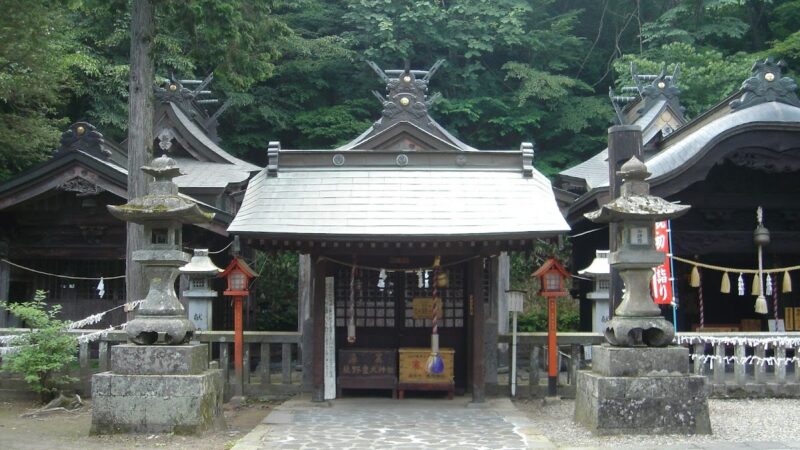
A Complete Guide to Jagu Shrine (Tomioka City, Gunma Prefecture) | The History and Highlights of an Ancient Shrine Worshipped as the Guardian Deity of Sericulture
Jagu Shrine, located in Nanokaichi, Tomioka City, Gunma Prefecture, is a shrine of special significance in Gunma Prefecture, where sericulture culture flourished. Situated close to the World Heritage Site “Tomioka Silk Mill,” it attracts many worshippers with its long history dating back to ancient times and its unique form of worship. This article provides a detailed explanation of Jagu Shrine’s history, enshrined deities, highlights of the grounds, annual festival, and access methods.
History and Origins of Jagu Shrine
Founding and Ancient Status
The founding date of Jagu Shrine is unknown, but it is an ancient shrine listed in the “Kozuke no Kuni Jinmyocho” (Register of Shrines in Kōzuke Province), compiled in the late Heian period. According to this register, it is presumed that “Oshin Myōjin,” which held the rank of Junior Fifth Rank, Upper Grade, among the 32 shrines listed in Kanra District, is this shrine. The rank of Junior Fifth Rank, Upper Grade, indicates a considerable status among shrines of that time, suggesting that it was a center of local faith from ancient times.
Relocation and Reconstruction in 1494
In 1494, during the late Muromachi period, the Hebimiya Shrine was relocated and rebuilt at its current location. Interestingly, it is believed that Suwa Daimyojin was originally enshrined at this site. The shift from Suwa faith to Hebimiya faith is an important event that shows the evolution of faith in this region. After this reconstruction, it became affectionately known as “Hebimiya Daimyojin” by the local people.
Development in the Edo Period and the Maeda Family of Nanokaichi Domain
In the Edo period, Hebimiya Shrine became a revered shrine of the Maeda family, the lords of the Nanokaichi Domain. Under the patronage of the lord, the maintenance and management of the shrine stabilized, and it established its position as a center of faith in the region. The torii gate and the plaque on the worship hall bear the inscription “Sho-ichii Hebimiya Daimyojin,” indicating that its divine rank rose throughout the Edo period.
Characteristics of the Deity and Beliefs
Takaokami-no-kami
The deity enshrined at Hebimiya Shrine is Takaokami-no-kami. Takaokami-no-kami is a dragon god who controls water and appears in Japanese mythology. He has been worshipped since ancient times as a guardian deity of rain and water sources. The character “龗” means dragon, indicating a deep connection between snakes and dragons. In Gunma Prefecture, where agriculture is thriving, the worship of Takaokami-no-kami, the god of water, held extremely important significance.
Belief as a Guardian Deity of Sericulture
Gunma Prefecture flourished as one of Japan’s leading sericulture regions from the Meiji era to the early Showa era. As evidenced by the registration of the Tomioka Silk Mill as a World Heritage Site, the sericulture culture of this region greatly contributed to Japan’s modernization.
The reason Hebimiya Shrine was worshipped as a guardian deity of sericulture is that snakes are natural enemies of mice, which eat silkworms and cocoons. For silkworm farmers, rats were a major enemy that ruined their precious cocoons. Therefore, a belief arose in which snakes, which exterminate rats, were deified, and prayers for the success of silkworm farming were offered.
In Gunma Prefecture, in addition to snakes, cats were also revered as guardians of silkworm farming, and the worship of cat paintings and cat-shaped stones was widespread. At Hebimiya Shrine, the “cat stone belief” is still practiced, where small stones are borrowed from the shrine and placed in the silkworm room as amulets to ward off rats.
Aspect as a Water Deity
Since Takaokami-no-kami is the god who controls water, Hebimiya Shrine also functioned as a place for praying for rain and a bountiful harvest. It has been closely intertwined with the lives of the local people as a guardian deity not only of silkworm farming but also of agriculture in general, including rice cultivation.
Highlights of the Shrine Grounds
Shrine Architecture
The entrance to the grounds of Hebimiya Shrine faces east, and a wooden torii gate stands where the road curves slightly. The torii gate is a Ryobu-torii style, and to its left is a shrine name marker inscribed with “Murasha Hebimiya Shrine.”
Proceeding west through the grounds, the Kagura-den (sacred dance hall) is located on the right. In front is the Irimoya-zukuri style worship hall, and behind it sits the Shinmei-zukuri style main shrine. The Shinmei-zukuri style is an ancient and elegant architectural style, exemplified by Ise Grand Shrine, and its simple yet dignified appearance conveys a sense of high status.
Dragon’s Claw Scratching Stone
Within the shrine grounds is a stone called the “Dragon’s Claw Scratching Stone.” This is an important object of worship that forms the basis of the Hebimiya legend, and is said to bear the marks left by a dragon (or snake) scratching its claws. This stone is deeply connected to the history of the shrine and is one of the points of interest for visitors.
The existence of the Dragon’s Claw Scratching Stone is related to the fact that Takaokami-no-kami is a dragon god, and it demonstrates a unique form of worship that fuses water deity worship and snake worship.
Haramiishi (Pregnant Stone)
Another important object of worship within the shrine grounds is the “Haramiishi” (Pregnant Stone). This stone has been touched and worshipped by many as a deity of safe childbirth. Women wishing to conceive and pregnant women praying for a safe delivery visit the stone and are believed to receive blessings by touching it.
The worship of Haramiishi has developed not only as a deity of sericulture, but also as a folk belief praying for women’s health and the prosperity of descendants. Because it has been touched by many people over the years, the surface of the stone is smooth.
Kofun (Ancient Burial Mounds) and Subsidiary Shrines
The grounds and surrounding area of Hebimiya Shrine are a group of ancient burial mounds, and subsidiary shrines such as Ontake Shrine and Hachiman Shrine are enshrined on top of several of these mounds. The base of the first subsidiary shrine you encounter upon entering the grounds is also considered highly likely to be a burial mound.
These burial mounds are valuable historical sites that tell the story of the ancient history of this region, further enhancing the historical value of the shrine. The construction of shrines on top of ancient burial mounds is a phenomenon seen throughout Japan, indicating that ancient sacred sites have been passed down as places of worship for generations.
The Ontake Shrine enshrines the deity of Mount Kiso Ontake, incorporating elements of mountain worship. The Hachiman Shrine enshrines Hachiman, the god of war, and has served as a guardian deity of the region. The existence of these subsidiary shrines indicates that Hebimiya Shrine is a comprehensive space of worship encompassing diverse beliefs, not just a single faith.
Hebimiya Shrine Annual Festival
Spring Festival
The Hebimiya Shrine Spring Festival is one of the important annual events in the region. During this festival, many stalls selling farming tools and silkworm-related equipment line the shrine grounds, attracting many worshippers. It is said that during the heyday of sericulture, the festival was particularly bustling with silkworm farmers seeking silkworm-related equipment.
The Spring Grand Festival, along with the Spring Festival of Sasamori Inari Shrine in Kanra Town, is considered one of the “Three Great Street Markets of Kanra,” and has played an important role as a venue for local commercial activity. Even today, it continues the tradition and serves as a gathering place for local people.
Autumn Grand Festival and Taidai Kagura
At the Autumn Grand Festival, Kagura (sacred dance) is performed by members of the Hebimiya Shrine Taidai Kagura Preservation Society. Taidai Kagura is a traditional performing art offered at shrine festivals, expressing gratitude to the gods and praying for a bountiful harvest and peace in the community.
The Hebimiya Shrine Taidai Kagura Preservation Society works to pass on this traditional art to future generations, and its value as a local cultural asset is highly regarded. The Autumn Grand Festival, along with the Spring Grand Festival, is an important opportunity to deepen the bonds of the local community.
Goshuin (Shrine Seal) Information
Hebimiya Shrine offers Goshuin. Goshuin can be obtained directly during the annual festival. Since the shrine is often unattended, those wishing to receive a Goshuin (shrine stamp) are advised to visit during the annual festival.
The Goshuin will bear the shrine’s name, the date of visit, and the shrine’s seal. For those collecting Goshuin, the Goshuin from Hebimiya Shrine, with its unique history rooted in sericulture, will hold special significance.
Access and Surrounding Information
Access by Train
Hebimiya Shrine is approximately a 7-minute walk (about 500 meters south) from Joshu-Nanokaichi Station on the Joshin Electric Railway. The Joshin Electric Railway connects Takasaki Station and Shimonita Station, and there are many historical sites along the line.
Access by Car
If visiting by car, it’s about a 10-minute drive from the Tomioka Interchange on the Joshin-etsu Expressway. It’s located near Tomioka High School in Nanokaichi, Tomioka City, and is relatively easy to find. While there is parking available for visitors on the shrine grounds, congestion is expected during the annual festival, so using public transportation is recommended.
Access by Car ### Nearby Tourist Attractions
The area around Hebimiya Shrine is dotted with some of Gunma Prefecture’s most representative tourist attractions.
Tomioka Silk Mill: A World Heritage Site symbolizing Japan’s modernization, located about a 5-minute drive from Hebimiya Shrine. It’s worth visiting to learn about the history of sericulture and to understand its connection to Hebimiya Shrine’s sericulture beliefs.
Nukisaki Shrine: A prestigious shrine known as the Ichinomiya (first-ranked shrine) of Kōzuke Province, located in Ichinomiya, Tomioka City. Many people visit it along with Hebimiya Shrine.
Sakisaki Shrine: Formerly called “Saginomiya,” this shrine enshrines Hime-Ōkami, the goddess of sericulture and weaving. Due to its shared connection to sericulture beliefs, visiting it along with Hebimiya Shrine is also recommended.
Gunma Prefectural Museum of Natural History: Located in Kamikuroiwa, Tomioka City, this museum allows visitors to learn about the nature and history of Gunma Prefecture.
The Modern Significance of Hebimiya Shrine
A Place to Preserve the Memory of Sericulture
In modern times, sericulture has declined, and the number of farmers practicing sericulture in Gunma Prefecture has drastically decreased. However, Hebimiya Shrine is a valuable cultural heritage site that preserves the memory of the era when sericulture culture flourished. With the Tomioka Silk Mill being registered as a World Heritage Site and the history of Japan’s sericulture and silk reeling industry being re-evaluated, the significance of Hebimiya Shrine is also being re-examined.
A Pilgrimage Spot for the Year of the Snake in 2025
2025 is the Year of the Snake in the Chinese zodiac. Hebimiya Shrine, which deifies the snake (巳), is one of the shrines that will attract particular attention during the Year of the Snake. Many visitors are expected to come as part of the “Year of the Snake Pilgrimage,” a pilgrimage to shrines related to snakes and serpents in Gunma Prefecture.
The Year of the Snake is believed to bring good fortune in finances and business prosperity, and a special increase in visitors is expected at Hebimiya Shrine.
The Year of the Snake is considered a time for good fortune in finances and business prosperity, and a special increase in visitors is anticipated. ### The Core of the Local Community
Through its annual festival and Kagura (sacred dance) performances, Hebimiya Shrine continues to play a central role in the local community. The activities of the Taidai Kagura Preservation Society are also significant in terms of the transmission of traditional culture and support the region’s cultural identity.
Etiquette and Manners for Visiting the Shrine
Basic Worship Etiquette
When visiting Hebimiya Shrine, follow general shrine worship etiquette. Bow before passing through the torii gate, and avoid walking in the center of the path. Cleanse your hands and mouth at the water basin, and worship in front of the main hall using the “two bows, two claps, one bow” method.
Photography on the Shrine Grounds
Photography on the shrine grounds is generally permitted, but please be discreet in the main hall and sacred areas, and be considerate of other worshippers. When photographing objects of worship such as the Dragon’s Claw Stone or the Pregnant Stone, it is important to do so with respect.
Points to Note When Participating in the Grand Festival
The Grand Festival is crowded with many worshippers. Both the spring festival, with its numerous stalls, and the autumn festival, with its Kagura (sacred dance) performances, are important local events, so please be mindful of respect and behave appropriately. During the Kagura performance, quiet appreciation and respect for traditional performing arts are expected.
Summary
Hebimiya Shrine, located in Nanokaichi, Tomioka City, Gunma Prefecture, is a historical shrine that has attracted unique devotion as the guardian deity of sericulture. With Takaokami-no-kami as its enshrined deity, the worship form, which combines the aspects of a water god and a snake god, demonstrates the richness of Japanese folk beliefs.
Within the shrine grounds are objects of worship such as the Dragon’s Claw Stone and the Pregnant Stone, and the subsidiary shrines built on top of ancient burial mounds further enhance their historical value. The spring and autumn Grand Festivals are still passed down as important annual events in the region, and the performance of the Daidai Kagura is significant in terms of preserving traditional culture.
Located near the Tomioka Silk Mill, a World Heritage Site, Hebimiya Shrine is an essential spot for understanding Gunma Prefecture’s sericulture culture. It’s a shrine that many people should visit, especially those celebrating the Year of the Snake, and as a place to experience Gunma’s history and culture.
Its convenient location, within walking distance of Joshu-Nanokaichi Station on the Joshin Electric Railway, makes it easy to stop by as part of a Tomioka City sightseeing trip. Why not experience the profound history and world of faith of Gunma Prefecture at Hebimiya Shrine, which conveys the memories of the era when sericulture flourished?