Himure Hachimangu Shrine Complete Guide | History, Benefits, Access, and Highlights Explained in Detail
Himure Hachimangu Shrine, located in Omihachiman City, Shiga Prefecture, is a venerable shrine with a history of over a thousand years. Situated in the heart of Omihachiman, known as the birthplace of Omi merchants, it is affectionately known as “Hachiman-san” by the locals.
This article comprehensively explains everything you need to know before visiting Himure Hachimangu Shrine, including its history, enshrined deities and benefits, highlights within the grounds, annual events, surrounding tourist spots, and access methods.
What is Himure Hachimangu Shrine?
Himure Hachimangu Shrine is a shrine located in Miyauchi-cho, Omihachiman City, Shiga Prefecture, and its official name is “Himure Hachimangu Shrine.” It has been revered since ancient times as the guardian deity of Omi Province, and even today, many worshippers visit it as the local tutelary shrine.
Basic Information
- Location: 257 Miyauchi-cho, Omihachiman City, Shiga Prefecture
- Deities Enshrined: Hondawake-no-mikoto, Okinagatarashihime-no-mikoto, Himegami
- Founding: Traditionally 131 AD (First year of Emperor Seimu’s reign)
- Shrine Rank: Former Prefectural Shrine
- Annual Festival: Hachiman Festival (Mid-March to Mid-April)
History of Himure Hachiman Shrine
Origin of Founding
Himure Hachiman Shrine has a long history, and according to shrine tradition, it dates back to the first year of Emperor Seimu’s reign (131 AD). Initially, it was enshrined as “Oshima-no-Okami” and was worshipped as the guardian deity of the region. During the Heian period, the Hachiman deity was invited from Usa Hachimangu Shrine, and the shrine became the present-day “Himure Hachimangu Shrine.” The name “Himure” is said to originate from the fact that this area was a sacred site of sun worship since ancient times.
Deep Connection with Omi Merchants
Himure Hachimangu Shrine played a crucial role as a spiritual pillar for Omi merchants. Omihachiman is known as the birthplace of Omi merchants, and merchants who upheld the business ethic of “Sanpo Yoshi” (good for the seller, good for the buyer, and good for society) were active throughout Japan.
Before departing, merchants prayed for business prosperity at Himure Hachimangu Shrine, and upon their safe return, they made offerings of gratitude. Stone lanterns and votive tablets donated by merchants still remain on the shrine grounds, testifying to the prosperity of that time.
Oda Nobunaga and the Castle Town of Azuchi
During the Sengoku period, when Oda Nobunaga built Azuchi Castle, the area around Himure Hachimangu Shrine was developed as a castle town. Nobunaga implemented the Rakuichi-Rakuza policy, promoting commercial development in the region. Himure Hachimangu Shrine was also highly regarded as the guardian deity of the castle town.
Deities and Blessings
Deities
Himure Hachimangu Shrine enshrines three deities.
Honda-wake no Mikoto
This is the divine name of Emperor Ojin, the 15th emperor, and the principal deity of Hachiman. He is revered as the god of military fortune and the god of national protection.
Okinagatarashihime no Mikoto
This refers to Empress Jingu, the mother of Emperor Ojin. She is worshipped as the goddess of safe childbirth and child-rearing.
Himegami
Considered one of the three Munakata goddesses, she is revered as the goddess of maritime safety and traffic safety.
Main Benefits
Himure Hachimangu Shrine is known for its diverse blessings.
- Business Prosperity: As the guardian deity of Omi merchants, it is believed to bring success and prosperity to businesses.
- Matchmaking and Romantic Success: Prayers for good relationships and marital harmony.
- Safe Childbirth and Fertility: Prayers for safe childbirth through the divine virtues of Empress Jingu.
- Exorcism and Good Fortune: Exorcism at important life milestones.
- Academic Success: Passing exams and improving academic performance.
- Traffic Safety: Prayers for safe travels.
In particular, worshippers from all over Japan visit seeking blessings for business prosperity and matchmaking.
Highlights of the Shrine Grounds
Tower Gate (Important Cultural Property)
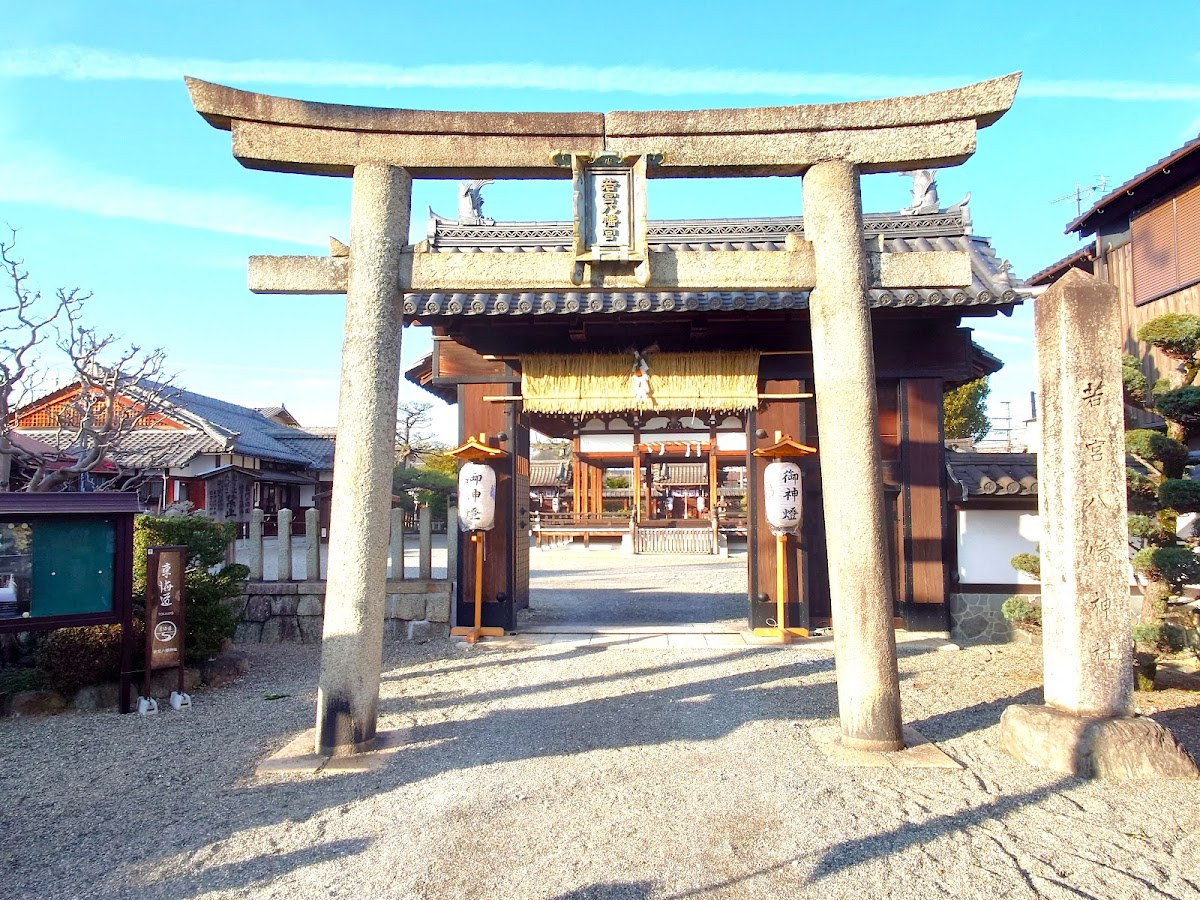
Upon entering the shrine grounds, the first thing that catches your eye is the magnificent tower gate. This gate dates back to the early Edo period and is designated as an Important Cultural Property of Shiga Prefecture. The beautiful vermilion-painted gate is a beloved symbol of Himure Hachimangu Shrine.
Main Hall
The main hall is a majestic building that retains the architectural style of the Momoyama period. Its cypress bark roof and intricate carvings create a solemn atmosphere for visitors. Visiting in the quiet early morning hours allows you to feel the sacred atmosphere.
Noh Stage
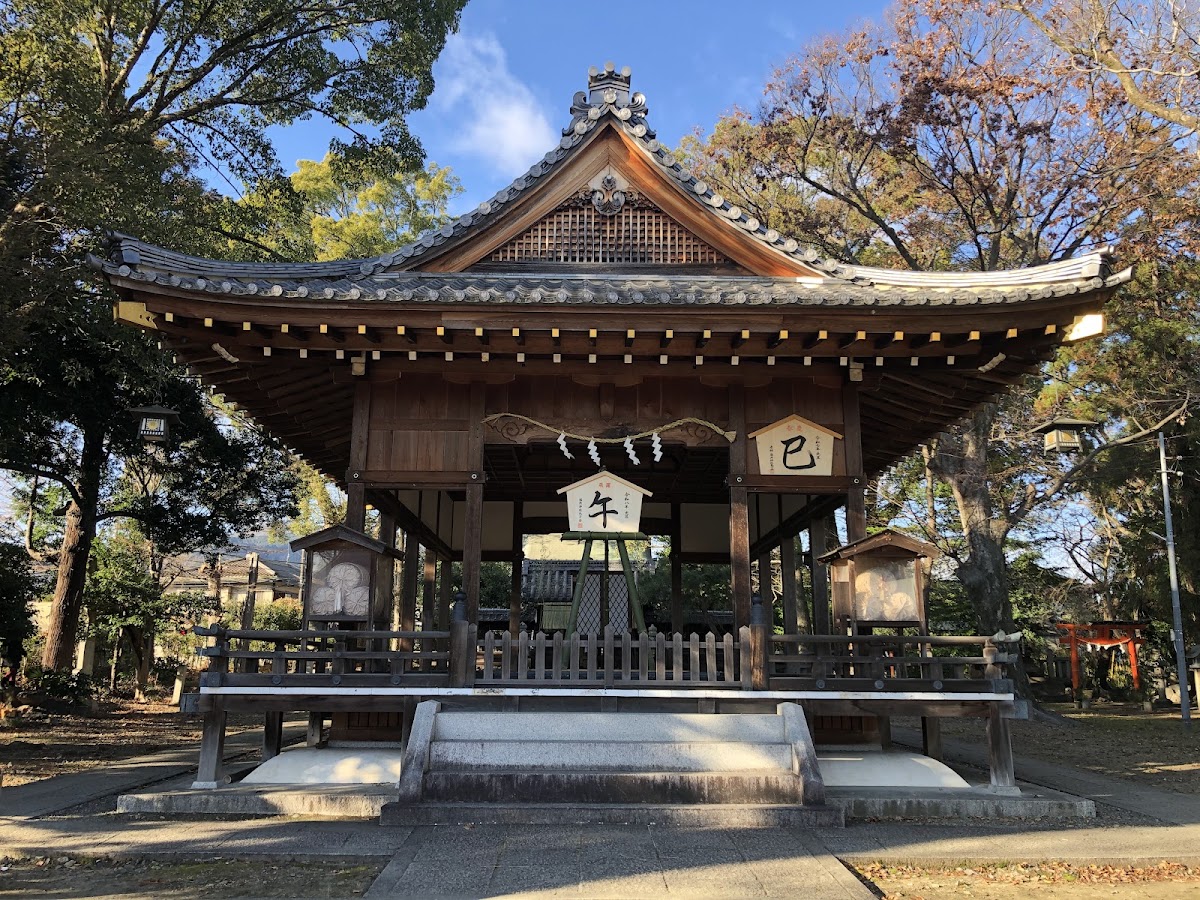
Within the shrine grounds is a Noh stage dating back to the Edo period, where Noh performances are still held during festivals. It is a valuable facility that conveys the cultural traditions of Omihachiman to the present day.
Stone Lanterns
Along the approach to the shrine, stone lanterns donated by Omi merchants line the path. Each monument bears the shop name or personal name of a merchant, offering a glimpse into the commercial prosperity of the time.
Sacred Tree
Within the shrine grounds stands a sacred tree said to be several hundred years old, a popular power spot. Legend says that wishes will come true if you place your hand on the trunk and pray.
Annual Events and Festivals
Hachiman Festival (Sagicho Festival & Torch Festival)
The largest festival at Himure Hachimangu Shrine is the “Hachiman Festival.” It consists of two parts: the “Sagicho Festival” in mid-March and the “Torch Festival” in mid-April.
Sagicho Festival (Mid-March)
Its origins lie in a fire festival said to have been grandly held by Oda Nobunaga in the town of Azuchi Castle. Young men carry a Sagicho (giant torch) approximately 6 meters tall through the town, and finally burn it within the grounds of Himure Hachimangu Shrine. The magnificent Sagicho festival, adorned with opulent decorations, is a breathtaking sight and has been designated a nationally selected intangible folk cultural property.
Torch Festival (mid-April)
This is a magnificent festival where giant torches are offered. At night, when the torches erected in the temple grounds are lit, a fantastical scene unfolds.
These festivals attract over 100,000 tourists every year and have become a spring tradition in Omihachiman.
Other Annual Events
- Hatsumode (January 1st-3rd): Bustling with many worshippers
- Setsubun Festival (February 3rd): Bean-throwing ritual
- Natsukoshi no Oharae (June 30th): Passing through a ring of reeds
- Reitaisai (October): Autumn harvest thanksgiving festival
- Shichi-Go-San (November): Prayers for the healthy growth of children
Goshuin and Amulet Information
Goshuin
At Himure Hachimangu Shrine, in addition to regular goshuin, seasonal special goshuin are also available. There are pre-printed and handwritten types, and the offering fee is usually around 300-500 yen.
Goshuin notebooks also feature original designs from Himure Hachimangu Shrine, with popular designs featuring the scenery of Omihachiman and the Sagicho Festival.
Amulets and Items Offered
- Business Prosperity Amulet: An amulet for business success, inheriting the spirit of Omi merchants.
- Matchmaking Amulet: An amulet to attract good relationships.
- Safe Childbirth Amulet: An amulet to protect the health of mother and child.
- Exorcism Amulet: A protective amulet for those in their unlucky year.
- Traffic Safety Sticker: A safety charm to be attached to a car.
The amulet office’s operating hours are usually 9:00 AM to 5:00 PM, but may change during festivals and the New Year period.
Access Methods
Access by Train
If using JR
Get off at “Omihachiman Station” on the JR Biwako Line
- Approximately 25 minutes on foot from the station (approx. 2km)
- Approximately 7 minutes by Omi Railway Bus bound for “Chomeiji” or “Kyukamura,” get off at “Osugicho Hachimanyama Ropeway Entrance,” then approximately 3 minutes on foot
From Kyoto: Approximately 40 minutes by Special Rapid Service from JR Kyoto Station
From Osaka: Approximately 70 minutes by Special Rapid Service from JR Osaka Station
From Nagoya: Approximately 70 minutes by Special Rapid Service from JR Nagoya Station
Access by Car
Using Meishin Expressway
Approximately 20 minutes from “Ryuo IC” or “Yokaichi IC”
Parking Information
- Himure Hachimangu Shrine’s dedicated parking lot: Approximately 50 spaces (free)
- Several nearby municipal parking lots available (paid)
- Due to traffic restrictions during the festival, the use of public transportation is recommended.
Access by Bus
The Omi Railway bus from Omihachiman Station is convenient.
- Route: Chomeiji Line, Kyukamura Line
- Fare: Approximately 300 yen one way
- Travel time: Approximately 7 minutes
- Frequency: Approximately 1-2 buses per hour
Manners and Time Required for Visiting a Shrine
Etiquette for Visiting a Shrine
- Bow before passing through the torii gate
- Purify your body and mind at the water basin: Left hand → Right hand → Mouth → Left hand
- Walk along the edge of the path: The center is the path for the gods
- Bow twice, clap twice, and bow once in front of the main hall
- Bow once again at the torii gate when leaving
Estimated Time Required
- Normal Visit: 30 minutes to 1 hour
- Including Goshuin (shrine stamp) and amulet distribution: 1 hour to 1 hour 30 minutes
- Including sightseeing in the surrounding area: 2 hours to 3 hours
- During Festivals: Half a day to a full day
Recommended times to visit
- Early morning (7:00-9:00): Enjoy a quiet and sacred atmosphere
- Weekday mornings: Relatively uncrowded
- Evening: The shrine grounds are beautiful when illuminated by the setting sun
- Times to avoid: The first three days of the New Year, and the Sagicho Festival period (crowded)
Nearby Tourist Attractions
There are many attractive tourist spots around Himure Hachimangu Shrine.
Taneya & Club Harie Himure Village
A famous confectionery shop specializing in Japanese and Western sweets, located right in front of Himure Hachimangu Shrine. It features “Tsubura Mochi,” a representative sweet of Omihachiman, and a cafe by “Club Harie,” famous for its Baumkuchen. It’s perfect for a break after visiting the shrine, and you can enjoy views of Mt. Hachiman from inside the shop.
Hachimanbori Canal
A historical canal located about a 5-minute walk from Himure Hachimangu Shrine. It was developed by Toyotomi Hidetsugu when he built Hachimanyama Castle, and the white-walled storehouses and stone walls create a beautiful landscape. It’s also famous as a filming location for historical dramas, and you can enjoy boating.
Hachimanyama Ropeway
A ropeway located a short walk from Himure Hachimangu Shrine. From the mountaintop, you can enjoy panoramic views of Lake Biwa and the townscape of Omihachiman. The mountaintop is home to the ruins of Toyotomi Hidetsugu’s castle and Zuiryuji Temple.
Old Town (Important Preservation District for Groups of Traditional Buildings)
A historical townscape lined with the townhouses of Omi merchants. Omi merchant residences and museums are scattered throughout, allowing you to experience the lifestyle of merchants in the Edo period.
La Collina Omihachiman
The headquarters and flagship store of the Taneya Group. The architecture harmonizes beautifully with nature, and you can enjoy shopping and dining on the vast grounds. Approximately 10 minutes by car from Himure Hachimangu Shrine.
History and Culture of Omihachiman
The Spirit of Omi Merchants
Omihachiman is known as the birthplace of “Omi merchants.” Omi merchants upheld the business ethic of “Sanpo Yoshi” (good for the seller, good for the buyer, and good for society), and were active throughout Japan. This spirit is said to be a precursor to modern CSR (Corporate Social Responsibility).
Himure Hachimangu Shrine was a spiritual pillar for these Omi merchants, a place to pray for business success, and a place to return a portion of profits to society.
Vories Architecture
Omihachiman has many buildings designed by the American architect William Merrell Vories. Vories came to Japan during the Meiji era and based his activities in Omihachiman. He created a unique architectural style that fused Western architecture with Japanese tradition.
Seasonal Highlights
Spring (March-May)
- Sagicho Festival (Mid-March): The main highlight
- Cherry Blossom Blooming: Beautiful cherry blossoms in the temple grounds and along the Hachimanbori Canal
- Torch Festival (Mid-April): A fantastical fire festival
Summer (June-August)
- Fresh Greenery: The trees in the temple grounds turn a vibrant green
- Summer Purification Ceremony: Purifying oneself of the impurities accumulated over the past six months by passing through a ring of reeds
- Cooling Off the Hachimanbori Canal: A pleasant season for strolling along the waterside
Autumn (September-November)
- Autumn Leaves: Magnificent autumn foliage in the temple grounds and on Mt. Hachiman
- Annual Grand Festival: A festival to give thanks for the autumn harvest
- Shichi-Go-San Festival: Children in their festive attire are a heartwarming sight
Winter (December-February)
- New Year’s Visit: Bustling with worshippers celebrating the New Year.
- Setsubun Festival: Bean-throwing ritual.
- Snowy Scenery: The snow-covered shrine grounds are exceptionally beautiful.
Visitor Reviews and Reputation
The following comments have been received from visitors who have come to Himure Hachimangu Shrine:
History and Atmosphere
“A solemn atmosphere that evokes over a thousand years of history. Entering the grounds brings a sense of calm.”
“A place where you can feel the spirit of Omi merchants. Recommended for business people.”
Sagicho Festival
“The magnificent Sagicho is breathtaking. Worth seeing at least once.”
“A valuable experience where you can feel both the excitement of the festival and the weight of tradition at the same time.”
Surrounding Environment
“Taneya Cafe is right in front, convenient for a break after visiting the shrine.”
“It’s great that you can combine sightseeing with Hachimanbori and the old town.”
Benefits
“My business has been going smoothly since I prayed for business prosperity.”
“I was blessed with a good match thanks to the blessings for finding love.”
Frequently Asked Questions
Q1: What are the visiting hours for Himure Hachimangu Shrine?
A: The shrine grounds are open 24 hours a day for worship, but the office (for Goshuin stamps and amulets) is open from 9:00 to 17:00.
Q2: Can I get a Goshuin (temple/shrine stamp) on weekends and holidays?
A: Yes, you can get one on weekends and holidays if the office is open. However, it will be crowded during festivals and the New Year period.
Q3: Is parking free?
A: The shrine’s dedicated parking lot is free, but spaces are limited. It may not be available during festivals.
Q4: When is the Sagicho Festival held?
A: It is held annually in mid-March (the weekend closest to March 14th and 15th). Details can be found on the Omihachiman City Tourism Association website.
Q5: Can I bring my pet to the shrine?
A: Small dogs are allowed if they are in a carrier bag or being carried, but please refrain from letting them roam freely on the shrine grounds.
Q6: Can I have a wedding ceremony here?
A: Yes, Shinto wedding ceremonies are possible. Please inquire at the shrine office for details.
Q7: What is a recommended sightseeing course in Omihachiman?
A: A popular course is Himure Hachimangu Shrine → Tea at Taneya → Stroll through Hachimanbori Canal → Old Town → La Collina Omihachiman. This can be completed in half a day to a full day.
Summary: The Charm of Himure Hachimangu Shrine
Himure Hachimangu Shrine has a history of over a thousand years and has watched over the development of the region as a spiritual pillar for Omi merchants. It offers various blessings, including business prosperity, matchmaking, and safe childbirth, attracting many worshippers throughout the year.
In particular, the Sagicho Festival in March is a must-see event, a traditional event that has continued since the time of Oda Nobunaga and is designated as a nationally selected intangible folk cultural property.
With its solemn atmosphere within the shrine grounds, the surrounding historic townscape, gourmet spots like Taneya and Club Harie, and the beautiful scenery of Hachimanbori Canal, Omihachiman, centered around Himure Hachimangu Shrine, is a fascinating area where you can enjoy history, culture, nature, and food all at once.
Easily accessible from Kyoto and Osaka, it’s definitely worth a visit during your Kansai sightseeing trip. An experience awaits you where you can rediscover the spirit of the Omi merchants’ “three-way satisfaction” philosophy and refresh both mind and body.
When visiting the shrine, reflect on its history, convey your wishes to the gods, and remember to offer your prayers with gratitude. We hope your experience at Himure Hachimangu Shrine will have a positive impact on your life.