Hino Shrine (Nishinomiya City, Hyogo Prefecture) Complete Guide | The Charm and Visiting Information of a Historic Shrine Situated on the Site of Kawarabayashi Castle
About Hino Shrine
Hino Shrine is a historic shrine located at 2-51 Hino-cho, Nishinomiya City, Hyogo Prefecture. It enshrines Amaterasu Omikami as its main deity, with Toyouke Omikami and Kasuga Daimyojin also enshrined. The most distinctive feature of this shrine is that it is built on the site of Kawarabayashi Castle, constructed during the Nanboku-cho period. The lush forest covering the shrine grounds is designated as a natural monument of Hyogo Prefecture as the “Hino Shrine Forest,” and has also been selected as one of “Hyogo’s 100 Best Forests.”
Despite its location approximately 15 minutes on foot from Hankyu Nishinomiya-Kitaguchi Station and approximately 17 minutes on foot from Koshien-guchi Station, the shrine exudes a tranquil atmosphere that makes you forget the hustle and bustle of the city. It is beloved not only by locals but also by history enthusiasts and visitors collecting Goshuin (shrine stamps).
History and Origins of Hino Shrine
Deep Connection to Kawarabayashi Castle
An essential aspect of understanding the history of Hino Shrine is its relationship with Kawarabayashi Castle. Kawarabayashi Castle is believed to have existed as early as 1336, and records show that Kishi Goroshiro Yoshiuji, a retainer of Akamatsu Norimura (Enshin), fought in this area. This land was formerly known as Kawarabayashi (Kawarabayashi) Manor and was an important base in Settsu Province.
Founding of the Shrine
There are two theories regarding the founding of Hino Shrine.
One theory suggests that during the Koan era of the Northern Court (1361-1362), Kawarabayashi Danjozaemon (Kawarabayashi Danjozaemon), a powerful daimyo in Izumi and Settsu, enshrined the shrine within Kawarabayashi Castle as its guardian deity. During this period, the Kawarabayashi clan ruled a vast territory stretching from Settsu to Kawachi provinces, controlling castles such as Koshimizu Castle in Nishinomiya City, Takao Castle in Ashiya, and Tomimatsu Castle in Amagasaki.
Another theory suggests that when the Kawarabayashi clan made Kawarabayashi Castle their ancestral home, they enshrined this shrine, a local guardian shrine that had existed since before the manorial era, as the castle’s guardian deity. According to this theory, the history of Hino Shrine is even older, suggesting it had long been a center of local faith.
The Fall of Kawarabayashi Castle and the Survival of the Shrine
Kawarabayashi Castle suffered heavy losses during the Sengoku period (Warring States period). In 1570, the Kawarabayashi clan, allied with Oda Nobunaga, fought fiercely against the Miyoshi forces of Awa and Sanuki provinces. On September 28th of the same year, Kawarabayashi Castle fell, and it is said that over 110 men and women, including the castle commander Kawarabayashi Mikawa-no-kami, were killed.
The tragic fall of Kawarabayashi Castle marked the end of its history, but Hino Shrine continued to exist as the guardian shrine of the region, attracting the faith of local people to this day. A stone monument inscribed with “Kawarabayashi Castle Ruins” stands along the approach to the shrine, preserving the history of this place.
Highlights of the Shrine Grounds
Approach and Shrine Grove
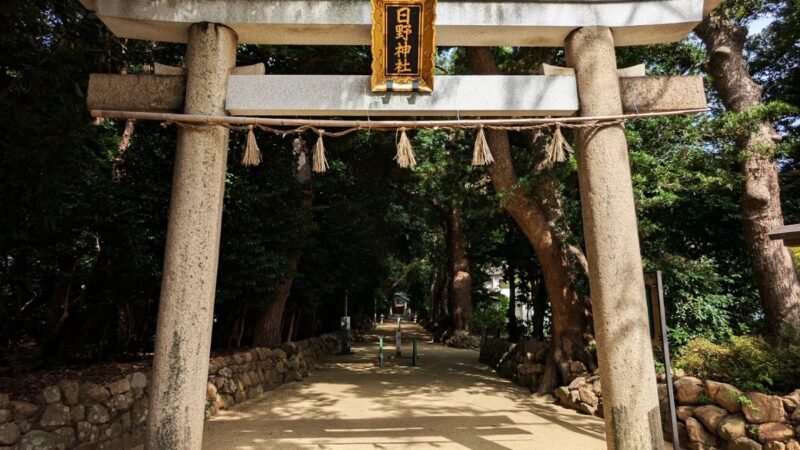
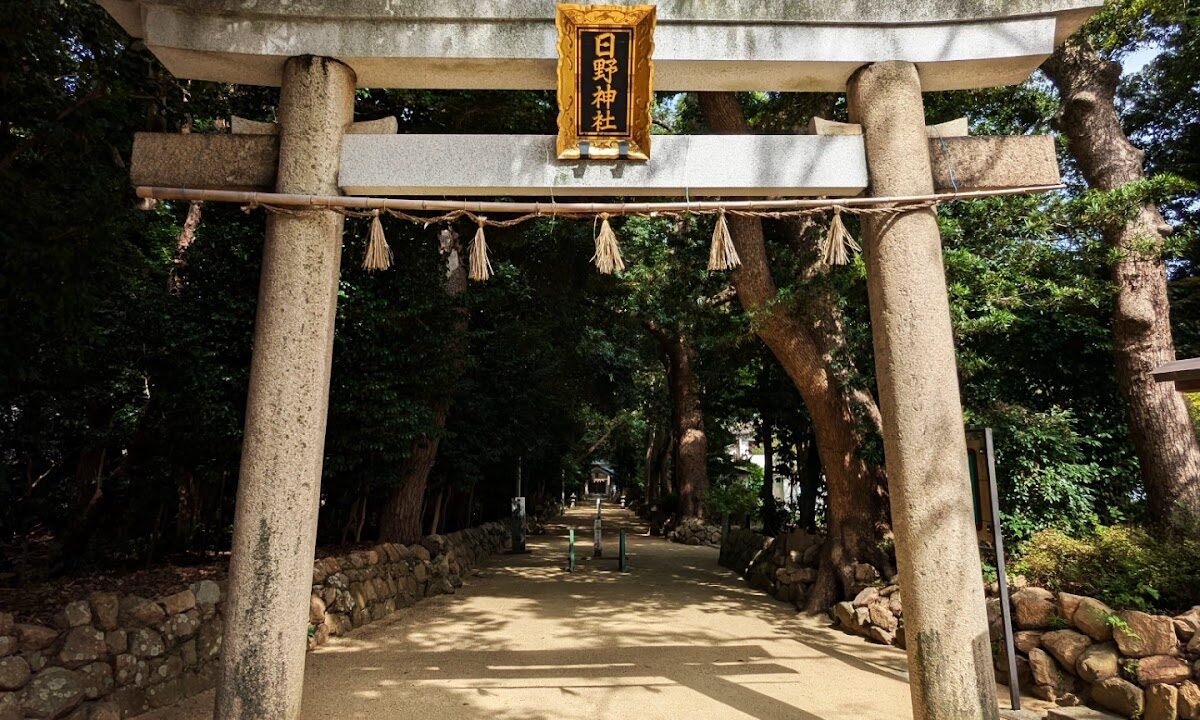
The approach to Hino Shrine, despite being in an urban area, is surrounded by abundant nature. Walking along the dense grove, you feel as if you’ve stepped into a different world, far removed from the hustle and bustle of the city. The forest surrounding the shrine, known as the “Hino Shrine Shrine Grove,” is designated a natural monument of Hyogo Prefecture, preserving its valuable vegetation.
This shrine grove, also selected as one of “Hyogo’s 100 Best Forests,” is a valuable green space in the increasingly urbanized city of Nishinomiya, and is important from the perspective of ecosystem conservation. This forest, where you can feel the changing seasons, provides peace of mind to visitors.
Shrine Architecture
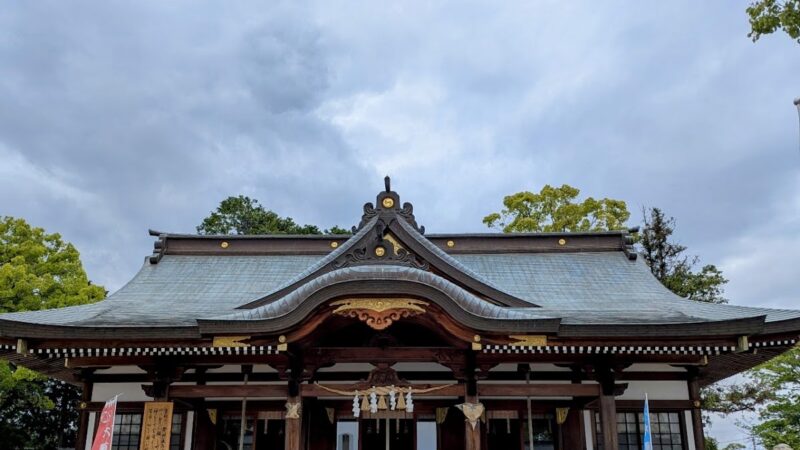
The worship hall of Hino Shrine employs a modern architectural style, being a white reinforced concrete structure with a copper-plated roof. In contrast, the main sanctuary is a traditional wooden structure, exuding a solemn atmosphere befitting a shrine. This combination of old and new architectural styles tells the story of the shrine’s long history and the changes it has undergone over time.
The path to the shrine features terrain reminiscent of the remains of Kawarabayashi Castle, making it an attractive spot for history enthusiasts to enjoy both exploring castle ruins and visiting the shrine. While no clear castle remains currently exist, the topography and layout of the shrine grounds allow one to imagine the castle’s former presence.
Stone Monument at Kawarabayashi Castle Site
The stone monument marking the “Kawarabayashi Castle Site” on the approach to the shrine indicates that this is not merely a shrine, but an important historical site. Many visitors stop before this monument, reflecting on the historical drama that unfolded here from the Nanboku-cho period to the Sengoku period.
Deities and Blessings
Main Deity: Amaterasu Omikami
The main deity of Hino Shrine is Amaterasu Omikami, the supreme deity in Japanese mythology. Revered as the sun goddess and considered the ancestral deity of the Imperial family, Amaterasu Omikami is believed to bestow a wide range of blessings, including national peace and security, good fortune, and protection from evil.
Enshrined Deities: Toyouke Omikami and Kasuga Daimyojin
Toyouke Omikami is known as the god of food and grains, and is believed to bestow blessings of abundant harvests and industrial development. Kasuga Daimyojin is a deity based on the Kasuga faith, with Takemikazuchi no Mikoto as its main deity, and is believed to bestow blessings of military success and family safety.
Hino Shrine, which enshrines these deities, attracts the faith of many people as a guardian deity of the region and as a shrine that grants individual wishes.
Goshuin Information
Since Hino Shrine does not have a resident priest, you can obtain its goshuin (seal) at Koshien Kumano Shrine, which is a subsidiary shrine. The goshuin are often handwritten directly and are well-received by visitors for their careful and attentive service.
Koshien Kumano Shrine is located in Koshien-cho, Nishinomiya City, and is some distance from Hino Shrine. Therefore, those wishing to obtain a goshuin are advised to check Koshien Kumano Shrine’s opening hours beforehand. The goshuin bears the inscription “Hino Shrine” and is popular among goshuin enthusiasts as a memento of this historic shrine located on the site of Kawarabayashi Castle.
Access and Transportation Information
Basic Information
- Address: 2-51 Hino-cho, Nishinomiya City, Hyogo Prefecture 663-8022
- Phone Number: 0798-64-0383 (Koshien Kumano Shrine)
Access by Train
Using Hankyu Railway
- Approximately 15 minutes on foot from Nishinomiya-Kitaguchi Station on the Hankyu Kobe Line
- Approximately 26 minutes on foot from Mondoyakujin Station on the Hankyu Imazu Line
Using JR
- Approximately 17 minutes on foot (approx. 1.4 km) from the North Exit of Koshien-guchi Station on the JR Kobe Line
Access from Hankyu Nishinomiya-Kitaguchi Station is the most convenient. The easiest route is to head northeast from the station and walk along the Hankyu railway tracks. Although located in a residential area, the greenery of the shrine grounds serves as a landmark.
Access by Car
Information regarding the shrine’s dedicated parking lot is limited. If you are visiting by car, we recommend considering using nearby coin-operated parking lots or using public transportation. Since the shrine is located in a residential area, please avoid street parking.
Points and Manners for Visiting
Visiting Hours
Hino Shrine’s grounds are freely accessible, and you can generally visit at any time. However, since there is no resident priest, if you wish to receive a Goshuin (shrine stamp) or prayers, we recommend contacting Koshien Kumano Shrine, which is managed by the same priest, in advance.
Visiting Manners
- Bow Before Passing Through the Torii Gate: As a sign of respect before entering the sacred area, bow before the torii gate.
- How to Walk Along the Approach: The center of the approach is considered the path of the gods, so it is preferable to walk along the sides.
- Procedure for Washing Hands: If there is a water basin for washing hands, wash your left hand, then your right hand, then your mouth, and finally the handle of the ladle.
- Worship at the Main Hall: The basic procedure is two bows, two claps, and one bow. Worship quietly and with sincerity.
- Protection of the Shrine Grove: This is a valuable forest designated as a prefectural natural monument, so please be careful not to damage the plants or litter.
Photography
Photography is generally permitted on the shrine grounds, but please be discreet in sacred areas such as the main hall, and be considerate of other worshippers. The beautiful scenery of the shrine grove is a popular photo spot, but please do not enter restricted areas for nature conservation purposes.
Nearby Attractions and Spots
Nishinomiya-Kitaguchi Area
The area around Hankyu Nishinomiya-Kitaguchi Station is the central commercial area of Nishinomiya City. There are large commercial facilities such as Hankyu Nishinomiya Gardens, where you can enjoy shopping and dining before or after your visit to the shrine.
Koshien Area
The Koshien area, where you can get a Goshuin (temple/shrine stamp) at Koshien Kumano Shrine, is home to Hanshin Koshien Stadium. Baseball fans can enjoy visiting Koshien Stadium and exploring the surrounding gourmet spots.
Nishinomiya Shrine (Ebessan)
Nishinomiya Shrine, a representative shrine of Nishinomiya City, is nationally known as “Ebessan,” the god of business prosperity. While it’s a bit of a distance from Hino Shrine, it’s worth visiting as part of a shrine tour in Nishinomiya City.
Mondoyakujin (Tokoji Temple)
Mondoyakujin, famous for warding off evil, is also relatively close to Hino Shrine. Those in their unlucky year or seeking protection from evil are recommended to visit both.
Seasonal Attractions
Spring (March-May)
The trees in the shrine’s grove are enveloped in fresh greenery, a season full of vitality. Walking along the approach to the shrine, the scent of young leaves and the chirping of birds create a pleasant and refreshing experience. ### Summer (June-August)
The shrine grounds, covered in deep green, offer a refreshing coolness despite being in an urban area. The shade of the trees is pleasant, making it relatively comfortable to visit even on hot days.
Autumn (September-November)
This is the season when the autumn leaves of the shrine’s grove are beautiful. Various trees change color, and the approach to the shrine is dyed in autumn hues. Visiting the shrine while crunching on fallen leaves is a charming experience.
Winter (December-February)
This is the season when the shrine buildings are more clearly visible through the bare trees. The tranquil grounds exude an even more sacred atmosphere.
Cultural Value of Hino Shrine
Hino Shrine Grove, a Prefectural Designated Natural Monument
The Hino Shrine Grove is a valuable natural environment designated as a natural monument of Hyogo Prefecture. In Nishinomiya City, where urbanization is progressing, the preservation of such rich nature is extremely valuable. Natural forests with a diverse mix of tree species are important from a biodiversity perspective and serve as habitats for many wild birds and insects.
Hyogo’s Top 100 Forests
Being selected for “Hyogo’s Top 100 Forests” indicates that it is a particularly outstanding forest environment within Hyogo Prefecture. This selection is based on a comprehensive evaluation of the forest’s historical, cultural, and natural characteristics, meaning that the Hino Shrine forest meets these criteria at a high level.
Historical Value as the Site of Kawarabayashi Castle
As the site of a castle dating from the Nanboku-cho period to the Sengoku period, the grounds of Hino Shrine are historically significant. Although no clear remains are left, the history etched into this land provides valuable clues for understanding the medieval history of Nishinomiya City.
The Role of Hino Shrine in the Community
For the area around Hino-cho in Nishinomiya City, Hino Shrine is not merely a tourist spot, but a place of worship deeply rooted in daily life. As the guardian shrine of the region, it serves as a spiritual anchor for residents, attracting visitors who come to pray at seasonal and life-changing occasions.
Despite its small size, its historical background and rich natural environment make it an important element in shaping the region’s identity. In the midst of urban development, the preservation of such a historic shrine and its natural environment is a source of pride for local residents and a valuable asset to be passed on to future generations.
Visitor Voices and Reputation
Visitors to Hino Shrine often comment on its “quiet and peaceful atmosphere,” describing it as “an oasis in the city” and “a place where you can feel history.” The rich natural environment of the shrine’s grove and its historical background as the site of Kawarabayashi Castle are particularly highly praised.
Despite its small size, the main hall’s appearance is popular for being “truly shrine-like,” making it a popular spot for photography. Its convenient location within walking distance of Hankyu Nishinomiya-Kitaguchi Station is also appreciated, making it easily accessible.
On the other hand, it’s important to know beforehand that there are no resident priests, and therefore, you need to obtain a Goshuin (shrine stamp) at Koshien Kumano Shrine. ## Summary
Hino Shrine is a historically significant shrine located in Hino-cho, Nishinomiya City, Hyogo Prefecture, built on the site of the former Kawarabayashi Castle. It enshrines Amaterasu Omikami as its main deity, with Toyouke Omikami and Kasuga Daimyojin also enshrined. It is believed to have been founded during the Koan era (1361-1362) as the guardian deity of Kawarabayashi Castle, and it conveys the turbulent history from the Nanboku-cho period to the Sengoku period.
The “Hino Shrine Forest” covering the shrine grounds is designated as a natural monument of Hyogo Prefecture and is a valuable natural environment selected as one of “Hyogo’s 100 Best Forests.” Despite being in an urban area, the tranquil space surrounded by abundant nature provides peace of mind to visitors.
Access is convenient, approximately a 15-minute walk from Hankyu Nishinomiya-Kitaguchi Station and approximately a 17-minute walk from JR Koshien-guchi Station. Goshuin (shrine stamps) can be obtained at Koshien Kumano Shrine, which is managed by the same shrine.
For history buffs, nature lovers, those collecting Goshuin (temple/shrine stamps), and anyone seeking tranquility, Hino Shrine is well worth a visit. When you visit Nishinomiya City, be sure to stop by this shrine where history and nature harmonize.