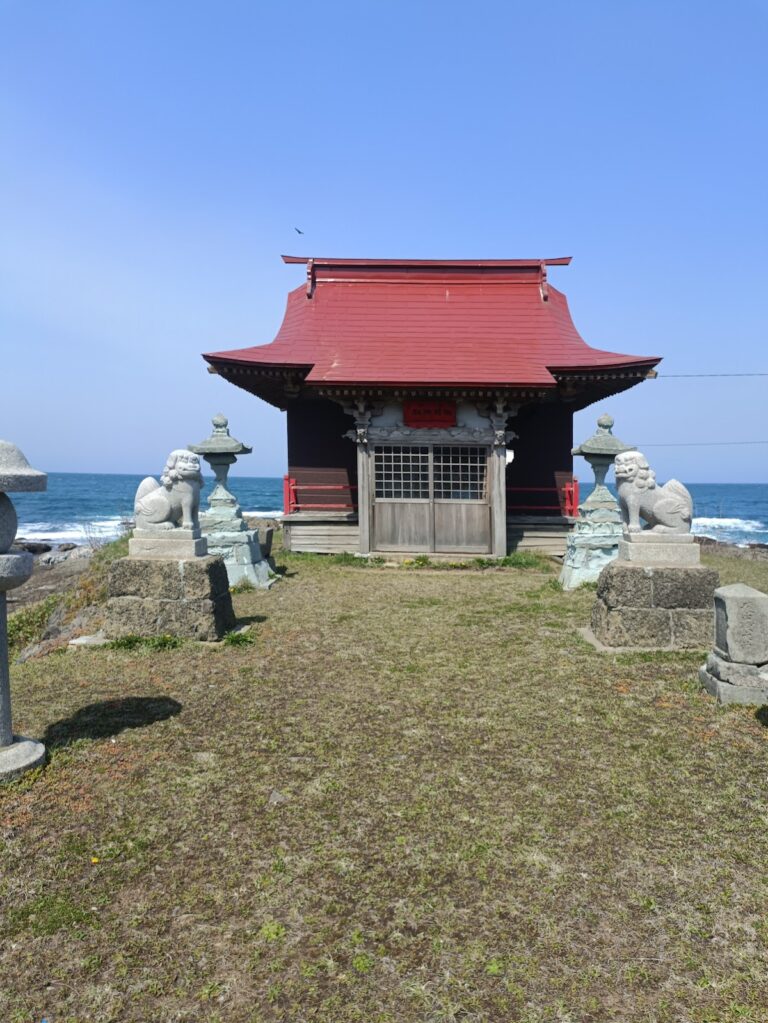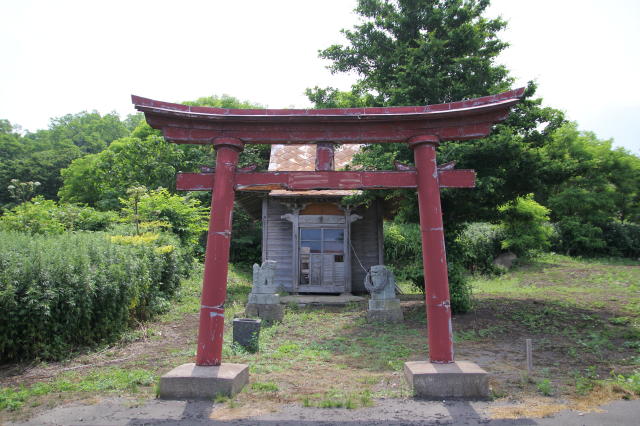
History and Cultural Background of Inari Shrine (Miyafushikotomari, Utasuki Village, Utasuki District, Suttsu Town, Hokkaido)
Located in the Utasuki district of Suttsu Town, Suttsu District, Hokkaido, Inari Shrine is a shrine with a history dating back to the late Edo period and is a cultural heritage deeply intertwined with the prosperity of the fishing industry in this region. This article provides a detailed explanation of the shrine’s founding, historical background, and role in the local community.
Founding and Historical Background of Inari Shrine
Founded in 1823 (Bunsei 6)
Inari Shrine, located in Miya (present-day Miya, Utasuki-cho, Suttsu Town), was founded in May 1823 (Bunsei 6). The shrine was built by Yanagiya Shohei, who was the Otasuki fishing grounds contractor at the time. In Hokkaido during the Edo period, the Matsumae Domain established a “fishing grounds contracting system,” under which merchants from Honshu undertook the management of fishing grounds in various locations.
The Otasutsu trading post was a vast fishing area centered around the present-day Utasuki district of Suttsu Town, and flourished as a trading center primarily focused on herring fishing. The trading post contractors were not merely fishing business owners, but important figures involved in regional development and governance. It is believed that Yanagiya Shohei’s construction of the Inari Shrine was intended to pray for fishing safety, a bountiful catch, and regional prosperity.
Hokkaido and the Trading Post Contract System in the Late Edo Period
In Hokkaido (then known as Ezochi) during the Edo period, the Matsumae Domain established trading and fishing bases called “basho” in various locations, and a system was in place where merchants from Honshu were contracted to manage them. The Otasutsu trading post was one such example, and it developed against the backdrop of the rich fishing grounds along the Suttsu Bay coast.
In exchange for obtaining the right to manage the fishing grounds, the trading post contractors paid taxes to the Matsumae Domain and were also responsible for trade with the local Ainu people and securing labor. In these centers of economic activity, shrines were often erected, and prayers were offered for business prosperity and safe voyages. Inari, the god of commerce and abundant harvests, was widely worshipped, making the establishment of an Inari shrine in the Utasuki district, which prospered from fishing and trade, a natural progression.
Influential Fishing Land Owners and Inari Faith in the Utasuki District
The Sato Family and the Tradition of Their Shrine
Even after the Meiji period, influential families who owned fishing land existed in the Utasuki district. A prime example is the Sato family. Families like the Sato family, who owned fishing land, had a custom of erecting shrines on their properties to pray for the prosperity and safety of their family businesses.
The Utasuki Sato family also worshipped an Inari shrine, which is thought to have been a private religious facility separate from the Miyano Inari Shrine founded by Yanagiya Shohei. This coexistence of public, community shrines and private shrines worshipped by individual influential figures reflects a characteristic of religious practices in Hokkaido fishing villages at that time.
Two Old Houses on the Coast of Suttsu Bay
Along the coast of Suttsu Bay, including the Utasuki district, were scattered old houses of influential figures who had made their fortunes in fishing. These houses amassed immense wealth during the peak of the herring fishing season and built magnificent buildings known as “herring mansions.” The presence of shrines on their grounds was not merely an expression of faith, but also a symbol of social status.
Influential figures such as the Yanagiya and Sato families wielded not only economic influence in the local community but also played a role as cultural and religious centers. The shrines they erected served as spiritual anchors for employees and local residents, strengthening community bonds.
Changes and Regional Development After the Meiji Period
The Meiji Restoration and the Development of Hokkaido
After the Meiji Restoration, Hokkaido entered a period of full-scale development. In 1869 (Meiji 2), Ezochi was renamed “Hokkaido,” and the Hokkaido Development Commission was established. The land contract system was abolished, and new administrative divisions were established.
Suttsu County, including the Utasuki district, was officially established during the Meiji-era administrative reorganization. During this period, many shrines were officially recognized as village shrines or regional shrines, establishing their status as local shrines. It is presumed that the Inari Shrine of Miya also continued its role in the local community within this changing landscape.
Changes in the Showa Era and its Inheritance into the Modern Age
With the decline of herring fishing in the Showa era, the economic situation of the Utasuki district changed dramatically. Many of the once-prosperous fishing ground owners fell into ruin, and the population declined. However, even amidst these changes, the shrines rooted in the community were preserved as objects of worship.
In modern times, many small shrines in depopulated rural areas face difficulties in maintenance and management, but their value as precious legacies that convey the history and culture of the region is still being re-recognized.
Characteristics of Inari Worship in Hokkaido
Transmission of the Faith from Honshu
Inari worship originally originated at Fushimi Inari Taisha in Kyoto. The spread of Inari worship to Hokkaido occurred during the late Edo period and into the Meiji era, brought by immigrants and merchants from Honshu.
The Inari Shrine in Miya, founded by a merchant from Honshu named Yanagiya Shohei, is a typical example of the transplantation of Honshu’s Inari worship to Hokkaido. Inari is believed to bestow various blessings, including business prosperity, abundant harvests, and family safety, and was widely accepted in the Hokkaido settlements, where fishing was the primary industry.
The Connection Between Fishing and Inari Worship
Originally, Inari was worshipped as the god of agriculture, especially rice cultivation. However, with the development of commerce, its character as a god of business prosperity strengthened. Since fishing was more central to the economy than agriculture in Hokkaido, Inari also came to be worshipped as a god who brings safety to fishermen and abundant catches.
The Connection Between Fishing and Inari Worship
Originally, Inari was worshipped as the god of agriculture, particularly rice cultivation. However, with the development of commerce, its character as a god of business prosperity became stronger. The Inari Shrine in the Utasuki district is thought to have attracted the faith of fishermen during the prosperous herring fishing season, functioning as a place for praying for safety before setting sail and giving thanks for a bountiful catch. This flexible interpretation of the deity’s characteristics according to the local industrial structure is one of the hallmarks of Japanese folk beliefs.
History and Administrative Changes of Utasuki District
Establishment of the District and Regional Structure
Utasuki District was formally established during the administrative reorganization of the Meiji period. During the Edo period, it was part of the Matsumae Domain and operated under a system of contracted fishing grounds such as the Otasutsu trading post. However, after the establishment of the Hokkaido Development Commission in 1869 (Meiji 2), it gradually transitioned to a modern administrative division.
Utasuki District included Utasuki Village, which later merged with Suttsu Town to form the current administrative division. This region is known as a rich fishing ground facing the Sea of Japan, and during the peak of the herring fishing season, it boasted one of the greatest prosperities in Hokkaido.
Town and Village Mergers in the Showa Era
During the Showa era, amidst a nationwide trend of town and village mergers, Utasuki Village merged with Suttsu Town, becoming the current Utasuki district of Suttsu Town. While this merger streamlined administration, it also created the challenge of how to preserve the region’s unique history and culture.
Historical buildings and religious sites, such as the Inari Shrine in Miya, play a crucial role in maintaining the region’s identity, transcending these administrative divisions.
Traces of Influential Figures that Tell the Story of the Town’s Prosperity
Prosperity During the Peak of Herring Fishing
From the late 19th to the early 20th century, the Hokkaido coast of the Sea of Japan experienced unprecedented prosperity due to herring fishing. Large numbers of herring, known as “spring herring,” swarmed the coast during their spawning season, attracting people from all over who dreamed of striking it rich.
The Utasuki district also benefited, with many fishing ground owners amassing fortunes. They built luxurious homes, erected shrines on their properties, and displayed their influence within the community. The existence of the Inari Shrine is a precious trace that conveys the prosperity of that era to the present day.
Things that remain in daily life
After the decline of herring fishing, many fishing ground owners fell into ruin, and magnificent buildings were demolished or fell into disrepair. However, religious facilities that remained in the form of shrines continue to function not only as physical structures but also as devices that pass on the memory and culture of the region.
Visiting the Utasuki district today, the traces of its former prosperity are fading, but through historical buildings like the Inari Shrine, one can catch a glimpse of the life and faith of the people of that time. Preserving such cultural heritage and passing it on to future generations is extremely important for maintaining the historical identity of the region.
Geographical characteristics of the Miyafushikotomari district
Topography and fishing of Suttsu Bay
Miyafushikotomari is a district facing Suttsu Bay and has long been a fishing base as a natural harbor. Suttsu Bay is a relatively calm sea area and was known as a good fishing ground for migratory fish, including herring.
This geographical condition facilitated the development of fishing grounds from the Edo period onward, leading to the establishment of the Otasutsu fishing grounds. The Miya district, where the Inari Shrine was founded, was precisely one of the centers of this fishing activity.
A Key Point for Transportation and Logistics
From the Edo period to the Meiji era, the west coast of Hokkaido was called “Western Ezochi” and was a key point for maritime transportation to Honshu. Suttsu Bay was one of its important ports of call, with a bustling flow of goods and people.
It is believed that this status as a key transportation point played a role in the founding of the Inari Shrine. As a place to pray for safe voyages and success in commercial transactions, the shrine was an indispensable presence in the local community.
Value as a Cultural Heritage in the Modern Era
Valuable Material for Local History Research
The Miya Inari Shrine holds valuable historical material for understanding the history of Hokkaido’s development, particularly the era of the place contract system. The clear founding date and the identification of the founder are extremely important pieces of information for historical research. Each of these small local shrines is an important piece in the history of Hokkaido as a whole, and their preservation and research are of great academic significance.
Potential as a Tourism Resource
In recent years, regional development utilizing historical buildings and cultural heritage has attracted attention. In Suttsu Town, utilizing historical facilities such as Inari Shrines as tourism resources has the potential to promote the region’s appeal and increase the number of visitors.
By setting up routes to tour the historical heritage of the Utasuki district with themes such as “Herring Mansion” or “Footprints of a Place Contractor,” it would be possible to attract history enthusiasts and tourists interested in cultural properties.
Architectural Style and Cultural Characteristics of Inari Shrines
Shrine Architecture in Hokkaido
While Hokkaido’s shrine architecture is based on the traditional styles of Honshu, it sometimes exhibits unique characteristics due to climatic conditions and the availability of materials. Shrines built from the late Edo period to the early Meiji period are particularly valuable for understanding the architectural techniques and forms of worship of that time.
Further investigation is needed to determine the architectural style and current state of the Miya Inari Shrine, but records indicating its founding in 1823 (Bunsei 6) place it in an important position as an example of late Edo period shrine architecture in Hokkaido.
Elements Unique to Inari Shrines
Characteristics of Inari shrines include vermilion torii gates, fox statues (divine messengers), and plaques bearing the character “Inari.” The extent to which these elements were present in the Miya Inari Shrine is an interesting point.
Among Hokkaido’s Inari shrines, some are highly prestigious, having received a divided spirit from the main shrine on Honshu, while others have developed independently as local religious practices. Since the Miya Inari Shrine was founded by a commercially successful landowner, it is presumed to have had a strong character as a practical religious facility focused on business prosperity.
Comparison with Other Inari Shrines in Hokkaido
Differences from Sapporo Fushimi Inari Shrine
One of the most famous Inari shrines in Hokkaido is the Sapporo Fushimi Inari Shrine. This shrine was officially established in 1884 (Meiji 17) after receiving a divided spirit from Fushimi Inari Taisha in Kyoto, and is now known as a tourist attraction.
Miya Inari Shrine was founded in 1823 (Bunsei 6), approximately 60 years earlier than Sapporo Fushimi Inari Shrine, making it older in the history of Inari worship in Hokkaido. However, the circumstances of their founding differ significantly: Miya Inari Shrine began as a private faith of a land contractor, while Sapporo Fushimi Inari Shrine took the form of an official divided spirit.
Similarities with Inari Shrines in Various Fishing Villages
Along the coast of Hokkaido, there are many Inari shrines that were founded in conjunction with the prosperity of fishing. These shrines share the common purpose of praying for fishing safety and a bountiful catch, and have served as spiritual pillars for local fishing communities.
Miya Inari Shrine can be positioned as one of these fishing village Inari shrines, and can be considered a valuable cultural heritage located at the intersection of Hokkaido’s fishing history and religious history.
Challenges for Future Preservation and Utilization
Depopulation and Cultural Property Protection
One of the biggest challenges facing modern regional cities is depopulation. The Utasuki district of Suttsu Town is no exception, experiencing population decline and aging. Under these circumstances, how to preserve historical buildings and cultural properties is an urgent issue.
Many small shrines face difficulties in maintenance due to a decrease in parishioners, raising questions about securing repair funds and who will be responsible for daily management. Diverse stakeholders, including government, local residents, researchers, and tourism stakeholders, need to collaborate on preservation activities.
The Importance of Digital Archives
Even when physical preservation is difficult, record preservation using digital technology is possible. Information can be preserved for future generations through methods such as photographing shrines, 3D scanning, and digitizing related materials.
Regarding the Miya Inari Shrine, creating detailed records of its current state and investigating and documenting its changes since its founding as thoroughly as possible will be the first step in protecting its cultural heritage.
Summary: Passing on Local Memories to the Future
Located in Miyafushikodomari, Utasuki Village, Utasuki District, Suttsu Town, Hokkaido, the Inari Shrine is a 200-year-old shrine founded in 1823 by Yanagiya Shohei, a contractor for the Otasutsu fishing grounds. This shrine is a valuable cultural heritage site that embodies the major currents of Hokkaido’s history: the late Edo period’s land contracting system, Meiji-era development, and the rise and fall of herring fishing.
This shrine provides important clues to understanding the roles played by influential figures such as land contractors and fishing ground owners in the local community, how Inari worship was received and developed in Hokkaido, and how local prosperity and faith were intertwined.
In modern times, while facing the challenge of depopulation, there is a need to preserve and utilize such historical buildings to maintain regional identity and create new value. We sincerely hope that the Miyafushikodomari Inari Shrine will be passed down not merely as a relic of the past, but as a living cultural heritage site that connects the region’s memories to the future.
When you visit Suttsu Town, why not stop by this historic Inari Shrine and reflect on the lives of the people who once built prosperity in this land? The history etched into this small shrine is part of the grand story of Hokkaido’s development, and it will surely tell us many things.