
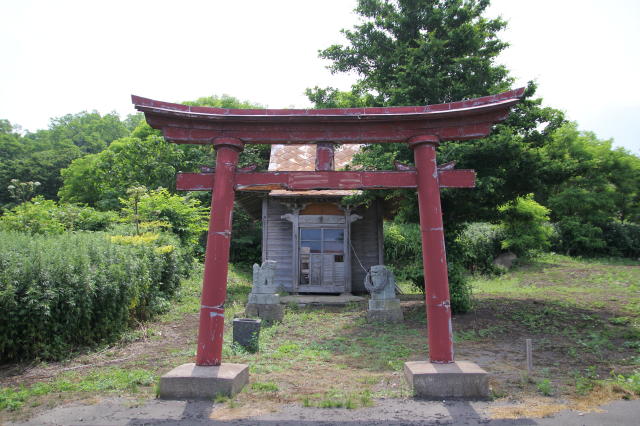
Inari Shrine (Alto Yamanoue, Yokoma, Isoya-cho, Suttsu-cho, Hokkaido) | Complete Guide to History and Worship
Located in Suttsu-cho, Suttsu-gun, within the jurisdiction of the Shiribeshi General Subprefectural Bureau of Hokkaido, the Inari Shrine is a Shinto shrine that attracts the faith of the local community. This article provides a comprehensive explanation of the detailed information, historical background, worship methods, and regional characteristics of Suttsu-cho.
Basic Information on the Inari Shrine
Location and Geographical Characteristics
The Inari Shrine is located at 354 Alto Yamanoue, Yokoma, Isoya-cho, Suttsu-cho, Suttsu-gun, Hokkaido. Suttsu-cho is a town facing the Sea of Japan on the Hokkaido coast and is known for its scenic beauty overlooking Suttsu Bay. As the place name “Alto Yamanoue” suggests, this shrine is situated on a small hill and has been cherished as a guardian presence for the community.
Suttsu Town is broadly divided into the Suttsu side and the Utasutsu side by the Shutagawa River. Isoya Town has historically been a region where fishing and agriculture thrived. The place name Yokoma is an old place name that describes a geographical feature, meaning a small valley or stream in the mountains.
Deities and Beliefs
The deities enshrined at Inari shrines are Inari gods, centered around Ukanomitama-no-Mikoto. Inari gods are widely worshipped throughout Japan as guardians of abundant harvests, industrial development, and business prosperity, as well as the ancestors of clothing, food, and shelter.
Many Inari shrines in Hokkaido were founded by inviting a divided spirit from Fushimi Inari Taisha in Kyoto. In Shinto, Fushimi Inari Taisha is considered the head shrine of all Inari shrines nationwide, and its worship spread from the Edo period to the Meiji period along with the development of Hokkaido.
The History of Inari Worship in Suttsu Town
Hokkaido Development and the Establishment of Shrines
Many shrines in Hokkaido were built during the development period from the late Edo period to the Meiji era. Looking at the history of Suttsu Town, during the Edo period it was under the control of the Matsumae Domain and prospered from fishing, primarily herring.
Records show that in 1804 (Bunka 1), the Matsumae Domain established an Inari shrine to pray for the prosperity of the Abuta area (present-day Iburi region). It is said that they ordered Wada Shigehei, the contractor for the Abuta area at the time, to receive a divided spirit from Fushimi Inari Taisha in Kyoto. It is highly probable that the Inari shrine in Suttsu Town was also established around the same time to pray for regional prosperity and a bountiful harvest.
Separation of Shinto and Buddhism and Inari Worship
The separation of Shinto and Buddhism in the early Meiji era brought about a major turning point for Inari worship throughout Japan. Until then, Inari worship had been practiced in a syncretic form of Shinto and Buddhism, but it eventually split into Shinto-based Inari shrines and Buddhist-based Inari shrines (temples dedicated to Dakiniten).
Many Inari shrines in Hokkaido were reorganized as Shinto-based and continue to attract local worshippers as Shinto shrines. The Inari shrine in Suttsu Town is also a Shinto-based shrine and has served as a spiritual center for the local residents.
Characteristics and Grounds of the Inari Shrine
The Significance of its Location on a Mountain
This Inari shrine, located at “Alto Yamanoue,” is situated on a hill overlooking the region. Since ancient times, there has been a deep meaning in building shrines in high places.
Firstly, there is a belief that gods protect the region from high places. Mountaintops and hilltops have been considered sacred places (himorogi) where gods descend. Secondly, from a practical standpoint, elevated areas are protected from natural disasters such as floods and tsunamis, and have served as evacuation sites for the community.
Symbols of Inari Shrines: Torii Gates and Foxes
A characteristic feature of Inari shrines is the vermilion torii gate and fox statues. Vermilion has long been considered a color symbolizing protection against evil and vitality, indicating the sacredness of the shrine.
Foxes are considered messengers (attendants) of Inari-sama (the Inari deity). This is related to Inari-sama being a god of agriculture; because foxes prey on mice, they came to be worshipped as protectors of grain. Many Inari shrines have fox statues placed along the approach to the shrine or in front of the main hall.
Hokkaido’s Inari Shrine Network
Major Inari Shrines in Hokkaido
There are numerous Inari shrines in Hokkaido. Representative examples include:
Sapporo Fushimi Inari Shrine: This historic shrine was established in 1884 (Meiji 17) with a divided spirit from Kyoto’s Fushimi Inari Taisha, and its main hall was built in 1907 (Meiji 40). Located in Fushimi, Chuo-ku, Sapporo, its impressive sight of 27 vermilion torii gates makes it a popular power spot in Sapporo, attracting many worshippers.
Hakodate Gokoku Shrine Inari: Situated at the foot of Mount Hakodate, it has watched over the development of the port city of Hakodate.
Asahikawa Inari Shrine: Located in Asahikawa, the central city of northern Hokkaido, it is revered by local merchants and industrialists as a god of business prosperity.
These shrines have each cultivated their own unique history and beliefs in their respective regions, but they all share a common connection to Fushimi Inari Taisha, forming a network of Inari worship.
Characteristics of Inari-affiliated Shrines
In Shinto, an “affiliated shrine” refers to a group of shrines that enshrine the same deity. Inari-affiliated shrines are the most numerous in Japan, with over 30,000 said to exist.
Inari-affiliated shrines in Hokkaido originated when people who migrated from Honshu during the pioneering period brought their Inari faith from their homeland. Inari shrines were built in various pioneering settlements to pray for abundant harvests and regional prosperity.
The Inari shrine in Suttsu Town is one such shrine that arose during this history of Hokkaido’s pioneering. It has a history intertwined with the development of local agriculture and fisheries.
Regional Characteristics and Culture of Suttsu Town
History and Industry of Suttsu Town
Suttsu Town is a port town that has prospered since ancient times due to herring fishing. During the Edo period, it was an important fishing ground for the Matsumae Domain, and from the Meiji era onward, it flourished as one of Hokkaido’s leading herring fishing ports. The place name “Suttsu” is said to originate from the Ainu word “Shupki” (reed root). Currently, Suttsu Town is a thriving center for agriculture in addition to fishing, particularly the cultivation of potatoes and pumpkins. It is also attracting attention as a suitable location for wind power generation, giving it an aspect as a town of renewable energy.
Characteristics of the Isoya District
Isoya is one of the historically significant districts within Suttsu Town. It is a naturally rich area surrounded by a coastline facing the Sea of Japan and mountains in the background. As the sub-district name Yokoma suggests, settlements have formed in the valleys between the mountains.
In this district, fishing and agriculture have been practiced since ancient times, and Inari Shrine was a place of worship closely intertwined with the lives of these people. The shrine has played an important role as a place to pray for abundant harvests and bountiful catches, and as the center of the local community.
How to Worship and Manners
Basic Worship Etiquette
When visiting a shrine, it is important to observe the following basic etiquette:
- How to Pass Through the Torii Gate: The torii gate is the entrance to the sacred area. Bow before passing through the gate. Since the center of the approach to the shrine is considered the path of the gods, it is polite to walk along the sides.
- Procedure for Washing Hands: If there is a water basin, wash your left hand first, then your right hand, then take water in your left hand and rinse your mouth, and finally wash the handle of the ladle.
- Worship at the Main Hall: The basic procedure is two bows, two claps, and one bow. Place your offering, ring the bell if there is one, bow deeply twice, clap your hands twice, silently recite your wish, and finally bow deeply once more.
- When Leaving: When leaving, bow at the torii gate before exiting the sacred area.
Points of Worship Unique to Inari Shrines
At Inari shrines, pay attention to the fox statues. Often, the foxes are holding keys, jewels, or rice stalks in their mouths. Each of these elements has its own meaning: the key symbolizes the rice storehouse, the jewel represents a wish-granting jewel, and the rice stalk symbolizes a bountiful harvest.
Furthermore, at Inari shrines, it is customary to offer fried tofu and inari sushi. This stems from the folk belief that foxes are fond of fried tofu.
Access and Surrounding Information
Access to Suttsu Town
Suttsu Town can be accessed in the following ways:
Access by Car:
- Approximately 2 hours and 30 minutes from Sapporo via National Route 5 and National Route 229
- Approximately 3 hours from Hakodate via National Route 5 and National Route 229
- Approximately 2 hours from Otaru via National Route 5 and National Route 229
Public Transportation:
- Take the JR Hakodate Main Line to Kutchan Station or Otaru Station, then take a bus to Suttsu Town (prior confirmation is necessary as the number of buses is limited)
Directions to Inari Shrine (Alto Yamanoue, Yokoma, Isoya Town)
From the center of Suttsu Town to the Isoya area, head south on National Route 229. Once in Isoya Town, follow the signs towards Yokoma. As the place name “Alto Yamanoue” suggests, you will need to climb a mountain path.
During winter, road conditions can be severe due to snow, so it is recommended to check local information before visiting. Also, due to its mountainous location, comfortable walking shoes are recommended.
Nearby Tourist Attractions
The following are some tourist attractions near Suttsu Town:
Suttsu Bay: Enjoy the beautiful scenery of the Sea of Japan. The sunset is particularly stunning, captivating visitors as the sun sinks below the horizon.
Benkei Cape: A cape steeped in the legend of Minamoto no Yoshitsune and Benkei, offering panoramic views of the magnificent Sea of Japan from its observation deck.
Michi-no-Eki Minato-mare Suttsu: A roadside station where you can purchase fresh local seafood and agricultural products. Popular items include Suttsu’s famous Atka mackerel and sea urchin.
Tarugishi Coast: A beautiful coastline with crystal-clear waters and unique rock formations.
Shuta River: Known for its clear waters, it is a place where you can observe salmon swimming upstream.
Local Festivals and Annual Events
Annual Events at Shrines in Hokkaido
Shrines in Hokkaido hold various festivals and events throughout the year. Major annual events include:
January: Hatsumode (first shrine visit of the year), Genshisai (beginning of the year festival)
February: Setsubunsai (bean-throwing festival), Kigensai (founding festival)
April-May: Spring Grand Festival
June: Natsukoshi no Oharae (summer purification ceremony)
September-October: Autumn Grand Festival, Harvest Thanksgiving Festival
November: Shichi-Go-San (children’s festival)
December: Toshikoshi no Oharae (year-end purification ceremony), Joyasai (New Year’s Eve festival)
Festival dates and content vary by shrine, so it is recommended to check in advance if you plan to visit.
Local Events in Suttsu Town
Suttsu Town holds events befitting a town of fishing and agriculture. In spring, a safety prayer festival is held, and in autumn, a bountiful harvest thanksgiving festival is held. Furthermore, Suttsu Town also hosts local events such as the “Suttsu Marugoto Festival,” showcasing the region’s attractions.
The Modern Significance of Inari Worship
From Abundant Harvests to Business Prosperity
Inari worship originally had a strong character as a deity of agriculture. However, over time, it came to be worshipped as a god of business prosperity and industrial development. This stems from the Edo period, when commerce flourished and merchants began to revere Inari as the guardian deity of business.
Even today, Inari shrines are often enshrined as company shrines and are popular places to pray for business success.
As a Center of the Local Community
Shrines are not merely religious facilities; they also play a role as a center of the local community. Through festivals and cleaning activities, they serve as places where local residents gather and interact.
In rural areas experiencing depopulation, maintaining shrines can be a challenge, but even so, local people continue to cherish and protect them. The Inari Shrine in Suttsu Town will undoubtedly continue to be preserved as a valuable place that conveys the history and culture of the region.
Hokkaido Shrine Association and the Shrine Network
Role of the Hokkaido Shrine Association
The Hokkaido Shrine Association is a religious corporation that encompasses shrines throughout Hokkaido. Approximately 600 shrines in Hokkaido are members, and it engages in activities such as supporting shrine operations, training Shinto priests, and promoting Shinto culture.
The Shrine Association’s website allows you to check information on individual shrines and schedules of annual events. However, detailed information may not be available for smaller shrines.
Utilizing Shrine Databases
In recent years, the number of database sites that allow you to search for shrine information online has increased. Sites such as “Yaoyorozu no Kami” (Eight Million Gods) and “Jinja Search” (Shrine Search) allow you to search for shrines nationwide by lineage and region.
Basic information about the Inari Shrine in Suttsu Town is also registered in these databases, and you can check its location and map information. However, this information is not always up-to-date, so it is recommended to check the local situation beforehand if you plan to visit.
Mindset for Visiting a Shrine
Visit with a Reverent Heart
The most important thing when visiting a shrine is a reverent heart. While there’s nothing wrong with visiting shrines as a tourist or for power spot pilgrimage, you must not forget that these are places of worship for the local people.
It is necessary to pray quietly, refrain from speaking loudly on the shrine grounds, and be considerate not to defile the sacred place. Also, be aware that photography is prohibited in some places.
Express Gratitude
A shrine is not just a place to make wishes. It is also a place to express gratitude for daily peace, health, and the safety of the community. When praying, it is important to first express gratitude, and then make your wishes.
Summary: The Value of Inari Shrine in Suttsu Town
Located on the mountaintop of Yokoma, Isoya-cho, Suttsu-gun, Hokkaido, the Inari Shrine is a valuable presence that conveys the history and faith of the region to the present day. Located atop a mountain, this shrine has watched over the region for centuries, serving as a place of prayer for abundant harvests and local prosperity, cherished by the community for many years.
The history of Inari worship, intertwined with the pioneering history of Hokkaido, the culture of Suttsu Town—a town of fishing and agriculture—and the shrine’s role as the heart of the community—all of these are condensed within this small shrine.
If you have the opportunity to visit Suttsu Town, please be sure to stop by this Inari Shrine. Along with the view of the Sea of Japan from the mountaintop, you can feel the history and culture of Hokkaido. Taking time to reflect on the region’s history and express gratitude for nature and the lives of its people through shrine visits will be a valuable experience in today’s society.
Shrines are not merely tourist attractions; they are spiritual centers of the community. When visiting, please respect the local faith and culture, and offer your prayers with reverence. We hope this article will help you learn more about the Inari Shrine in Suttsu Town and deepen your understanding of Hokkaido’s shrine culture.
