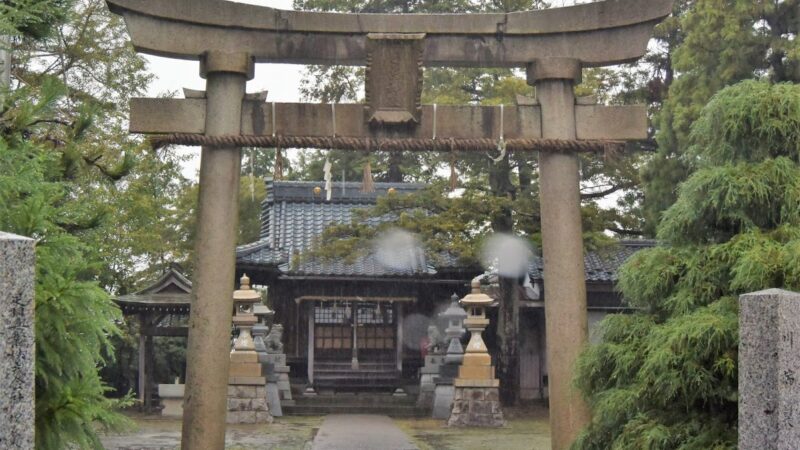
Hiyoshi Shrine (33-32 Tenike-cho, Fukui City, Fukui Prefecture) Complete Guide | History, Access, and Surrounding Information
Hiyoshi Shrine, located in Tenike-cho, Fukui City, Fukui Prefecture, has long been a beloved shrine that attracts the faith of the local community. This article provides a detailed introduction to Hiyoshi Shrine, from basic information and historical background to access methods and information on surrounding shrines.
Basic Information about Hiyoshi Shrine
Location and Postal Code
The official address of Hiyoshi Shrine is 33-32 Tenike-cho, Fukui City, Fukui Prefecture. The postal code is 〒910-0124. Located in the Tenike-cho area, slightly away from the center of Fukui City, it attracts the faith of local residents in a quiet environment.
Deities and History
The name Hiyoshi Shrine is a common name for many shrines throughout Japan. This originates from the fact that Hiyoshi Taisha (Sanno Grand Shrine), located in Otsu City, Shiga Prefecture, is the head shrine, and that shrines were established in various locations by inviting the Sanno Gongen and his attendant deities enshrined there.
Generally, the following deities are enshrined at Hiyoshi shrines:
- Oyamakui-no-kami: Revered as the god of mountains and local deities
- Onamuchi-no-kami: Another name for Okuninushi-no-mikoto, the god of nation-building
- Tagorihime-no-mikoto: One of the three Munakata goddesses
Characteristics of the Shrines
There are multiple Hiyoshi shrines in Fukui Prefecture. Even within Fukui City alone, there are shrines with the same name in Tenike-cho, Teramae-cho, Fukami-cho, and other areas. This indicates that Hiyoshi faith was widespread, and each region has cultivated its own unique history and beliefs.
Hiyoshi Shrine in Tenike-cho is the local guardian shrine, closely intertwined with the lives of the residents, and is believed to offer blessings for abundant harvests, family safety, and protection from evil.
How to Access Hiyoshi Shrine
Access by Car
Tenike-cho in Fukui City is located a little distance from the city center, so access by car is convenient.
- From Fukui Station: Approximately 15-20 minutes
- From Fukui IC on the Hokuriku Expressway: Approximately 20 minutes
- Parking: There may be parking spaces for visitors on the shrine grounds or nearby (prior confirmation recommended)
Access by Public Transportation
If using public transportation, you will need to use Fukui City’s community buses or regular bus routes, but the number of services may be limited. Since it is a short walk from the nearest bus stop, it is recommended to check Fukui City’s public transportation information in advance.
Landmarks in the Surrounding Area
Tenike-cho is located on the outskirts of Fukui City, a quiet area with sprawling rural scenery. Checking access routes from national and major prefectural roads in advance will make your visit smoother.
Map of the area around Hiyoshi Shrine
The area surrounding 33-32 Tenike-cho, Fukui City, Fukui Prefecture, is a peaceful rural area. Farmlands and residential areas are scattered throughout, retaining the atmosphere of an old settlement.
Major facilities in the surrounding area
- Tenike-cho Community Center: A local meeting facility
- Agricultural facilities: Farmlands spread throughout the area, making it a thriving agricultural region
- Local roads: Local roads serving residents’ daily lives are well-maintained.
You can confirm the exact location by searching for “33-32 Tenike-cho, Fukui City, Fukui Prefecture” or “Hiyoshi Shrine, Tenike-cho, Fukui City” in a map app or car navigation system.
List of nearby shrines
Many other shrines besides Hiyoshi Shrine are scattered throughout Fukui City and the surrounding areas of Fukui Prefecture.
Major Shrines in Fukui City
- Asuwa Shrine
- One of Fukui City’s representative shrines
- A historically significant shrine dedicated to Emperor Keitai
- Also known as a famous cherry blossom viewing spot
- Keyakurotatsu Shrine
- The main shrine of Fukui City
- A shrine revered for warding off evil and bringing good fortune
- Sakae-no-Yashiro Shrine
- A shrine dedicated to the Matsudaira family, the lords of the Fukui domain
- Located near the Fukui Castle ruins
- Other Hiyoshi Shrines in Fukui City
- Hiyoshi Shrine at 6-38 Teramae-cho
- Hiyoshi Shrine at 102-8 Fukami-cho
Hiyoshi Shrines in Neighboring Municipalities
There are several Hiyoshi Shrines within Fukui Prefecture, and Hiyoshi Shrines are widely distributed throughout Japan.
- Hiyoshi Shrine in Sabae City: 40-18 Toba-cho, Sabae City
- Hiyoshi Shrine in Katsuyama City: 1 Miyagawa, Hota, Shikatani-cho, Katsuyama City
- Hiyoshi Shrine in Obama City: 29-1 Kitashioya, Obama City
These shrines were also established by inviting deities from Hiyoshi Taisha, and each has its own unique history in its respective region.
Hiyoshi Faith and Hiyoshi Shrines Nationwide
Relationship with Hiyoshi Taisha
The head shrine of Hiyoshi Shrines is Hiyoshi Taisha, located in Sakamoto, Otsu City, Shiga Prefecture. Situated at the foot of Mount Hiei, it has been revered since ancient times as the guardian deity of Enryaku-ji Temple.
From the Heian period onward, along with the expansion of the power of Enryaku-ji Temple on Mount Hiei, Hiyoshi faith spread throughout Japan. When Tendai sect temples are built, Hiyoshi Shrines are often invited to serve as their guardian shrines, which is one reason why Hiyoshi Shrines are distributed throughout Japan.
Nationwide Ranking of the Number of Shrines with the Same Name
Hiyoshi Shrine is one of the most numerous shrine names throughout Japan. According to the Temple and Shrine Database, there are hundreds of Hiyoshi Shrines throughout the country, making it one of the most common shrine names in Japan, alongside Hachiman Shrines, Inari Shrines, and Tenjin Shrines.
This demonstrates the spread of Hiyoshi faith and reflects the penetration of Sanno faith in various regions.
Shrine Culture in Fukui Prefecture
Fukui Prefecture in the Ranking of the Number of Shrines by Prefecture
Fukui Prefecture is known for having a relatively high number of shrines per capita and per unit area. This indicates that ancient beliefs are deeply rooted in the region.
In the ranking of the number of shrines by city/ward/town/village, Fukui City is one of the municipalities with the most shrines in the prefecture. This is due to Fukui City being the prefectural capital, having a large area, and encompassing many settlements.
Characteristics of Shrines in Fukui Prefecture
Shrines in Fukui Prefecture have the following characteristics:
- History of Echizen Province: As the ancient Echizen Province, there are many shrines associated with Emperor Keitai.
- Influence of the Ikko-ikki Rebellion: The Ikko-ikki rebellions of the Sengoku period influenced shrine culture.
- Snow Country Beliefs: Nature worship and deities of agriculture unique to heavy snowfall areas.
- Sea Worship: Sea god worship is also prevalent, particularly in the Wakasa region.
Etiquette and Manners for Visiting Shrines
Basic Method of Worship
We will introduce the basic etiquette for visiting Hiyoshi Shrine.
- Bow before passing through the torii gate.
- Purify yourself at the water basin.
- Hold the ladle in your right hand and purify your left hand.
- Switch the ladle to your left hand and purify your right hand.
- Switch the ladle back to your right hand, receive water in your left hand, and rinse your mouth.
- Finally, hold the ladle upright and purify the handle.
- Worship in front of the main hall.
- The basic procedure is two bows, two claps, and one bow.
- Ring the bell if there is one.
- Quietly place your offering.
- Bow again at the torii gate when leaving.
Attire and Mindset for Visiting a Shrine
Shrines are sacred places, so please pay attention to the following points:
- Wear clean clothing when visiting.
- Do not speak loudly.
- Refrain from eating or drinking on the shrine grounds.
- Take photographs only within permitted areas.
- Check in advance if bringing a pet is allowed.
How to Use QR Codes
Nowadays, QR codes are used to easily access shrine information on smartphones.
How to Use QR Codes
- Sharing Location Information: Share the precise location of a shrine using a QR code.
- Digital Goshuin (Shrine Seal): Some shrines offer digital goshuin using QR codes.
- Accessing Shrine Information: View history and festival information via QR code.
- Cashless Donations and Offerings: The number of shrines accepting QR code payments is increasing.
Searching for Shrines on Smartphones
Searching for “Hiyoshi Shrine, 33-32 Tenike-cho, Fukui City, Fukui Prefecture” will allow you to view detailed information on map apps and shrine search websites. Database sites covering temples and shrines nationwide also allow you to search from lists of all Buddhist temples and all shrines.
Specialized shrine search sites allow you to search for shrines by prefecture and city/town/village, and you can also use the full-text search function from the top page to find your desired shrine.
Annual Events and Festivals
General Annual Events at Hiyoshi Shrine
Hiyoshi Shrine holds various festivals and events throughout the year.
- New Year’s Day Festival: A festival celebrating the New Year
- Setsubun Festival: A ritual to ward off evil spirits, including bean-throwing
- Spring Grand Festival: A prayer for a bountiful spring harvest
- Summer Purification Ceremony: A purification ceremony to cleanse away the impurities accumulated over the past six months
- Autumn Grand Festival: A festival to give thanks for the harvest
- Niiname-sai Festival: Offering the new harvest to the gods
Specific festival dates vary depending on the shrine, so it is recommended to check before visiting.
History and Culture of Tenike-cho, Fukui City
Origins of Tenike-cho
Tenike-cho is a region located on the outskirts of Fukui City, where a settlement centered on agriculture has been formed since ancient times. The town name “Tenike” is thought to originate from the region’s topography and water sources.
Regional Characteristics
- Agricultural Area: Agriculture, primarily rice cultivation, is thriving.
- Traditional Settlements: Retains ancient settlement forms.
- Natural Environment: Surrounded by rural landscapes and mountains.
- Community: Strong ties among local residents.
Recommended Shrine Visits
Shrine Visit Routes in Fukui City
When visiting Fukui City, a “shrine visit” is highly recommended.
City Center Course:
- Asuwa Shrine (Famous for cherry blossoms)
- Kegakuroryu Shrine (Protection against evil)
- Sakae-no-sha Shrine (Associated with the Fukui Domain)
Suburban Course:
- Hiyoshi Shrine in Tenike-cho
- Hiyoshi Shrine in Fukami-cho
- Hiyoshi Shrine in Teramae-cho
Even though they are all Hiyoshi Shrines, you can experience different atmospheres and histories in each region.
The Joy of Collecting Goshuin (Shrine/Temple Stamps)
One of the joys of visiting shrines is collecting Goshuin. Goshuin are ink calligraphy and red stamps given at shrines as proof of worship, and you can enjoy the different designs and calligraphy styles at each shrine.
Manners for Receiving a Goshuin (Shrine Stamp):
- Receive it after your visit
- Prepare a Goshuincho (stamp book)
- Prepare a donation (around 300-500 yen)
- Request politely
The Role of the Local Community and the Shrine
Function as a Local Guardian Deity
Hiyoshi Shrine in Tenike-cho fulfills the following roles as the local guardian deity:
- Spiritual Pillar of the Community: A source of comfort for residents
- Center of the Community: A place for community interaction through festivals
- Inheritance of Traditional Culture: Passing on the history and culture of the region to the next generation
- Environmental Preservation: Protecting the natural environment as a sacred grove
Significance of Shrines in Modern Times
Amidst declining birth rates, an aging population, and depopulation, local shrines are also taking on new roles:
- Tourism Resource: Promoting the region’s attractions
- Cultural Property Protection: Preserving historical buildings and cultural properties
- Disaster Prevention Base: An evacuation site and information base during disasters
- A Place of Healing for the Soul: A Rest for Those Tired of City Life
Summary
Hiyoshi Shrine, located at 33-32 Tenike-cho, Fukui City, Fukui Prefecture, is a Sanno faith shrine that was established by inviting a deity from Hiyoshi Taisha in Shiga Prefecture. It has long been cherished by the local community. As one of the many Hiyoshi Shrines throughout Japan, this shrine plays an important role as the local guardian deity.
There are several other Hiyoshi Shrines within Fukui City, each with its own unique history and beliefs. Furthermore, throughout Fukui Prefecture, Hiyoshi Shrines are scattered throughout cities such as Sabae, Katsuyama, and Obama, demonstrating the widespread influence of Hiyoshi faith.
Visiting shrines is not merely sightseeing; it’s a valuable opportunity to experience traditional Japanese culture and local history. When visiting Fukui City, we highly recommend visiting Hiyoshi Shrine in Tenike-cho and other shrines throughout the city to experience the unique charm and history of each.
Information on temples and shrines throughout Japan can be found on online shrine search sites and comprehensive shrine lists. Using the full-text search function on the homepage, you can find your desired shrine by prefecture or municipality, and you can also refer to rankings of shrines per capita and per area, as well as rankings of the number of identical shrines nationwide.
We hope that Hiyoshi Shrine in Tenike-cho, Fukui City, Fukui Prefecture, will continue to be loved and revered by the local people.