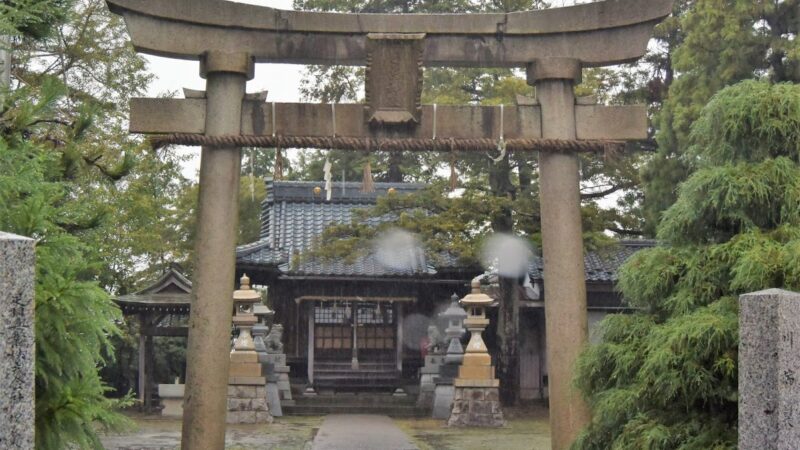
Tenman Shrine (27-36 Ishimori, Fukui City, Fukui Prefecture) | A Complete Guide to a Historic Shrine Associated with Nitta Yoshisada
Tenman Shrine, located in Ishimori-cho, Fukui City, Fukui Prefecture, is a historic shrine dedicated to Sugawara no Michizane, known as the god of learning. This shrine is built on the site of Ishimaru Castle, the residence of Nitta Yoshisada, a military commander during the Nanboku-cho period, and is an important historical site indispensable to understanding Fukui’s history.
This article comprehensively introduces information useful for those considering a visit to Tenman Shrine, including its detailed history, enshrined deities, highlights within the grounds, access methods, and surrounding tourist spots.
Basic Information on Tenman Shrine
Location and Access
Location: 27-36 Ishimori, Fukui City, Fukui Prefecture
Postal Code: 910-3264
Tenman Shrine is located in Ishimori-cho, in the northern part of Fukui City. Located relatively close to JR Morita Station, and easily accessible by car from central Fukui City.
Access
By Train:
- Approximately 20 minutes on foot from JR Hokuriku Main Line “Morita Station”
- Approximately 10 minutes by local train from Fukui Station to Morita Station
By Car:
- Approximately 15 minutes from Hokuriku Expressway “Maruoka IC”
- Approximately 20 minutes from central Fukui City via National Route 416
- Parking: Parking available for visitors on the shrine grounds
By Bus:
- Approximately 5 minutes on foot from Keifuku Bus “Ishimori” bus stop
History and Origins of Tenman Shrine
History of Founding
While the exact founding date of Tenman Shrine is not known, it is believed to have been located in this area since ancient times. The most important historical background is that this area was the location of Ishimaru Castle, the residence of Nitta Yoshisada, a military commander during the Nanboku-cho period.
Nitta Yoshisada was a samurai known for his achievements in overthrowing the Kamakura Shogunate in 1333, and subsequently played an active role in the Hokuriku region. Ishimaru Castle is considered one of his bases, and Tenman Shrine, built on the castle’s site, preserves the region’s historical memory to this day.
Edo Period Records
The Fukui Domain Kanazu Territory Village Record from 1773 (An’ei 2) lists “Tenmangu Shrine,” confirming that it already existed as a shrine attracting local devotion in the mid-Edo period. This record is a valuable historical document proving that Tenman Shrine has a history of at least 250 years.
Shrines in the Meiji Era
According to records from the early Meiji period, the shrine buildings at that time were as follows:
- Shrine Building Size: 6 shaku frontage, 8 shaku depth (approximately 1.8m x 2.4m)
- Shrine Grounds Area: 153 tsubo (approximately 505 square meters)
- Number of Parishioners: 38 households
Although small in scale, the Tenman Shrine at that time functioned as a center of faith for the local people.
Shrine Building Reconstruction in the Taisho Era
On February 11, 1920 (Taisho 9), the Tenman Shrine underwent a large-scale reconstruction of its shrine buildings, which was completed. The dimensions of the new shrine buildings are as follows:
- Frontage: 2.5 ken (approximately 4.5m)
- Depth: 2.5 ken (approximately 4.5m)
Compared to the shrine buildings of the Meiji era, this represents an expansion to approximately 2.5 times their original size. This can be seen as an indication of regional development, an increase in parishioners, and a deepening of faith in the shrine.
Deity and Divine Virtues
Sugawara no Michizane
The deity enshrined at Tenman Shrine is Sugawara no Michizane. Michizane was a scholar and politician of the Heian period, known for his exceptional talent in Chinese poetry and calligraphy, and is worshipped as the “god of learning” at Tenmangu and Tenjin shrines throughout Japan.
Divine Virtues (Benefits)
By visiting Tenman Shrine, the following divine virtues are believed to be received:
Academic Success and Prayer for Passing Exams
It is ideal for students and those taking exams to pray for academic success. By drawing on Michizane’s deep knowledge of learning, one can pray for improvement in wisdom and academic ability.
Improvement in Calligraphy and Performing Arts
Because Michizane was also an excellent calligrapher, he is also worshipped by those who wish to improve their skills in calligraphy, literature, and performing arts.
Protection from Misfortune and Disaster
After being unjustly exiled, Sugawara no Michizane came to be revered as a thunder god, and is therefore worshipped as a deity who wards off misfortune and disaster.
Honesty and Sincerity
It is believed that one can cultivate an honest and sincere heart by emulating Michizane’s sincere character.
Highlights of the Shrine Grounds
Main Hall and Worship Hall
The shrine buildings, rebuilt in 1920 (Taisho 9), possess a traditional shrine architectural style and evoke a sense of local history. While not large in scale, they are meticulously maintained, reflecting the deep faith of the local people.
Historical Value as the Site of Ishimaru Castle
The entire shrine grounds are believed to be the site of Ishimaru Castle, the residence of Nitta Yoshisada. Although few remains of the castle exist today, it serves as a reminder of its importance as a military base during the Nanboku-cho period. For history buffs, this is a valuable place to reflect on medieval history while visiting the shrine.
Natural Environment of the Shrine Grounds
The shrine grounds feature ancient trees and seasonal flowers, allowing visitors to experience the beauty of nature throughout the seasons. The tranquil environment, perfect for peaceful worship, is one of the shrine’s charms.
Annual Events and Festivals
Annual Festival
Tenman Shrine holds traditional local festivals throughout the year. The annual festival, in particular, brings together parishioners to pray for the maintenance of the shrine and the prosperity of the community.
Visiting During Exam Season
As a shrine dedicated to the god of learning, it sees many students and their parents visiting to pray for success, especially during exam season (January to March).
Manners and Etiquette for Visiting the Shrine
Basic Etiquette for Visiting the Shrine
When visiting Tenman Shrine, please observe the following etiquette:
- Bow before passing through the torii gate
This shows respect before entering the sacred area.
- Purify your body and mind at the water basin
Purify your left hand, then your right hand, and then your mouth.
- Worship in front of the main hall
Worship using the two bows, two claps, and one bow ritual.
- Bow upon leaving
Bow once as you leave the torii gate.
Attire for worship
There are no specific dress code requirements, but please be mindful of the sacred nature of the place and dress cleanly and respectfully.
Nearby tourist attractions and facilities
Kuzuryu River
Located about 10 minutes by car from Tenman Shrine, the Kuzuryu River is a major river in Fukui Prefecture. You can enjoy strolling and cycling along the riverbank, refreshing yourself in a rich natural environment.
Maruoka Castle
Located about 20 minutes by car, Maruoka Castle is a nationally important cultural property known as one of the oldest existing castle towers. Visiting this shrine in conjunction with Tenman Shrine will give you a deeper understanding of Fukui’s history.
Historical Sites in the Morita Area
Around Morita Station, there are numerous historical sites, including ancient burial mounds and temples. Enjoying a historical stroll through the area before or after visiting Tenman Shrine is highly recommended.
Restaurants and Rest Facilities
Around Ishimori-cho, there are restaurants serving dishes made with local ingredients, as well as cafes. Enjoying local cuisine after your visit is also a good idea.
Differences from Other Tenman Shrines in Fukui City
While there are several Tenman Shrines in Fukui City, Ishimori’s Tenman Shrine is distinctive in the following ways:
Historical Background at the Site of Ishimaru Castle
It possesses a unique historical value not found in other Tenman Shrines, as it is located on the site of Nitta Yoshisada’s castle.
A Community-Oriented Guardian Deity
Although not a large shrine, it has a history of being carefully preserved by its parishioners as the guardian deity of the community.
A Quiet and Peaceful Worship Environment
Located slightly away from the city center, you can worship in a calm and peaceful atmosphere.
How to Enjoy Visiting Tenman Shrine
As a Historical Exploration
Those interested in Nitta Yoshisada and the history of the Nanboku-cho period will gain a deeper appreciation by researching the history of Ishimaru Castle beforehand. Imagine the footsteps of medieval warriors as you walk through the shrine grounds.
As a Prayer for Academic Success
Students and their families are encouraged to visit to pray for success in their exams. Praying wholeheartedly in this peaceful environment can renew your resolve for academic success.
As an Experience of Local Culture
Through interaction with local people, you can learn about Fukui’s local culture and traditions. Visiting during festival season will allow you to feel the warmth of the local community.
Enjoying the Seasons
Enjoy the changing seasons: the fresh greenery of spring, the deep green of summer, the autumn leaves, and the snowy landscapes of winter. Enjoy the changing scenery of the shrine grounds as you visit in each season.
Notes on Visiting
Visiting Hours
Tenman Shrine is generally open for worship throughout the day, but it is recommended to avoid early morning and late-night visits and instead visit during daylight hours.
Parking Etiquette
Parking space on the shrine grounds is limited, so please use it with consideration for others. It may be crowded on days with festivals and other events.
Photography
Photography is generally permitted on the shrine grounds, but please be considerate of other worshippers and refrain from taking photos inside the main hall.
Maintaining Silence
Shrines are sacred places. Please refrain from loud conversations and noisy behavior, and worship quietly.
Relationship with the Fukui Prefectural Shrine Association
Tenman Shrine belongs to the Fukui Prefectural Shrine Association, and detailed information is available on their website. The Fukui Prefectural Shrine Association is the organization that oversees shrines within the prefecture, playing a crucial role in the maintenance and management of shrines and the continuation of religious rites.
For official information and the latest event schedules for Tenman Shrine, we recommend checking the Fukui Prefectural Shrine Association website or contacting them directly.
The Role of Tenman Shrine in the Community
Function as a Local Guardian Deity
Tenman Shrine serves as the local guardian deity for the Ishimori-cho area, acting as a spiritual anchor for local residents. It is cherished by local people at various stages of life, such as visits at birth and growth milestones, exorcisms during unlucky years, and New Year’s visits.
Center of the Community
Through festivals and cleaning activities, it also plays a role in strengthening community bonds. The cooperation of parishioners in maintaining the shrine deepens community ties.
Place for Historical Education
As a place to convey the history of Nitta Yoshisada and Ishimaru Castle, it also plays an educational role in teaching local children about their local history.
Things to Know Before Visiting Tenman Shrine
Climate of Fukui
Fukui Prefecture belongs to the Sea of Japan climate zone, and experiences heavy snowfall in winter. If visiting in winter, be sure to take precautions against the cold and prepare for snowy roads. Summers are relatively cool and pleasant.
Best Time to Visit
- Spring (March-May): Beautiful fresh greenery and pleasant weather
- Autumn (September-November): Attractive autumn foliage and stable weather
- Exam Season (January-March): Ideal for praying for success in exams
Estimated Time Required
For a visit only, 15-30 minutes is sufficient. If you wish to stroll around the grounds at a leisurely pace, allow about an hour.
Summary: The Charm of Tenman Shrine
Located at 27-36 Ishimori, Fukui City, Fukui Prefecture, Tenman Shrine is a historic shrine dedicated to Sugawara no Michizane, the god of learning. It also boasts historical value as the site of Ishimaru Castle, the residence of Nitta Yoshisada.
While not a large-scale tourist destination, it offers a peaceful environment for worship, providing a valuable opportunity to connect with local history and culture. It’s recommended not only for those seeking academic success or passing exams, but also for those interested in Fukui’s history and those wanting to experience local culture.
Its convenient location, within walking distance of JR Morita Station, is another attractive feature. When visiting Fukui, be sure to stop by Tenman Shrine. A special worship experience awaits you, where you can simultaneously feel the local faith that has continued since the Edo period and the historical romance of the Nanboku-cho period.