
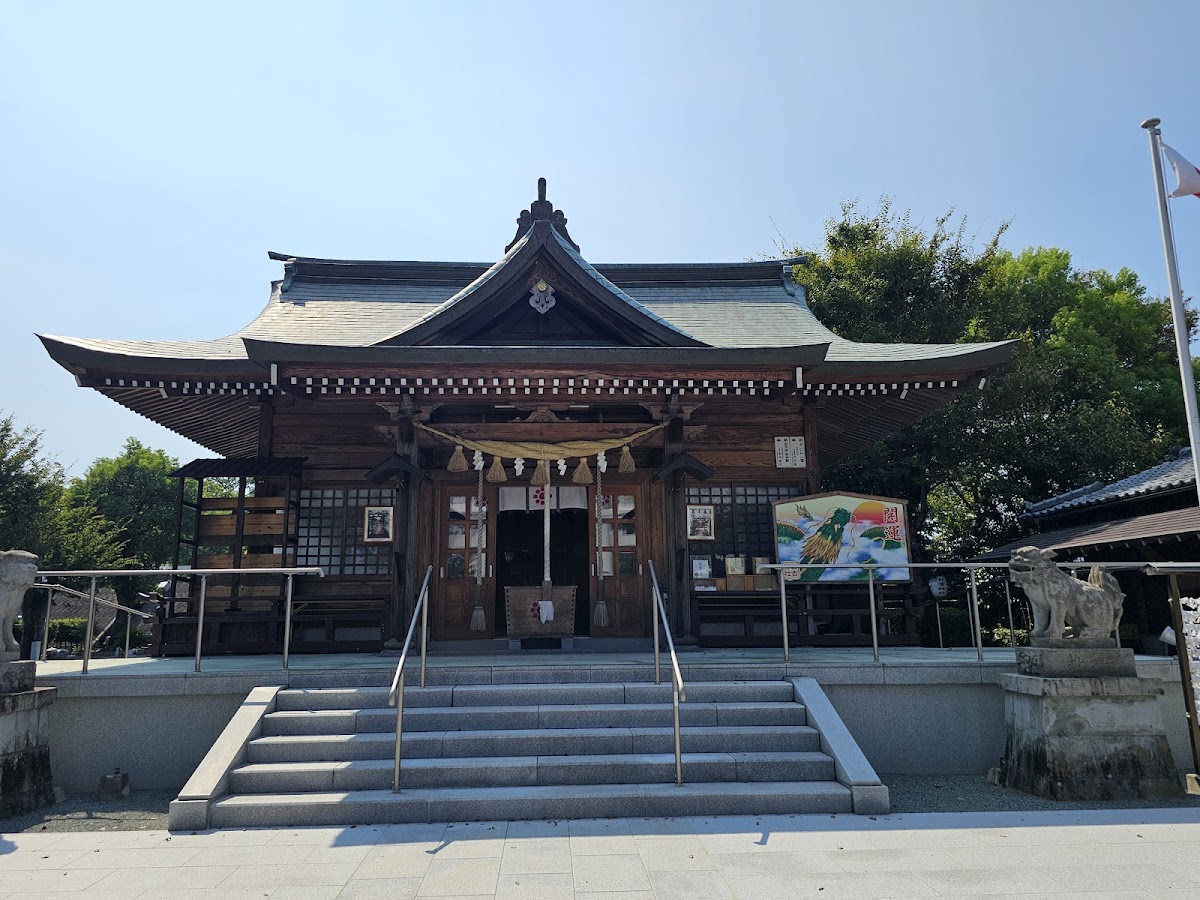
Hiyoshi Shrine (Minami Ward, Kumamoto City) | History and Highlights of the Sanno Torii Gate and the Imperial Prayer Site Associated with the Hosokawa Family
Hiyoshi Shrine, located in Juzenji, Minami Ward, Kumamoto City, is a historic shrine founded in 1153 (Ninpei 3) during the late Heian period. It was established as an imperial prayer site for national peace and security, and as the guardian shrine of the entire Kamikura-sho area, with a divided spirit invited from Hiyoshi Taisha Shrine on Mount Hiei in Omi Province (present-day Shiga Prefecture). This shrine, which boasts a rare Sanno Torii gate and has a history of being deeply revered as the tutelary deity of the Hosokawa family, the lords of the Higo Domain, will be introduced in detail.
History and Origins of Hiyoshi Shrine
Founded in the Late Heian Period
The founding of Hiyoshi Shrine dates back to 1153 (Ninpei 3). The shrine’s origins trace back to Ishiura Kawachi-no-kami Tsunekuni, who, upon assuming the post of governor of Higo Province, invited a divided spirit from Hiyoshi Taisha Shrine on Mount Hiei in Omi Province. Initially, it was established as an imperial prayer site for national peace and security, and as the guardian shrine of a vast area encompassing 716 cho 5 tan (over 700 hectares) of the Kamikura-sho estate.
During the medieval period, it played a crucial role as a place of prayer for the emperor, with frequent prayers offered for the extension of the emperor’s reign and the peace of the nation. It flourished as one of the most prestigious shrines in Higo Province. This history as an imperial prayer site holds a particularly important place in the history of Hiyoshi Shrine.
Deep Connections with the Hosokawa Family
In the Edo period, the relationship with the Hosokawa family, the lords of Higo Domain, deepened. The Hosokawa family devoutly worshipped Hiyoshi Shrine for generations, and during the time of the 6th lord, Hosokawa Shigekata, it was officially designated as the tutelary deity of the Hosokawa family. A local guardian deity is a god who protects a particular land or family, and Hiyoshi Shrine held a special significance for the Hosokawa family.
Under the patronage of the Hosokawa family, the shrine continued to be maintained and developed, laying the foundation for the faith that continues to this day. As a shrine closely intertwined with the history of the Kumamoto domain, it has also garnered reverence from the local people.
Deities and Benefits
Main Deities
The main deities of Hiyoshi Shrine are as follows:
- Oyamakui-no-kami: Known as the god of mountains and the guardian deity of the land.
- Onamuchi-no-kami: Another name for Okuninushi-no-kami, the god of matchmaking and nation-building.
- Deities of the 21 Hiyoshi Sanno Shrines: Various deities enshrined at Hiyoshi Taisha Shrine on Mount Hiei.
These deities are central to the Sanno faith and are believed to bring various benefits.
Expected Benefits
Hiyoshi Shrine is believed to offer the following benefits:
- Matchmaking and Successful Relationships: Due to the divine virtues of Ōkuninushi-no-Mikoto
- Prosperity of Descendants and Safe Childbirth: Due to its role as a guardian deity of the land
- Prayers for Success in Exams and Academic Achievement: Due to its connection with Mount Hiei and its role as a god of learning
- Good Fortune and Luck in Competitions: Due to its history of attracting the faith of samurai families
- Healing from Illness: A characteristic benefit of Sannō faith
- Family Safety and Business Prosperity: Due to its role as a guardian deity of the region
- Protection from Evil and Misfortune: A characteristic of Sannō faith
Highlights of the Shrine Grounds
Rare Sannō Torii
The most distinctive feature of Hiyoshi Shrine is its Sannō Torii, which is rare throughout Japan. The Sannō Torii has a unique shape, with a triangular gable (gasshō) added to the top of a regular torii gate, symbolizing the syncretism of Buddhism and Shinto.
This shape is said to represent either the shape of Mount Hiei or the Taizokai and Kongokai mandalas of Buddhism. It is a rare sight to see this type of torii gate in Kumamoto City, and many visitors are immediately captivated by it.
Shrine Precincts
Several shrine precincts are located within the grounds of Hiyoshi Shrine.
Kojima Shrine
Kojima Shrine, located within the grounds, is worshipped as a deity that watches over the healthy growth of children. Families from the local area can be seen visiting to pray for the health and growth of their children.
Itsukushima Shrine and Sanno Inari Shrine
These shrine precincts also offer unique blessings and cater to the various wishes of visitors. Itsukushima Shrine enshrines Benzaiten, the goddess of water, and is believed to bring blessings for performing arts and financial fortune, while Sanno Inari Shrine is worshipped by those praying for business prosperity and abundant harvests.
The Legend of the Night-Crying Shell
Within the shrine grounds lies a mysterious shell known as the “Night-Crying Shell.” This shell is said to emit a crying sound at night, and has been passed down through generations as one of the shrine’s seven mysteries. It can actually be seen on the grounds, making it a valuable artifact that evokes the history and romance of the shrine.
Sazareishi Stone
A “Sazareishi” stone is also located on the shrine grounds. Sazareishi is an auspicious stone, mentioned in the Japanese national anthem “Kimigayo.” It is formed from small stones that have hardened over a long period of time to become a large rock. As a stone symbolizing Japan’s permanence and development, it is cherished by many shrines.
Access and Visiting Information
Location and Transportation Access
Address: 2-15-3 Juzenji, Minami-ku, Kumamoto City, Kumamoto Prefecture
Access by Train:
- Approximately 17 minutes on foot from JR Kagoshima Main Line “Tasakibashi Station”
- Approximately 1.2 km south-southeast from Kumamoto Station, located near the left bank of the Shirakawa River
Access by Car:
- Approximately 5 minutes by car from Kumamoto Station
- Parking available (parking spaces for visitors on the temple grounds)
Visiting Hours and Contact Information
Visiting Hours: Temple grounds are freely accessible (the shrine office may be unattended at certain times)
Telephone: 096-356-0851
Regarding Goshuin (Temple Seals): If you wish to receive a Goshuin, it is recommended to call in advance. Since the chief priest may be absent, prior confirmation is recommended to ensure you receive a Goshuin.
Goshuin Information
You can receive a Goshuin (temple/shrine stamp) at Hiyoshi Shrine. The Goshuin will bear the shrine’s name and the date of your visit, and will feature a stamp characteristic of Sanno faith.
Those wishing to receive a Goshuin should note the following:
- Contact the shrine by phone in advance to confirm the priest’s attendance hours.
- Bring your Goshuincho (stamp book) (pre-printed stamps may be available).
- Prepare a donation (generally around 300-500 yen).
- Receive the Goshuin after offering your prayers (the Goshuin is proof of your visit).
In recent years, Goshuin pilgrimages have become popular, but remember that the Goshuin is proof of your visit, not a stamp rally. Please visit with respect.
Annual Events and Festivals
Hiyoshi Shrine holds various festivals throughout the year. Major events include the annual grand festival and monthly festivals, where local people gather to offer thanks to the gods.
For detailed information on festival schedules, we recommend contacting the shrine before your visit. Participating in local traditional events will allow you to experience the shrine’s history and culture more deeply.
Nearby Attractions
The area around Juzenji, Minami-ku, Kumamoto City, where Hiyoshi Shrine is located, also has other historical sites and attractions.
Around Shirakawa River
The shrine is located near the left bank of the Shirakawa River, making it a pleasant place for a stroll along the river. You can enjoy a relaxing time while appreciating the blessings of Kumamoto’s water.
Around Kumamoto Station
The shrine is close to Kumamoto Station, making it convenient to stop by during your journey by Shinkansen or local train. The area around the station has plenty of restaurants and souvenir shops, allowing you to enjoy Kumamoto sightseeing in conjunction with your visit to the shrine.
Manners and Etiquette for Visiting the Shrine
When visiting Hiyoshi Shrine, please observe the following manners.
Basic Etiquette for Visiting a Shrine
- Bow before passing through the torii gate: A courtesy when entering the sacred area.
- Walk along the edge of the path: The center is the path for the gods.
- Purify your body and mind at the water basin: Purify your left hand, right hand, and mouth in that order.
- Worship at the main hall: Two bows, two claps, and one bow is the basic form.
- Bow again at the torii gate when leaving: With gratitude.
Photography
Photography is generally permitted on the shrine grounds, but please note the following:
- Do not take photos in areas where photography is prohibited, such as inside the main hall.
- Be considerate of other worshippers.
- When posting on social media, remember to show respect to the shrine.
- Refrain from using flash photography.
Summary of Hiyoshi Shrine’s Charms
Hiyoshi Shrine in Minami-ku, Kumamoto City, is a historic shrine dating back to the late Heian period and possesses the following charms:
- Historical Value: Established in 1153 (Ninpei 3), it holds the status of an imperial prayer shrine.
- Architectural Features: A rare Sanno-style torii gate found nationwide.
- Cultural Background: Historically the tutelary deity of the Hosokawa family.
- Divine Power: Diverse blessings and the tradition of Sanno worship.
- Points of Interest within the Shrine Grounds: Multiple subsidiary shrines, a night-crying shell, and a sacred rock.
- Accessibility: Conveniently located near Kumamoto Station.
Hiyoshi Shrine was founded as the guardian shrine of a vast area encompassing 716 cho and 5 tan of Kamikura-sho. In the Middle Ages, it played a vital role as an imperial prayer shrine, praying for the peace and security of the nation. During the Edo period, it was deeply revered as the tutelary deity of the Hosokawa family. The faith and traditions cultivated throughout its long history continue to be a source of comfort for many people today.
When visiting Kumamoto, be sure to visit this historic shrine, pass through the Sanno-style torii gate, and experience the weight of history and sacred atmosphere in its tranquil grounds. At this place of worship, which has continued since the Heian period, the time spent in quiet prayer will be a precious experience that allows you to forget the hustle and bustle of everyday life.
Hiyoshi Shrine is a valuable cultural asset that conveys the history and culture of Kumamoto to the present day, and a living place of worship that continues to attract the faith of the local people. By understanding both of these aspects and visiting with respect, you will surely gain a deeper sense of awe and insight.


