
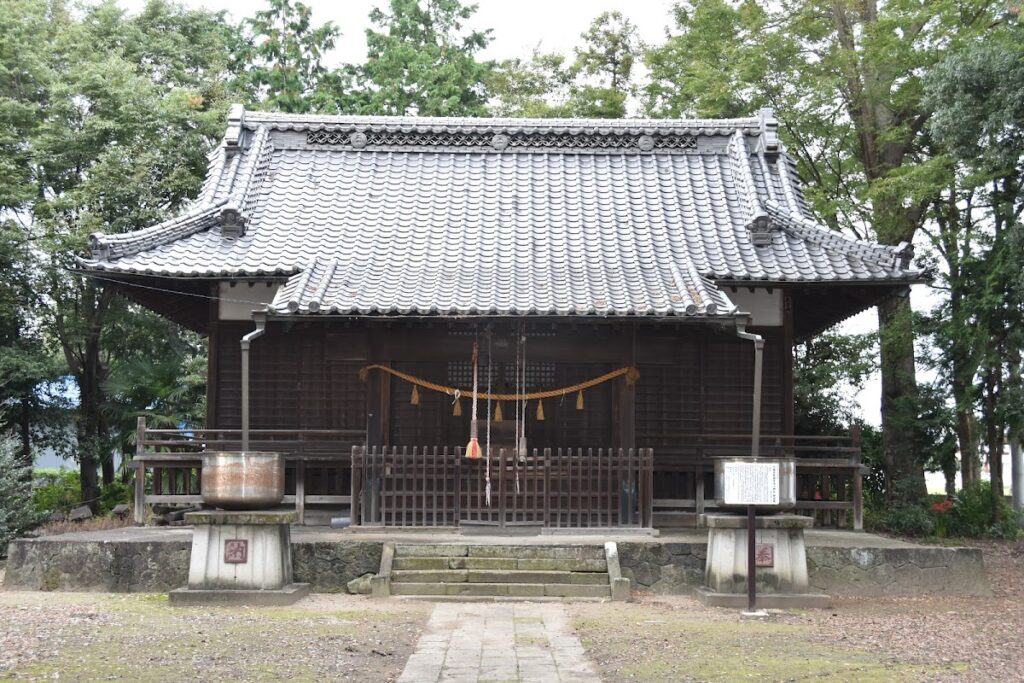
Complete Guide to Imaki Aosaka Inami Ikegami Shrine: A Thorough Explanation of the Engishiki-Listed Shrines and Historical Background
Imaki Aosaka Inami Ikegami Shrine is a historical shrine located in Kodama District, Saitama Prefecture. Several shrines are considered candidates for the “Imaki Aosaka Inami Ikegami Shrine in Kami District, Musashi Province,” listed in the Engishiki Jinmyocho (a list of shrines compiled in 927 AD), each possessing its own unique history and traditions.
This article provides a comprehensive explanation of the two main candidate shrines: the Imaki Aosaka Inami Ikegami Shrine in Sekiguchi, Kamikawa Town, and the Imaki Aosaka Inami Ikegami Shrine in Shinobu, Kamisato Town, covering their history, enshrined deities, grounds, annual events, and access.
Table of Contents
- What is an Engishiki-nai Shrine?
- Regarding the Candidate Shrine for Imashiro Aosaka Inami Ikegami Shrine
- Imashiro Aosaka Inami Ikegami Shrine in Sekiguchi, Kamikawa Town
- Imashiro Aosaka Inami Ikegami Shrine in Shinobu, Kamisato Town
- Other Candidate Shrines and Related Shrines
- Origin of the Shrine Name and Historical Changes
- Etiquette and Highlights of Worship
- Access and Surrounding Information
What is an Engishiki-nai Shrine?
An Engishiki-nai shrine refers to a shrine listed in the “Engishiki Jinmyocho,” compiled in the 5th year of the Engi era (927 AD) during the mid-Heian period. These are historically significant shrines officially recognized by the imperial court at the time, and 2,861 shrines (there are various theories) are listed nationwide.
In Musashi Province, 44 Engishiki-nai shrines are listed, and “Imashiro Aosaka Inami Ikegami Shrine” is one of them. Being designated as a Shikinaisha (a shrine listed in the Engishiki, an ancient Japanese legal text) is evidence of its importance to the imperial court in ancient times and indicates that it was a center of religious worship in the region.
Among the Shikinaisha, there are cases where it is currently impossible to identify which shrine corresponds to the Shikinaisha, or where multiple shrines have come forward as candidates (candidate shrines). Imashiro Aosaka Inami Ikegami Shrine is a prime example of the latter case, with several candidate shrines existing within Saitama Prefecture.
Regarding the Candidate Shrines for Imashiro Aosaka Inami Ikegami Shrine
Several candidate shrines for Imashiro Aosaka Inami Ikegami Shrine exist, mainly within Kodama District, Saitama Prefecture. The two most likely candidates are the following:
Major Candidate Shrines
- Imashiro Aosaka Inami Ikegami Shrine in Sekiguchi, Kamikawa Town (Former Village Shrine)
- Imashiro Aosaka Inami Ikegami Shrine in Shinobu, Kamisato Town (Former Prefectural Shrine)
Both of these shrines are located along rivers in the Tone River system and are thought to have deep connections to ancient water management and agricultural beliefs. ### Other Related Shrines
- Shrine within the grounds of Abo Shrine (Abo, Kamikawa-cho)
- Niu Shrine (currently enshrined together within the grounds of Abo Shrine)
These shrines originally existed as independent shrines, but have a history of being merged or separated over time.
Reasons for the Existence of Multiple Candidate Shrines
The following reasons are considered to be behind the existence of multiple candidate shrines:
- Loss of records due to warfare from the medieval to early modern periods
- Changes in location due to relocation or merger of shrines
- Spread of faith in different regions and establishment of branch shrines
- Influence of the Meiji-era shrine merger policy
Imashiro Aosaka Inami Ikegami Shrine in Sekiguchi, Kamikawa-cho
History
Imashiro Aosaka Inami Ikegami Shrine, located in Sekiguchi, Kamikawa-cho, is situated along the Kanna River. According to shrine tradition, the shrine was originally located behind the Abo Shrine, but in March of Tensho 5 (1577), when the former Abo Village and Sekiguchi Village were separated, it was moved to its current location (Sekiguchi, Ikegami) as the guardian shrine of Sekiguchi Village.
While some theories suggest its founding date is Shinki 1 (724), no definitive records remain. However, since it is listed in the Engishiki Jinmyocho (a list of shrines compiled in the Heian period), it is believed to have existed at least before the 10th century.
Under the Meiji era’s shrine ranking system, it was classified as a village shrine and has been revered as a central place of worship in the region.
Deities Enshrined
The following deities are enshrined at the Imashiro Aosaka Inamiikegami Shrine in Sekiguchi, Kamikawa Town:
- Okami-no-kami: God of water, dragon god
- Toyouke-bime-no-mikoto: Goddess of food and grains
- Mizuha-no-me-no-kami: Goddess of water
- Haniyasuhime-no-mikoto: Goddess of earth
- Toyouke-hime-no-mikoto: Goddess of grains and agriculture
These deities are all gods associated with water, agriculture, and land, and are deeply connected to prayers for abundant harvests in agricultural societies. In particular, Okami-no-kami and Mizuha-no-me-no-kami, as water deities, were objects of worship for flood control of the Kanna River and the safety of irrigation water.
Shrine Grounds
The grounds of Imashiro Aosaka Inami Ikegami Shrine in Sekiguchi, Kamikawa Town, are located in a quiet environment near the Kanna River. The grounds include the following facilities:
- Torii: A Myojin-style torii gate standing at the entrance to the approach to the shrine.
- Temizuya: A place to purify oneself before worship.
- Haiden: A building where worshippers offer their prayers.
- Honden: The main shrine where the deities reside.
- Henpaku: A plaque bearing the shrine’s name.
The shrine grounds also house subsidiary shrines such as Hachiman-gu and Tenman-gu, reflecting its history of embracing diverse local beliefs.
Annual Events
Imashiro Aosaka Inami Ikegami Shrine in Sekiguchi, Kamikawa Town, holds various festivals throughout the year. Main annual events include:
- Spring Grand Festival
- Autumn Grand Festival
- New Year’s Festival
At these festivals, local residents gather to pray for a bountiful harvest and family safety.
Access
Location: Sekiguchi, Kamikawa-machi, Kodama-gun, Saitama Prefecture
Access by Train:
- Approximately 15 minutes by car from JR Takasaki Line “Jinbohara Station”
- Approximately 10 minutes by car from JR Hachiko Line “Tansho Station”
Access by Car:
- Approximately 15 minutes from Kan-Etsu Expressway “Honjo-Kodama IC”
There is some parking space on the shrine grounds or nearby, but it may be difficult for large vehicles to enter.
Imashiro Aosaka Inamiikegami Shrine in Shinobu, Kamisato-machi
History
Imashiro Aosaka Inamiikegami Shrine, located in Shinobu, Kamisato-machi, is situated along the Karasu River and has been revered as the main shrine of Shinobu-sho. According to shrine tradition, it is an ancient shrine established in 711 AD (Wado 4).
Because the local area where the shrine is located is called “Inami,” it is considered a strong candidate for the Shikinaisha (shrine listed in the Engishiki) “Imajo Aosaka Inami Ikegami Shrine.” The matching of the place name and the shrine name is an important factor in determining the authenticity of this candidate.
Under the Meiji era’s shrine ranking system, it was ranked as a prefectural shrine, holding a higher status than the village shrine in Sekiguchi, Kamikawa Town. This demonstrates the shrine’s influence and power in the region at the time.
Deities Enshrined
The Imashiro Aosaka Inamiikegami Shrine in Shinobu, Kamisato Town, enshrines the following two deities:
- Ibukidonushi-no-Mikoto: God of wind, god of breath
- Toyoukehime-no-Mikoto: Goddess of food and grains
Compared to the shrine in Sekiguchi, Kamikawa Town, the number of enshrined deities is smaller, but it is distinctive in that it enshrines Ibukidonushi-no-Mikoto, the wind god, as its principal deity. Wind greatly influences the growth of crops, making it an important deity in agricultural beliefs.
Shrine Grounds
The grounds of Imashiro Aosaka Inamiikegami Shrine in Shinobu, Kamisato Town, possess a dignified appearance that reflects its status as a prefectural shrine:
- Shrine Name Marker: A stone monument inscribed with “Engishiki-listed Imashiro Aosaka Inamiikegami Shrine”
- Torii Gate: A magnificent torii gate guarding the approach to the shrine
- Temizuya (Water Basin): A facility for worshippers to purify themselves
- Haiden (Worship Hall): A building for worship; the shrine’s name is inscribed on the plaque
- Honden (Main Hall): The shrine where the deities reside
The shrine grounds also house subsidiary shrines such as Hachiman-gu and Tenman-gu, catering to the diverse religious needs of the region. Furthermore, a stone monument commemorating the Shikinen Sengu (periodic rebuilding) of Ise Grand Shrine has been erected, demonstrating its connection to the entire Shinto world.
Annual Events
At Imashiro Aosaka Inami Ikegami Shrine in Shinobu, Kamisato-machi, various festivals are held throughout the year:
- New Year’s Day Festival
- Spring Grand Festival
- Autumn Grand Festival
- Shichi-Go-San Festival
- Various Prayer Festivals
These events are attended by local residents, ensuring the continuation of traditional rituals.
Access
Location: 225 Shinobu, Kamisato-machi, Kodama-gun, Saitama Prefecture (Oaza Shinobu, Inami)
Access by Train:
- Approximately 20 minutes on foot or 5 minutes by car from JR Takasaki Line “Jinbohara Station”
- Approximately 15 minutes by car from JR Takasaki Line “Honjo Station”
Access by Car:
- Approximately 10 minutes from Kan-Etsu Expressway “Honjo Kodama IC”
- Accessible from National Route 17
There is parking space for visitors on the shrine grounds.
Other Shrines and Related Shrines
Subsidiary Shrines of Abo Shrine
Within the grounds of Abo Shrine, located in Abo, Kamikawa-cho, there is a subsidiary shrine called “Imajo Aosaka Inami Ikegami Shrine.” This is thought to be related to the location where the aforementioned shrine in Sekiguchi, Kamikawa-cho, was located before its relocation.
According to shrine tradition, when Sekiguchi Village was separated in 1577 (Tensho 5), the shrine was relocated to its current location as the guardian shrine of Sekiguchi Village, and Imajo Aosaka Inami Ikegami Shrine remained as a subsidiary shrine at its original location.
Niu Shrine
Within the grounds of Abo Shrine, there was also a shrine called “Niu Shrine.” This Niu Shrine was also considered one of the shrines identified with the Shikinaisha “Imajo Aosaka Inami Ikegami Shrine,” but it is now enshrined together with Abo Shrine.
The place name and shrine name “Niu” (丹生) are often associated with cinnabar production areas and mines, suggesting the possibility of ancient mining activity in this region.
Origin and Historical Changes of the Shrine Name
Components of the Shrine Name
The long shrine name, “Imaki Aosaka Inami Ikegami Shrine,” is composed of several elements:
- Imaki: Possibly a place name or meaning “new castle”
- Aosaka: Possibly a place name or a topographical feature meaning “blue slope”
- Inami: Meaning rice harvest, abundance
- Ikegami (池上/池上): Topographical feature meaning above a pond, waterside
From these elements, it can be inferred that this shrine was deeply involved with paddy rice cultivation and was located near a water facility (pond).
Changes in Notation
The *Engishiki Jinmyocho* (a list of shrines compiled in the Engi era) sometimes lists the shrine as “Imajo Aoyazaka Inamiikegami Shrine,” showing a variation in the spelling between “Aoyazaka” and “Aoyazaka.” This is thought to be due to errors during the copying process or changes in pronunciation.
Currently, “Imajo Aoyazaka Inamiikegami Shrine” is the common spelling, but historically, various spellings existed.
Relationship with Kami District, Musashi Province
The *Engishiki Jinmyocho* states that the shrine belongs to “Kami District, Musashi Province.” Kami District was an ancient administrative division corresponding to the area around present-day Kodama District, Saitama Prefecture.
Other shrines listed in the *Engishiki* exist in Kami District, indicating that this region was important from ancient times. Rivers such as the Kanna River and Karasu River flowed through the area, and fertile land stretched out, leading to early development.
Etiquette and Highlights of Visiting the Shrine
Basic Etiquette for Visiting the Shrine
When visiting Imashiro Aosaka Inami Ikegami Shrine, please follow the etiquette below:
- Bow at the Torii Gate: Bow before passing through the torii gate.
- Purification at the Water Basin: Purify your hands and mouth.
- Hold the ladle in your right hand and purify your left hand.
- Switch the ladle to your left hand and purify your right hand.
- Switch the ladle back to your right hand, receive water in your left hand, and rinse your mouth.
- Finally, stand the ladle upright to purify the handle.
- Worship at the Main Hall: Two Bows, Two Claps, One Bow
- Place your offering.
- Bow deeply twice.
- Clap your hands twice.
- Bow deeply once.
Points of Interest
Plaque and Shrine Name Marker
The plaque displayed in the main hall bears the name of the shrine, “Imashiro Aosaka Inami Ikegami Shrine.” By examining the calligraphy and calligrapher, you can learn about the history of the shrine and its connection to the local community.
The shrine name marker at the entrance to the grounds often bears the inscription “Engishiki-nai” (listed in the Engishiki), demonstrating its pride and tradition as a Shikinaisha (a shrine listed in the Engishiki).
Shrines within the Grounds
Shrines within the grounds, such as Hachiman-gu and Tenman-gu, reflect the diversity of local beliefs. Hachiman-gu were widely worshipped by the samurai class as a god of war, while Tenman-gu were widely worshipped by commoners as a god of learning.
Visiting these shrines allows you to understand the multifaceted role that shrines have played within the local community.
Natural Environment
Located near rivers such as the Kanna River and Karasu River, the shrine grounds and surrounding area are blessed with abundant nature. You can enjoy the scenery of each season: the fresh green of spring, the deep green of summer, the autumn leaves, and the tranquility of winter.
You can experience the atmosphere of a sacred area integrated with nature, while feeling the ancient beliefs surrounding water and agriculture.
About Goshuin (Shrine Seals)
Goshuin can be obtained at Imashiro Aosaka Inami Ikegami Shrine (availability may vary by shrine). Goshuin are popular as proof of worship and as a tangible memento of one’s connection with the shrine.
When obtaining a Goshuin:
- Always complete your worship beforehand.
- Prepare your Goshuincho (seal book).
- Prepare the offering fee (approximately 300-500 yen).
- Promptly request the seal from the shrine priest or office staff.
Please observe these basic manners.
Access and Surrounding Information
Access by Public Transportation
The candidate shrines for Imashiro Aosaka Inamiikegami Shrine are all located along the JR Takasaki Line:
Shrine in Sekiguchi, Kamikawa Town:
- Take a taxi or rental car from JR Takasaki Line “Jinbohara Station” or “Honjo Station”
- Take a taxi from JR Hachiko Line “Tansho Station”
Shrine in Shinobu, Kamisato Town:
- Approximately 20 minutes on foot (approx. 1.5 km) from JR Takasaki Line “Jinbohara Station”
- Take a taxi or bus from “Honjo Station”
Access by public transportation is somewhat inconvenient, so it is necessary to plan with ample time.
Access by Car
Access by car is the most convenient:
Expressway:
- 10-15 minutes from Honjo-Kodama IC on the Kan-Etsu Expressway
General Roads:
- Accessible from National Route 17 (Nakasendo)
- National Route 462 is also available
When using a car navigation system, please search by address or shrine name. However, please note that older map data may not display the exact location.
Parking Information
Both shrines have parking spaces for visitors on the grounds or nearby, but they are not large parking lots. During festivals or other times when congestion is expected, please consider using public transportation.
Nearby Tourist Attractions
When visiting Imashiro Aosaka Inami Ikegami Shrine, we recommend also visiting nearby tourist attractions:
Kanasana Shrine
A Shikinaisha (shrine listed in the Engishiki) located in Kamikawa Town, known as the second-ranked shrine of Musashi Province. It retains a primitive form of worship, lacking a main shrine and considering Mount Omuro (Omurogatake) as the object of worship.
Jōmine Park
Located on a hill in Kamikawa Town, this park is known for its cherry blossoms, especially winter cherry blossoms. The observation deck offers panoramic views of the Kanto Plain.
Kanna River Landscape
Beautiful natural scenery unfolds along the Kanna River, where you can enjoy fishing and barbecues.
Honjō City
The neighboring city of Honjō has a history as a thriving post town on the Nakasendō road, and old streetscapes and historical sites remain.
Best Time to Visit
Imajo Aosaka Inami Ikegami Shrine is open year-round, but the best times to visit are:
- Spring (March-May): Beautiful fresh greenery and mild weather
- Autumn (September-November): Peak autumn foliage, and the Autumn Grand Festival is held
- New Year (January): First shrine visit of the year, and a refreshing atmosphere of the new year
Please take sufficient precautions against the heat in summer and the cold in winter.
Summary
Imajo Aosaka Inami Ikegami Shrine is a historically significant shrine listed in the Engishiki Jinmyocho (a list of shrines compiled in the Heian period), boasting a history of over a thousand years. While several shrines currently exist that claim this designation, all have been carefully preserved as centers of local faith.
Imajo Aosaka Inami Ikegami Shrine in Sekiguchi, Kamikawa Town, is situated along the Kanna River and enshrines the water god and the agricultural god, serving as a place to pray for the region’s abundance and safety. Meanwhile, the Imashiro Aosaka Inamiikegami Shrine in Shinobu, Kamisato Town, holds the status of a prefectural shrine and has been widely revered as the principal shrine of Shinobu Manor.
Both shrines are valuable cultural heritage sites that convey the ancient beliefs surrounding water and agriculture. When visiting Saitama Prefecture, be sure to visit these shrines and experience their long history and local faith.
As you clasp your hands together in the tranquil grounds and stand in the same place where ancient people prayed, you will feel a connection that transcends time and space. The Imashiro Aosaka Inamiikegami Shrine is an irreplaceable presence that reminds us, living in the modern age, of awe and gratitude towards nature.

