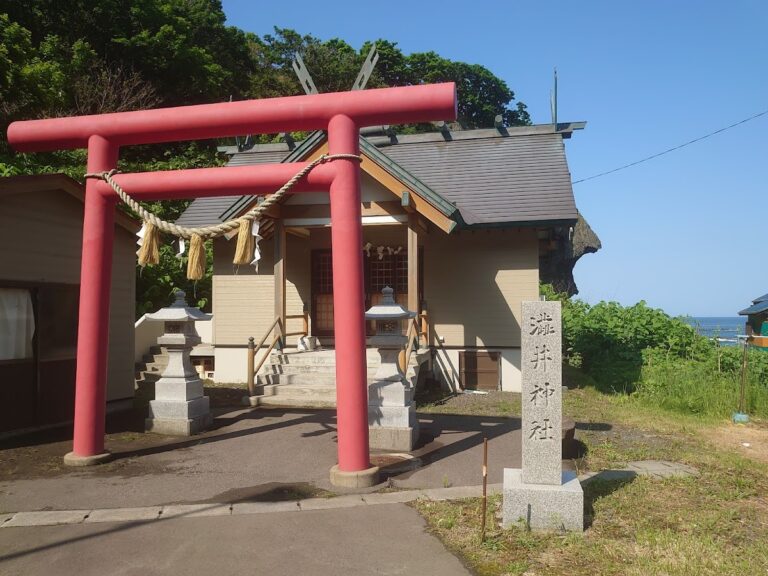
Inari Shrine (Horikabu Village, Tomari Village, Hokkaido) | Complete Guide to History, Deities, Festivals, and Access
Tomari Village is located in the western part of the Shiribeshi region of Hokkaido, southwest of the Shakotan Peninsula. The Inari Shrine, situated in the Horikabu district of this village, has a long history as a center of faith for the local residents. This article provides a comprehensive explanation, from detailed information about the Inari Shrine to its historical background and the origins of Horikabu Village.
Basic Information about Inari Shrine
Location and Access
The Inari Shrine is located at 84 Horikabu Village, Tomari Village, Koyu District, Hokkaido. The postal code is 〒045-0201.
Transportation Access
- Take the Chuo Bus bound for Kaminai from Iwanai Town
- Get off at the “Horikabu” bus stop
- Within walking distance from the bus stop
Tomari Village belongs to the Shiribeshi General Subprefectural Bureau and is a coastal village located between Iwanai Town and Kaminai Village. National Route 229 (Oiwake Soran Line) passes through the village, making it accessible by car. It’s approximately 2.5 hours by car from Sapporo and 1.5 hours from Otaru.
Contact Information
- Phone Number: 0135-75-2145
- Administering Body: Hokkaido Shrine Association
- Corporate Number: 9430005008581 (Designated October 5, 2015)
Deities and Beliefs
Main Deity: Ukemochi-no-kami
The deity enshrined at Inari Shrine is Ukemochi-no-kami. Ukemochi-no-kami is a goddess of food in Japanese mythology, widely worshipped as a god of abundant harvests, business prosperity, and industrial development.
Uke-mochi-no-kami does not appear in the Kojiki, but is a deity mentioned in the Nihon Shoki in the section on the creation of the gods. When Tsukuyomi-no-mikoto visited Uke-mochi-no-kami at the command of Amaterasu-Omikami, she offered him various foods from her mouth. However, Tsukuyomi-no-mikoto, considering these to be impure, became enraged and killed her. The myth tells that from her body, cattle, horses, silkworms, rice, millet, and red beans were born.
Relationship with Inari Worship
Although the shrine’s name is “Inari Shrine,” the main deity enshrined is not Ukanomitama-no-kami, who is typically worshipped at Inari shrines, but Uke-mochi-no-kami. Both deities are often identified as gods who preside over food and grains, and have a history of syncretism in Shinto.
In Hokkaido, many Inari shrines were established by inviting deities from Fushimi Inari Taisha in Kyoto. However, there are also shrines with unique forms of worship, such as this shrine, which enshrines Uke Mochi no Kami as its principal deity. This is thought to be a result of the selection of deities to suit the local circumstances during the establishment of shrines in Hokkaido during the pioneering period.
Shrine Buildings and Grounds
Shrine Building Style and Size
- Shrine Building Style: Shinmei-zukuri
- Shrine Building Area: 12 tsubo (approximately 39.6 square meters)
- Grounds Area: 50 tsubo (approximately 165 square meters)
Shinmei-zukuri is the oldest style of shrine architecture in Japan, exemplified by Ise Grand Shrine. It is characterized by its simple and pure structure with a gable roof and a flat entrance. In Hokkaido’s shrine architecture, styles brought from Honshu were often adopted during the pioneering period after the Meiji Restoration, and Inari shrines also inherit this tradition.
Characteristics of the Shrine Grounds
While the shrine grounds, at 50 tsubo (approximately 165 square meters), are not vast, they are of a sufficient size to serve as the local guardian shrine. Despite the harsh climate conditions unique to coastal areas, the grounds have been carefully maintained by local residents.
Annual Festival and Events
Annual Festival Date: July 7th
The Inari Shrine’s annual festival is held every year on July 7th. This festival is the most important event for the shrine, a once-a-year ritual to express gratitude to the enshrined deity.
Early July marks the beginning of the summer tourist season in Hokkaido, and is also the time when agricultural and fishing activities intensify. Holding the festival at this time symbolizes prayers for a bountiful harvest and abundant catches, and wishes for the prosperity of the region.
Horikabu Inari Shrine Festival
According to Tomari Village’s tourist information, a local festival called the “Horikabu Inari Shrine Festival” is held. The festival events, centered around the annual festival, play an important role as a place for interaction among local residents, fostering bonds across generations.
Parishioners and Worshippers
Parishioner Organization
- Number of Parishioner Households: 100 households
- Number of Worshippers: 120 people
Parishioners are people who reside in the area where the shrine is located and who believe in and maintain the shrine. The number of parishioner households, 100, reflects the size of the Horikabu district settlement.
Worshippers are people who believe in a particular shrine even if they live outside the parishioner area. The number of worshippers, 120 people, is thought to include people who formerly lived in the Horikabu district and those with connections to the shrine.
Relationship with the Local Community
In small settlements in Hokkaido, shrines hold more significance than mere religious facilities. Inari shrines are spiritual anchors for local residents and play an important role in maintaining community cohesion through festivals.
In rural areas experiencing depopulation, having 100 parishioner households demonstrates a strong connection between the shrine and the local community.
History of Horikabu Village
Establishment of Horikabu Village
Horikabu Village was a village within Iwanai District that existed from the beginning of the Meiji era until 1882 (Meiji 15). According to Kotobank, it is believed to have been established between August 1869 (Meiji 2) and 1873 (Meiji 6).
The village name “Horikabu” is highly likely to originate from an Ainu place name, and like many place names in Hokkaido, it is presumed to be a Japanese adaptation of an indigenous language.
Changes in Administrative Boundaries
In 1909 (Meiji 42), Horikabu Village merged with Tomari Village, Sakazuki Village, Koshinai Village, and Kayanuma Village to form Tomari Village under the second-class town/village system. With this merger, Horikabu Village ceased to be an independent administrative unit and remains a large administrative division of Tomari Village to this day.
The current official address is “Horikabu Village, Large Administrative Division, Tomari Village, Kou District,” preserving the former village name as the large administrative division name. This is a characteristic of administrative divisions seen in many areas of Hokkaido.
Composition of the Village District
The Horikabu Village area includes the following districts:
- Chatsu
- Herokaruusu
- Takinoma
These place names are also thought to originate from the Ainu language, reflecting the depth of the region’s history.
Overview of Tomari Village and the Position of the Inari Shrine
Characteristics of Tomari Village
Tomari Village is a small municipality belonging to the Koyu District within the jurisdiction of the Shiribeshi General Subprefectural Bureau of Hokkaido, with a population of approximately 1,500 (as of 2024). It is home to the Tomari Nuclear Power Plant, the only nuclear power plant in Hokkaido, and its finances are relatively prosperous thanks to subsidies under the Three Laws Concerning Power Sources.
Shrines within Tomari Village
There are five shrines in Tomari Village, Koyu District, Hokkaido. The Inari Shrine in Horikabu Village is one of them; others include the Tomari Inari Shrine in the Tomari area.
Tomari Inari Shrine is said to have been founded by Tatsuya Shinsuke (Fukushimaya), a contractor for the old shrine district, and has a history of inviting the divine spirit from Fushimi Inari Shrine in Kyoto in 1801. In 1875, it was ranked as a village shrine, holding the same rank as the Inari Shrine in Horikabu Village.
Former Shrine Rank: Village Shrine
What is the Shrine Ranking System?
The former shrine rank of Inari Shrine was Village Shrine. The shrine ranking system was a system for ranking shrines established during the Meiji era, with hierarchical levels including Kanpei-sha (government-supported shrine), Kokuhei-sha (national shrine), Fuken-sha (prefectural shrine), Go-sha (village shrine), Mura-sha (village shrine), and Unranked Shrine.
Mura-sha were positioned as central shrines within the boundaries of municipalities and served as the core of local community faith. As part of the Meiji government’s policy of making Shinto the state religion, village shrines were designated in each region, and the consolidation of local shrines progressed.
Village Shrines in Hokkaido
Although shrines in Hokkaido have a shorter history compared to those in Honshu, they were rapidly developed along with the Meiji era’s development. The designation of a village shrine aimed to establish a spiritual pillar in the settlement and to foster the formation of a local community.
While there are no clear records of when the Inari Shrine in Horikabu Village was elevated to the status of a village shrine, it is presumed to have been sometime between the mid- to late Meiji period.
Characteristics of Inari Shrines in Hokkaido
Distribution of Inari Shrines
Nationwide, there are 2,970 shrines that enshrine Inari as their main deity, and including subsidiary shrines and those with combined enshrined deities, the number reaches 32,000. Inari shrines are one of the most common types of shrines in Japan, boasting the second-highest number of shrines nationwide.
Numerous Inari shrines also exist within Hokkaido, ranging from large urban shrines such as the Fushimi Inari Shrine in Sapporo (founded in 1884, elevated to a regional shrine in 1941) to community-based shrines like the Inari Shrine in Horikabu Village, exhibiting diverse forms.
Beliefs of the Pioneer Era
Many Inari shrines in Hokkaido were founded during the Meiji era, when settlers from Honshu brought their beliefs from their homeland with them. Inari, the god of abundant harvests and business prosperity, was the most familiar and reliable deity for the settlers who prayed for stability and prosperity in their new land.
In coastal areas where fishing was thriving, Inari was also worshipped as a deity for maritime safety and bountiful catches, and has been revered as the guardian deity of a wide range of industries, including agriculture, fishing, and commerce.
The Shinmei-zukuri Architectural Style
Characteristics of Shinmei-zukuri
The Shinmei-zukuri style, a style of shrine architecture for Inari shrines, has the following characteristics:
- Gable roof: The roof is shaped like an inverted book.
- Hirairi: The entrance is on the long side of the building.
- Linear structure: Simple beauty with restrained ornamentation.
- Raised floor: A structure where the floor is raised above the ground.
The Shinmei-zukuri style is considered the prototype of Japanese shrine architecture, with the main hall of Ise Grand Shrine being the most famous example. This style embodies the purity and simplicity of Shinto and is also a practical structure that is easy to maintain even under the harsh climatic conditions of Hokkaido.
Hokkaido’s Climate and Shrines
Hokkaido, especially the area around Tomari Village on the Sea of Japan side, experiences heavy snowfall in winter and is exposed to strong winds, creating a harsh environment. The linear and robust structure of the Shinmei-zukuri style is well-suited to these climatic conditions.
The shrine’s size of 12 tsubo (approximately 40 square meters) is considered appropriate, balancing the burden of maintenance with local demand.
Local Culture and Inari Shrines
History of Herring Fishing
The coastal area of the Shiribeshi region, including Tomari Village, was once a thriving herring fishing area. During the Meiji and Taisho periods, when large schools of herring swarmed the area, creating what were known as “herring palaces,” many fishermen gathered, and the local economy flourished.
It is believed that this fishing prosperity played a significant role in the founding and maintenance of Inari shrines. Prayers for abundant catches and maritime safety were important matters of worship for shrines in coastal areas.
Modern Local Society
Although the industrial structure of Tomari Village changed after the decline of herring fishing, Inari Shrine continues to exist as a spiritual pillar of the community. Even in modern times, with a stable economic base due to the location of a nuclear power plant, traditional beliefs and festivals are still being passed down.
Manners and Etiquette for Visiting Shrines
Basic Etiquette for Visiting Shrines
Basic etiquette when visiting an Inari shrine:
- Bow before passing through the torii gate
- Purify your body and mind at the water basin (may be unusable in winter due to freezing)
- Walk away from the center of the path
- Bow twice, clap twice, and bow once in front of the main hall
- Bow again at the torii gate when leaving
Visiting Shrines in Winter
When visiting shrines in Hokkaido during winter, please note the following:
- Slippery ground due to snow and ice
- Thorough cold weather protection
- What to do if the water basin is frozen
- Shrine office is often unattended
Nearby Tourist Information
Attractions in Tomari Village
Tourist spots in Tomari Village to visit when visiting an Inari shrine:
- Herring Palace Tomari: Historical Buildings that Convey the Prosperity of the Past
- Ice Center Tomarin: A village-run ice skating facility
- Tomari Nuclear Power Plant PR Center “Tomarin-kan”: A facility where you can learn about the mechanism of nuclear power generation
- Bentenjima Island: A scenic spot floating in Tomari Bay
Shrine Pilgrimage in the Shiribeshi Region
The Shiribeshi region, including Inari Shrine, is dotted with historical shrines. A shrine pilgrimage to shrines in neighboring municipalities such as Iwanai Town, Kaminai Village, and Kyowa Town is a great opportunity to learn about the history and culture of this region.
Summary
The Inari Shrine, located in Horikabu Village, Tomari Village, Koyu District, Hokkaido, is a village shrine that has attracted local faith with Uke Mochi no Kami as its enshrined deity. With its Shinto-style shrine building, annual festival on July 7th, and a parishioner organization of 100 households, it continues to fulfill its role as a small but deeply rooted shrine in the community.
From the establishment of Horikabu Village in the Meiji era to its merger with Tomari Village, the rise and fall of herring fishing, and up to the present day, the Inari Shrine has remained a witness to the history of the region. It is a valuable site for understanding the relationship between the pioneering history of Hokkaido and Shinto beliefs.
If you have the opportunity to visit Tomari Village, I highly recommend visiting the Inari Shrine in the Horikabu district and offering a prayer before the quietly standing shrine. There, you will surely feel the prayers of the people who have lived in a harsh natural environment and the presence of the gods who have protected the region.