What is the Okusha Hohaijo (Fushimi Inari Taisha)?
The Okusha Hohaijo is an important place of worship located on the mountainside of Mt. Inari, beyond the Senbon Torii (thousand torii gates) of Fushimi Inari Taisha in Kyoto. It’s about a 15-minute walk from the main shrine and is a popular spot visited by many worshippers.
History and Significance of the Okusha Hohaijo
The Okusha Hohaijo was established as a place for worshipping “Ichinominé (Kamisha Shinseki),” located at the summit of Mt. Inari, from afar. In Fushimi Inari Taisha, where the entire Mt. Inari is considered sacred ground, it functions as an important place of worship for those who find it difficult to visit the summit.
Route to the Inner Shrine Worship Hall
Access from the Main Shrine to the Inner Shrine Worship Hall
Estimated Time and Distance
- From the Main Shrine to the Inner Shrine Worship Hall: Approximately 15 minutes on foot (approximately 500m)
- Physical Fitness Level: Beginner to Intermediate (gentle uphill slope)
- Recommended Time: Early morning (7:00-9:00) or evening (after 16:00) are relatively less crowded.
Detailed Route
- Visiting the Main Shrine: First, complete your prayers at the main shrine.
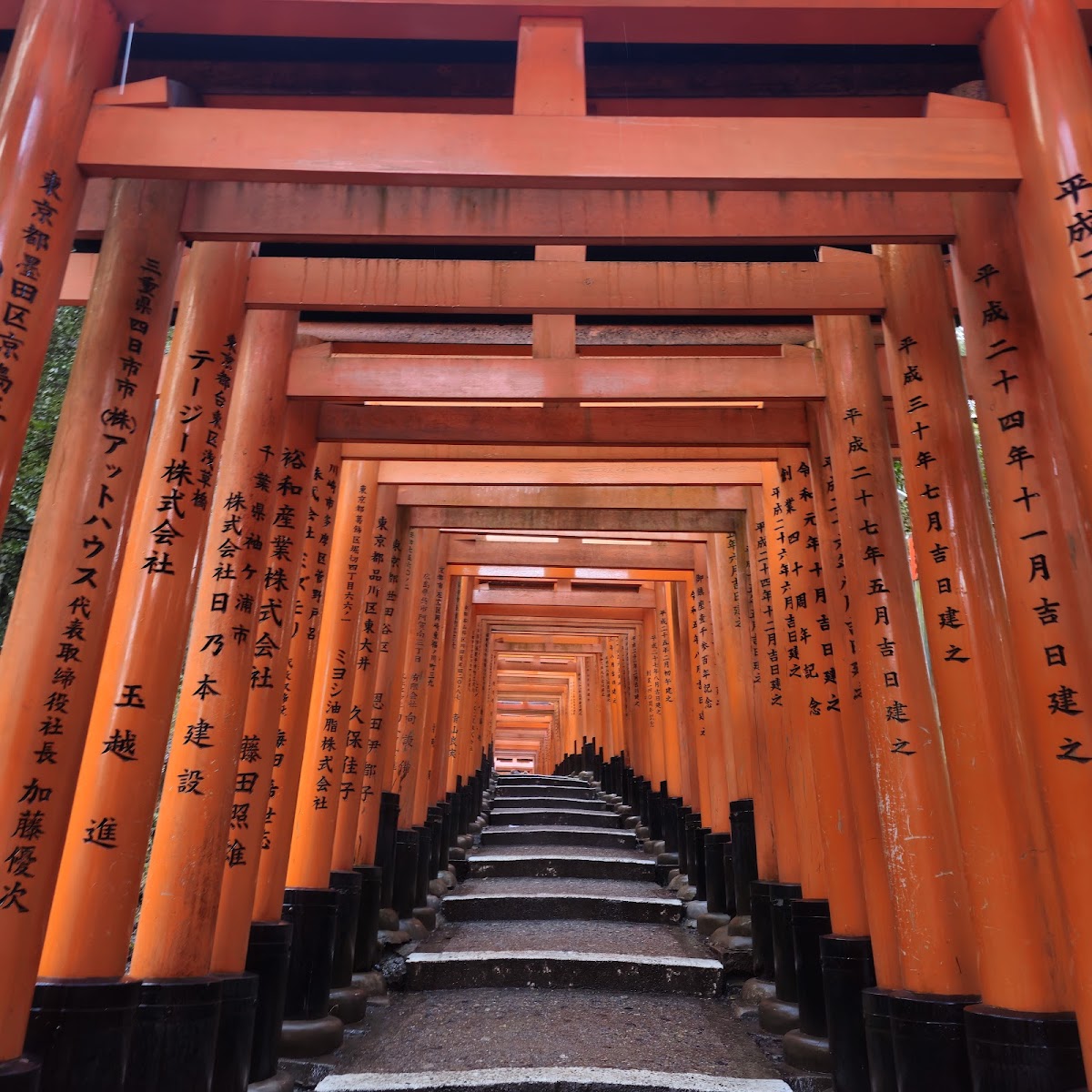
- Entrance to the Senbon Torii: Enter the Senbon Torii from the right side of the main shrine.
- Passing Through the Senbon Torii: Walk through the vermilion tunnel for approximately 5-10 minutes.
- Arrival at the Inner Shrine Worship Hall: After passing through the Senbon Torii, you will come out into a plaza.
Access to Fushimi Inari Taisha
Access by Train
- JR Nara Line “Inari Station”: Immediately after alighting (5 minutes from Kyoto Station, 140 yen)
- Keihan Main Line “Fushimi Inari Station”: 5 minutes on foot (15 minutes from Gion Shijo Station, 270 yen)
Access by Bus
- Kyoto City Bus: Immediately after alighting at “Inari Taisha-mae” bus stop (South 5 line)
Access by Car
- Approximately 20 minutes from Meishin Expressway “Kyoto Minami IC”
- Parking: Free parking available on the temple grounds (approximately 170 spaces, likely to be full during peak hours)
Highlights of the Inner Shrine Worship Hall
Omokaru Stone (Wishing Stone)
What is the Omokaru Stone?
The “Giboshi” (ornamental finial) placed on top of a pair of stone lanterns located in the back right of the Inner Shrine Worship Hall is the “Omokaru Stone.”
The Correct Way to Worship the Omokaru Stone
- Consciously Think of Your Wish: Think of your specific wish.
- Lift the Stone: Lift the finial with both hands.
- Divination by Weight:
- If it’s lighter than expected, “Your wish will come true.”
- If it’s heavier than expected, “It will take time for your wish to come true.”
Omokaru Stone Crowds
Even on weekdays, there may be a 10-15 minute wait. It’s relatively less crowded in the early morning (before 8:00 AM) or evening (after 5:00 PM).
White Fox Ema (Votive Tablets)
Characteristics of the Ema
At the Okusha Worship Hall, you can dedicate unique ema shaped like the face of a white fox. Worshippers can freely draw faces on them, resulting in a large number of ema with unique expressions.
Price and Purchase Location of Ema (votive tablets)
- Price: 500 yen per tablet
- Purchase Location: The office at the Okusha (inner shrine) worship hall
- Features: You can freely draw eyes, mouths, beards, etc.
Branching Point to Myobu Valley Worship Hall
The Okusha worship hall is also an important branching point for the “mountain pilgrimage” that leads further to the summit. From here, you can aim for Ichinominé, the summit, via Kumadaka Shrine and Mitsutsuji.
Benefits of the Okusha Worship Hall
Main Benefits
Business Prosperity and Success
Ukanomitama-no-Okami, the main deity of Fushimi Inari Taisha, is worshipped as the god of abundant harvests and business prosperity.
Wish Fulfillment
Making a wish at the Omokaru Stone is said to be particularly effective in fulfilling specific wishes.
Good Fortune and Prosperity
The entire Inariyama mountain is considered a powerful spiritual spot, believed to bring good fortune and increased luck.
Points for a Prayer to Enhance Your Blessings
- Formal Prayer at the Main Shrine First: Always pray at the main shrine before visiting the inner shrine’s worship hall.
- Express Gratitude: Express gratitude not only for your wishes but also for everyday blessings.
- Regular Visits: A thank-you visit after your wish has been granted is also important.
Points to Note and Manners When Visiting
Clothing and Items to Bring
Recommended Clothing
- Comfortable Shoes: Sneakers or athletic shoes (avoid heels)
- Comfortable Clothing: There are many stairs and slopes.
- Seasonal Measures: Parasol and hat in summer, warm clothing in winter.
Useful Items to Bring
- Drinks (vending machines are limited)
- Towel (for wiping sweat)
- Camera/Smartphone (fully charged)
Prayer Manners
Photography Manners
- Be considerate of other worshippers.
- Please refrain from using tripods during crowded times.
- Do not photograph personal information written on ema (votive tablets).
Other Manners
- Please refrain from loud conversations.
- Do not touch or lean on the torii gate.
- Please take your trash with you.
Nearby Attractions
Mountain Pilgrimage (Inariyama Mountain Climbing)
The pilgrimage route from the Okusha (inner shrine) to the summit of Inariyama Mountain is called the “Mountain Pilgrimage.”
- Estimated Time: Approximately 1 hour from the Okusha to the summit, approximately 2-3 hours for the entire loop.
- Main Attractions: Kumataka Shrine, Mitsutsuji, Yotsutsuji, Ichinominé (elevation 233m)
Tea Houses and Rest Areas
There are tea houses around the Okusha (inner shrine) offering inari sushi and kitsune udon. They are perfect for taking a break during your pilgrimage.
Best Time and Season for Visiting
Recommended Season
Spring (March-May)
The cherry blossom season is beautiful, but it gets crowded with tourists. Late April to May is recommended as the fresh greenery is stunning.
Autumn (October-November)
The autumn foliage season is especially beautiful, with a magnificent contrast between the vermilion torii gate and the colorful leaves.
Summer and Winter Precautions
- Summer: Take sufficient precautions against the heat and stay hydrated.
- Winter: Due to the early sunset, it is recommended to begin your visit by 3 PM.
Recommended Times
Early Morning Visit (7:00 AM – 9:00 AM)
- Fewer people, allowing for a peaceful visit.
- The Senbon Torii (thousand torii gates) illuminated by the morning sun are beautiful.
- Ideal for photography.
Evening Visit (4:00 PM – 6:00 PM)
- The torii gates bathed in the setting sun create a magical atmosphere.
- A time when the number of tourists begins to decrease.
Summary: Points to Note When Visiting the Okusha Hohaisho (Inner Shrine Worship Hall)
The Okusha Hohaisho is one of the highlights of a visit to Fushimi Inari Taisha. Beyond the Senbon Torii lies a mystical space where unique experiences await, such as making wishes at the Omokaru Stone and dedicating white fox ema (votive tablets).
Despite being only a 15-minute walk from the main shrine, it’s a place where you can fully experience the sacred atmosphere of Mount Inari. We recommend visiting during less crowded times, such as early morning or evening, and wearing comfortable walking shoes.
Whether you’re seeking blessings for business prosperity or the fulfillment of your wishes, or simply want to create lasting memories of your Kyoto trip, we highly recommend making the trip to the inner shrine.