Izukanda Shrine (Otsu City, Shiga Prefecture) Complete Guide | A Thorough Explanation of History, Goshuin (Shrine Seals), Access, and Benefits
Izukanda Shrine, located in the Katata district of Otsu City, Shiga Prefecture, is a historical shrine that has existed since the Heian period. In Katata, a place that prospered from water transport on Lake Biwa, it has been revered by the local people since ancient times. This article comprehensively introduces information you should know before visiting Izukanda Shrine, including its history, enshrined deities, benefits, highlights of the grounds, goshuin information, and access methods.
What is Izukanda Shrine? | The Guardian Shrine of Katata that Protects Water Transport on Lake Biwa
Izukanda Shrine is located at 1-16-18 Imakatata, Otsu City, Shiga Prefecture, and its former shrine rank was a village shrine. As the current name suggests, this shrine has a history of being a merger of two shrines: “Izu Shrine” and “Kanda Shrine.” Katata flourished as a key point for water transport on Lake Biwa, and in the Middle Ages, the Katata clan, who held privileges for lake transportation, played an active role. Izu Kanda Shrine is an important shrine that has watched over the prosperity and safety of the entire Katata area as its guardian deity.
Although its grounds are small and quietly situated within a residential area, its historical value and the depth of faith in the region are immeasurable.
History and Origins of Izu Kanda Shrine | The Story of the Merger of Two Shrines
Founding of Kanda Shrine (Jogan 2, 860 AD)
According to shrine tradition, the history of Izu Kanda Shrine dates back to Jogan 2 (860 AD). It is said to have begun when Iki Sukune Koreo invited the Kanda Shrine to Sekiyahama in Katataura.
Kanda Shrine, dedicated to the god of abundant harvests, attracted the faith of local residents engaged in agriculture. At that time, Katata relied not only on fishing and water transport on Lake Biwa, but also on agriculture, making Kanda Shrine a vital support for the local community.
The Establishment of Izu Shrine (Kanpyō 4, 892)
Meanwhile, the founding of Izu Shrine is said to date back to Kanpyō 4 (892). It is said that when Hōshōbō Son’i, a high-ranking priest of Enryaku-ji Temple on Mount Hiei, stayed in Mishima, Izu Province for ascetic training, he noticed the resemblance of Katata to Izu, and thus invited Izu Daigongen (Ōyamatsumi-no-Mikoto) of Mishima Taisha Shrine to this location.
Son’i was a high-ranking priest of the Heian period who, after training on Mount Hiei, spread Buddhism throughout various regions. It is believed that the Izu Daigongen deity was invited to Katata Shrine because its topography and the scenery of Lake Biwa resembled those of Izu, and to pray for the safety of water transport and the prosperity of the region.
Merger of the Two Shrines (Shōtai 3, 900 AD)
In Shōtai 3 (900 AD), the Izu Shrine was merged with the Kanda Shrine. As a result, the god of abundant harvests and the god of water transport and mountains were enshrined in a single shrine, and it came to be known as “Katata Ōmiya.”
During the Muromachi period, it was widely revered as the guardian shrine of the entire Katata area and was deeply revered by the Katata people, who held privileges over water transport on Lake Biwa. Katata had an autonomous organization called “Katata Jūrokugō” (Katata Sixteen Villages) and held the right to manage the Lake Biwa checkpoints, making the worship of Izu Daigongen, the guardian deity of water transport, particularly important.
History of War and Reconstruction
In 1569 (Eiroku 12), the shrine buildings were destroyed by fire during the Sengoku period. During this time, Omi Province became a battlefield between Oda Nobunaga, Asai Nagamasa, and the Rokkaku clan, and many temples and shrines suffered damage.
Only Izu Shrine was rebuilt during the Tensho era (1573-1592), but after subsequent changes, the shrine’s name was unified to its current name, “Izu Kanda Shrine,” during the Meiji era. Due to the Meiji-era shrine consolidation policy, the history of both shrines has been preserved to this day.
Deities and Benefits | Guardian Deity of Abundant Harvests and Safe Water Transport
Main Deity
Izu Kanda Shrine enshrines the following deity:
Oyamazumi-no-Mikoto
A deity known as the god of mountains and the sea, and the main deity of Izu Shrine. The deity enshrined at Mishima Taisha Shrine is believed to grant blessings for safe water transport, safe voyages, and business prosperity.
Itsukanome-no-kami
One of the Inari deities, this god presides over abundant harvests and business prosperity. This deity is enshrined as the principal deity of Kanda Shrine.
Ukanomitama-no-mikoto
Also known as an Inari deity, this god presides over food and grains. This deity is worshipped as the guardian deity of agriculture.
Main Blessings
At Izu Kanda Shrine, the following blessings are believed to be bestowed:
- Abundant Harvest and Agricultural Prosperity: Blessings of grain from the deities of the Kanda Shrine lineage
- Business Prosperity: Development of commerce through Inari-sama and Oyamatsumi-no-Mikoto
- Safe Water Transport and Navigation: From its history of protecting water transport on Lake Biwa
- Family Safety: Protection as the guardian deity of the region
- Exorcism and Good Fortune: Divine efficacy from ancient beliefs
This shrine is particularly relevant to those who operate businesses around Lake Biwa, those working in water-related industries, and those engaged in agriculture and fishing.
Highlights of the Shrine Grounds | A Compact Space with a Sense of History
Architectural Style of the Main Hall
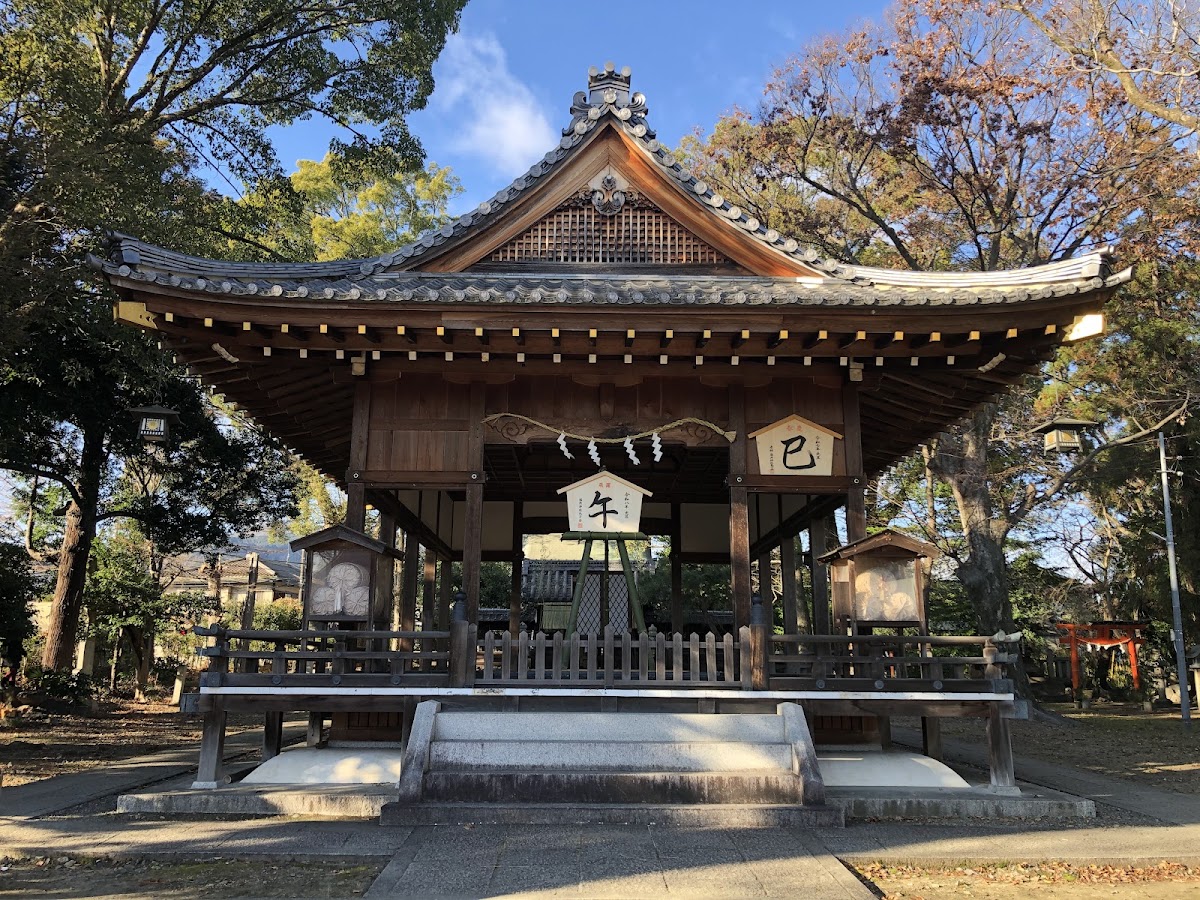
The main hall of Izu Kanda Shrine is built in the traditional shrine architectural style called Ikkensha Nagare-zukuri. Although relatively compact in size with a frontage of one ken and one shaku, it is meticulously crafted, conveying a sense of dignity as the center of local faith.
The Nagare-zukuri style, characterized by a long, extended front roof forming a Kōhai (portable porch), is one of the most common styles in Japanese shrine architecture. It incorporates practical considerations, such as keeping worshippers dry on rainy days.
Worship Hall and Middle Gate
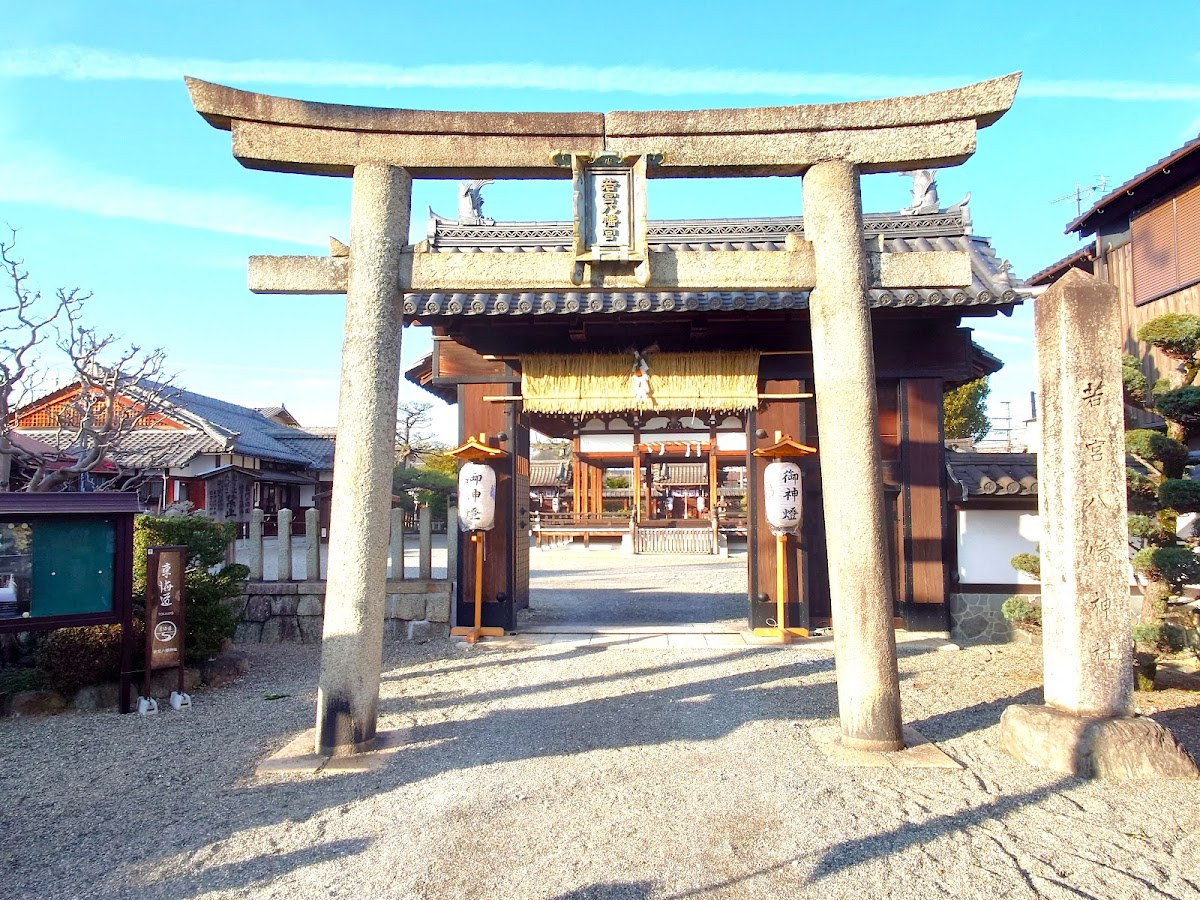
In front of the main shrine is the worship hall, where worshippers offer their prayers. A middle gate is also present, serving as a boundary separating the sacred area from the secular world.
The shrine grounds are small but meticulously maintained, reflecting the careful upkeep by local residents.
Ema (Votive Tablets) and Offerings
Within the grounds is an ema rack where ema bearing the wishes of worshippers are offered. You can see ema inscribed with various wishes, such as a bountiful harvest, business prosperity, and family safety.
Quiet Worship Space
Located in a residential area, it requires navigating narrow streets, but this contributes to a quiet and peaceful worship experience. One of its charms is the atmosphere you can experience at a shrine deeply rooted in the community, unspoiled by tourism.
Goshuin (Shrine Seal) Information | Availability and Procedures
Izu Kanda Shrine is a small shrine, and therefore may not have a permanent priest or shrine office. Those wishing to receive a goshuin are advised to inquire in advance with the Shiga Prefectural Shrine Association or a nearby shrine.
There is another shrine in Otsu City called Izu Shrine (Honkatata), also known as “Izu Jingu.” Because these are easily confused, please confirm the location when visiting or receiving a goshuin.
- Izu Kanda Shrine: 1-16-18 Imakatata, Otsu City
- Izu Shrine (Izu Jingu): 1-chome Honkatata, Otsu City
Both are historical shrines located in the Katata area, but please note that they are separate shrines.
Access and Parking Information | Directions from Katata Station
Access by Train
Nearest Station: JR Kosei Line “Katata Station”
- Approximately 18 minutes on foot from the Katata Station exit
- Distance: Approximately 1.4 km
The route from Katata Station heads northwest, passing through a residential area. It’s located on the way to Lake Biwa, in a quiet residential area.
Access by Bus
It’s also possible to use the Kojaku Kotsu bus from Katata Station. It’s a few minutes’ walk from the nearest bus stop, but since the number of buses is limited, it’s recommended to check the timetable in advance.
Access by Car
Dedicated Parking: Information on clearly designated parking for visitors is limited. Parking on the street nearby may cause inconvenience due to the residential area.
If visiting by car, it’s recommended to use coin parking near Katata Station and walk to the shrine.
Address and Basic Information
- Location: 1-16-18 Imakatada, Otsu City, Shiga Prefecture 520-0241
- Phone Number: Please inquire through the Shiga Prefectural Shrine Association
- Visiting Hours: Grounds are open freely (the shrine office may be unattended)
- Admission Fee: Free
Nearby Tourist Attractions | Highlights of the Katata Area
When visiting Izu Kanda Shrine, we recommend also visiting other tourist attractions in the Katata area.
Ukimido (Mangetsuji Temple)
A beautiful temple built as if jutting out into Lake Biwa, it is a representative tourist attraction of Katata. Known as “Katata no Rakugan” (Wild Geese Descending at Katata), one of the Eight Views of Omi, the scenery of it floating on the lake is spectacular.
Izu Shrine (Izu Jingu)
Another Izu Shrine located in Honkatada, this is also a historical shrine. The main deity enshrined here is Oyamatsumi-no-Mikoto, and the shrine has been revered as the guardian deity of the entire Katata area. It is also known as a power spot for matchmaking.
Shōzui-ji Temple
An ancient temple in Katata, its tranquil grounds are a major attraction. Located on a hill overlooking Lake Biwa, it is ideal for historical walks.
Biwako Ohashi Bridge
A large bridge connecting Katata to Moriyama City on the opposite shore, offering magnificent views of Lake Biwa. It is a popular spot for driving and cycling.
Annual Events and Festivals | Traditional Events Rooted in the Community
At Izu Kanda Shrine, festivals are held throughout the year by local residents. For detailed festival schedules, please check with the Shiga Prefectural Shrine Association or local information.
Generally, the following annual events are held at shrines:
- New Year’s Day Festival (January 1st): A festival celebrating the New Year
- Spring Festival: A festival praying for a bountiful spring harvest
- Autumn Festival: A festival giving thanks for the harvest
- Monthly Festival: A regular monthly festival
As this is a small shrine, large-scale festivals may not be held, but it is carefully preserved by the local parishioners.
Manners and Etiquette for Visiting a Shrine | Basics of Shrine Visiting
Here are some basic manners to observe when visiting Izu Kanda Shrine.
How to Pass Through the Torii Gate
The torii gate is the entrance to the sacred area. Bow before passing through. Since the center of the path is considered the path of the gods, it is polite to walk along the side.
How to Wash Your Hands at the Water Basin
If there is a water basin, purify yourself in the following order.
- Take the ladle with your right hand and purify your left hand.
- Switch the ladle to your left hand and purify your right hand.
- Switch the ladle back to your right hand, receive water in your left hand, and rinse your mouth.
- Purify your left hand once more.
- Hold the ladle upright, purify the handle, and return it to its original position.
Proper Worship at the Main Hall
Worship is performed using the general “two bows, two claps, one bow” method.
- Place your offering in the offering box.
- Ring the bell if there is one.
- Bow deeply twice (two bows).
- Clap your hands twice at chest height (two claps).
- Pray with your hands clasped together.
- Finally, bow deeply once (one bow).
Photography
Photography is generally permitted within the temple grounds, but it may be prohibited inside the main hall or in sacred areas. Please be considerate of other worshippers.
The Charm of Izu Kanda Shrine | A Local Treasure that Conveys History to the Present
Izu Kanda Shrine is not a shrine that is heavily advertised as a tourist destination. However, that is precisely why it has a unique charm.
A Faith Rooted in the Community
With a history of over 1000 years, the fact that it is still carefully preserved by the local people evokes the origins of Japanese shrine faith. While not flashy, the existence of a shrine that quietly watches over the community is precious in the modern age.
Telling the Story of Lake Biwa’s History
Katata is a historic town that prospered from water transport on Lake Biwa. Izu Kanda Shrine, as a witness to that history, conveys the faith of the people who lived alongside Lake Biwa. It is a shrine worth visiting for those interested in the history of Lake Biwa.
A Quiet Worship Experience
Unlike famous shrines bustling with tourists, one of its charms is the quiet atmosphere. You can offer your prayers at your own pace and reflect on history. ## Summary | Experiencing History and Faith at Izu Kanda Shrine
Izu Kanda Shrine is a historic shrine located in Katata, Otsu City, Shiga Prefecture. With a long history dating back to the founding of Kanda Shrine in 860 AD, the enshrinement of Izu Shrine in 892 AD, and the subsequent merger in 900 AD, it has long been revered as the guardian shrine of Katata, which prospered from water transport on Lake Biwa.
The enshrined deities are Oyamatsumi-no-Mikoto, Iwa-Ukanome-no-Kami, and Ukanomitama-no-Mikoto, and the shrine is believed to bring blessings for abundant harvests, business prosperity, and safe water transport. Although the grounds are small, you can see traditional shrine architecture, including the main hall (Ichikensha Nagare-zukuri style), the worship hall, and the middle gate.
It is easily accessible, about an 18-minute walk from JR Katata Station, and there are other tourist attractions nearby, such as Ukimido and Izu Shrine (Izu Jingu). Located in a quiet residential area, this hidden gem of a shrine offers a peaceful setting for worship, making it highly recommended for history buffs and shrine enthusiasts.
Why not experience traditional Japanese faith and local history at Izu Kanda Shrine, which has a history intertwined with that of Lake Biwa?