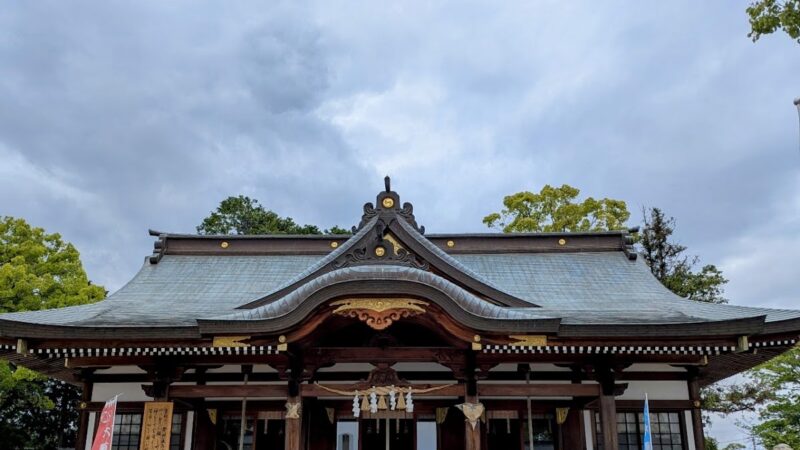
Complete Guide to Izushi Shrine | History, Deities, Access, and Nearby Tourist Spots of Tajima Province
Izushi Shrine, located in Izushi-cho, Toyooka City, Hyogo Prefecture, is an ancient shrine boasting a history of over 1300 years as the Ichinomiya (first-ranked shrine) of Tajima Province. Affectionately known as “Ikkyu-san” by locals, it is known as a shrine dedicated to Amenohiboko, a god of foreign origin who appears in the Kojiki and Nihon Shoki. This article provides a detailed introduction to Izushi Shrine, including its history, enshrined deities, highlights, access methods, and nearby tourist spots.
What is Izushi Shrine? – A Historic and Prestigious Shrine as the Ichinomiya of Tajima Province
Izushi Shrine, located in Miyauchi, Izushi-cho, Toyooka City, Hyogo Prefecture, is a representative shrine of the Tajima region. As the Ichinomiya of Tajima Province, it has long boasted unparalleled divine power in the Tajima region and is affectionately known as “Ikkyu-san” by locals.
Status as the Ichinomiya of Tajima
An Ichinomiya refers to the shrine with the highest rank in each province under the Ritsuryo system. Izushi Shrine, as the Ichinomiya of Tajima Province, has played a crucial role as the center of faith in the Tajima region from ancient times through the medieval and early modern periods. Even today, it is counted as one of the five major shrines of Tajima and functions as a spiritual pillar of the region.
History Recorded in the Kojiki and Nihon Shoki
The history of Izushi Shrine is confirmed to have existed at least 1300 years ago, as it is described in the Kojiki (completed in 712), the oldest existing history book in Japan, and the Nihon Shoki (completed in 720), compiled during the Nara period. As the central shrine of the legend of Amenohiboko, which appears in these classics, it is an indispensable presence when discussing ancient Japanese history.
Deities Enshrined – Amenohiboko and Izushihachizen-no-Okami
Two deities are enshrined at Izushi Shrine. Each is revered as a god deeply involved in the development and progress of the Tajima region. ### Amenohiboko-no-Mikoto
Amenohiboko-no-Mikoto is a prince said to have come to Japan from Silla on the Korean Peninsula. According to the Kojiki and Nihon Shoki, Amenohiboko arrived in Japan carrying eight sacred treasures, traveled throughout the region, and finally settled in Tajima Province.
Worship as the Ancestor Deity of Tajima Development
There is a legend that Amenohiboko, during a time when the Tajima region was a muddy sea, cut through the rocky mountains of the Seto Inland Sea, channeling water into the Sea of Japan and creating the fertile plains of today. Because of this achievement in land development, Amenohiboko is revered as the ancestral deity of Tajima development, and is particularly revered by those involved in civil engineering and construction.
Even today, Izushi Shrine holds a festival said to be a remnant of the completion of civil engineering work, and this tradition expresses gratitude to Amenohiboko that has continued since ancient times.
Izushiyamae no Okami
Izushiyamae no Okami refers to the spirits of the eight sacred treasures (Yasshu Shinpo) said to have been brought to Japan by Amenohiboko. These treasures are said to be:
- Two Jewels
- Wave-Slicing Scarf
- Wave-Cutting Scarf
- Wind-Slicing Scarf
- Wind-Cutting Scarf
- Okikagami (Inner Mirror)
- Hetsukagami (Outer Mirror)
- Izushi no Tousu (Izushi Knife)
These sacred treasures are believed to have played an important role in ancient rituals and magic, and by enshrining their spirits, prayers are offered for the prosperity and peace of the region.
History and Transformation of Izushi Shrine
The history of Izushi Shrine dates back to ancient times and has undergone various transformations over time. ### From Ancient to Medieval Times
In ancient times, Izushi Shrine functioned as the central place of worship in Tajima Province. Its current location, north of the center of Izushi town, is believed to have been the former center of Izushi. The fact that the shrine is located in a flat residential area rather than on a mountaintop also indicates that this region was the center of people’s lives from ancient times.
In the medieval period, Izushi Shrine established its position as the Ichinomiya (first-ranked shrine) of Tajima Province and came to be revered by the samurai class.
From Early Modern to Modern Times
During the Edo period, it continued to attract local faith under the patronage of the Izushi Domain. After the Meiji Restoration’s separation of Shinto and Buddhism, it was ranked as a prefectural shrine under the modern shrine ranking system.
The current shrine building was rebuilt in 1914 (Taisho 3) and is designated as a cultural property of Toyooka City. This building possesses the characteristics of traditional shrine architecture in the Tajima region and is protected as a building of high historical value.
Highlights of the Shrine Grounds
The grounds of Izushi Shrine offer various points of interest that evoke a sense of history. ### Main Shrine and Worship Hall
Rebuilt in 1914 (Taisho 3), the shrine buildings are a valuable structure that incorporates modern architectural techniques while adhering to traditional shrine architectural styles. Protected as a Toyooka City designated cultural property, it represents the shrine architecture of the Tajima region.
Torii Gate and Approach
The approach leading from the Izushi River is enveloped in a tranquil atmosphere. Passing through the torii gate, one can feel a sacred atmosphere, as if being invited into a place of worship that has continued since ancient times.
Attractiveness as a Power Spot
Izushi Shrine is also known as a power spot where the founder of Tajima is enshrined. As a place where one can feel the energy of Amenohiboko, the god of national development, the number of visitors praying for good fortune and improved career prospects has increased in recent years.
Festivals and Annual Events
Various festivals are held at Izushi Shrine throughout the year.
Main Festivals
Izushi Shrine holds various festivals that preserve local traditions, including a festival commemorating the achievements of Amenohiboko in developing Tajima. The festival celebrating the completion of civil engineering works is particularly noteworthy as it is unique and stems from an ancient legend of land development.
Connection to the Community
As its friendly nickname, “Ikkyu-san,” suggests, Izushi Shrine is deeply rooted in the lives of the local people. It continues to be a beloved place of worship for life’s milestones, such as New Year’s visits, Shichi-Go-San (a traditional rite of passage for children), and exorcisms.
Goshuin (Shrine Seals) and Amulets
Goshuin (Shrine Seals)
Izushi Shrine offers Goshuin (shrine seals). These seals, signifying its status as the Ichinomiya (first-ranked shrine) of Tajima, are popular among those who enjoy visiting shrines. Izushi Town also offers a “Izushi Matchmaking and Goshuin Pilgrimage,” allowing visitors to explore surrounding shrines and temples and experience Izushi’s history and culture more deeply.
Amulets and Offerings
As the shrine enshrines the god of national development, amulets for career success and good fortune are popular. Various amulets praying for the safety and prosperity of the region are also available.
Access Information
Here’s how to access Izushi Shrine.
Location
Address: Miyauchi, Izushi-cho, Toyooka City, Hyogo Prefecture
Access by Train and Bus
It is located approximately 10km southeast of JR Toyooka Station. From Toyooka Station, take the Zentan Bus bound for Izushi and get off at “Toriibashi” or “Izushi Bus Depot,” then walk for about 5-10 minutes. The bus journey takes approximately 30 minutes.
Access by Car
- Approximately 30 minutes from the Yoka-Hyono-yama IC on the Kita-Kinki Toyooka Expressway via National Route 426.
- Approximately 20 minutes from Toyooka Station via National Routes 426 and 482.
- Head south along Route 426 following the Izushi River, then turn east at Torii Bridge where it intersects with Route 482 (approximately 500m).
Parking
There is parking space around the shrine, but it is also possible to use the public parking lot in the center of Izushi town and visit on foot. Visiting the shrine in conjunction with a stroll through the Izushi castle town is recommended.
Inquiries
Phone: 0796-52-2440
We also post information on our official Facebook page, so we recommend checking it before your visit.
Tourist Attractions Around Izushi Shrine
After visiting Izushi Shrine, be sure to explore the surrounding tourist attractions. Izushi town is a historic castle town known as “Little Kyoto of Tajima.”
Izushi Castle Ruins
The Izushi Castle Ruins, a symbol of Izushi, are located about 2km from Izushi Shrine, a 20-minute walk away. The view of the castle town from Yamasatomaru is spectacular, and it’s also known as a famous cherry blossom viewing spot in spring. The approach to the Inari Shrine, lined with vermilion torii gates, is another highlight.
Izushi Soba
Izushi is a gourmet spot famous for its “Izushi Sara Soba” (soba served on a plate). Over 50 soba restaurants line the castle town, offering delicious soba served in the unique “Sara Soba” style. Unique experience programs, such as “Izushi Soba Delivery Experience for Locals,” are also available.
Izushi Karo Yashiki (Izushi Chief Retainer’s Residence)
The Izushi Karo Yashiki, a restored samurai residence from the Edo period, allows visitors to experience life in that era. It’s within walking distance of Izushi Shrine, making it ideal for a historical walking tour.
Izushi Meiji-kan
The Izushi Meiji-kan, utilizing a Western-style building from the Meiji era, is a facility where you can learn about the modern history of Izushi. The building, with its retro atmosphere, is also a popular spot for taking photos.
Sokyo-ji Temple (Takuan-ji Temple)
Sokyo-ji Temple is famous as a temple associated with Takuan, the monk known as the inventor of “takuan-zuke” (pickled daikon radish). Along with Izushi Shrine, it is an indispensable spot when discussing the history of Izushi.
Toyooka City Museum of Art – Ito Kiyohisa Memorial Hall –
This museum primarily exhibits the works of Ito Kiyohisa, a Western-style painter from Izushi. As a cultural facility where art and history merge, it has become a new attraction for Izushi tourism.
Izushi Former Fukutomi Residence
An important cultural property that preserves a merchant’s house from the late Edo period. It is a valuable building that conveys the commercial culture of Izushi to the present day.
Izushi Experience Programs
Izushi offers a variety of experience programs where you can experience its history and culture.
Experience in Kimono! Castle Town Retro Tour
This program allows you to rent a kimono and stroll through the castle town. Visiting Izushi Shrine in a kimono will create a special experience that feels like stepping back in time.
Izushi Time Trip Guide
This tour features a local guide who provides detailed explanations of Izushi’s history and culture. The deep history of Izushi Shrine will be further understood with the expert guide’s explanations.
Izushi Matchmaking & Goshuin Stamp Pilgrimage
This pilgrimage involves visiting multiple shrines and temples, including Izushi Shrine, to collect Goshuin stamps. You can experience Izushi’s spiritual culture while praying for matchmaking and good fortune.
Model Izushi Itinerary
We introduce a model one-day sightseeing course centered around Izushi Shrine.
Morning: Historical Exploration Course
- Visit to Izushi Shrine (9:00-10:00): Experience ancient history at Tajima’s Ichinomiya (first-ranked shrine)
- Stroll through Izushi Castle Ruins (10:30-11:30): A scenic spot overlooking the castle town
- Lunch with Izushi Soba (12:00-13:00): Enjoy the famous Sara Soba (soba noodles served on plates)
Afternoon: Cultural Experience Course
- Visit to Izushi Karo Residence (13:30-14:30): Experience Edo-period samurai culture
- Izushi Meiji-kan (15:00-15:30): Enjoy retro Western-style architecture
- Stroll through the Castle Town (16:00-17:00): Souvenir shopping and exploring the townscape
Relationship with Other Shrines in the Tajima Region
Izushi Shrine is one of the five major shrines of Tajima and is central to the shrine network of the Tajima region.
What are the Five Shrines of Tajima?
The Five Shrines of Tajima refer to Izushi Shrine, Yabu Shrine, Awaga Shrine, Odai-agata Shrine, and Kinumaki Shrine. These shrines all have a long history and have supported the faith and culture of the Tajima region.
Relationship with Izushi Shrine on Awaji Island
Interestingly, there is also an Izushi Shrine on Awaji Island. The Izushi Shrine on Awaji Island is known as the place where the treasure “Izushi no Tosu” (Izushi’s sword) appeared, and has a deep connection to the legend of Amenohiboko. As a shrine that shows the footsteps of Amenohiboko’s travels, it has a spiritual connection to the Izushi Shrine in Tajima.
The Four Seasons of Izushi Shrine
Izushi Shrine shows different faces in each of the four seasons.
Spring
During cherry blossom season, the surrounding area, along with the Izushi Castle ruins, is beautifully colored. It is a refreshing season for worship in the lush green grounds.
Summer
The verdant grounds become a cool space that makes you forget the summer heat. Summer festivals and other events are also held.
Autumn
A beautiful season for autumn foliage. The entire castle town of Izushi is dyed in autumn colors, making it the perfect time for a historical stroll.
Winter
The snow-covered shrine grounds exude a sacred atmosphere enveloped in silence. Visiting the shrine in the crisp winter air is a truly refreshing experience.
Access and Accommodation in Izushi
Accommodation
Around Izushi, there are inns where you can enjoy the atmosphere of the castle town, as well as hot spring inns where you can fully enjoy the nature of Tajima. Kinosaki Onsen is also nearby, and travel plans combining hot springs and historical sightseeing are popular.
Combining with Sightseeing in Toyooka City
Toyooka City has many spots where you can enjoy nature and history, such as the Stork Park and Genbudo Cave. Combining a visit to Izushi Shrine with sightseeing in the Tajima area allows you to fully experience its charm.
Summary: Experiencing the History and Power of Tajima at Izushi Shrine
Izushi Shrine, with its history spanning over 1300 years, has served as the Ichinomiya (first-ranked shrine) of Tajima Province, functioning as a spiritual pillar of the Tajima region from ancient times to the present day. This shrine, dedicated to the foreign deity Amenohiboko and revered as the ancestral god of national development, possesses a unique history and is crucial for understanding ancient Japanese history.
While affectionately known locally as “Ikkyu-san,” Izushi Shrine maintains its prestigious status as the Ichinomiya of Tajima. It continues to welcome many visitors as a starting point for exploring the history of the castle town of Izushi, and as a power spot.
Combined with the local cuisine of Izushi soba, the breathtaking views of the Izushi Castle ruins, and numerous historical buildings, a visit to Izushi Shrine will provide a truly immersive experience of the Tajima region’s charm. Reflect on the long and rich history that stretches back to the time of the Kojiki and Nihon Shoki as you visit Izushi Shrine.