Jofuku-ji Temple (Kamigyo-ku, Kyoto Prefecture) | The History of an Ancient Temple Protecting from Evil Spirits in Heian-kyo, and Highlights of its Red Gate and Cultural Assets
Located in the Nishijin area of Kamigyo-ku, Kyoto City, Jofuku-ji Temple is an ancient Jodo sect temple said to have been founded during the Enryaku era (782-806) in the early Heian period. Known for its vermilion-painted red gate, it is affectionately known locally as “Akamon-dera” (Red Gate Temple). This article provides a detailed overview of Jofuku-ji Temple, including its history, cultural assets, highlights, and access information.
History and Origins of Jofuku-ji Temple
Founding in the Heian Period and Two Legends
Two legends remain regarding the founding of Jofuku-ji Temple.
One theory is that it was founded during the Enryaku era (782-806) by Ken’ei Daisōzu, a scholar-monk of Kōfuku-ji Temple in Nara. It is said that Kenkei built a temple in Murakumo, Kadono-gun, to enshrine a statue of Shakyamuni Buddha that he had brought from Tang China. During this period, Jofuku-ji Temple was a prestigious temple, counted among the 25 great temples of Kyoto.
Another tradition states that it was founded in 896 (Kanpyō 8) by Princess Hanshi, the mother of Emperor Kōkō (or possibly Emperor Uda). Princess Hanshi was a noble figure known as a consort, and this theory is also considered highly credible.
In either case, it is certain that Jofuku-ji Temple existed from the early days of Heian-kyō and held an important position in Kyoto at that time.
Role as a Guardian against Evil Spirits for the Kyoto Imperial Palace
Initially, Jofuku-ji Temple was built northeast of the Kyoto Imperial Palace as a temple to ward off evil spirits from the northeast direction (the “demon’s gate”). In Heian-kyo (Kyoto), based on the principles of Onmyōdō (Japanese esoteric cosmology), there was a custom of positioning temples in the northeast (demon’s gate) direction to protect the capital. Jōfuku-ji Temple is one such temple built with these religious and political intentions.
Transition from Tendai to Jōdo Sect
Jōfuku-ji Temple initially started as a Tendai sect temple, but underwent a major turning point in 1525, at the end of the Muromachi period. It received the imperial title of “Nembutsu Sanmai-dō” (a hall for reciting Buddhist prayers) from Emperor Go-Kashiwabara, and thus became a Jōdo sect temple as well. This resulted in Jōfuku-ji Temple becoming a unique temple encompassing both Tendai and Jōdo sects.
Later, in 1615, it relocated to its current location in Sasaya-chō, Jōfuku-ji-dōri Ichijō-agaru, Kamigyo-ku. This relocation is believed to have been part of the reconstruction efforts following devastation caused by war and fire.
History of Fires and Reconstruction
Throughout its long history, Jofuku-ji Temple has suffered numerous fires. In particular, during periods of warfare, including the Ōnin War (1467-1477), it suffered significant damage, similar to many other temples in Kyoto. However, each time, it was rebuilt thanks to the support of devout believers, and it continues to stand today.
Even after the Edo period, it encountered several fires, but major buildings such as the main hall and the Shakado (Buddha Hall) were rebuilt, and valuable cultural assets were preserved.
Formal Name and Mountain Name of Jofuku-ji Temple
The formal mountain name of Jofuku-ji Temple is “Eshōzan,” and its temple name is “Chikōin.” It was also formerly known as “Murakumo-ji” because it was located in the Murakumo area. Currently, it is a temple belonging to the Jōdo sect and serves as a center of Nembutsu (recitation of Amida Buddha’s name).
Highlights and Cultural Assets of Jofuku-ji Temple
The Iconic Red Gate
The first thing visitors to Jofuku-ji Temple see is the vermilion-painted red gate facing Jofuku-ji Street. This gate, entirely painted in vermilion, is very impressive and is affectionately called “Akamon” or “Akamon-ji” by local residents.
Located along a street lined with Nishijin townhouses, this red gate is particularly eye-catching. Vermilion is considered a color that wards off evil and purifies in Buddhism, creating a solemn atmosphere befitting the entrance to a temple.
The Main Hall and the Principal Image of Amida Buddha
The main hall houses the principal image, a statue of Amida Buddha. As a Jodo sect temple, faith in Amida Buddha is central, and it serves as a training ground for chanting the Buddha’s name.
The interior of the main hall is usually closed to the public, but during special religious services, visitors may have the opportunity to worship the principal image. The solemn atmosphere inside the hall evokes deep faith in visitors.
Shakado Hall and the Shakyamuni Buddha Statue from Three Countries
One of the most important cultural assets of Jofuku-ji Temple is the Shakyamuni Buddha statue enshrined in the Shakado Hall. This Buddha statue is said to have been “transmitted from three countries,” a historically significant statue believed to have arrived via India, China, and Japan.
There is a legend that it was brought from Tang China by the monk Kenkei, and it is a valuable example of early Heian period Buddhist art. It is said to have the style of the Kamakura period and is designated as a Kyoto City Designated Tangible Cultural Property.
The Shakyamuni Buddha statue represents Shakyamuni Buddha, the founder of Buddhism, and can be considered the most important treasure that tells the history of Jofuku-ji Temple’s founding.
Important Cultural Properties and Kyoto City Designated Cultural Properties
In addition to the Shakyamuni Buddha statue, Jofuku-ji Temple houses several other cultural properties. The collection includes Buddhist statues, paintings, and ancient documents from the Kamakura period, making them invaluable resources for understanding the history of Kyoto’s Buddhist culture.
Furthermore, the temple grounds retain historically significant buildings, preserving architectural styles from the Edo to Meiji periods.
One Hundred Historic Sites of Kamigyo Ward and Trees of Local Pride
Jofuku-ji Temple has been selected as one of the “One Hundred Historic Sites of Kamigyo Ward,” recognizing its historical importance to the region. Within the temple grounds are large trees designated as “trees of local pride”: a Japanese holly (Ilex rotunda) and a zelkova tree (Zelkova serrata).
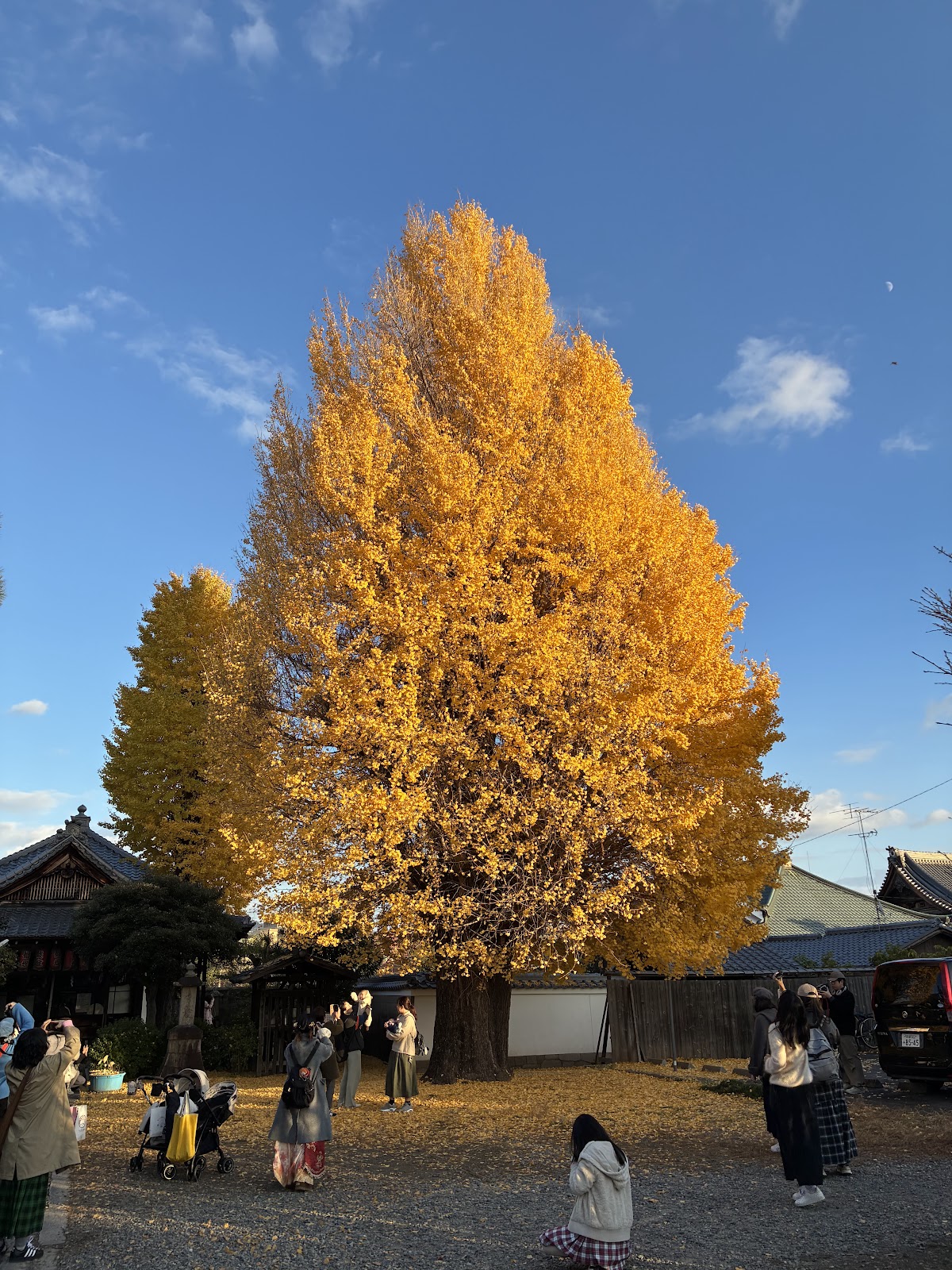
The Japanese holly is an evergreen tree that bears red berries from autumn to winter, adding color to the temple grounds. The zelkova tree is a deciduous tree, and its majestic appearance further enhances the dignity of Jofuku-ji Temple, which has a long history. These trees are familiar to local residents and display different expressions with each season.
Jofuku-ji Temple Grounds and Architecture
Temple Layout
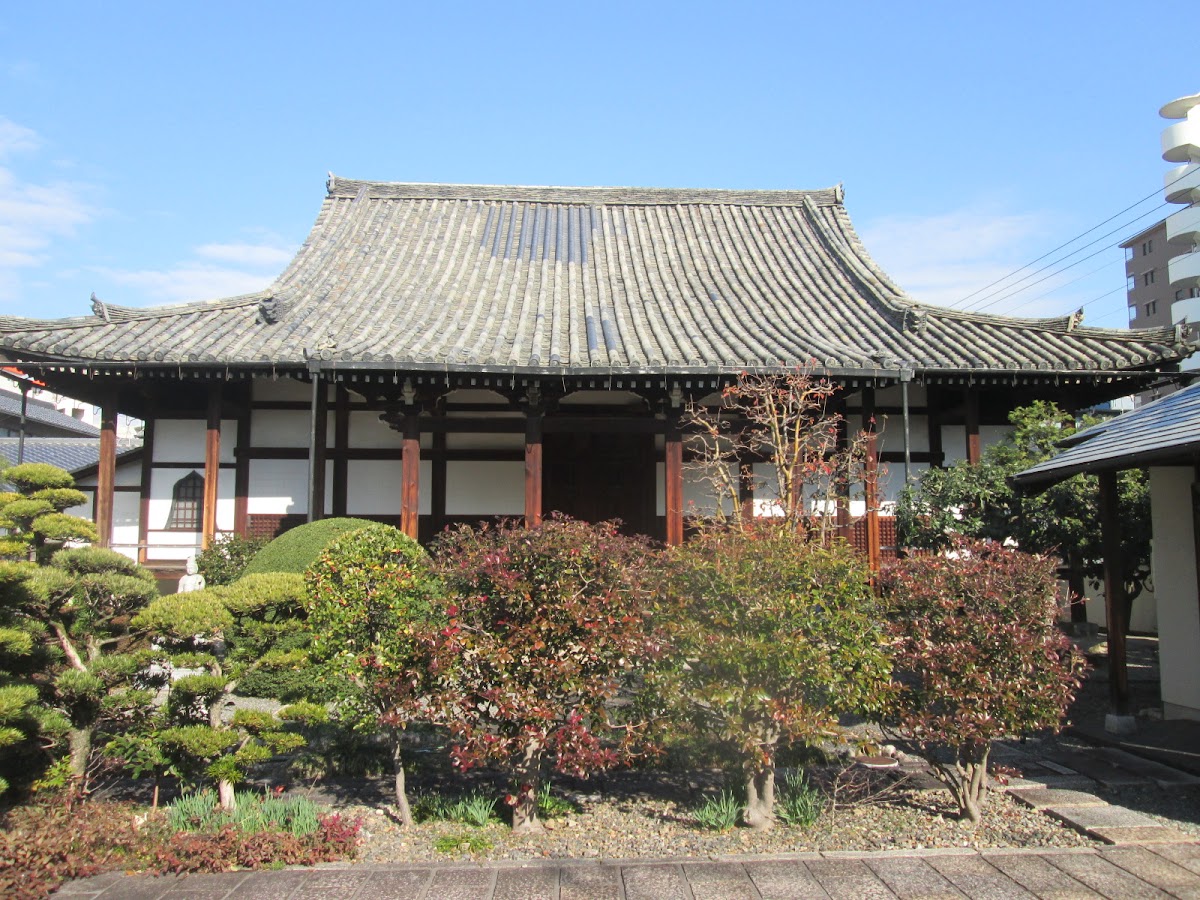
The current grounds of Jofuku-ji Temple, upon entering through the red gate facing Jofuku-ji Street, feature buildings such as the main hall, Shakado hall, and priest’s quarters. Despite being located in the residential area of Nishijin, the temple grounds are enveloped in tranquility, creating a peaceful space that allows one to forget the hustle and bustle of the city.
The layout of the grounds follows the typical form of a Jodo sect temple, with a carefully considered flow that naturally guides visitors to the main hall.
Architectural Style Characteristics
Jofuku-ji Temple’s architecture, having been rebuilt during the Edo period, strongly retains the characteristics of the architectural style of that time. The beauty of the wooden architecture and the simple yet dignified design harmonize, creating a serene atmosphere characteristic of a Jodo sect temple, distinct from Zen temples.
In particular, the curves of the main hall’s roof and the arrangement of the pillars utilize traditional temple architecture techniques, making them of high architectural historical value.
The Connection Between Jofuku-ji Temple and Nishijin
Historical Background of the Nishijin Area
Nishijin, where Jofuku-ji Temple is located, got its name from the fact that the Western Army established a camp there during the Onin War. From the Muromachi period onward, it developed as a center of the textile industry, becoming a production area for high-quality silk fabrics known as “Nishijin-ori.”
Jofuku-ji Temple, situated in the heart of Nishijin, a town that prospered from this textile industry, has played an important role as a center of faith and culture for the local people.
Connections to the Local Community
For the residents of Nishijin, Jofuku-ji Temple is not merely a religious facility, but also a place to share the history and culture of the region. Through annual events and memorial services, it fosters interaction among residents and strengthens community bonds.
The name of the street, Jofuku-ji-dori, itself speaks to the temple’s presence and is an important element in shaping the streetscape of Nishijin.
Annual Events and Ceremonies at Jofuku-ji Temple
Main Annual Events
As a Jodo sect temple, Jofuku-ji Temple holds various ceremonies and events throughout the year. Particularly important events include the following:
- Shushō-e (New Year’s Ceremony): A New Year’s ceremony praying for peace throughout the year.
- Spring Equinox Ceremony: Centered around the spring equinox, a memorial service for ancestors is held.
- Obon Ceremony: The Obon festival is held in August, attracting many parishioners.
- Autumn Equinox Ceremony: Centered around the autumn equinox, another ancestral memorial service is held.
- New Year’s Eve Bell Ringing: The temple bell is rung on New Year’s Eve to welcome the new year.
These events are important opportunities for local residents to feel the changing seasons.
Practice of Nembutsu Faith
As a Jodo-shu (Pure Land) Buddhist temple, Jofuku-ji Temple places great importance on the practice of Nembutsu. The faith of relying on Amida Buddha’s vow and praying for rebirth in the Pure Land through chanting “Namu Amida Butsu” has been passed down through generations.
Regular Nembutsu gatherings are also held, and the sight of believers gathering together to chant the Nembutsu is a scene unique to Jodo-shu temples.
How to Access Jofuku-ji Temple
Basic Information
- Official Name: Eishozan Chikoin Jofuku-ji Temple
- Sect: Jodo-shu (Pure Land Buddhism)
- Address: 2-chome, Sasaya-cho, Ichijo-agaru, Jofuku-ji-dori, Kamigyo-ku, Kyoto City, Kyoto Prefecture (Postal Code: 602-8453)
- Telephone: The temple’s telephone number must be confirmed based on publicly available information.
Access by Public Transportation
Using Kyoto City Buses
It is convenient to use Kyoto City Buses from major areas such as Kyoto Station and Shijo Kawaramachi.
- Get off at the “Senbon Imadegawa” bus stop, approximately 7 minutes on foot
- Get off at the “Imadegawa Jofuku-ji” bus stop, approximately 3 minutes on foot
- Get off at the “Chiekoin Ichijo” bus stop, approximately 5 minutes on foot
From the bus stop, head north or south along Jofuku-ji-dori, aiming for the intersection with Ichijo-dori. The Akamon (Red Gate) is a landmark.
By Train
The nearest station is Kitano-Hakubaicho Station on the Keifuku Electric Railway (Randen) Kitano Line. It’s about a 15-minute walk (approximately 1.3 km) from the station. A straightforward route is to head south along Senbon-dori Street and then west along Ichijo-dori Street.
Alternatively, it’s about a 20-minute walk from Imadegawa Station on the Kyoto Municipal Subway Karasuma Line. The route is to head west along Imadegawa-dori Street and then north along Jofukuji-dori Street.
Access by Car
If visiting by car, access Jofukuji-dori Street from central Kyoto via Imadegawa-dori Street or Marutamachi-dori Street. However, the Nishijin area is a residential area with many narrow roads, so caution is advised when driving.
Parking
Jofukuji Temple likely does not have its own parking lot, so it is recommended to use nearby coin-operated parking lots. Several parking lots are located along Senbon-dori Street and Imadegawa-dori Street.
Nearby Tourist Attractions
When visiting Jofuku-ji Temple, you can also visit nearby tourist attractions.
- Kitano Tenmangu Shrine: A shrine dedicated to Sugawara no Michizane, known as the god of learning. Approximately 15 minutes on foot from Jofuku-ji Temple.
- Senbon Shakado (Daihoon-ji Temple): An ancient temple with a national treasure main hall. Approximately 10 minutes on foot from Jofuku-ji Temple.
- Seimei Shrine: A shrine dedicated to Abe no Seimei, the Onmyoji (diviner). Approximately 15 minutes on foot from Jofuku-ji Temple.
- Nishijin Textile Center: A facility where you can learn about the history and techniques of Nishijin weaving. Approximately 10 minutes on foot from Jofuku-ji Temple.
By combining these spots, you can experience the history and culture of the Nishijin area more deeply.
Visiting Information and Precautions
Visiting Hours and Admission Fees
Jofuku-ji Temple is generally a temple that is not open to the public. While entry to the temple grounds may be permitted, viewing the interior of the main hall and the Shakado hall is not usually allowed. It is recommended to check in advance for information on special openings.
Manners for Visiting
- Please visit the temple grounds quietly and refrain from loud conversations.
- Photography may be permitted in some cases, but photography inside the main hall and of Buddha statues is often prohibited, so please check in advance.
- Please do not touch the Akamon gate or other buildings.
- Please take your trash with you.
Regarding Clothing
There are no specific dress code regulations, but please dress appropriately when visiting a temple. It is best to avoid extremely revealing clothing and sandals.
The Charm and Value of Visiting Jofuku-ji Temple
Layers of History
The greatest charm of Jofuku-ji Temple lies in its layered history, which dates back to the early Heian period. With a history spanning over 1200 years since its founding, this temple embodies the very history of Kyoto, from its transition from Tendai to Jodo sect, through repeated fires and reconstructions, to its present-day status.
Experiencing the Culture of Nishijin
One of the charms of Jofuku-ji Temple is its location within the unique cultural sphere of Nishijin. As a place of worship for the townspeople who prospered from the textile industry, it showcases a temple deeply rooted in the local community.
A Tranquil Space
Unlike famous temples bustling with tourists, Jofuku-ji Temple maintains a quiet atmosphere. Despite being in the heart of the city, the temple grounds offer a peaceful setting where time seems to slow down, allowing for a serene and peaceful visit.
To Learn More About Jofuku-ji Temple
Related Historical Figures
Many important figures are involved in the history of Jofuku-ji Temple.
- Kenkei Daisozu: A scholar-monk of Kofuku-ji Temple, considered its founder. After returning from Tang China, he brought back a statue of Shakyamuni Buddha.
- Princess Hanshi: The birth mother of Emperor Kōkō. A central figure in another founding legend.
- Emperor Go-Kashiwabara: An emperor of the Muromachi period. He bestowed the imperial title of “Nembutsu Sanmai-dō” (Hall for Nembutsu Meditation) upon Jōfuku-ji Temple.
By researching these figures, you can gain a deeper understanding of the historical significance of Jōfuku-ji Temple.
The Teachings of the Jōdo Sect and Nembutsu Faith
When visiting Jōfuku-ji Temple, having basic knowledge of the teachings of the Jōdo Sect will lead to a deeper understanding. The Jōdo Sect, founded by Honen Shonin, preaches that by chanting “Namu Amida Butsu,” everyone can equally attain rebirth in the Pure Land.
Jōfuku-ji Temple has served as a place of practice for this Nembutsu faith, providing spiritual support to many people for many years.
About the Twenty-Five Great Temples of Kyoto
The “Twenty-Five Great Temples of Kyoto,” to which Jōfuku-ji Temple was counted at the time of its founding, refer to the major group of temples in Heian-kyō (Kyoto). These temples played an important role in protecting the capital and praying for the peace and security of the nation.
While only a limited number of these temples remain today, Jofuku-ji Temple is one of them, a valuable example that conveys the religious landscape of Heian-kyo (ancient Kyoto).
Summary
Jofuku-ji Temple, located in Kamigyo-ku, Kyoto City, is a historic Jodo sect temple founded during the Enryaku era in the early Heian period. Built to ward off evil spirits from the Kyoto Imperial Palace, it is a prestigious temple counted among the 25 great temples, and has a long history.
Its vermilion-painted red gate is a local landmark, and it is affectionately known as “Akamon-ji” (Red Gate Temple). The temple grounds house valuable cultural assets, including a statue of Shakyamuni Buddha said to have been brought from three different countries, and it has been selected as one of Kamigyo-ku’s 100 Historic Sites.
Located in Nishijin, a cultural area that prospered from the textile industry, it continues to play an important role in the local community. Jofuku-ji Temple is easily accessible on foot from the Senbon Imadegawa and Imadegawa Jofuku-ji bus stops, and is located near other tourist attractions such as Kitano Tenmangu Shrine and Senbon Shakado Temple.
Jofuku-ji Temple is a hidden gem that quietly conveys the profound history and culture of Kyoto. For those who want to experience the charm of a locally rooted temple, distinct from famous tourist spots, this is a place you should definitely visit. Why not take a stroll through the streets of Nishijin and reflect on this place of worship that has continued since the Heian period?