Jogyoji Temple (Kashihara City, Nara Prefecture) Complete Guide | A Historic Temple of the Shinshu Otani School and Information on Graves and Perpetual Memorial Services
Located in Kotsuki-cho, Kashihara City, Nara Prefecture, Jogyoji Temple is a historic temple belonging to the Shinshu Otani school. It is a place of faith deeply rooted in the community, and is also cherished by many as a temple that offers modern forms of memorial services such as perpetual memorial graves and tree burials. This article provides detailed information on Jogyoji Temple, including its history, characteristics, access methods, and information on graves and perpetual memorial services.
Basic Information on Jogyoji Temple
Location and Access
Address: 593-1 Kotsuki-cho, Kashihara City, Nara Prefecture 634-0846
Jogyoji Temple is located in the Kotsuki-cho area of Kashihara City, Nara Prefecture, and is easily accessible from the city center. The surrounding area is a harmonious blend of residential areas and rural landscapes, offering a peaceful environment for worship.
Access from the Nearest Station
Kintetsu Osaka Line, Masuga Station is the nearest station.
- Approximately 18 minutes on foot from Masuga Station Exit 1 (approx. 1.1 km)
- Approximately 26 minutes on foot from Matsuzuka Station Exit
From Masuga Station, you can access the temple on foot towards Kotsuki-cho. The route from the station to the temple is relatively flat and passes through a residential area of Kashihara City. If you are coming by car, we recommend contacting the temple in advance to inquire about parking availability.
Sect and Mountain/Temple Name
- Sect: Shinshu Otani-ha (Higashi Honganji-ha)
- Mountain Name: Yuzenzan
- Temple Name: Zuikain
The Shinshu Otani-ha is one of the sects of Jodo Shinshu Buddhism, a traditional Buddhist sect with Higashi Honganji Temple in Kyoto as its head temple. Inheriting the teachings of Shinran Shonin, we cherish a faith centered on the recitation of the Nembutsu, “Namu Amida Butsu.”
About the Shinshu Otani School
Teachings of Jodo Shinshu
Jodo Shinshu, to which the Shinshu Otani School belongs, is a sect founded by Shinran Shonin (1173-1263), a monk of the Kamakura period. It teaches that everyone can be saved equally by believing in the original vow of Amida Buddha and reciting the Nembutsu.
The following are some of the characteristics of Jodo Shinshu Buddhism:
- Reliance on the Power of Others: The belief that salvation comes not from one’s own power, but from the power of Amida Buddha’s original vow.
- Salvation of the Wicked: The teaching that ordinary people burdened with worldly desires, rather than good people, are the ones who are meant to be saved.
- Exclusive Nembutsu: The practice centers on chanting “Namu Amida Butsu.”
Characteristics of the Shinshu Otani School
The Shinshu Otani School is a sect that was established after the East-West split of Honganji Temple during the Meiji era, and its head temple is Higashi Honganji (officially known as Shinshu Honbyo) in Kyoto. It has approximately 8,900 temples nationwide and is one of the largest sects in terms of the number of followers.
The Shinshu Otani School has its own unique customs regarding funerals and memorial services, which differ from those of typical Buddhist temples. For example, it uses a Dharma name scroll and a family register instead of a memorial tablet, and bestows a “Dharma name” rather than a posthumous Buddhist name.
History and Origins of Jogyoji Temple
Origins of the Temple
While there are limited historical documents regarding the exact founding date of Jogyoji Temple, it has a long history as a Shinshu Otani sect temple, serving as a center of faith for the people of the Kotsuki-cho area of Kashihara City.
Kashihara City is a historically important area where the ancient Fujiwara-kyo was located, and many temples and shrines are scattered throughout the surrounding area. Jogyoji Temple has also played a role as a spiritual pillar for the local residents in this area with its historical background.
Historical Background of Kotsuki-cho, Kashihara City
Kotsuki-cho is located in the northern part of Kashihara City and has developed as an agricultural area since ancient times. In recent years, development as a residential area has progressed, but it remains a calm area with a rural landscape.
Kashihara City as a whole is known as an area with many extremely important historical sites in ancient Japan, such as Kashihara Shrine, which is said to be the site of Emperor Jimmu’s enthronement, and the site of Fujiwara Palace from the Asuka period.
Jogyoji Temple Grounds and Highlights
Atmosphere of the Main Hall and Grounds
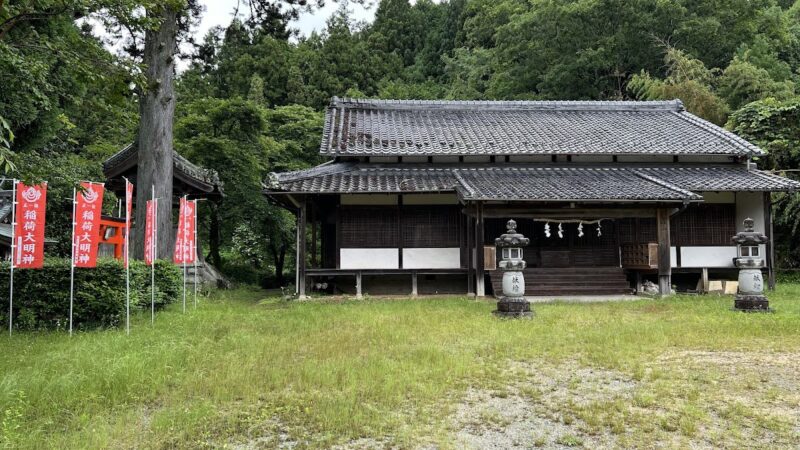
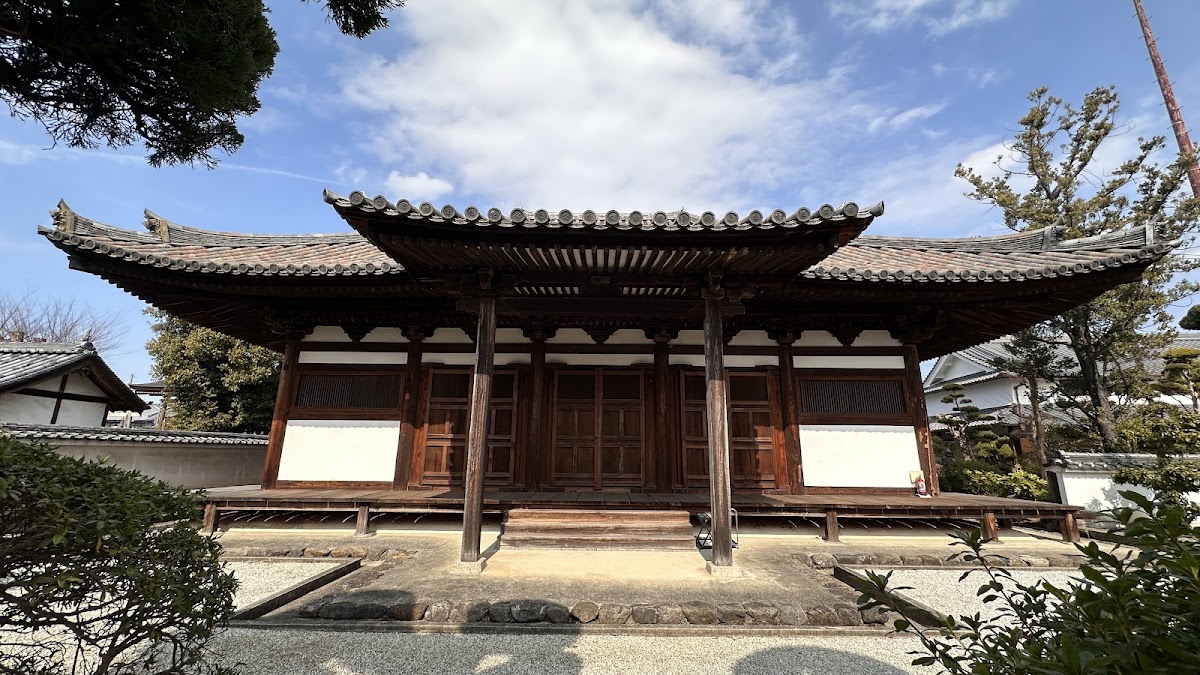
Jogyoji Temple’s grounds exhibit a tranquil atmosphere typical of a Shinshu Otani sect temple. The main hall houses an Amida Buddha statue, where daily services and religious ceremonies are held.
Shinshu Otani sect temples are characterized by the unique splendor (decoration of Buddhist implements and ornaments) of their main halls, featuring a golden, gleaming Amida Buddha statue and elaborate decorations.
Buddhist Sayings on the Bulletin Board
Jogyoji Temple displays inspiring Buddhist sayings and words on its bulletin board. Many visitors have expressed being encouraged by these words.
In the past, the words of actress Kirin Kiki, “When I smile, the mirror smiles; when I make an angry face, the mirror gets angry; this world is all a mirror of my heart,” were displayed, leaving a deep impression on visitors.
These notice boards, displaying Buddhist teachings, serve to connect Buddhist principles to daily life and provide insights to visitors.
Jogyoji Temple Cemetery Information
Characteristics of Temple Cemeteries
Jogyoji Temple offers cemeteries for its parishioners and those with connections to the temple. A major characteristic of temple cemeteries is that, because the temple manages and maintains them, perpetual memorial services can be expected.
Advantages of Temple Cemeteries:
- Thorough memorial services and management by the temple
- Easy participation in memorial services and annual events
- Religious reassurance and traditional memorial service forms
- Perpetual rest in the sacred space of the temple grounds
About Perpetual Memorial Graves
In modern times, there is a growing need for perpetual memorial graves for those who have no successors to their graves or who do not want to burden their descendants. Jogyoji Temple may also offer perpetual memorial graves.
Features of Perpetual Memorial Graves:
- The temple provides perpetual memorial services and management.
- Peace of mind even without a successor.
- Often less expensive than traditional graves.
- Choice of individual or communal graves.
The form and cost of perpetual memorial graves vary depending on the temple, so we recommend contacting Jogyoji Temple directly for details.
The Possibility of Tree Burial
Tree burial is a new burial method that uses a tree as a grave marker instead of a tombstone, and is gaining popularity among those who desire a return to nature. The number of temples offering tree burials in Nara Prefecture is increasing, and Jogyoji Temple may also introduce it in the future.
Advantages of Tree Burial:
- An environmentally friendly burial method that returns to nature.
- Lower costs as there are no tombstone costs.
- Many are perpetual memorial types that do not require a successor.
- Bright and open atmosphere.
About Columbariums
Columbariums are facilities where cremated remains are kept indoors, offering the advantage of being able to visit regardless of the weather. This form of memorial service is gaining popularity, particularly in urban areas.
For information regarding the availability of a columbarium at Jogyoji Temple, please contact the temple directly.
Consultation on Grave Closure (Reburial)
In recent years, managing graves located far away has become difficult, leading to an increase in people considering grave closure (reburial). Jogyoji Temple may also offer consultations for those wishing to rebury remains from other cemeteries.
Grave Closure Process:
- Consultation with the current cemetery administrator
- Securing a new receiving location (such as Jogyoji Temple)
- Application for reburial permission from the government
- Closing ceremony and removal of remains
- Opening ceremony and interment at the new cemetery
For specific procedures and costs regarding reburial, please contact Jogyoji Temple directly.
Memorial Services and Events at Jogyoji Temple
Annual Events
Shinshu Otani sect temples hold various memorial services and events throughout the year. It is believed that Jogyoji Temple also holds the following events: Main Annual Events:
- Shushōe: January 1st, a memorial service to welcome the New Year
- Shunki Higan-e: A memorial service centered around the spring equinox in March
- Hanamatsuri (Buddha’s Birthday): April 8th, a memorial service celebrating the birth of Buddha
- Urabon-e: A memorial service for the Obon festival in August
- Shūki Higan-e: A memorial service centered around the autumn equinox in September
- Hōonkō: The most important memorial service commemorating the death anniversary of Shinran Shōnin (around November)
- Joya-e: December 31st, a memorial service at the end of the year
Daily Services and Dharma Talks
Many Shinshu Ōtani sect temples hold regular services and Dharma talks. At Jogyoji Temple, there are likely opportunities for parishioners and local residents to gather, chant the Nembutsu (invocation of Amida Buddha), and learn the teachings of Buddhism.
At Dharma talks, the head priest may explain Buddhist teachings in an easy-to-understand way and answer questions and concerns about daily life.
Attractions around Jogyoji Temple
Major Tourist Spots in Kashihara City
Kashihara City, where Jogyoji Temple is located, boasts numerous important tourist spots where you can experience Japanese history.
Kashihara Shrine: Kashihara Shrine, considered the birthplace of Japan, is a shrine dedicated to Emperor Jimmu, the first emperor. Its vast grounds and magnificent shrine buildings attract many visitors. It is approximately a 10-minute drive from Jogyoji Temple.
Fujiwara Palace Site: This is the site of the palace of Fujiwara-kyo, the capital of Japan from 694 to 710. Currently, it is maintained as a vast historical park, where beautiful flowers bloom in every season. It is particularly famous for its rapeseed blossoms in spring, lotus flowers in summer, and cosmos flowers in autumn.
Imai-cho: This is an important preservation district for traditional buildings, where the townscape of the Edo period remains. It has a history of flourishing as a merchant town, and many buildings from that time are preserved. Just strolling around gives you the feeling of having traveled back in time to the Edo period.
Nearby Temples and Shrines
Besides Jogyoji Temple, many historical temples and shrines are scattered around Kashihara City.
- Kume-dera Temple: An ancient temple said to have been founded by Prince Kume, the younger brother of Prince Shotoku.
- Ofusa Kannon: A temple famous for its roses and wind chimes.
- Abe Monjuin Temple: One of Japan’s three Monju temples, revered as the god of learning.
Manners for Visiting Jogyoji Temple
Shinshu Otani School’s Visiting Etiquette
The Shinshu Otani School has unique visiting etiquette that differs from other sects.
How to perform the prayer gesture:
Bring both hands together in front of your chest, tilting your fingertips slightly forward. The prayer beads should be worn on both hands.
How to offer incense:
In the Shinshu Otani sect, it is customary to offer incense twice. Do not press the incense to your forehead; simply place it directly into the incense burner.
Nembutsu (Buddhist chant):
Chant “Namu Amida Butsu.” There is no set number of chants; the important thing is to chant with sincerity.
Attire and belongings for visiting the temple
Attire:
Everyday clothes are acceptable, but clean and subdued attire is preferred. If attending a memorial service, choose clothing in subdued colors such as black or navy.
Items to Bring:
- Prayer Beads (Rosary): In the Shinshu Otani sect, a double-strand rosary is used.
- Offering Money or Donation: There are no set amounts, but offer with sincerity.
- Handkerchief or Tissues
Grave Visiting Etiquette
Grave Visiting Procedure:
- Wash your hands and rinse your mouth to purify yourself.
- Clean around the grave and remove weeds.
- Wash and purify the gravestone with water.
- Offer flowers and other offerings (in Shinshu Buddhism, incense sticks are not stood upright but laid horizontally).
- Join your hands in prayer and recite the Nembutsu.
- Clean up and leave.
Points to Note:
- In Shinshu Buddhism, pouring water on a grave does not mean “purifying the Buddha,” but rather “cleaning the grave.”
- It is customary to either take offerings home or consume them on the spot (to prevent them from being disturbed by animals).
The Process of Purchasing a Grave and Perpetual Memorial Service at Jogyoji Temple
When Building a Grave
If you are considering building a grave at Jogyoji Temple, the process is as follows:
1. Consultation and Visit:
First, contact Jogyoji Temple and make an appointment to visit the cemetery. It is important to actually visit the site to check the atmosphere and environment.
2. Plot Selection:
Choose your desired plot. Consider factors such as sunlight, drainage, and ease of visitation.
3. Contract:
Sign a cemetery usage contract. Confirm the terms, including usage fees, management fees, and whether you need to become a temple parishioner.
4. Ordering the Gravestone:
Order the gravestone through a stonemason. Decide on the design, type of stone, and engraving details.
5. Consecration Ceremony:
Once the gravestone is completed, an consecration ceremony (soul-imbuing) is held. This makes the gravestone an object of worship.
Applying for Perpetual Memorial Service
1. Consultation:
Contact Jogyoji Temple to express your desire for perpetual memorial service and discuss the details.
2. Explanation:
Receive a detailed explanation of the perpetual memorial service, including its contents, costs, and methods.
3. Contract:
Once you are satisfied with the contents, sign the contract for the perpetual memorial service.
4. Interment:
Inter the remains.
An interment ceremony will be held.
Estimated Cost:
The cost of perpetual memorial service varies greatly depending on whether it is an individual or communal grave, and the duration of the service. Generally, it ranges from 100,000 to 1,000,000 yen, but please contact Jogyoji Temple directly for specific costs.
About the Danka System
Becoming a Danka
If you have a grave at Jogyoji Temple, you may be asked to become a Danka (parishioner). A Danka is a family that provides financial and spiritual support to a specific temple.
Role of a Temple Member:
- Cooperation in the maintenance and operation of the temple
- Payment of annual temple maintenance fees (temple membership fees)
- Participation in temple events
- Requesting funeral and memorial services from the temple
Benefits of Being a Temple Member:
- Receiving elaborate memorial services
- Use of the temple cemetery
- Building a relationship that makes it easy to consult with the head priest
- Increased opportunities to learn Buddhist teachings
In recent years, the number of temples where you can have a grave without being a temple member has increased, so we recommend checking directly with Jogyoji Temple regarding their policies.
Funeral and Memorial Service Practices in Kashihara City, Nara Prefecture
Characteristics of Funerals in Kashihara City
In Kashihara City, Nara Prefecture, traditional Buddhist funerals are the mainstream, but in recent years, simplified funeral forms such as family funerals and one-day funerals have also increased.
Trends in Funerals in Kashihara City:
- Home funerals are decreasing, and funerals held at funeral halls are becoming the mainstream.
- The number of attendees is decreasing.
- Wake receptions and post-funeral meals are becoming simpler.
- The number of people choosing direct cremation (cremation only) is increasing.
Memorial Culture in Nara Prefecture
Nara Prefecture, as the birthplace of Japanese Buddhism, boasts a rich Buddhist culture. Many temples, such as Todai-ji, Kofuku-ji, and Horyu-ji, are registered as World Heritage Sites, and Buddhism is deeply rooted in daily life in the region.
In Kashihara City, too, the custom of cherishing ancestor worship and visiting graves remains, based on this traditional Buddhist culture.
Frequently Asked Questions
Q1: Can anyone visit Jogyoji Temple?
A1: Yes, Jogyoji Temple is open to non-parishioners as well. However, it is recommended to check with the temple in advance regarding entry into the main hall or participation in special memorial services. General worship and strolling around the temple grounds are permitted. ### Q2: Can I use the cemetery at Jogyoji Temple even if I belong to a different Buddhist sect?
A2: Jogyoji Temple is a temple of the Shinshu Otani sect, so generally, it is intended for people of the same sect. However, some temples accept people regardless of sect, so please contact Jogyoji Temple directly for details. For perpetual memorial graves, an increasing number of temples are accepting people regardless of sect.
Q3: How much does a memorial service cost at Jogyoji Temple?
A3: The amount of the offering for a memorial service varies depending on the type of service and local customs. Generally, it is estimated to be around 30,000 to 50,000 yen for annual memorial services such as the first or third anniversary, but please consult Jogyoji Temple directly for specific amounts.
Q4: Is there parking available?
A4: Please contact Jogyoji Temple directly regarding the availability and number of parking spaces. If a large number of attendees are expected for a memorial service, it is recommended to check parking availability in advance.
Q5: Is a reservation required to visit Jogyoji Temple?
A5: Reservations are not required for regular visits. However, if you wish to consult about graves or perpetual memorial services, or to tour the main hall, we recommend making a reservation by phone in advance. The head priest may be absent, so making a reservation ensures you will be properly attended to.
Q6: What is the difference between the Shinshu Otani sect and the Jodo Shinshu Honganji sect?
A6: Both are sects of Jodo Shinshu Buddhism that inherit the teachings of Shinran Shonin, but their head temples differ. The Shinshu Otani sect considers Higashi Honganji (Shinshu Honbyo) in Kyoto as its head temple, while the Jodo Shinshu Honganji sect considers Nishi Honganji as its head temple. While the fundamental doctrines are the same, there are slight differences in customs and rituals. For example, the number of times incense is offered is twice in the Shinshu Otani sect and once in the Honganji sect.
Q7: How much does grave maintenance cost?
A7: The annual maintenance fee for temple cemeteries is generally around 5,000 to 20,000 yen, but this varies depending on the temple and plot. Please contact Jogyoji Temple directly for specific maintenance fees. The maintenance fee includes cleaning of common areas, water charges, and temple maintenance costs.
Q8: Is it okay to build a grave while still alive?
A8: Yes, building a grave while still alive is called “Juryo” and has long been considered auspicious. It offers advantages such as being able to build a grave according to your wishes and not being subject to inheritance tax. Pre-need graves are also common in the Shinshu Otani sect.
Summary
Located in Kotsuki-cho, Kashihara City, Nara Prefecture, Jogyoji Temple is a historic temple that inherits the traditions of the Shinshu Otani sect. With access approximately 18 minutes on foot from Masuga Station on the Kintetsu Osaka Line, it is a temple cherished by local residents for its peaceful environment.
Jogyoji Temple may offer not only traditional temple cemeteries but also modern memorial options such as perpetual memorial graves and tree burials, catering to contemporary needs. If you are considering a grave, perpetual memorial services, or closing a family grave, we encourage you to consult with Jogyoji Temple.
Based on the Shinshu Otani sect’s teaching of “reliance on the power of others,” you can prepare for the end of your life with the reassurance that everyone is equally saved. Reflecting on your own life and death while contemplating the Buddhist teachings displayed on the temple’s bulletin board is one of the meaningful aspects of visiting Jogyoji Temple.
Kashihara City boasts numerous historical sites, including Kashihara Shrine and the Fujiwara Palace ruins. Visiting Jogyoji Temple in conjunction with a tour of these historical sites is highly recommended.
For specific consultations regarding graves and memorial services, or to schedule a visit, please contact Jogyoji Temple directly. They will provide attentive and caring advice.