Jozanji Temple (Hokkaido) Complete Guide: History and Highlights of the Soto Zen Temple Associated with Jozan Misen, Founder of Jozankei Onsen
Jozanji Temple, located in Jozankei Onsen in Minami-ku, Sapporo City, Hokkaido, is a temple associated with the founder of Jozankei Onsen, known as Sapporo’s inner sanctuary, Abbot Jozan Misen. Belonging to the Soto Zen sect, its mountain name is “Daitokuzan.” As one of the oldest temples in Sapporo City, it houses numerous artifacts of Jozan Misen, after whom the area of Jozankei is named.
This article provides a detailed explanation of Jozanji Temple’s history, highlights, access methods, and information on its Goshuin (temple stamp), all essential information for visiting Jozankei Onsen.
Basic Information about Jozanji Temple
Temple Name: Jozanji Temple
Sect: Soto Zen
Mountain Name: Daitokuzan
Address: 247, 3-chome, Jozankei Onsen Higashi, Minami-ku, Sapporo, Hokkaido 061-2302
Phone Number: 011-598-2011 (Advance contact is recommended)
Founder: Bisen Jozan Osho
Established: Around 1866 (Keio 2)
Incorporated into Sapporo City: April 1961 (Showa 36)
Jozanji Temple is located in the heart of the Jozankei Onsen hot spring resort area and, along with Jozankei Shrine, remains an important temple that conveys the history and culture of the region.
History of Jozanji Temple: Bisen Jozan and the Opening of Jozankei Onsen
About Bisen Jozan
When discussing the history of Jozanji Temple, the existence of its founder, Bisen Jozan, is indispensable. Bisen Jozan was a Shugendo monk who traveled throughout Hokkaido, and around 1866 (Keio 2), guided by an Ainu youth, he discovered a hot spring in the upper reaches of the Toyohira River.
Jozan focused on the therapeutic properties of the hot spring and decided to develop the area as a therapeutic hot spring resort. He himself built a hot spring inn and provided accommodation for people who came for therapeutic bathing. This is considered the beginning of the present-day Jozankei Onsen.
Origin of the Place Name Jozankei
The place name “Jozankei” is indeed derived from Bisen Jozan. Because it was a valley where Jozan discovered the hot spring, it came to be called “Jozankei,” and it became established as the name of the hot spring resort. The “Jozan” in Jozanji Temple is also taken from the name of Bisen Jozan. ### History as one of Sapporo’s oldest temples
Jozanji Temple is considered one of the oldest temples in Sapporo. Founded around 1866, it is a valuable temple that existed even before the establishment of the Hokkaido Development Commission. Initially, it developed alongside the Jozankei Onsen (hot spring resort), serving as a spiritual haven for visitors seeking therapeutic baths.
Incorporation into Sapporo City
The Jozankei area became part of Sapporo City after April 1961 (Showa 36). Prior to that, it developed as an independent hot spring town, but even after becoming part of Sapporo’s Minami Ward, Jozanji Temple has continued to preserve the region’s history and traditions.
Changes in the Main Hall
The main hall of Jozanji Temple has been rebuilt several times over the years. Renovations and reconstructions were carried out during the Taisho and Heisei periods, leading to its current form. The history of these constructions overlaps with the history of the development of Jozankei Onsen.
Highlights and Features of Jozanji Temple
Treasure Hall
The greatest highlight of Jozanji Temple is the Treasure Hall, which displays artifacts related to the monk, Bisen Jozan. Many valuable materials not found elsewhere are stored here, making it an extremely important facility for understanding the history of Jozankei Onsen.
Main Exhibits:
- Wooden statue of Bisen Jozan
- Buddhist implements and ritual objects used by Jozan
- Documents from the time of the hot spring’s opening
- Various writings and personal belongings of Jozan
These artifacts are valuable historical materials that tell the story of how Jozankei Onsen was opened and developed. If you wish to visit the Treasure Hall, it is recommended to contact the temple in advance to check its opening hours.
Atmosphere of the Temple Grounds
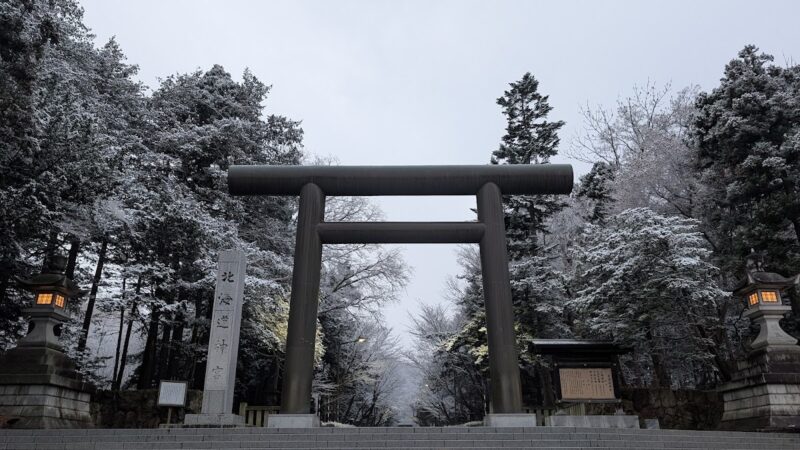
Despite being located in the heart of the Jozankei Onsen town, the grounds of Jozanji Temple are a tranquil and peaceful space. Surrounded by abundant nature, the temple grounds are beautifully green from spring to autumn, and covered in snow in winter.
The simple yet dignified appearance, typical of a Soto Zen temple, offers peace of mind to visitors. Its location, slightly removed from the hustle and bustle of the hot spring town, is another of its charms, allowing for quiet worship.
Relationship with Jozankei Shrine
Jozanji Temple is located very close to Jozankei Shrine, and both have walked hand in hand with the history of Jozankei Onsen. Jozankei Shrine was established in 1905 (Meiji 38), and is known for its blooming Corydalis flowers in spring and its beautiful autumn foliage.
Visiting both Jozanji Temple and Jozankei Shrine allows for a deeper understanding of the history and culture of Jozankei Onsen.
Goshuin Information
Goshuin (temple stamps) are available at Jozanji Temple. As a Soto Zen temple, the carefully handwritten goshuin are popular as a memento of one’s visit. Regarding Goshuin (Temple Seals):
- Issuance of Goshuin: Possible (however, prior contact is recommended as the head priest may be absent)
- Goshuincho (Stamp Book): Please check whether the temple has its own original Goshuincho.
- Reception Hours: Daytime (Please check specific times in advance)
If you wish to receive a Goshuin, it is recommended that you check in advance by phone (011-598-2011). The head priest may be absent or unable to assist you due to religious services, etc.
Access Method
Access from Sapporo City Center
The basic route to Jozanji Temple is via the Jozankei Onsen (hot spring resort) from Sapporo city center.
Access by Bus:
- Take the Jotetsu Bus bound for Jozankei Onsen from Sapporo Station or Odori.
- Travel time: Approximately 60-75 minutes
- Get off at the “Jozankei Shrine” bus stop and walk for approximately 2 minutes (137m).
- Or get off at the “Jozankei Onsen Higashi 3-chome” bus stop and it’s right there.
Access by Private Car:
- Head south on National Route 230 from Sapporo city center.
- Travel time: Approximately 50 minutes
- Parking: Use the public parking lots in the Jozankei Onsen area (please check if there is a dedicated parking lot for the temple).
Access from Jozankei Onsen Accommodations
It is accessible in about 5-10 minutes on foot from major hotels in Jozankei Onsen, such as Jozankei Manseikaku Hotel Millione. It can be visited as part of a walking tour of the hot spring town.
Enjoy Jozankei Onsen in Combination
The Charm of Jozankei Onsen
When visiting Jozanji Temple, we recommend also enjoying an overnight stay or a day trip to Jozankei Onsen. Known as Sapporo’s hidden gem, Jozankei Onsen is a hot spring resort surrounded by abundant nature, boasting excellent spring water quality and seasonal scenery.
Features of Jozankei Onsen:
- Spring Water Quality: Sodium Chloride Spring, etc.
- Efficacy: Neuralgia, muscle pain, joint pain, fatigue recovery, etc.
- Numerous hotels and inns line the hot spring town.
Nearby Tourist Attractions
There are many other sights to see around Jozanji Temple.
- Jozankei Shrine: Established in 1905, known for its beautiful spring Corydalis and autumn foliage.
- Futami Suspension Bridge: A symbolic landmark of Jozankei Onsen.
- Kappa-buchi: The legendary site of Jozankei’s mascot, the “kappa.”
- Jozankei Dam: Beautiful scenery of the dam lake.
- Toyohirakyo Dam: Famous for its autumn foliage.
Points to Note and Manners When Visiting
Manners When Visiting
Jozanji Temple is a Soto Zen Buddhist temple. Please note the following points when visiting.
- Please be quiet: Please be quiet while on the temple grounds.
- Photography: Permission is required to take photographs inside the main hall or treasure hall.
- Dress Code: There are no particularly strict regulations, but please avoid revealing clothing.
- Donation: When receiving a Goshuin (temple stamp) or amulet, please make an appropriate donation.
Notes on Visiting Season
Jozankei is located in the mountainous region of Hokkaido, so the climate varies greatly depending on the season.
- Winter (November-April): There is heavy snowfall, and roads may be icy. Warm clothing is essential.
- Spring (May-June): Snowmelt season, large temperature fluctuations.
- Summer (July-August): Relatively pleasant, but insect repellent is recommended.
- Autumn (September-October): Autumn foliage season, and there are many tourists. Act Early
The History of Jozankei Onsen and the Role of Jozanji Temple
History of Hot Spring Development
Since 1866, when Misumi Jozan discovered the hot springs, Jozankei Onsen has developed into one of Hokkaido’s leading hot spring resorts. During the Meiji era, professors and students from Sapporo Agricultural College (now Hokkaido University) visited, and during the Taisho era, improved transportation access solidified its status as a tourist destination.
The Role of Jozanji Temple in the Region
Jozanji Temple has functioned not only as a temple but also as an important facility that conveys the history and culture of Jozankei Onsen. By preserving the relics of Misumi Jozan, it plays a role in passing on the history of the hot spring’s opening to future generations.
For local residents, Jozanji Temple is a spiritual haven and a central presence in the community through memorial services and events.
About the Soto Zen School
The Soto Zen school, to which Jozanji Temple belongs, is a branch of Japanese Zen Buddhism. Founded by Zen Master Dogen, the Soto Zen sect is based on the principle of “Shikantaza,” which means simply and wholeheartedly practicing seated meditation.
Characteristics of the Soto Zen Sect:
- Head Temples: Eiheiji (Fukui Prefecture), Sojiji (Kanagawa Prefecture)
- Teachings: The practice of enlightenment through seated meditation
- Over 14,000 temples nationwide
Hokkaido has many Soto Zen temples, which were introduced by people who migrated from Honshu during the pioneering era. Jozanji Temple is one such temple, preserving the history of Soto Zen in Hokkaido.
Voices of Visitors to Jozanji Temple
Many visitors to Jozanji Temple are deeply impressed by its profound history and tranquil atmosphere.
- “Seeing the belongings of Misumi Jozan, I was able to understand the hardships involved in opening the hot springs.”
- “I felt at peace in this quiet place, away from the hustle and bustle of the hot spring town.”
- “Learning the origin of the name Jozankei made the hot springs feel more familiar.”
- “Receiving a Goshuin (temple stamp) was a wonderful memento of my trip.”
These comments show that Jozanji Temple is not merely a tourist spot, but an important place where one can experience the history and culture of Jozankei Onsen.
Annual Events and Memorial Services
As a Soto Zen temple, Jozanji Temple holds various memorial services and events throughout the year.
Main Events:
- New Year’s Memorial Service
- Spring Equinox Service
- Autumn Equinox Service
- Segaki Memorial Service
- Other monthly memorial services
There are also events that the general public can participate in, so please inquire with the temple if you are interested.
Summary: Jozanji Temple is a must-visit spot for understanding the history of Jozankei Onsen
Jozanji Temple, located in Jozankei Onsen in Minami-ku, Sapporo City, Hokkaido, is a Soto Zen Buddhist temple with one of the oldest histories in Sapporo City. It is an important cultural facility that houses the relics of the hot spring’s founder, Abbot Bisen Jozan.
When visiting Jozankei Onsen, in addition to enjoying the hot springs, be sure to visit Jozanji Temple. Through the relics of Bisen Jozan and the exhibits in the treasure hall, you can learn how Jozankei Onsen was founded and developed.
Spending time in the tranquil temple grounds, reflecting on the history of Jozankei, will make your hot spring trip deeper and more meaningful. Please visit Jozanji Temple to experience the history and culture of Jozankei Onsen, Sapporo’s hidden gem.
Points to Note When Visiting:
- If you wish to visit the Treasure Hall, please contact us in advance.
- If you wish to receive a Goshuin (temple stamp), it is recommended to check in advance.
- Visiting Jozankei Shrine together will deepen your understanding.
- It’s easy to stop by as part of a stroll through the hot spring town.
- You can enjoy the scenery of each season.
Jozanji Temple, as a valuable temple that conveys the history and culture of Jozankei Onsen, will continue to be cherished by many people for years to come.