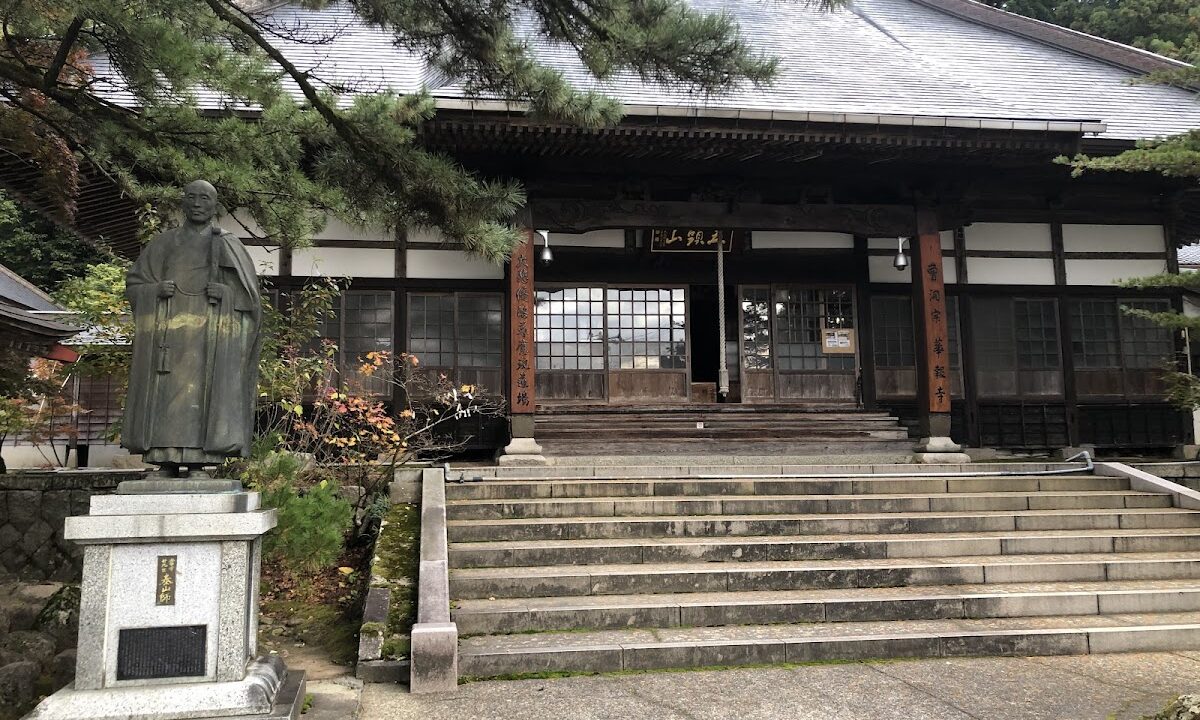
Kehoji Temple (Agano City, Niigata Prefecture) | A Thorough Explanation of the History of the Deyu Onsen Hot Springs Associated with Kobo Daishi and the Faith of Upasa
Kehoji Temple, located in Deyu, Agano City, Niigata Prefecture, is an ancient Soto Zen temple nestled at the foot of Mount Gozu. With its legend of being founded by Kobo Daishi Kukai, a statue of Upasa said to have been carved by Gyoki Bodhisattva, and deep connection to Deyu Onsen, considered the oldest hot spring in the prefecture, it continues to welcome many visitors as a place of rich history and faith. This article provides a detailed introduction to Kehoji Temple, from its historical background to its current attractions and information on nearby hot springs.
History and Origins of Kehoji Temple
Two Legends of the Temple’s Founding
Two legends are told regarding the founding of Kehoji Temple.
One theory suggests that the origin of the hot spring dates back to the Daido era (806-810), when Kobo Daishi Kukai visited the area, enshrined the Gozu Gongen deity on the summit of Mount Gozu, and built a temple at the foot of the mountain. It is also said that Kukai discovered a hot spring in the area, which is considered the origin of the current Izuyu Onsen. The specific year, 806 (Daido 1), is preserved in the tradition.
Another theory suggests that during the Tenpyo era (725-749), when Gyoki Bodhisattva practiced asceticism on Mount Gozu, he carved four statues of Upasa Bodhisattva from a sacred tree on the mountain and built a temple to enshrine them. The Upasa Bodhisattva statue currently enshrined in the main hall of Kahoji Temple is said to be one of these four.
Both legends indicate that the temple was founded sometime between the Nara and early Heian periods, indicating that Kahoji Temple had long been a sacred site attracting worshippers.
Conversion from Shingon Buddhism to Soto Zen Buddhism
Initially, Kahoji Temple was a Shingon Buddhist temple. At its peak, it flourished as a large temple with over 30 temple buildings, and it is believed that the area around the present-day hot spring resort was part of Kahoji Temple’s grounds during the medieval period. It is thought to have been a central hub of the Gozusan mountain worship and a base for Shugendo (mountain asceticism).
During the Bunmei era (1469-1487), it underwent a major transformation. The temple changed its name from “Kahoji” to “Kahoji” and simultaneously converted from Shingon Buddhism to Soto Zen Buddhism. This period coincided with the late Muromachi period, a time of widespread religious reorganization throughout Japan.
Developments Since the Modern Era
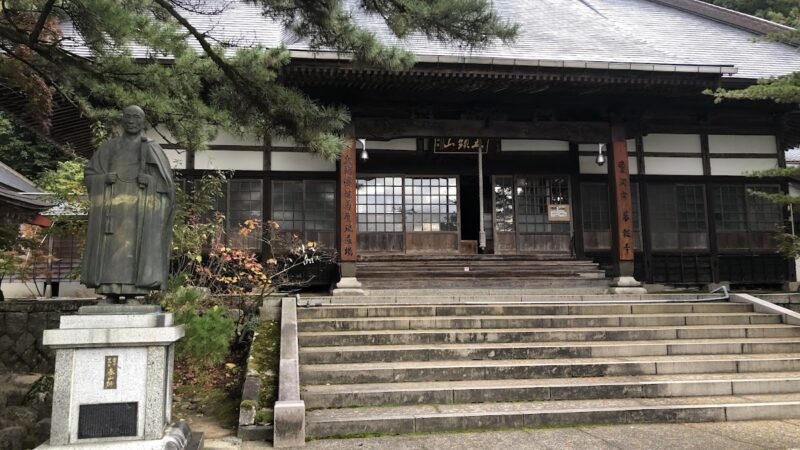
After the war, the main hall of Kahoji Temple was rebuilt. Although the current main hall was built after the war, it remains a center of Ubason worship and attracts many visitors. In particular, its connection to the Izuyu Onsen hot spring, which is said to be effective for skin diseases such as atopic dermatitis, means that many visitors seeking therapeutic baths also come to the temple.
Center of Ubason Worship
What is Ubason?
The main hall of Kahoji Temple houses a Ubason statue said to have been carved by Gyoki Bodhisattva from a sacred tree on Mount Gozu. Ubason is known as a deity who attracts worshippers seeking blessings for conception, safe childbirth, and child-rearing, and is particularly popular with female worshippers.
It is said that of the four Ubason statues carved by Gyoki during the Tenpyo era, one is enshrined at Kahoji Temple, while the remaining three are enshrined elsewhere. This statue of Upasa is the most important object of worship at Kahoji Temple, and many people still offer prayers to it today.
Today as a Place of Worship
Kahoji Temple still functions as a place of worship for Upasa, attracting visitors not only from the local area but also from within and outside the prefecture. In particular, couples praying for children, pregnant women praying for safe childbirth, and parents praying for the safe raising of their children can be seen here.
Combined with its tranquil environment at the foot of Mount Gozu, it is cherished as a sacred place where people can find peace of mind and offer prayers.
Highlights of the Temple Grounds
Main Hall and Buddha Statue
The main hall, rebuilt after the war, exhibits a simple yet dignified appearance characteristic of a Soto Zen temple. The statue of Upasa is enshrined inside the main hall, quietly welcoming visitors. The architectural style and interior splendor of the main hall are characteristic of a Soto Zen temple.
Stone Monuments Associated with Cultural Figures
Within the temple grounds, there are stone monuments commemorating prominent cultural figures who visited Kahoji Temple.
Sasaki Shodo was a metal caster from Sado Island and an artist designated as a Living National Treasure. A stone monument on the temple grounds indicates his visit, demonstrating that this place was also beloved by cultural figures.
There is also a stone monument indicating the visit of Soma Gyofu, a poet. Soma Gyofu was a poet and poet from Niigata Prefecture and a cultural figure who also served as a professor at Waseda University. These monuments demonstrate that Kahoji Temple was not merely a place of worship, but also a place of cultural exchange.
Connection to Mount Gozu
Kahoji Temple is deeply connected to the worship of Mount Gozu. Mount Gozu is one of Niigata Prefecture’s representative sacred mountains and has long been known as a place of training for Shugendo practitioners. Kahoji Temple is located at the foot of Mount Gozu and has served as a center of mountain worship.
From the temple grounds, one can enjoy a magnificent view of Mount Gozu, creating a sacred space where the mountain and the temple are integrated.
Deep Connection with Izuyu Onsen
Hot Spring of Kobo Daishi Legend
The Izuyu district, where Kahoji Temple is located, is a hot spring resort known as Izuyu Onsen. Legend says this hot spring was discovered by Kobo Daishi Kukai, and it is considered the oldest hot spring in the prefecture.
The legend says that Kobo Daishi discovered the hot spring while training on Mount Gozu and caused it to gush forth to heal people’s illnesses. This legend is deeply connected to the founding legend of Kahoji Temple, and it has developed as a place of faith and therapeutic bathing where the temple and the hot spring are integrated.
Kahoji no Yu (Public Bath)
Within the grounds of Kahoji Temple is a public bath called “Kahoji no Yu”. This newly opened facility, located near the former public bathhouse, features separate baths and washing areas for men and women, making it easily accessible to both locals and tourists.
Ideyu Onsen is known as a hot spring effective for atopic dermatitis, attracting many visitors daily for therapeutic bathing. The water is gentle on the skin and features a lukewarm temperature ideal for long soaks. The hot spring water, bubbling up from the center of the bath, is a luxurious, free-flowing source.
Kahoji no Yu is a public bathhouse beloved by locals, steeped in history and associated with the legend of Kobo Daishi. Combining a visit to the temple with a soak in the hot springs offers a truly refreshing experience for both mind and body.
Part of the Gozu Onsenkyo
Ideyu Onsen is part of the Gozu Onsenkyo. Gozu Onsenkyo is a collective name for hot spring resorts scattered at the foot of Mount Gozu, including Ideyu Onsen, Imata Onsen, and Murasugi Onsen. Each has different water qualities and characteristics, allowing visitors to enjoy a hot spring tour.
Deyu Onsen is the oldest hot spring resort in the Gozu Onsenkyo area, known for its rich history of faith and therapeutic bathing centered around Kahoji Temple.
Basic Information
Location & Access
Location: 794 Deyu, Agano City, Niigata Prefecture
Sect: Soto Zen
Principal Image: Upason
Access:
- Approximately 15 minutes by car from JR Uetsu Main Line “Kamiyama Station”
- Approximately 20 minutes by car from Banetsu Expressway “Yasuda IC”
- Approximately 50 minutes by car from central Niigata City
Parking: Available (parking available on the temple grounds or in the surrounding area)
Visiting Hours & Inquiries
While visits are generally free, it is recommended to contact the temple in advance if you wish to view the main hall or receive a temple stamp.
Contact Information:
Kahoji Temple
Address: 794 Deyu, Agano City, Niigata Prefecture
Chief Priest: Yasuhide Okada
Nearby Attractions and Tourist Spots
Hiking Mt. Gozu
A hiking trail to Mt. Gozu is maintained from Kahoji Temple. Mt. Gozu is 912.5m high and has multiple hiking trails, enjoyable for beginners and experienced hikers alike. From the summit, you can enjoy a spectacular view of the Niigata Plain and the Sea of Japan.
Other Hot Springs in Gozu Onsenkyo
Besides Deyu Onsen, there are several other hot springs in Gozu Onsenkyo. Murasugi Onsen is known as a radium hot spring, and Imata Onsen is a quiet mountain hot spring resort. By enjoying a hot spring tour, you can experience the differences in the water quality of each.
Hyoko Lake
Agano City has a lake called Hyoko Lake, famous as a wintering ground for swans. Every year from mid-October to March, thousands of swans migrate to this area, which is also designated as a Ramsar Convention wetland. It’s about a 20-minute drive from Kahoji Temple.
Cultural Facilities in Agano City
Agano City has many facilities and historical sites where you can experience history and culture, such as the Yoshida Togo Memorial Museum and the Yasuda Castle Ruins. Visiting these in conjunction with a visit to Kahoji Temple will give you a deeper understanding of Agano City’s history.
About Goshuin (Temple Seals)
You can receive a Goshuin at Kahoji Temple. However, the head priest may be absent, so if you want to be sure to receive a Goshuin, it is recommended to contact the temple in advance.
The Goshuin often bears the temple name “Kahoji” and the characters “Ubason,” and is a popular memento of your visit. Bringing your Goshuincho (stamp book) and making a polite request is considered good manners.
Points to Note When Visiting Kahoji Temple
Etiquette for Visiting
Kahoji Temple is a temple that still functions as a place of worship. Please observe the following etiquette when visiting:
- Be quiet on the temple grounds and avoid disturbing other visitors.
- Take photographs only in designated areas.
- Remove your hat inside the main hall and pray with respect.
- Always take your trash with you.
Clothing and Belongings
There are no specific dress code requirements, but clean clothing appropriate for visiting a temple is desirable. Since some parts of the temple grounds are unpaved, comfortable shoes are recommended.
If you wish to receive a temple stamp (Goshuin), please bring your stamp book, and it is also a good idea to have some small change for offerings.
Combining with Hot Spring Bathing
Combining a visit to Kahoji Temple with a bath at Kahoji no Yu (a public bathhouse) will make for a more fulfilling experience. Why not experience the ancient culture of healing your mind and body in a hot spring after visiting a temple?
The usage fee for the communal bath is relatively reasonable, but you will need to bring your own towels, etc.
Seasonal Attractions
Spring: With the lush greenery of Mount Gozu as a backdrop, the trees in the temple grounds begin to bud. Enjoy a refreshing visit in the crisp air.
Summer: The verdant temple grounds are cool and comfortable, making it a perfect summer retreat. Combined with the therapeutic effects of the hot springs, it’s ideal for relieving summer fatigue.
Autumn: The autumn foliage of Mount Gozu is beautiful. The view of the autumn-colored Mount Gozu from the temple grounds is spectacular.
Winter: The temple amidst a snowy landscape has a fantastical atmosphere. Visiting the temple while warming up in the hot springs is a unique winter pleasure.
Summary
Kahoji Temple is an ancient temple associated with high-ranking priests such as Kobo Daishi Kukai and Gyoki Bodhisattva, and continues to welcome many visitors as a center of the worship of Upasa. Kahoji Temple boasts a multifaceted history and culture, including a statue of Uba-son said to have been carved from a sacred tree on Mount Gozu, the former glory of its more than 30 temple buildings, its historical transformation from Shingon Buddhism to Soto Zen Buddhism, and its deep connection to the oldest hot spring in Niigata Prefecture, Izuyu Onsen.
Within the temple grounds are stone monuments associated with cultural figures such as Sasaki Shodo and Soma Mifu, indicating that Kahoji Temple was not only a place of faith but also a place of cultural exchange. Even today, Kahoji no Yu (a public bathhouse) remains on the temple grounds, allowing visitors to experience the traditional therapeutic bathing culture that combines worship with hot spring bathing.
Located in a corner of the Gozu Onsenkyo hot spring area, Kahoji Temple is a place where you can refresh both mind and body amidst a rich natural environment. Seeking quiet prayer in a historic temple and healing in a hot spring steeped in legends of Kobo Daishi, please visit Kahoji Temple. You will be able to spend a fulfilling time experiencing the rich nature and history of Agano City, Niigata Prefecture.