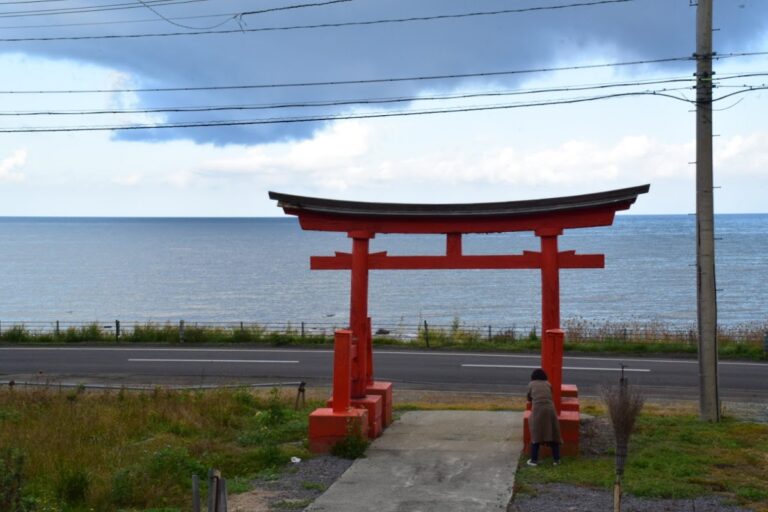
Complete Guide to Umi Shrine (Suttsu-cho, Suttsu-gun, Hokkaido) | Detailed Explanation of Deities, History, Access, and Highlights
Located in Suttsu-cho, Hokkaido, facing the Sea of Japan in the Shiribeshi region, Umi Shrine is a historic shrine with deep ties to the Enku Buddha statues of the Edo period. It has attracted the faith of the people of Suttsu, a town that prospered as a fishing village, and has a history of over 200 years as a place to pray for maritime safety and abundant catches. This article will introduce all the charms of Umi Shrine, from its enshrined deities and history to its highlights and access methods.
Basic Information about Umi Shrine
Location: Suttsu-cho, Suttsu-gun, Hokkaido
Shrine Rank: Former Village Shrine
Deity Enshrined: Sea God (Watatsumi-no-kami)
Founded: 1831 (Tenpo 2)
Annual Festival Day: Local festivals are held as an annual event.
Umi Shrine is a shrine belonging to the Hokkaido Shrine Association and is cherished by local residents as an important center of faith in Suttsu-cho.
Deity and Divine Virtues of Umi Shrine
Sea God (Watatsumi-no-kami)
The main deity enshrined at Umi Shrine is the Sea God (Watatsumi-no-kami). The Sea God is known in Japanese mythology as the god who governs the sea and has long been revered by people involved in fishing and shipping.
Main Divine Blessings:
- Maritime Safety
- Prayer for Abundant Fishing
- Safe Voyages
- Protection from Maritime Disasters
- Prosperity of the Fisheries Industry
Suttsu Town, facing the Sea of Japan, is a fishing town that has prospered since ancient times through herring and pollock fishing. The Kaijinja Shrine has been revered by the local people from the Meiji era to the present day as a spiritual haven for fishermen praying for safety and abundant catches.
The History and Origins of the Kaijinja Shrine
Encounter with the Enku Buddhas (Bunka 4, 1807)
The history of the Kaijinja Shrine dates back to Bunka 4 (1807). According to shrine tradition, one day, a local fisherman picked up two wooden statues that were drifting in the Shiribetsu River.
Upon examining the wooden statues, it was discovered that one had the inscription “Isoya no Take, Kanbun 6th year, Year of the Fire Ox, August 11th, First Ascent of the Back Mountain, Enku” on its back, while the other had the inscription “Next Year’s Mountain.”
These wooden statues were identified as Buddhist statues carved by Enku (1632-1695), a renowned Buddhist sculptor and high-ranking priest of the early Edo period. Enku is said to have carved as many as 120,000 Buddhist statues in his lifetime, leaving many works in Hokkaido.
Enshrinement at Notsuto Cape
The two Enku Buddha statues discovered were initially enshrined in a cave at Notsuto Cape. Notsuto Cape is a scenic spot overlooking Suttsu Bay and has long been recognized as a sacred place by the local people.
The Enku Buddha statues, placed in the cave, became the object of worship for fishermen praying for maritime safety and abundant catches.
Construction of the Shrine (Tenpo 2, 1831)
Approximately 24 years after the discovery of the Enku Buddha, in Tenpo 2 (1831), local residents held discussions to pray for a bountiful catch, and it was decided to construct a formal shrine.
The Enku Buddha, which had been enshrined in the cave, was moved to the newly constructed shrine and worshipped as “Kaijin” (Sea God). This is considered the official founding of Kaijin Shrine.
Development in the Meiji Era
In October of Meiji 9 (1876), Kaijin Shrine was designated a village shrine. This meant that, under the shrine ranking system of the time, it was officially recognized as the guardian shrine of the village.
During the Meiji era, Hokkaido underwent rapid development, and Suttsu Town also developed as a base for fishing and shipping. Kaijin Shrine came to play an increasingly important role as a guardian deity of the region and as a spiritual pillar for those engaged in fishing.
A Faith That Continues to the Present
Even as times have changed from Showa to Heisei to Reiwa, the Kaijinja Shrine has continued to attract the faith of the people of Suttsu Town. While fishing practices may have changed, the desire for the safety and prosperity of those who live in harmony with the sea remains unchanged and has been passed down to this day.
About Enku Buddhas
Who was Enku?
Enku (1632-1695) was a Shugendo monk of the early Edo period and is known as a Buddhist sculptor with a unique style. Born in Mino Province (present-day Gifu Prefecture), he traveled throughout Japan, carving an enormous number of Buddhist statues, said to be as many as 120,000.
Enku’s Buddhist statues are called “Enku Buddhas,” and are characterized by their unique form, roughly carved with a hatchet. With their simple yet powerful expressions, Enku Buddhas continue to fascinate many people even today.
Enku’s Pilgrimage to Hokkaido
Enku visited Hokkaido (then known as Ezo) from 1666 to the Kanbun era, leaving behind many Buddhist statues. The Enku Buddha statue preserved at Kai Shrine is believed to have been carved during this period.
“Isoya no Take” is thought to refer to Isoya-dake (a mountain on the border of present-day Suttsu Town and Shimamaki Village), indicating that Enku visited this region and practiced mountain asceticism.
The Value of the Enku Buddha Statue at Kai Shrine
The Enku Buddha statue preserved at Kai Shrine is a valuable historical document illustrating Enku’s activities in Hokkaido and possesses high cultural value. Including the circumstances of its discovery, it is an indispensable element in discussing the history and culture of Suttsu Town.
History and Culture of Suttsu Town
Overview of Suttsu Town
Suttsu Town is a small town located in Suttsu District, under the jurisdiction of the Shiribeshi General Subprefectural Bureau of Hokkaido. It faces the Sea of Japan and has a population of approximately 2,700 (as of 2024). It is broadly divided into the Suttsu side and the Utasutsu side, separated by the Shutagawa River, centered around Suttsu Bay.
History as a Fishing Town
From the Edo period to the Meiji and Taisho periods, Suttsu Town flourished greatly from herring fishing. It boasted such prosperity that it was called “Suttsu Senkoku” (Suttsu of a Thousand Koku), and was known as one of Hokkaido’s leading fishing bases.
Even today, fishing remains the town’s main industry, with Alaska pollock, Atka mackerel, and squid being landed. Suttsu Bay is also known as a good harbor and is a key point for maritime traffic.
Suttsu, the Town of Wind
Suttsu Town is also known as the “Town of Wind.” Due to the strong winds that blow throughout the year, the area has recently attracted attention as a suitable location for wind power generation, and several wind power facilities have been installed.
Tourist Attractions in Suttsu Town
Besides Umi Shrine, Suttsu Town has many other attractive tourist spots:
- Benkei Cape: A cape jutting out into Suttsu Bay, a scenic spot where the legend of Minamoto no Yoshitsune and Benkei remains.
- Suttsu Onsen: A hot spring facility overlooking the Sea of Japan.
- Michi-no-Eki Minato-mare Suttsu: A facility where you can purchase local seafood and specialty products.
- Suttsu Shrine: A historical shrine said to have been founded in 1627 (Kanei 4).
Guide to the Grounds of Umi Shrine
Atmosphere of the Grounds
The grounds of Umi Shrine are located in the quiet environment of Suttsu Town and are filled with a pure atmosphere befitting a shrine dedicated to the god of the sea. The shrine building, though simple, is carefully maintained, reflecting the deep faith of the local people.
Etiquette for Visiting a Shrine
The basic etiquette for visiting a shrine is as follows:
- Bow before passing through the torii gate.
- Purify your body and mind at the water basin. (Purify your left hand, right hand, and mouth in that order, and finally your left hand.)
- Avoid walking in the center of the approach to the shrine. (The center is considered the path of the gods.)
- Offer your donation in front of the main hall.
- Two bows, two claps, one bow. (Bow deeply twice, clap twice, bow deeply once.)
- Bow once after leaving the torii gate.
About Goshuin (Shrine Seals)
Regarding the issuance of Goshuin at Kai Shrine, we recommend contacting the Hokkaido Shrine Association or the Suttsu Town Tourist Information Center in advance. Because it is a small shrine, there may not always be a resident priest.
Access to Kaijinja Shrine
Location
Suttsu-cho, Suttsu-gun, Hokkaido (For detailed address information, please contact the Suttsu Town Hall or the Hokkaido Shrine Association)
Access by Car
From Sapporo:
- Approximately 2 hours 30 minutes from Sapporo city via National Route 230, National Route 5, and Prefectural Route 9
- Approximately 2 hours from Otaru city via National Route 5 and Prefectural Route 9
From Hakodate:
- Approximately 3 hours from Hakodate city via National Route 5 and Prefectural Route 9
Parking: Please check the parking situation around the shrine in advance.
Access by Public Transportation
By JR:
- Get off at Kuromatsunai Station on the JR Hakodate Main Line
- Approximately 40 minutes by bus or taxi from Kuromatsunai Station
By Bus:
- Approximately 3 hours 30 minutes from Sapporo to Suttsu by the express bus “Kōsoku Shiribeshi-go”
- From Suttsu Bus Terminal: Walk or take a taxi.
Important Note: Public transportation in Suttsu Town is limited, so access by car is recommended. Please be extremely careful of snow and icy roads during winter.
Recommended Time to Visit
Spring (April-June)
With the melting snow, Hokkaido’s short spring arrives. It’s also the season for the opening of the beaches, and many people involved in the fishing industry visit the shrine.
Summer (July-August)
Enjoy Hokkaido’s refreshing summer. Various events are held in Suttsu Town, making it a suitable season for sightseeing.
Autumn (September-October)
A season rich in autumn delicacies, including delicious seafood. You can also enjoy the autumn foliage.
Winter (November-March)
The harsh winter characteristic of the Sea of Japan coast begins. Heavy snowfall and strong winds necessitate sufficient cold-weather gear for visiting. However, the rugged winter scenery of the Sea of Japan is breathtaking.
Nearby Attractions and Cuisine
Seafood of Suttsu
When visiting Suttsu, be sure to enjoy the fresh seafood:
- Fresh Sea Urchin: Fresh sea urchins caught in Suttsu Bay are exquisite.
- Atka Mackerel: Fatty, dried Atka mackerel.
- Alaska Pollock: Famous as an ingredient in surimi products.
- Grilled Scallops: Available at roadside stations and other locations.
Benkei Cape
Located about 10 minutes by car from Umi Shrine, Benkei Cape is a representative tourist spot in Suttsu. Legend says that Minamoto no Yoshitsune and Benkei rested at this cape when they crossed to Hokkaido. A statue of Benkei stands at the tip of the cape, offering a magnificent panoramic view of the Sea of Japan.
Suttsu Onsen Yubetsu no Yu
This hot spring facility offers day-trip bathing, allowing you to relax and enjoy the hot springs while overlooking the Sea of Japan. It’s also recommended to stop by after visiting Umi Shrine.
Hokkaido’s Shrine Culture
History of Shrines in Hokkaido
Shrines in Hokkaido have a unique history distinct from those in Honshu. The construction of shrines began in earnest with the Meiji era’s development, and they developed as spiritual centers for the pioneers and as centers of local communities.
Shrines like Kaijinja, founded from the late Edo period to the early Meiji era, are closely linked to the history of Hokkaido’s development.
Hokkaido Shrine Association
The Hokkaido Shrine Association is located in Miyagaoka, Chuo-ku, Sapporo City, and is the organization that oversees shrines throughout Hokkaido. Approximately 600 shrines in Hokkaido, including Kaijinja, belong to this association, and it engages in activities such as shrine maintenance, training of Shinto priests, and promotion of Shinto culture.
Major Shrines of Hokkaido
Hokkaido boasts numerous shrines with rich history and prestige:
- Hokkaido Shrine (Sapporo): The guardian shrine of Hokkaido
- Funadama Shrine (Hakodate): Hokkaido’s oldest shrine (founded in 1135)
- Tarumae-yama Shrine (Tomakomai): A shrine with Mount Tarumae as its sacred object
- Atsuta Shrine (Ishikari): The guardian deity of a region that prospered from herring fishing
Guidelines for Visiting Umi Shrines
Gratitude to the Sea
Umi Shrines are places of gratitude for the blessings of the sea and prayers for maritime safety. When visiting, please offer your prayers with gratitude for the abundant blessings of the Sea of Japan and for the people who have protected and passed them down.
Learning Local History
The history of Umi Shrines encapsulates the history of Suttsu Town, including its encounter with Enku Buddha, the development of fishing, and the faith of local residents. Please use your visit as an opportunity to learn about Hokkaido’s history and culture.
Quiet Worship
Umi Shrine is a shrine deeply rooted in the lives of the local people. When visiting, please respect that it is a place of worship for the local residents and strive for quiet and respectful worship.
The Future of Suttsu Town and Umi Shrine
Sustainable Community Development
Suttsu Town faces the challenge of population decline, but is working towards sustainable community development through renewable energy projects such as wind power generation and tourism promotion.
Umi Shrine continues to exist as a spiritual pillar of the community, unchanged amidst these changes.
Value as a Cultural Asset
The historical value of Umi Shrine, including the Enku Buddha, will likely attract even more attention in the future. Appropriate preservation and utilization are expected as it is a valuable cultural asset of the region.
Potential as a Tourism Resource
Umi Shrine has the potential to be an important historical spot in promoting tourism in Suttsu Town. It is expected to attract many worshippers and tourists as part of a tourist route that includes Benkei Cape and the roadside station.
Summary
Umi Shrine, located in Suttsu-cho, Suttsu-gun, Hokkaido, is a historic shrine deeply connected to the Enku Buddha, a testament to the faith of local residents praying for maritime safety and abundant catches, and a valuable reminder of the history of Suttsu-cho’s development.
Originating from the Enku Buddha discovered in 1807, the shrine was built in 1831 and has been revered by the local people for nearly 200 years. In 1876, it was designated a village shrine, developing into a publicly recognized shrine.
In Suttsu, a fishing town facing the Sea of Japan, Umi Shrine is not merely a religious facility, but the heart of the local community and a spiritual haven for its people. It has been carefully preserved to this day as a place to express gratitude for the blessings of the sea and pray for the safety of those working at sea.
When visiting Suttsu-cho, be sure to visit Umi Shrine and experience the history, culture, and faith of the people of this region. The magnificent scenery of the Sea of Japan, the fresh seafood, and the warm encounters with the local people will surely create lasting travel memories.
For those interested in visiting shrines and exploring history in Hokkaido, those fascinated by Enku Buddha statues, and those who want to experience the culture of people who live in harmony with the sea, Umi Shrine is a must-see. While it’s a bit of a distance from Sapporo and Otaru, it’s a special place well worth the trip.