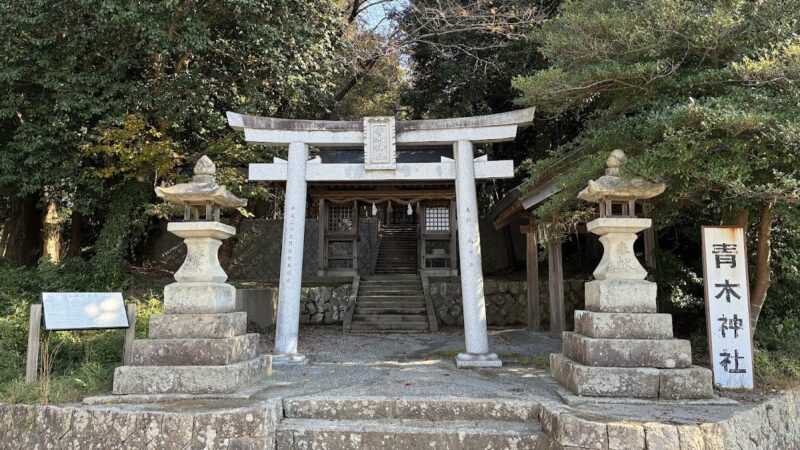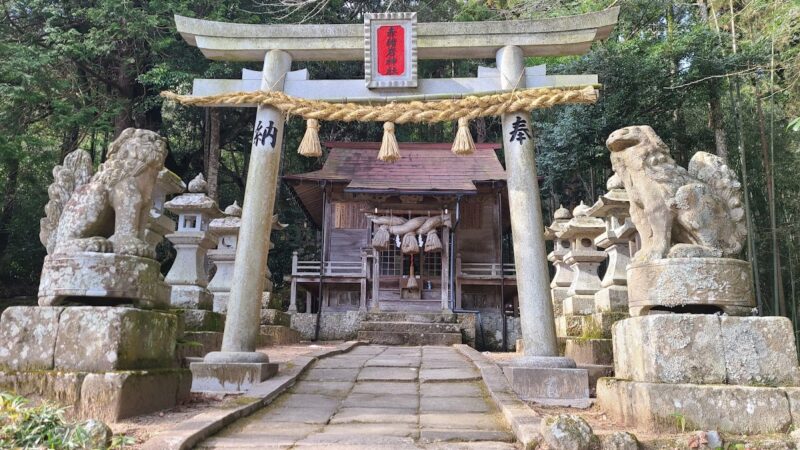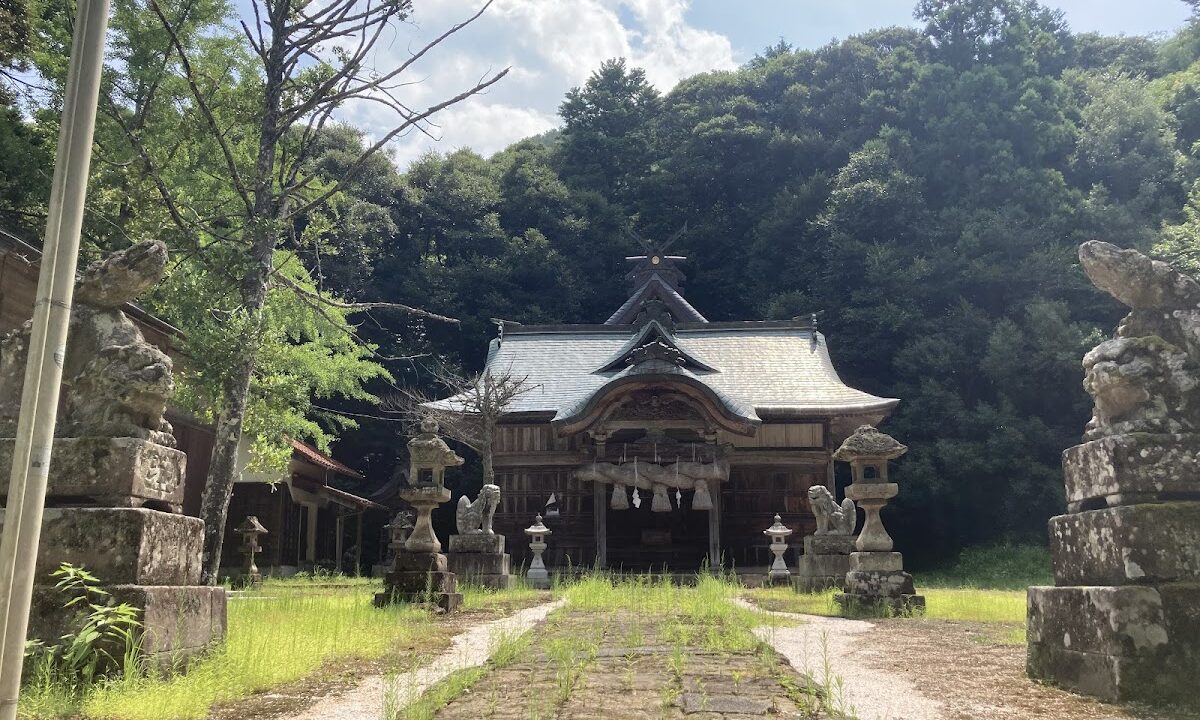
Kamo Shrine (Yamato, Nanbu-cho, Tottori Prefecture): A branch shrine of Kyoto’s Kamo Wakeikazuchi Shrine, located at the foot of Mt. Taihei
Kamo Shrine, located in Yamato, Nanbu-cho, Saihaku-gun, Tottori Prefecture, is a historical shrine that received a divided spirit from Kyoto’s Kamo Wakeikazuchi Shrine (Kamigamo Shrine). It has a unique history, having been relocated three times from the summit of Mt. Taihei to its mid-slope and then to its current location. Formerly a village shrine, it has garnered local devotion. This article provides a detailed introduction to Kamo Shrine, including its history, enshrined deities, grounds, and access information.
Table of Contents
- Overview of Kamo Shrine
- Origin and History
- About the Deities Enshrined
- Highlights of the Shrine Grounds
- Subsidiary Shrines
- Other Shrines in the Yamato Area
- Location and Access
- Points to Note When Visiting
Overview of Kamo Shrine
Kamo Shrine is located in Yamato, Nanbu-cho, Saihaku-gun, Tottori Prefecture. Its former shrine rank was Gosha (village shrine). It is known as a historically significant shrine that received a divided spirit from Kamo Wakeikazuchi Shrine (commonly known as Kamigamo Shrine) in Kyoto.
Nanbu-cho is located in western Tottori Prefecture and has flourished since ancient times as part of Hoki Province. The place name Yamato is an interesting name that tells the story of the region’s long history, and Kamo Shrine has functioned as a central place of worship for this Yamato settlement.
The exact founding date is unknown, but based on tradition that it was originally enshrined on the summit of Mount Ōnaru, it is believed to date back to a considerably ancient period. Currently, it is located at the foot of Mount Ōnaru and is revered by the local residents.
Origins and History
Founding and Relationship with Kyoto’s Kamo Wakeikazuchi Shrine
While the exact founding date of Kamo Shrine is not clearly recorded, its history states that a divided spirit was enshrined there from Kyoto’s Kamo Wakeikazuchi Shrine. Kamo Wakeikazuchi Shrine is one of the oldest shrines in Kyoto and a highly prestigious shrine dedicated to Kamo Wakeikazuchi Ōkami, known as the god of thunder.
While there are branch shrines of Kamo Shrine throughout Japan, the Kamo Shrine in Yamato, Nanbu-cho, is one such example, maintaining a deep connection with the main shrine in Kyoto. The exact date of this enshrinement is unknown, but it is presumed to have been founded during the period from ancient to medieval times when the worship of powerful Kyoto shrines spread to the provinces.
The History of Three Relocations
The most distinctive aspect of Kamo Shrine’s history is its three relocations.
First Location: Summit of Mount Ōnaru
It is said that Kamo Shrine was initially located on the summit of Mount Ōnaru. Placing a shrine on a mountaintop indicates an ancient form of worship where the mountain was revered as a sacred place, suggesting that Kamo Shrine may have initially been associated with mountain worship.
Second Location: Kodaira on the Mid-Slope of Mount Ōnaru
Later, the shrine was relocated to a place called “Kodaira” on the mid-slope of Mount Ōnaru. The move from the summit to the mid-slope is thought to have been for reasons of convenience for worshippers and practical reasons for shrine management. While the mountaintop may be sacred, it could be inconvenient for daily worship and the performance of rituals, so the relocation to a more accessible location was likely undertaken.
Third Location: Foot of Mt. Taihei (Current Location)
Furthermore, as time passed, the shrine was moved to its current location at the foot of Mt. Taihei. This is the current location, and it is the most easily accessible from the Yamato settlement. These three relocations demonstrate the process by which the shrine deepened its connection with the local community and became more open to a wider audience.
Status as a Local Shrine
Under the Meiji era’s shrine ranking system, Kamo Shrine was classified as a local shrine. A local shrine is ranked above a village shrine and below a prefectural shrine, signifying recognition as a central shrine in a specific region. This indicates that Kamo Shrine was a center of faith not only in the Yamato area but also in a wider region.
About the Deity
Kamo Wakeikazuchi no Okami
The principal deity of Kamo Shrine is Kamo Wakeikazuchi no Okami. This deity is also the deity of Kamo Wakeikazuchi Shrine in Kyoto and is widely worshipped as the god of thunder and protection against misfortune.
The name “Wakeikazuchi” can also be interpreted as “Wakeikazuchi” (young thunder), signifying a youthful and powerful thunder god. In ancient times, thunder was a symbol of heavenly power and revered as a source of essential rain for agriculture. Simultaneously, due to its immense power, it was also worshipped as a god that wards off disaster.
The Myth of Kamo Wakeikazuchi no Okami
There is a mythical legend surrounding the birth of Kamo Wakeikazuchi no Okami. His mother was Tamayorihime no Mikoto, and one day, while playing in a river, a vermilion-painted arrow floated by. She picked it up and placed it on her bed, and subsequently conceived, giving birth to Kamo Wakeikazuchi no Okami. This myth is a crucial story that forms the foundation of the faith of Kamo Shrine.
Divine Virtues
The divine virtues of Kamo Wakeikazuchi no Okami are diverse:
- Protection from Evil and Misfortune: Believed to ward off all calamities through the immense power of the thunder god.
- Protection from Lightning: Divine protection from lightning itself.
- Abundant Harvest: As the thunder god who brings rain, prayers are offered for a bountiful harvest.
- Prayers for Victory: As a powerful god, prayers are offered for success in competitions.
- Matchmaking: Benefits for matchmaking originating from the mythology of Kamo Shrine.
Highlights of the Shrine Grounds
Shrine Buildings
The shrine buildings of Kamo Shrine are arranged to take advantage of its location at the foot of Mt. Taihei. The main hall maintains the style of traditional shrine architecture while being adapted to the local climate and environment.
The shrine buildings are surrounded by lush trees, creating a tranquil atmosphere. The location, with Mount Taihei as its backdrop, conveys the history of the shrine’s former location on the mountaintop, allowing visitors to feel a sense of unity between the mountain and the shrine.
Natural Environment of the Shrine Grounds
The grounds of Kamo Shrine are surrounded by abundant nature. Located at the foot of Mount Taihei, visitors can experience the changing seasons.
In spring, new greenery sprouts; in summer, the grounds are enveloped in deep green; in autumn, the grounds are colored by vibrant autumn leaves; and in winter, a tranquil snowscape unfolds. This natural environment further enhances the sacred atmosphere of the shrine.
Approach and Torii Gate
The approach to Kamo Shrine continues from the Yamato settlement. Passing through the torii gate, one can feel a change in the atmosphere, realizing they have entered a sacred area. Walking along the approach, one can leave the hustle and bustle of everyday life behind and prepare their minds for worship.
Subsidiary Shrines
There is a possibility that several subsidiary shrines are enshrined within the grounds of Kamo Shrine. Many Shinto shrines enshrine deities associated with the local area or those offering specific blessings, in addition to the main deity, as subsidiary shrines within the grounds.
These subsidiary shrines reflect the diversity of local beliefs, and it is believed that at Kamo Shrine, alongside the main deity Kamo Wakeikazuchi no Okami, deities who respond to the various wishes of local residents are also enshrined.
Other Shrines in the Yamato Area
Besides Kamo Shrine, several other important shrines are located within the Yamato settlement. These shrines, each with its own unique history and beliefs, have shaped the spiritual culture of the region.
Tadasu Shrine
Tadasu Shrine is one of the shrines located in the Yamato area. The name “Tadasu” evokes the “Tadasu no Mori” forest within the grounds of Shimogamo Shrine (Kamo Mioya Shrine) in Kyoto. Just as Kamo Shrine has a connection to Kamigamo Shrine (Kamo Wakeikazuchi Shrine) in Kyoto, Tadasu Shrine’s name also suggests a connection to the Kamo faith of Kyoto.
Regarding the detailed history and deities of Tadasu Shrine, it is presumed that it functioned as a center of faith in the Yamato region, along with Kamo Shrine.
Sagi Shrine
Sagi Shrine is also a shrine located in the Yamato region. Herons (sagi) are birds that inhabit waterside areas and have long been objects of worship due to their deep connection with agriculture.
The existence of Sagi Shrine suggests that the Yamato region was blessed with water and agriculture. The fact that these three shrines—Kamo Shrine, Tadasu Shrine, and Sagi Shrine—are located in the same settlement speaks to the depth of faith in this region and the reverence for diverse deities.
Relationship between the Three Shrines
The three shrines of the Yamato region—Kamo Shrine, Tadasu Shrine, and Sagi Shrine—are each independent shrines, yet they are thought to have had a complementary relationship within the regional faith system. The structure of the Yamato district, with Kamo Shrine possessing the prestige of a divided spirit from Kyoto, Tadasu Shrine also stemming from the Kamo faith, and Sagi Shrine representing local agricultural beliefs, has shaped the rich religious culture of the Yamato area.
Location and Access
Location
Address: Yamato, Nanbu-cho, Saihaku-gun, Tottori Prefecture
Kamo Shrine is located in the Yamato settlement of Nanbu-cho. Yamato is a historically significant area within Nanbu-cho, where old place names still remain.
Access Method
Access by Car
Access to Kamo Shrine is convenient by car.
- Approximately 15 minutes from the Yonago Expressway “Mizoguchi IC”
- Approximately 20 minutes from the San’in Expressway “Yonago Nishi IC”
Nanbu-cho is located in the inland area of western Tottori Prefecture, midway between Yonago City and Kurayoshi City. It can be accessed via National Route 180 and prefectural roads.
Access by Public Transportation
If using public transportation, the nearest JR San’in Main Line stations are “Yonago Station” or “Hoki-Mizoguchi Station.” From there, you will need to take a bus or taxi, but since the number of services is limited, it is recommended to check the timetable in advance.
Local buses are operated by Nanbu Town Bus, but it is recommended to inquire with Nanbu Town Hall or the Nanbu Town Tourism Association about whether there are direct services to the Yamato area.
Parking
Due to the size and location of the shrine, there may not be a large dedicated parking lot. When visiting, please check the situation around the shrine and be considerate of the neighbors.
Nearby Tourist Attractions
Besides Kamo Shrine, Nanbu Town has other attractions:
Tottori Flower Corridor
This is one of Japan’s largest flower parks, where you can enjoy flowers of all seasons. The spectacular view of Mt. Daisen is also a major attraction.
Nanbu Town Yuusei Meeting Hall
This art museum exhibits the works of painter Yuusei, allowing you to experience local culture.
Around the Hoshoji River
The area around the Hoshoji River, which flows through Nanbu Town, is a nature-rich spot for walks.
Points to Note When Visiting a Shrine
Shrine Visiting Manners
Please observe basic shrine visiting manners:
- Bow at the Torii Gate: Bow before passing through the torii gate.
- Walking on the Approach: The center of the approach is considered the path of the gods, so walk along the sides.
- Procedure for Washing Hands: If there is a washbasin, wash your left hand, then your right hand, then your mouth.
- Procedure at the Worship Hall: The basic procedure is two bows, two claps, and one bow.
Photography
Photography is generally permitted on the shrine grounds, but it may be prohibited inside the main hall or around the sacred object. If unsure, it is recommended to take photos discreetly or to check beforehand.
Seasons and Clothing
Nanbu Town, located in the inland area of western Tottori Prefecture, experiences distinct seasonal changes.
- Spring/Autumn: The weather is pleasant, but it can get chilly in the mornings and evenings.
- Summer: It gets hot, but shrines at the foot of the mountains may be relatively cool.
- Winter: There is a possibility of snowfall, so winter visits require warm clothing and careful footing.
Shrine Office Services
Due to the size of Kamo Shrine, there may not be a permanent priest. If you wish to obtain a Goshuin (shrine stamp) or amulet, it is recommended to check in advance. Smaller local shrines may not have their offices open except on special days such as annual festivals.
Annual Festivals of Kamo Shrine
Annual Festival
Many shrines hold an annual festival (grand festival). It is believed that Kamo Shrine also holds an annual festival as an important local event. The festival includes a procession of the portable shrine and offering ceremonies, making it an important occasion for local residents to gather.
Other Festivals
Monthly festivals and seasonal festivals may be held throughout the year. In local shrines deeply connected to agriculture, important festivals include the spring Kinensai (prayer for a bountiful harvest) and the autumn Niinamesai (harvest thanksgiving festival).
Kamo Faith and Local Culture
Connection to Kyoto’s Kamo Shrine
The Kamo Shrine in Yamato, Nanbu-cho, was founded by inviting a divided spirit from Kyoto’s Kamo Wakeikazuchi Shrine (Kamigamo Shrine). This fact demonstrates the history of how Kyoto’s culture and beliefs spread to the provinces from ancient to medieval times.
Kyoto’s Kamo Shrine is a prestigious shrine with deep ties to the imperial court, and the fact that its faith extended as far as Tottori speaks to the breadth of cultural exchange at that time.
The Role of Kamo Shrines in the Region
Kamo Shrines have served not only as places of worship but also as centers of local communities. During festivals, local residents gathered, reaffirming the bonds of their community.
Even today, Kamo Shrine remains an important cultural heritage site that conveys the history and traditions of the Yamato region, and is one of the elements that form the region’s identity.
The History of Nanbu Town and the Place Name “Yamato”
The Origins of Nanbu Town
Nanbu Town was formed in 2004 (Heisei 16) through the merger of Saihaku Town and Aimi Town. It belongs to Saihaku District in western Tottori Prefecture and is a naturally rich area located at the southern foot of Mt. Daisen.
In ancient times, it belonged to Hoki Province, and in the Middle Ages, it was a land ruled by local powerful families. During the Edo period, it came under the control of the Tottori Domain and developed as a region centered on agriculture.
The Meaning of the Place Name “Yamato”
The place name “Yamato” is an interesting name that is related to the ancient Japanese names “Yamato” and “Yamato.” While it is unclear when and how this place name was given, it suggests that the region has a history dating back to ancient times.
The place name “Yamato” is rare throughout Japan, suggesting a unique historical background for this region. Combined with the history of Kamo Shrine, which is said to have received a divided spirit from Kamo Wakeikazuchi Shrine in Kyoto, this suggests that the Yamato area may have been a culturally important region since ancient times.
Reference Information and Contact Details
Nanbu Town Tourism Association
For information on Kamo Shrine and tourism in Nanbu Town, the Nanbu Town Tourism Association provides information.
The Nanbu Town Tourism Association provides information on local tourist spots, events, and access. When planning a visit to Kamo Shrine, it is recommended to check the latest information.
Nanbu Town Hall
For administrative information and detailed local information, you can contact Nanbu Town Hall.
Summary
Kamo Shrine, located in Yamato, Nanbu Town, Saihaku District, Tottori Prefecture, is a historically significant shrine that received a divided spirit from Kamo Wakeikazuchi Shrine in Kyoto. With a unique history of three relocations—from the summit of Mount Taihei to its mid-slope and then to its current location at the foot of the mountain—the Kamo Shrine, formerly a local shrine, has long been a center of regional faith.
The main deity, Kamo Wakeikazuchi no Okami, is widely revered as the god of thunder and protection against misfortune, and is believed to possess diverse divine virtues, including abundant harvests, victory in competitions, and matchmaking.
In the Yamato district, in addition to the Kamo Shrine, there are three other shrines: the Tadasu Shrine and the Sagi Shrine, forming a rich religious culture in the region. Each of these shrines, while possessing its own unique characteristics, has functioned as a spiritual pillar for the local community.
When visiting Nanbu Town, a visit to the Kamo Shrine will allow you to experience the history of the Kamo faith, which originated in Kyoto, the nature of Mount Taihei, and the deep history of the ancient place name Yamato. You can spend a peaceful time away from everyday life at this quiet shrine at the foot of the mountain.
While the Kamo Shrine may not be large in scale, it is a valuable cultural heritage that conveys the history and faith of the region to the present day. If you have the opportunity to travel to western Tottori Prefecture, be sure to visit Kamo Shrine in Yamato, Nanbu Town, and experience its history and tranquil atmosphere.