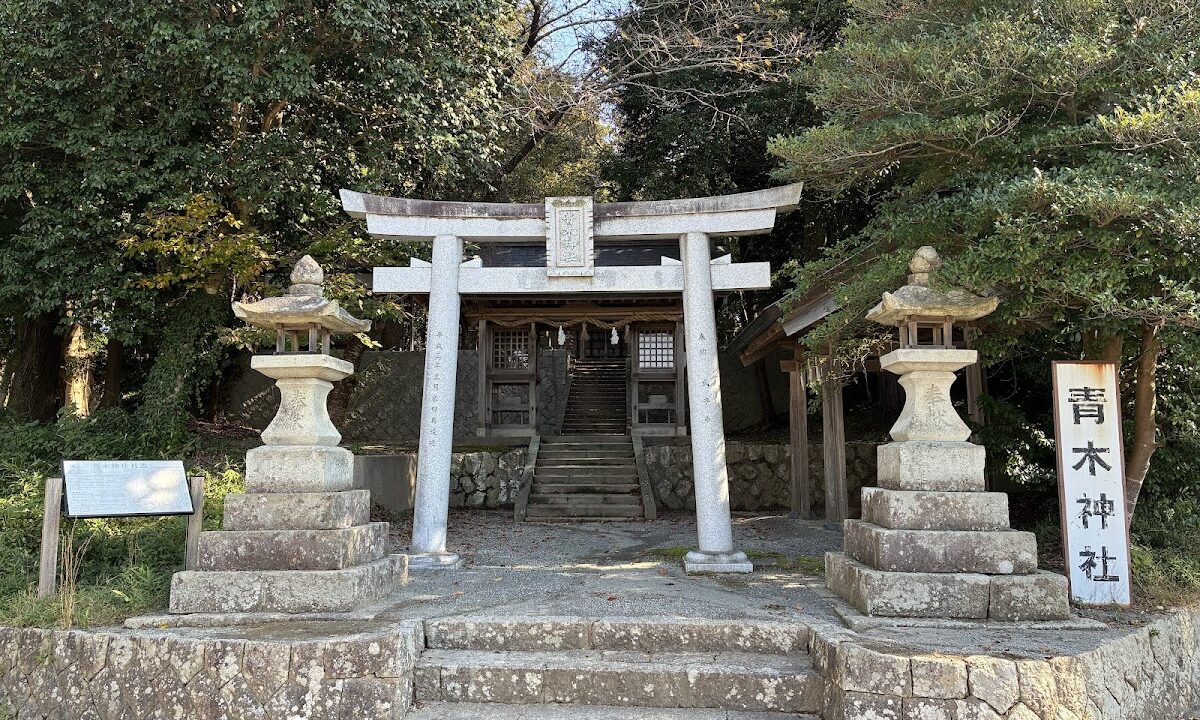
Aoki Shrine (Yonago City, Tottori Prefecture) Complete Guide | A Thorough Explanation of its History, Deities, and the Charm of its Sacred Grove
Aoki Shrine, located in Yonago City, Tottori Prefecture, is one of the few unique shrines in the prefecture, with Kukunochi-no-Mikoto, the god of trees, as its main deity. Situated facing west along the Hoshoji River, and possessing a valuable sacred grove designated as a city-designated natural monument, this shrine has been revered by the local people since ancient times. This article provides a detailed explanation of Aoki Shrine’s history, enshrined deities, highlights of its grounds, and access methods.
Basic Information on Aoki Shrine
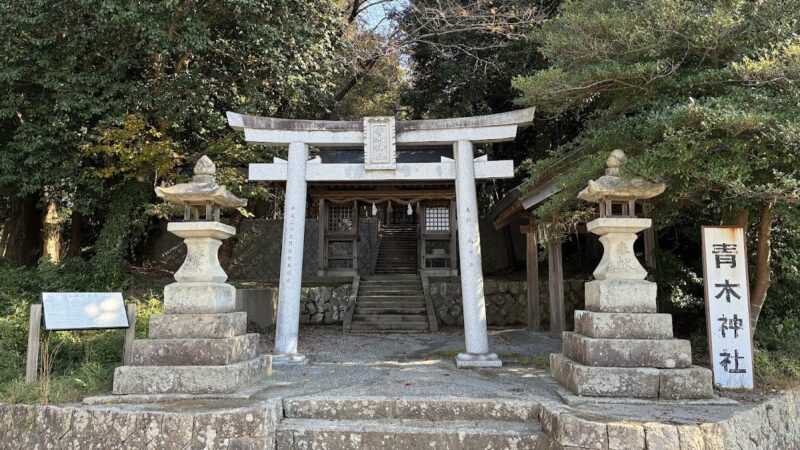
Aoki Shrine is a shrine located in Aoki, Yonago City, Tottori Prefecture, and belongs to the Association of Shinto Shrines. Situated on the west bank of the Hoshoji River, at the foot of the central plateau, its grounds feature a distinctive layout that takes advantage of the unique topography.
Location: Aoki, Yonago City, Tottori Prefecture
Religious Organization: Association of Shinto Shrines
Main Deity: Kukunochi-no-Mikoto
Shrine Rank: Former Village Shrine
Annual Festival Date: October 17th
The shrine grounds are formed by excavating the center of a plateau from its base, creating four levels. The shrine grove surrounds the north, east, and south sides in a horseshoe shape. This unique topography and rich natural environment are major attractions of Aoki Shrine.
History and Origins of Aoki Shrine
Founding and Ancient Beliefs
The founding date of Aoki Shrine is unclear, but according to shrine tradition, it was a former shrine deeply revered by the provincial governor. This suggests that it has functioned as an important place of worship in the region since ancient times.
Although the founding date is unclear, it has been deeply revered by feudal lords throughout history and has continued to exist as a spiritual pillar of the region. The fact that the main deity enshrined here is Kukunochinochi-no-Mikoto, the god of trees, speaks to the importance of forest resources and the depth of nature worship in this region.
Construction during the Sengoku Period
An important record in the history of Aoki Shrine concerns its construction during the Sengoku period (Warring States period).
In 1538 (Tenbun 7), Aoki Kageyu, the lord of Kairaiyama Castle, donated rice and money at the command of Amago Haruhisa, and the shrine was constructed. This period was in the midst of the Sengoku period, and it shows how warlords prayed for military success through their faith in the shrine.
The involvement of Aoki Kageyu in the construction has led to suggestions of a connection to the place name “Aoki,” indicating a deep link between the history of this region and Aoki Shrine.
Protection by the Domain during the Edo Period
During the Edo period, Aoki Shrine came under the protection of the Tottori Domain.
In Kanbun 1 (1661), the Tottori Domain lord designated Aoki Shrine as the main shrine of Enohara-go (Aoki, Sanehira, and Nakira), and a place of prayer for military success. This designation led to donations of rice and money from the domain for each construction project, ensuring the stable maintenance of the shrine.
With the domain’s protection, Aoki Shrine developed from a mere local shrine into an object of worship across a wider area. Its designation as a place of prayer for military success demonstrates the shrine’s status and importance.
Developments since the Meiji Era
Following the Meiji-era reforms to the shrine system, Aoki Shrine was elevated to the rank of a village shrine. After World War II, it became affiliated with the Association of Shinto Shrines and continues to attract the faith of local people to this day.
Even through the passage of time, Aoki Shrine continues to function as a central presence in the local community, playing a role in deepening community bonds through festivals and annual events.
Deities and Divine Virtues
Main Deity: Kukunochi-no-Mikoto
The main deity of Aoki Shrine is Kukunochi-no-Mikoto. This deity is known as the god of trees and trees in Japanese mythology.
Kukunochi-no-Mikoto is recorded in the Kojiki and Nihon Shoki as the child of Izanagi-no-Mikoto and Izanami-no-Mikoto. As the god who presides over trees, he symbolizes the growth of forests, the blessings of timber, and the richness of nature.
There are few shrines in Tottori Prefecture that enshrine Kukunochi-no-Mikoto as their main deity, and Aoki Shrine is one of the precious examples. This is thought to reflect the fact that this region has been blessed with abundant forest resources since ancient times, and that timber played an important role in daily life and industry.
Divine Virtues
The main divine virtues of Aoki Shrine, which enshrines Kukunochi-no-Mikoto, include the following:
- Abundant Harvest: The growth of trees and the blessings of abundant nature
- Family Safety: Peace and stability in the home
- Industrial Development: Prosperity, especially in forestry and timber-related industries
- Nature Conservation: Preservation of forests and the environment
- Healthy Longevity: Healthy growth like the vibrant trees
Due to its history as a place of prayer for military success, it is also believed to possess divine virtues for good fortune in competitions and protection from evil.
City-Designated Natural Monument: Aoki Shrine Forest
Overview of the Forest
One of the major features of Aoki Shrine is its forest, which is designated as a City-Designated Natural Monument. A forest is the woodland that spreads within and around the shrine grounds, and it is a valuable natural environment that has been protected as a sacred area since ancient times.
The sacred grove of Aoki Shrine is located on a plateau facing west overlooking the Hoshoji River, and is arranged in a horseshoe shape, surrounding the shrine grounds from the north, east, and south. This unique arrangement demonstrates the wisdom of ancient people who skillfully utilized the terrain.
Vegetation and Giant Trees of the Sacred Grove
The vegetation of the Aoki Shrine sacred grove is diverse, with particularly striking giant cedar trees. As a result of long-term protection, several giant trees, estimated to be several hundred years old, exist, overwhelming visitors.
The following tree species have been identified in the sacred grove:
- Cedar (Japanese Cedar): A representative giant tree of the sacred grove. Tall trees that create a solemn atmosphere befitting a sacred area:
- Shii (Japanese chinquapin): An evergreen broad-leaved tree forming the foundation of the shrine grove
- Kashi (Japanese oak): An evergreen tree known for its strong wood
- Machilus thunbergii: A large evergreen tree that grows in warm regions
- Other diverse tree species
These trees grow in multiple layers, forming a rich ecosystem. It also plays an important role as a habitat for birds and insects, making it a highly valuable place from the perspective of biodiversity conservation.
Cultural Value of the Shrine Grove
The reason the Aoki Shrine grove is designated as a city-designated natural monument lies in its high academic and cultural value:
- Vegetation Diversity: The vegetation remains close to that of a natural forest, making it valuable for understanding the potential natural vegetation of this region.
- Presence of Giant Trees: As a result of long-term protection, several ancient giant trees exist.
- Historical Value: As a forest protected alongside the long history of the shrine, it is part of the cultural landscape.
- Ecosystem Preservation: Amidst increasing urbanization, it functions as a habitat for valuable organisms.
When visiting the shrine grove, please be careful not to damage the trees or litter in order to preserve this valuable natural environment for future generations.
Highlights of the Shrine Grounds
Main Hall and Worship Hall
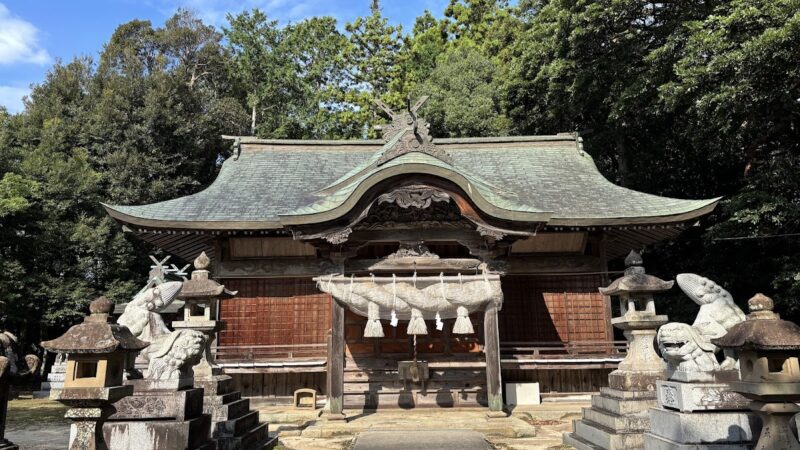
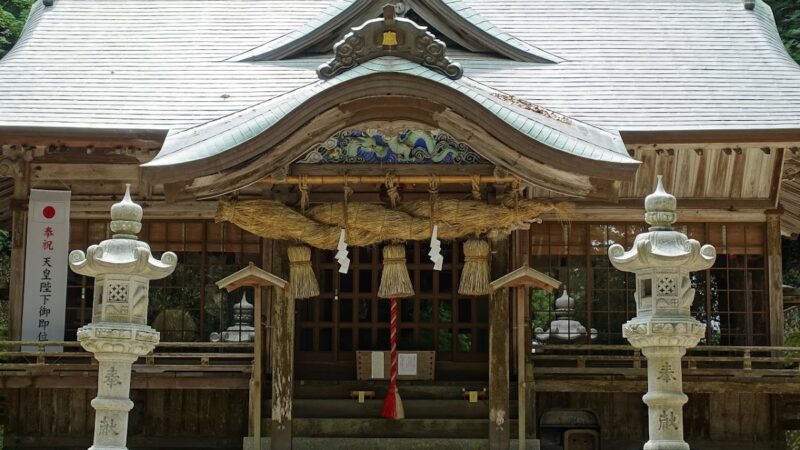
The main hall of Aoki Shrine preserves a historical architectural style. It is based on the style used when it was constructed under the protection of the Tottori Domain during the Edo period, and possesses the characteristics of traditional shrine architecture.
The worship hall is where worshippers offer their prayers and is located in front of the main shrine. Its simple yet dignified design creates a serene atmosphere for worship.
Layout of the Shrine Grounds
The shrine grounds, formed by excavating the center of the plateau into four levels, have a unique three-dimensional spatial configuration. This use of elevation changes allows worshippers to gradually approach the sacred realm as they proceed along the path.
Each level has stone steps, and worshippers ascend them, leaving the secular world and entering a sacred space. This spatial design demonstrates the wisdom of ancient shrine architecture.
Path and Stone Steps
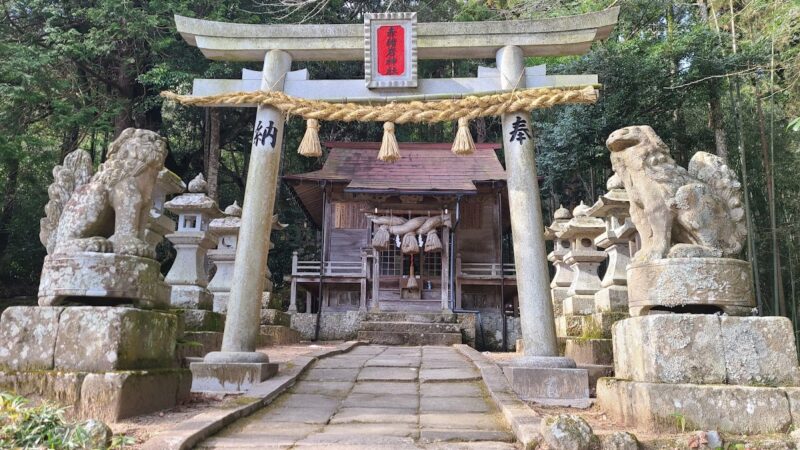
The path to Aoki Shrine leads through the shrine’s forest to the main shrine. Walking along the path surrounded by giant trees, one can simultaneously feel the power of nature and the sacredness of the sacred area.
The stone steps show signs of wear and tear over many years, telling the story of the many worshippers who have walked this path. Especially during the seasons of fresh greenery and autumn leaves, the beauty of the shrine’s grove is striking, making a walk along the approach to the shrine even more memorable.
Aoki Shrine and Aoki Archaeological Site
In the Aoki district where Aoki Shrine is located, there is the Aoki Archaeological Site, which is designated as a National Historic Site. Although this site is in a different location from the shrine, it is situated on the same Aoki Hills and is important for understanding the ancient history of this region.
Overview of the Aoki Archaeological Site
The Aoki Archaeological Site is a large-scale site spread across the Aoki Hills (elevation 40 meters), consisting of burial mounds and settlement remains. Ancient village remains from the middle Yayoi period (approximately 2000 years ago) to the early Kofun period (approximately 1500 years ago) and a group of burial mounds from approximately 1300 years ago are preserved.
In excavations conducted from 1971 to 1977, eight burial mounds and the entire 40-hectare excavation area were unearthed, attracting attention as a representative hillside settlement of the San’in region.
Historical Continuity of the Region
The existence of the Aoki archaeological site indicates that the Aoki area has been a place of human habitation since ancient times. While the founding date of Aoki Shrine is unknown, it is certain that people have lived in this area for a long time and cultivated their faith.
Visiting both the archaeological site and the shrine allows you to truly appreciate the depth of this region’s history, stretching from ancient times to the present day.
Annual Events and Festivals
Annual Festival
The annual festival of Aoki Shrine is held every year on October 17th. This is the most important festival for the shrine, where gratitude is offered to the enshrined deity and prayers are offered for the prosperity and peace of the region.
On the day of the festival, parishioners and local residents gather for a solemn Shinto ritual. This traditional festival provides an important opportunity to deepen the bonds of the local community.
Other Annual Events
At Aoki Shrine, various Shinto rituals are performed throughout the year, in addition to the annual festival:
- New Year’s Day Festival (January 1st): Prayers for happiness and peace in the new year
- Spring Festival: Prayers for a bountiful harvest
- Summer Purification Ceremony: Purification of impurities accumulated over the past six months
- Autumn Festival: Offering thanks for the harvest
- Niiname-sai Festival: Offering the new harvest to the gods
These events preserve the traditional Japanese form of annual events, inheriting the memory of a time when the changing seasons and people’s lives were closely intertwined.
Access and Visiting Information
Location and Contact Information
Location: Aoki, Yonago City, Tottori Prefecture
For detailed information on visiting hours and prayer requests, please contact the Tottori Prefectural Shrine Association or the Yonago City Tourist Information Center.
Tottori Prefecture Shrine Association: Provides information on shrines in Tottori Prefecture.
Access
Access by Car
Located approximately 15 minutes by car from the center of Yonago City. Accessible via the road along the Hoshoji River.
- Approximately 20 minutes from the Yonago IC on the Yonago Expressway
- Approximately 15 minutes from the Yonago-Nishi IC on the San’in Expressway
Regarding parking, please check the situation around the shrine grounds when visiting.
Access by Public Transportation
The nearest station is Yonago Station on the JR San’in Main Line. Using a bus or taxi from the station is convenient.
- Approximately 15 minutes by taxi from JR Yonago Station
- If using a local bus, take a bus bound for Aoki.
Public transportation services may be limited, so it is recommended to check the timetable in advance.
Notes for Visitors
- The shrine’s forest is a designated natural monument of the city. Please do not damage trees or collect plants.
- Please take all your trash with you.
- Please pray quietly and be considerate of other worshippers.
- Photography is permitted, but please be considerate if you include religious ceremonies or other worshippers in your photos.
- The shrine grounds are a sacred place. Please pray with respect.
Nearby Tourist Attractions
Attractions in Yonago City
When visiting Aoki Shrine, you can also visit other tourist attractions in Yonago City:
- Yonago Castle Ruins: The castle ruins are a symbol of Yonago City. The view from the castle tower is spectacular.
- Kaike Onsen: A representative hot spring resort in the San’in region. A hot spring town facing the Sea of Japan
- Kamogawa River/Nakaumi Lake: Enjoy beautiful waterside scenery
- Yonago City Museum of Art: Experience local arts and culture
Nearby Shrines and Temples
- Kamo Shrine Tenmangu: A historical shrine in Yonago City
- Katsuta Shrine: A shrine revered by the local community
- Daisen-ji Temple: A short trip will take you to one of the most representative sacred sites in the Chugoku region
Yonago City offers excellent access to major tourist destinations in the San’in region, such as Izumo Taisha Shrine and Mt. Daisen. Starting with a visit to Aoki Shrine, you can enjoy a journey exploring the history and nature of the San’in region.
Summary of Aoki Shrine’s Charms
Aoki Shrine, located in Yonago City, Tottori Prefecture, is a shrine where history and natural beauty blend seamlessly. It possesses multifaceted value as a rare shrine in the prefecture dedicated to Kukunochinochi-no-Mikoto, the god of trees, and as a valuable natural environment with a shrine forest designated as a city-designated natural monument.
Main Attractions of Aoki Shrine:
- Rare Deity: One of the few shrines in the prefecture that enshrines Kukunochinochi-no-Mikoto as its principal deity.
- Rich History: A venerable shrine that received protection from feudal lords from the Sengoku period through the Edo period.
- Precious Nature: A shrine forest and giant cedar trees designated as a city-designated natural monument.
- Unique Grounds Layout: A four-tiered grounds structure that utilizes the natural terrain.
- Local History: Historical continuity from ancient times as seen in relation to the Aoki Ruins.
In today’s increasingly urbanized world, spaces like Aoki Shrine, where history and nature are integrated, are precious. Walking along the approach surrounded by giant trees and offering prayers in the tranquil grounds allows you to spend a special time away from everyday life.
When you visit Yonago City, be sure to visit Aoki Shrine. The divine virtues of the tree god and the rich nature that has been protected over a long history will warmly welcome visitors. We hope you will feel the harmony between traditional Japanese faith and nature at this shrine, which has been cherished by the local community for generations.