Kanazakura Shrine (Kofu City, Yamanashi Prefecture) Complete Guide | The History, Sacred Treasures, and Charm of the Turmeric Cherry Blossoms – A Power Spot for Financial Luck
Located at the top of the scenic Shosenkyo Gorge in Kofu City, Yamanashi Prefecture, Kanazakura Shrine is one of Yamanashi’s leading power spots, known for its blessings of financial luck and wealth. With a history of approximately 2000 years, and with Mount Kinpu as its sacred object, this shrine boasts many unique attractions not found elsewhere, such as its crystal sacred treasures and the golden-hued turmeric cherry blossoms.
This article provides a thorough explanation of Kanazakura Shrine, including its detailed history, the secrets of its enshrined deities and sacred treasures, highlights, access methods, and points to consider when visiting, all from a local perspective.
History and Origins of Kanazakura Shrine
Origin of its Founding and the Imperial Prayer of Emperor Sujin
The founding of Kanazakura Shrine dates back to the reign of Emperor Sujin, the tenth emperor of Japan (circa 97 BC to 30 BC). At that time, an epidemic was spreading throughout Japan, causing great suffering to many people. Emperor Sujin ordered the enshrinement of deities throughout the country to pray for the eradication of the epidemic and the well-being of all people.
In Kai Province, the enshrinement of Sukunahikona-no-Mikoto on the summit of the sacred Mount Kinpu (2,599m above sea level) is considered the beginning of Kanazakura Shrine. Even today, the inner shrine remains on the summit of Mount Kinpu, while the Kanazakura Shrine located in Shosenkyo Gorge serves as the lower shrine.
A Sacred Site of Kinpusan Faith and Shugendo
Kinpusan has long been known as a sacred site of Shugendo (mountain asceticism) and is counted as one of the “Three Great Sacred Mountains of Japan.” As a center of mountain worship, many Shugendo practitioners and believers visited the shrine. Kinzakura Shrine, also known as “Zao Gongen,” possesses a unique form of worship that fuses mountain worship and Shinto.
During the Edo period, travelers and merchants passing through the Koshu Kaido (highway) visited the shrine. In Kofu, in particular, known as a crystal producing area, it flourished as a place where crystal merchants prayed for business prosperity.
Kinzakura Shrine in the Modern Era
Although the Shugendo elements were streamlined due to the Meiji-era separation of Shinto and Buddhism, its position as the center of Kinpusan faith has remained unchanged. The current shrine building was rebuilt in modern times and is characterized by its elegant architecture painted in vermilion.
Since the Showa era, the Shosenkyo Gorge has been designated a National Special Place of Scenic Beauty, leading to its development as a tourist destination. Kanazakura Shrine has become a representative tourist spot and power spot in Yamanashi Prefecture, attracting many visitors throughout the year.
Deities and Divine Virtues
Main Deity: Sukunahikona-no-Mikoto
The deity enshrined at Kanazakura Shrine is Sukunahikona-no-Mikoto. Known as a god who, along with Okuninushi-no-Mikoto, built the nation, Sukunahikona-no-Mikoto is a versatile deity who presides over medicine, hot springs, incantations, grain, knowledge, and sake brewing.
In particular, he is believed to grant blessings for healing illnesses, good health and longevity, and business prosperity, and is deeply connected to the prayer for the eradication of epidemics, which was the origin of the shrine’s founding. From the myth of him exhibiting great power despite his small body, the belief arose that “great power resides even in small things,” which later became linked to the worship of crystals.
Faith as a Power Spot for Financial Luck and Wealth
There are several factors that contribute to the widespread recognition of Kinzakura Shrine as a power spot for financial luck and wealth.
Firstly, the shrine’s name includes the character for “gold” (金). The “gold” in Kinpusan (金峰山) is said to originate from the golden glow of the rock face near the summit when illuminated by the rising and setting sun. This “gold” character has been worshipped as a symbol of wealth and fortune.
Secondly, the presence of the sacred crystal. Crystal has been treasured since ancient times as a stone that attracts wealth and purifies. The crystal at Kinzakura Shrine is considered particularly miraculous and is sought after by many as a charm for increasing financial luck.
Thirdly, the presence of the sacred tree, the “Ukon Cherry Tree.” This cherry tree, which blooms with golden flowers, is worshipped as a symbol of financial luck, and a legend has spread that “if you worship the Ukon Cherry Tree and receive a crystal charm, you will be blessed with financial luck for life.”
The Secret of the Sacred Treasures “Fireball” and “Waterball”
Kofu as a Crystal Mining Site
Yamanashi Prefecture, particularly the area around Kofu, has long been known as one of Japan’s leading crystal mining regions. High-quality crystal has been mined since ancient times in the foothills of Mt. Kinpu, including the Mitake district, and has been highly prized as “Koshu Crystal.”
The sacred treasures of Kinzakura Shrine, the “Fireball” and “Waterball,” are made from crystals excavated in this very area. These crystal balls, with their high transparency and unique internal luster, are enshrined in the main hall as the shrine’s most important treasures.
The Meaning of the Fireball and Waterball
The names “Fireball” and “Waterball” reflect the Yin-Yang philosophy and the Five Elements philosophy. Fire and water, while possessing opposing properties, are believed to be the source of all things through their harmony.
The fireball symbolizes the power of the sun, vitality, and active energy, while the waterball symbolizes the power of the moon, purification, and receptive energy. It has been believed that enshrining these two crystal balls imbues the area with a balanced and powerful spiritual energy.
The Relationship Between Ascending and Descending Dragons and Crystals
At the main hall of Kanazakura Shrine, sculptures of “ascending dragons” and “descending dragons” are enshrined. Notably, these dragons have crystals entwined around their tails.
Dragons have been revered since ancient times as divine beasts that control water, summoning clouds and bringing rain. At the same time, dragons are also seen as guardians of treasure. The ascending dragon symbolizes the momentum of rising to the heavens, upward momentum, and development, while the descending dragon symbolizes the bringing of blessings from heaven to earth, representing fertility and stability.
The fact that these dragons are entwined with crystals indicates that Kanazakura Shrine is a special sacred place possessing both the spiritual power of crystals and the power of the dragon god.
The Charm of the Sacred Tree “Ukon Cherry Blossom”
A Rare Cherry Blossom Shining in Golden Yellow
One of the biggest attractions at Kanazakura Shrine is the sacred tree, the “Ukon Cherry Blossom.” While typical cherry blossoms bloom in white or pink, the Ukon Cherry Blossom is an extremely rare variety that produces pale yellow to golden-yellow flowers.
The name “Ukon” comes from the yellow dye extracted from the roots of the turmeric plant, a member of the ginger family. The petals have pale reddish streaks, and when in full bloom, the entire shrine grounds are bathed in a fantastical golden glow.
Blooming Season and Cherry Blossom Festival
The Ukon Cherry Blossom blooms later than the Somei Yoshino cherry blossom, typically from late April to early May. Because of the high altitude of the Shosenkyo Gorge, cherry blossoms bloom later than in the lowlands, often reaching full bloom during Golden Week.
Every year, the “Kanazakura Shrine Cherry Blossom Festival” is held to coincide with this period. In 2025, the festival is scheduled to be held from April 19th to May 6th. The Spring Grand Festival will take place on April 19th and 20th, featuring a performance of “Daidai Kagura,” a Yamanashi Prefecture Intangible Cultural Property.
Besides the Ukon cherry trees, the shrine grounds also have approximately 50 Somei Yoshino cherry trees, allowing visitors to enjoy different varieties of cherry blossoms simultaneously depending on the season.
Legend of Good Fortune
At Kinzakura Shrine, there is a legend that “if you pray in front of the Ukon cherry trees when they are in full bloom, holding a crystal amulet, you will be blessed with good fortune for life.”
Because of this legend, many worshippers visit the shrine during the cherry blossom season to pray for good fortune in front of the sacred trees. The shrine offers special amulets adorned with crystal, such as the “Crystal Amulet” and the “Kinzakura Amulet,” and it is believed that praying with these amulets brings even greater blessings.
The visual impact of the golden cherry blossoms, combined with the sacred crystal, creates a truly fitting spectacle for a power spot for attracting wealth.
Highlights of the Shrine Grounds
Long Stone Staircase and Cedar Grove
The approach to Kinzakura Shrine is characterized by a long stone staircase leading from the torii gate to the main hall. While the climb is not easy, each step purifies the soul, giving a sense of approaching the sacred realm.
On both sides of the staircase, towering cedar trees, some hundreds of years old, flourish. This “cedar grove” is designated as a Kofu City cultural property and natural monument, a valuable natural heritage that tells the story of the shrine’s long history.
The majestic atmosphere created by the cedar grove is truly befitting of a sacred place. Walking along the path, bathed in dappled sunlight, you forget the hustle and bustle of the city, and your mind naturally becomes calm. Especially during early morning visits, you can witness the mystical sight of the cedar forest shrouded in morning mist.
Vermilion-Painted Shrine
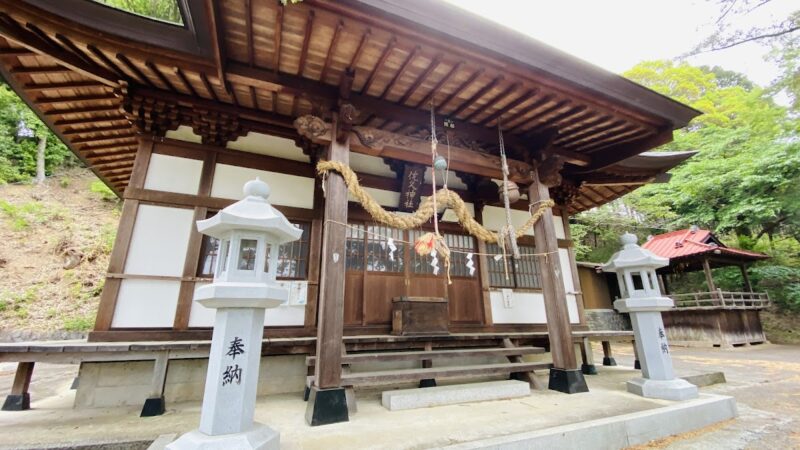
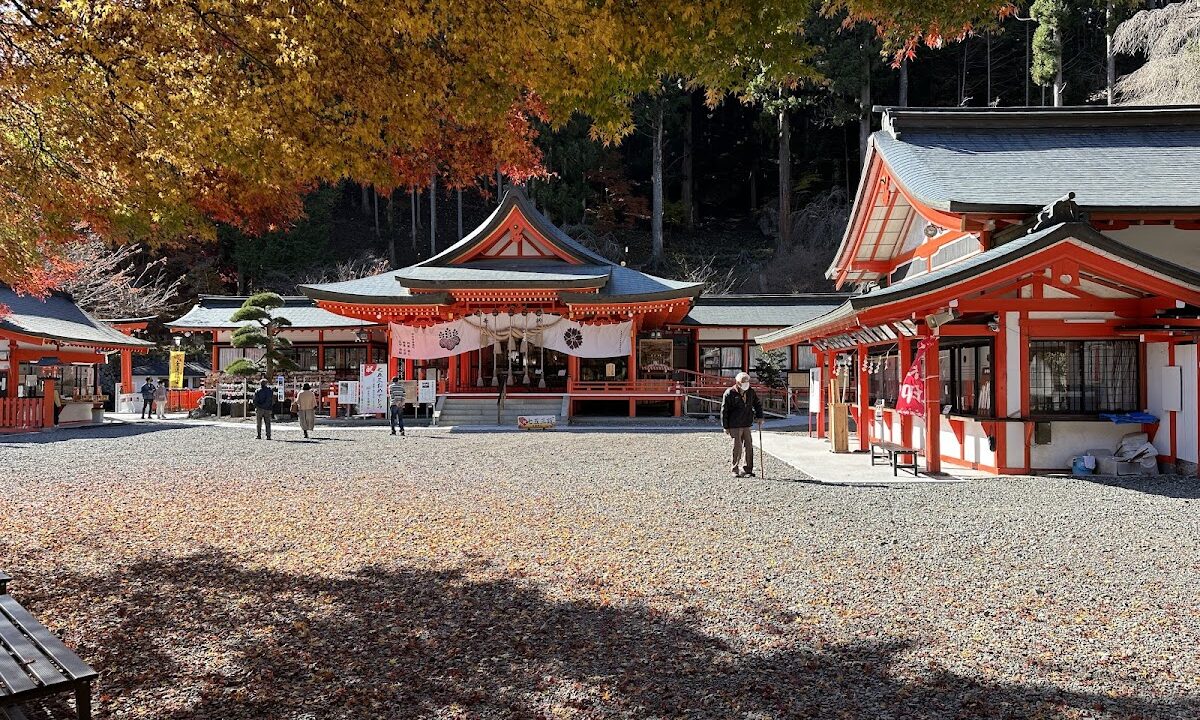
Upon climbing the stone steps, a beautiful vermilion-painted shrine appears before you. Characterized by its elegant architectural style with a large, sweeping roof, the sight of the vermilion building against the backdrop of green trees is truly picturesque.
In front of the worship hall is a spacious area from which you can enjoy views of the mountains of Shosenkyo Gorge. Located at a high altitude, the air is clear, and on sunny days, it’s a particularly refreshing place to visit.
Inside the main hall are the aforementioned “ascending and descending dragon” carvings and sacred treasures, but these are usually not open to the public. However, by offering prayers from the worship hall towards the main hall, you can feel its spiritual power.
Crystal Goshuin (Shrine Seal)
At Kanazakura Shrine, you can receive a goshuin (shrine seal) as a memento of your visit. The most distinctive feature of this goshuin is that the central seal is made of crystal.
The crystal seal has a unique, translucent texture that sparkles depending on how the light hits it. This crystal seal is unique to Kanazakura Shrine and is highly popular among Goshuin (shrine seal) collectors, with many people specifically visiting the shrine to obtain it.
The Goshuin can be obtained at the shrine office, but it can get crowded during cherry blossom season and on weekends, so it’s recommended to visit with plenty of time to spare.
Items and Amulets
Kanazakura Shrine offers a variety of amulets and items made with crystal.
The most popular is the “Crystal Amulet,” an amulet containing a small crystal. It is believed that possessing this amulet improves financial luck and wealth, and wards off evil spirits. In particular, the crystal amulet called the “Lifetime Amulet” is said to bring good fortune and wealth if worn throughout one’s life.
Other types of amulets are also available, such as the “Kanazakura Amulet,” “Business Prosperity Amulet,” and “Good Fortune Amulet.” Crystal bracelets and straps are also available, allowing you to take home the blessings of Kanazakura Shrine in a form you can wear daily.
Relationship with Shosenkyo Gorge
Shosenkyo Gorge, a National Special Place of Scenic Beauty
Kanazakura Shrine is located in the innermost part of Shosenkyo Gorge, a nationally designated Special Place of Scenic Beauty. Shosenkyo Gorge is a gorge stretching approximately 5 km along the upper reaches of the Arakawa River, known for its spectacular scenery created by strangely shaped rocks and clear streams.
Shosenkyo Gorge, often called “Japan’s most beautiful gorge,” is dotted with attractions such as Kakuen-mine Peak and Senga Falls, allowing visitors to enjoy the natural beauty of each season. Especially during the autumn foliage season, the entire gorge is dyed in red and yellow, creating a breathtakingly beautiful sight.
Shosenkyo Gorge Sightseeing and Kanazakura Shrine Visit
Many tourists combine a stroll through Shosenkyo Gorge with a visit to Kanazakura Shrine. From the entrance of Shosenkyo Gorge to Kanazakura Shrine is about a 15-minute drive, and there are also hiking trails using the Shosenkyo Ropeway.
The route, which gradually ascends in elevation while strolling through Shosenkyo Gorge and finally arriving at Kanazakura Shrine, offers a pilgrimage-like experience, moving from the secular world to a sacred realm.
After enjoying the beauty of the gorge, you’ll feel refreshed both physically and mentally by experiencing the tranquil atmosphere of Kanazakura Shrine. Especially during the seasons of fresh greenery and autumn leaves, the combination of natural beauty and the spiritual energy of the shrine creates a truly special experience.
Access Methods
Access by Public Transportation
By Train and Bus
- Get off at Kofu Station on the JR Chuo Main Line
- Take the Yamanashi Kotsu bus bound for “Shosenkyo Takigami” from the Kofu Station South Exit Bus Terminal (approximately 50 minutes)
- After getting off at the “Shosenkyo Takigami” bus stop, walk for approximately 40 minutes or take a taxi (approximately 10 minutes)
Since bus services are limited, it is recommended to check the timetable in advance. Especially on weekdays, there are fewer buses, so careful planning is necessary.
During peak seasons such as cherry blossom season and Golden Week, extra buses may be operated.
Access by Private Car
From Tokyo
- Approximately 45 minutes from the Chuo Expressway “Kofu-Showa IC”
- Approximately 40 minutes from the Chuo Expressway “Futaba Smart IC”
From Nagoya
- Approximately 45 minutes from the Chuo Expressway “Kofu-Showa IC”
After exiting the IC, take National Route 20 and then Prefectural Route 7 (Shosenkyo Line) towards Shosenkyo. While there are signs along the way, it’s recommended to set your car navigation system to “Kanazakura Shrine” or “2347 Mitake-cho, Kofu City, Yamanashi Prefecture.”
Parking Information
Kanazakura Shrine has a free parking lot for visitors. There is space for approximately 30 regular cars, but it can get crowded during cherry blossom season, weekends, and festival days.
If the main parking lot is full, you can use the paid parking lots located throughout Shosenkyo Gorge and then proceed on foot or by taxi. Especially during peak seasons, early morning visits are recommended.
The road is a mountain road with curves and inclines, so please drive with caution. During winter, there is a possibility of icy roads, so snow tires and checking the latest road conditions are necessary.
Points and Manners for Visiting
Best Time to Visit
Kanazakura Shrine is open year-round, but there are particularly recommended times.
Late April to Early May (Cherry Blossom Season)
The sacred turmeric cherry tree is in full bloom, making this the most spectacular time. It is considered the ideal time for praying for financial fortune. However, this is also the busiest time.
Fresh Green Season (Mid-May to June)
After the cherry blossom season, visits are relatively quiet. Enjoy a visit in the beautiful fresh green season and the crisp air.
Autumn Foliage Season (Late October to November)
This is the perfect time to visit the shrine while enjoying the autumn leaves of Shosenkyo Gorge. The beauty of the gorge and the solemnity of the shrine combine to create a special experience.
Winter (December to March)
Visiting the shrine amidst a snowy landscape is mystical. However, due to the possibility of icy roads and snow, proper equipment and checking information are essential.
Clothing and Items to Bring
Kanazakura Shrine is located at a high altitude and requires climbing a long flight of stone steps, so please pay attention to the following points:
- Comfortable Shoes: Sneakers or trekking shoes are recommended as you will be walking on stone steps and mountain paths.
- Comfortable Clothing: Visiting the shrine requires physical exertion. Choose comfortable clothing appropriate for the season.
- Warm Clothing: Due to the high altitude, temperatures will be lower than in the lowlands. Bring a jacket, especially in the early morning, evening, and during the transitional seasons of spring and autumn. – Drinks: Since you will be climbing stone steps, it is recommended to bring drinks to stay hydrated.
Etiquette for Visiting a Shrine
Please observe basic etiquette when visiting a shrine.
- Bow before passing through the torii gate: This is a greeting before entering the sacred area.
- Avoid walking in the center of the path: The center of the path is considered the path of the gods.
- Purify yourself at the water basin: Purify your left hand, then your right hand, then your mouth.
- Two bows, two claps, one bow: This is the basic way to pray at the main hall.
- Pray quietly: Be mindful that this is a sacred place and refrain from speaking loudly or making noise.
Photography is generally permitted, but please refrain from taking pictures inside the main hall or during religious ceremonies. Also, please be considerate of other worshippers.
Nearby Attractions
Main Spots in Shosenkyo Gorge
When visiting Kanazakura Shrine, we recommend also visiting other attractions in Shosenkyo Gorge.
Kakuenbo Peak
A massive granite rock formation, approximately 180m high, and a symbolic landmark of Shosenkyo Gorge.
Senga Falls
A beautiful waterfall with a drop of approximately 30m, selected as one of Japan’s Top 100 Waterfalls.
Shosenkyo Ropeway
Take the ropeway to the mountaintop and enjoy spectacular views of Mt. Fuji and the Southern Alps.
Crystal-Related Facilities
Kofu is a region with a long tradition of crystal processing.
Crystal Sound Museum
A museum exhibiting crystals and gemstones from around the world, where you can learn about the history and culture of crystals.
Crystal Shops
There are several shops selling crystal products around Shosenkyo Gorge, making it ideal for souvenir shopping.
Gourmet Information
Hoto
Hoto, a local Yamanashi dish, can be enjoyed at restaurants around Shosenkyo Gorge. It’s especially warming during the colder months.
Torimotsu-ni
Torimotsu-ni, a popular local dish from Kofu, is also served at restaurants in the area.
Yamanashi Wine
Yamanashi is also a renowned wine-producing region. Restaurants around Shosenkyo Gorge offer local wines.
Annual Events of Kanazakura Shrine
Spring Grand Festival (April)
This is the most important festival, held annually on April 19th and 20th. The “Daidai Kagura,” designated as a Yamanashi Prefecture Intangible Cultural Property, is performed to pray for a bountiful harvest and the safety of the parishioners.
The Daidai Kagura consists of ancient dances and music, expressing the world of mythology. This Kagura performance is only available once a year, making it a valuable cultural experience.
Cherry Blossom Festival (Late April – Early May)
This festival, held to coincide with the blooming season of the Ukon cherry blossoms, attracts many worshippers and tourists. Special offerings may be available during this period.
Other Events
Monthly festivals and seasonal ceremonies are held throughout the year. Detailed schedules can be found on the Kanazakura Shrine’s official website.
To Maximize the Blessings of Kanazakura Shrine
How to Visit for Increased Financial Luck
To maximize the blessings of increased financial luck at Kanazakura Shrine, keep the following points in mind:
- Visit during the blooming season of the Ukon cherry blossoms: The most effective time is considered to be when the golden cherry blossoms are in full bloom.
- Receive a crystal amulet: It is believed that praying with a crystal amulet in front of the sacred tree will bring lifelong financial good fortune.
- Purify your heart before visiting: As you climb the long stone steps, it is important to clear your mind of everyday worries and purify your heart. 4. Never Forget Gratitude: Don’t just wish for good fortune; remember to be grateful for the blessings you currently have.
How to Handle a Crystal Amulet
Treat your crystal amulet with care.
- Keep it in a place you always carry with you, such as your wallet or bag.
- Regularly wipe it with a clean cloth to purify it.
- Do not let others touch it (it is believed that this will disperse the amulet’s power).
- Once you feel its effects, visit the shrine again with gratitude.
Old amulets should be returned to Kanazakura Shrine or placed in the shrine’s old amulet collection box.
How to Enjoy the Power Spot
Kanazakura Shrine is a powerful power spot. To feel its power, the following ways of enjoying the shrine are recommended.
- Spend time leisurely within the shrine grounds
- Touch the giant cedar trees and feel the energy of nature
- Meditate quietly and take deep breaths
- Savor the atmosphere of the shrine, which is one with the nature of Shosenkyo Gorge
By visiting with ample time rather than rushing, you will be able to have a deeper experience.
Summary
Kanazakura Shrine is a venerable shrine with a history of approximately 2000 years, and is revered by many as a power spot for financial luck and wealth. With Mount Kinpu as its sacred object and enshrining a crystal treasure, this shrine possesses a unique charm characteristic of Yamanashi.
The golden-hued turmeric cherry blossoms, the crystal goshuin (shrine seal), the majestic giant cedar trees, and the atmosphere of the sacred grounds, integrated with the spectacular scenery of Shosenkyo Gorge, leave a deep impression on visitors.
Whether you are praying for increased financial luck, interested in history and culture, or seeking the beauty of nature, this is a place that can be enjoyed for a variety of purposes. When you visit Yamanashi, be sure to include a visit to Kanazakura Shrine in your plans.
As you climb the long stone steps and offer your prayers in the refreshing air, you will surely feel something special in your heart. We hope that Kanazakura Shrine will be a wonderful experience for you.