Kanazakura Shrine (Somaguchi, Makioka-cho, Yamanashi City, Yamanashi Prefecture) Complete Guide: The Charm of the Village Shrine and New Worship Hall of Kinpusan Faith
Kanazakura Shrine, located in Somaguchi, Makioka-cho, Yamanashi City, Yamanashi Prefecture, is a sacred site of mountain worship, with Mount Kinpusan (2,599m above sea level), the highest peak in the Okuchichibu mountain range, as its sacred object of worship. It is said to be one of the oldest village shrines of Kinpusan faith in the prefecture, and is an important shrine that conveys a deep history and faith that has continued since the Heian period.
Basic Information on Kanazakura Shrine (Somaguchi)
Location: 2919 Somaguchi, Makioka-cho, Yamanashi City, Yamanashi Prefecture
Deities: Okuninushi-no-Mikoto, Sukunahikona-no-Mikoto
Former Shrine Rank: Village Shrine
Founded: Said to be in 853 (Jinju 3)
Alternate Name: Kanazakura Shrine
There are several shrines named “Kanazakura Shrine” or “Kanazakura Jinja” in Yamanashi Prefecture, but the Kanazakura Shrine in Somaguchi, Makioka-cho, is located at the eastern trailhead of Mt. Kinpu and has long been revered as an important base for Kinpusan worship.
Origin of the Place Name “Somaguchi”
The place name “Somaguchi,” where Kanazakura Shrine is located, has a deep meaning. “Soma” refers to a mountain from which timber is cut, or to the lumberjacks (somabito) engaged in that work.
Mt. Kinpu has long been known as a source of high-quality timber, and this area was named “Somaguchi” (somaguchi) because it was the entrance to the mountain from which timber was cut. It also functioned as the eastern trailhead to Mt. Kinpu, and the fact that ascetics and pilgrims aimed for the summit from this point suggests that faith and daily life were closely intertwined in this place, as evidenced by the place name.
History of Kinpusan Faith and Mountain Worship
Establishment of Kinpusan Faith
Mt. Kinpu is one of the highest peaks in the Okuchichibu mountain range, located on the border of Yamanashi and Nagano prefectures, and has been revered as a sacred mountain since ancient times. It holds an important position as an object of mountain worship and as a sacred site for Shugendo (Japanese mountain asceticism).
According to shrine records, Kinzakura Shrine was established in March of the 3rd year of Ninju (853 AD) by the Tendai sect’s Chisho Daishi (Enchin), who invited the deity from Yamato Province (present-day Nara Prefecture). This period corresponds to the early Heian period, a time when mountain worship was being systematized throughout Japan.
Syncretism of Shinto and Buddhism and Zaō Gongen
From the medieval to the early modern period, Kinzakura Shrine exhibited a form of syncretic Shinto-Buddhist belief. Records show that both Zaō Gongen and Komori Katte shrines were enshrined together, indicating a strong influence of Shugendō (mountain asceticism).
Near the summit of Mount Kinpu, there was Kinpusen-ji Temple, which flourished as a sacred site for Shugendō practitioners. Kinzakura Shrine in Somaguchi, as its lower shrine, played an important role in connecting mountain worship with the faith of the local people.
Role as a Village Shrine
Besides Somaguchi, there were several village shrines for the Kinpusan faith in Kofu City’s Ontake-cho, Yamanashi City’s Manriki, and Yamanashi City’s Utada. Each functioned as a different mountain trailhead and regional center of worship. However, the Kinzakura Shrine in Somaguchi held a special position due to its long history (considered the oldest in the prefecture) and its geographical importance as the eastern mountain trailhead.
According to the “Kai no Kuni Shi” (History of Kai Province), there were 120 subsidiary shrines and smaller shrines scattered throughout Kinpusan, illustrating the breadth and depth of the Kinpusan faith.
Kinzakura Shrine Inner Sanctuary Site: An Important Historical Site Dating Back to the Heian Period
Value as a City-Designated Historic Site
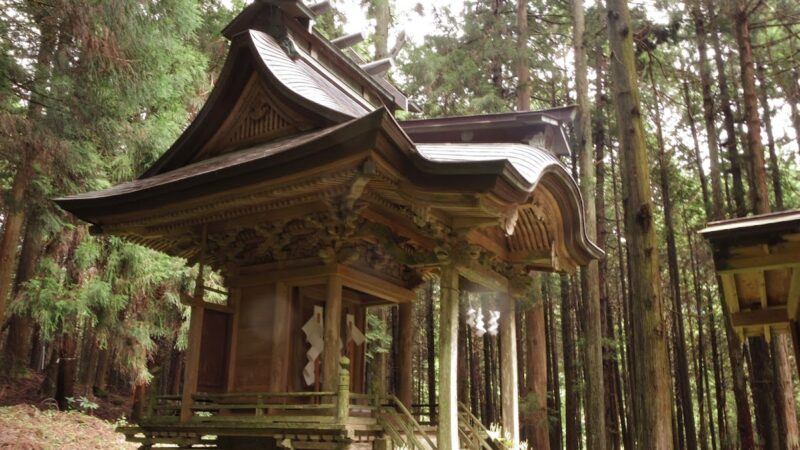
The Kinzakura Shrine Inner Sanctuary Site is an important historical site protected as a designated historic site by Yamanashi City. Located on the mountainside from the current shrine building, in an area called “Takahara,” it lies within the imperial forest along the eastern climbing route of Kinpusan.
Archaeological Remains Revealed by Excavation
The following important remains were confirmed during the excavation of the Okusha site:
- Approximately 15 terrace-like structures: Flat areas created by leveling the mountain slope
- Foundation Stones: Stones that supported the pillars of buildings
- Stone Steps: Approach to the shrine or buildings
- Three Building Remains: Buildings with strong Buddhist architectural elements discovered on the western side of the site
These buildings are thought to have been Buddhist halls or other structures with strong Buddhist architectural elements, providing valuable traces of the syncretic belief system of the Shinto-Buddhist era.
Possibility of Heian Period Founding
Analysis of the discovered artifacts revealed that the founding of this temple site may date back to the Heian period. This is extremely important as archaeological evidence supporting the founding tradition of 853 AD (Jinju 3) recorded in the shrine records.
Ancient stonework, foundation stones, and stone monuments inscribed with ancient characters remain, testifying to the fact that Kinzakura Shrine has functioned as a center of Kinpusan faith for over a thousand years.
Completion of the New Worship Hall in 2024: Inheritance of Traditional Architecture
Worship Hall Renovation Project
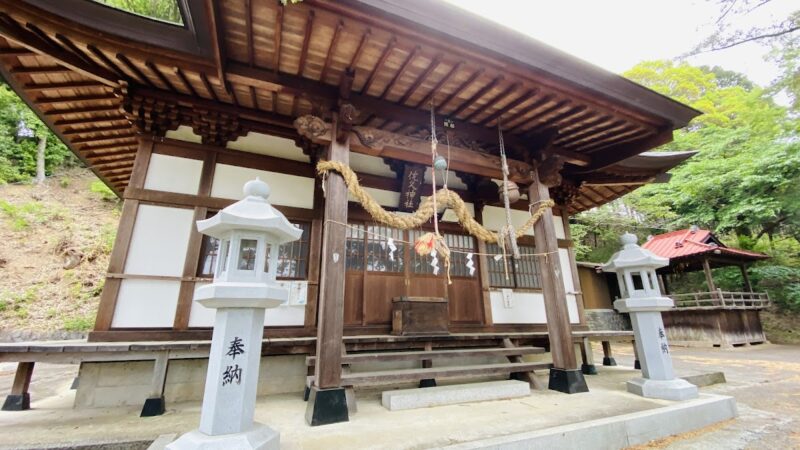
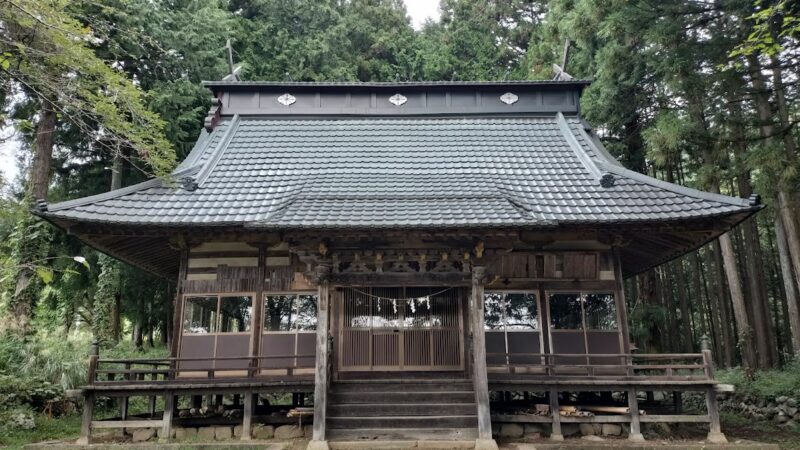
At Kinzakura Shrine, renovation work on the aging worship hall progressed, and the new worship hall was completed on August 11, 2024 (Sunday). Many people gathered for the completion ceremony, which was held with great fanfare.
From the Ridgepole Raising Ceremony to Completion
On December 23, 2023, a grand ridgepole raising ceremony was held, and the framework of the new worship hall was completed in the presence of many people involved. After approximately eight months of construction, the beautiful worship hall, built using traditional architectural techniques, was completed.
Inheritance of Traditional Architectural Techniques
The construction of the new worship hall was undertaken by a construction company that carries on the region’s traditional architectural techniques. Utilizing traditional wooden construction methods, the shrine boasts the dignity and beauty befitting a Shinto shrine.
While meeting modern building standards, it preserves traditional design and is completed as a building that retains its value as a cultural asset to be passed down to future generations. This new worship hall marks a new chapter in the history of Kanazakura Shrine and will continue to welcome many worshippers as the center of local faith.
Deity and Divine Virtues
Okuninushi-no-Mikoto
Okuninushi-no-Mikoto, also known as the principal deity of Izumo Taisha Shrine, is revered as the god of nation-building. He is believed to bestow blessings such as matchmaking, business prosperity, and abundant harvests, and is worshipped as a god who protects people’s lives.
Sukunahikona-no-Mikoto
A deity who, along with Okuninushi-no-Mikoto, played a key role in nation-building. Known as the god of medicine, hot springs, and incantations. He is believed to grant blessings for healing illnesses and for good health.
These two deities, both dedicated to national development and improving people’s lives, have been deeply revered since ancient times.
Annual Events at Kanazakura Shrine
Kanazakura Shrine holds various festivals and events throughout the year. As a central hub of faith for the local community, seasonal gratitude and prayers are offered.
Main Annual Events
- Annual Grand Festival: The most important festival held once a year.
- New Year’s Festival: A festival praying for peace in the new year.
- Autumn Harvest Thanksgiving Festival: A festival offering gratitude for a bountiful harvest.
The way the local community unites to support the festivals and pass on traditions demonstrates that Kanazakura Shrine remains a vibrant place of faith. ## Access to Kanazakura Shrine
Access by Car
From the Chuo Expressway:
- Approximately 40 minutes from Katsunuma IC
- Approximately 45 minutes from Ichinomiya-Misaka IC
Take National Route 140 (Karisaka-michi) and head towards Makioka from Yamanashi city center. There are signs when you enter the Somaguchi area.
Access by Public Transportation
JR Chuo Main Line:
- Get off at Yamanashi-shi Station
- Approximately 30 minutes by taxi
*Since the number of bus services is limited, it is recommended to check the timetable in advance or use a taxi.
Parking
There is parking space for visitors near the shrine. However, for large vehicles or large groups, it is recommended to check with the shrine in advance.
Points to Note When Visiting
- As it is located in a mountainous area, be aware of snow and icy roads during winter.
- There are areas where cell phone reception is poor.
- As it is a place rich in nature, insect repellent is recommended.
- If walking on mountain trails, please prepare appropriate clothing and footwear.
Nearby Attractions
Mt. Kinpu Hiking
A hiking trail leads from Kinzakura Shrine to Mt. Kinpu. This is a serious mountain climb, requiring sufficient equipment and planning, but it offers a valuable experience of experiencing the history of mountain worship.
Nishizawa Gorge
In Makioka-cho, Yamanashi City, lies Nishizawa Gorge, home to the Nanatsugama Godan Falls, selected as one of Japan’s Top 100 Waterfalls. It is a popular tourist spot where you can enjoy the beautiful gorge scenery.
Fuefukigawa Fruit Park
A representative tourist facility in Yamanashi City, where you can enjoy seasonal flowers and fruits, as well as the night view of Yamanashi. Visiting in conjunction with a visit to Kinzakura Shrine is also recommended.
Relationship between Kinzakura Shrine (Somaguchi) and Other Kinzakura Shrines
There are several Kinzakura Shrines in Yamanashi Prefecture:
Kinzakura Shrine (Mitake-cho, Kofu City)
This is the most famous Kinzakura Shrine, located at the southern trailhead of Mt. Kinpu. Known for its turmeric cherry blossoms, it attracts many worshippers.
Kinzakura Shrine (Manriki/Utada, Yamanashi City)
Each serves as a local center of worship, preserving the Mt. Kinpu faith.
All of these shrines are related to the Mt. Kinpu faith and have functioned as local shrines at different trailheads and regions. The Kinzakura Shrine at Somaguchi holds historical significance as the “oldest in the prefecture.”
Manners and Etiquette for Visiting a Shrine
Basic Worship Etiquette
- Bow at the Torii Gate: Bow before passing through the torii gate.
- Purification at the Water Basin: Purify your left hand, right hand, and mouth in that order.
- Walking the Path: The center is the path for the gods, so walk along the sides.
- Etiquette at the Main Hall: Two bows, two claps, and one bow are the basic rituals.
As a Sacred Site of Mountain Worship
Kinzakura Shrine is a shrine that enshrines the sacred mountain Kinpusan as its deity. It is important to have reverence for nature and to pray quietly with a calm mind.
About Goshuin (Shrine Seals)
Goshuin can be obtained at Kinzakura Shrine (Somaguchi). However, since there may not always be a resident priest, it is recommended to check in advance.
Goshuin are not merely commemorative stamps, but are given as proof of worship. Please receive them after a respectful visit.
Cultural Value of Kanazakura Shrine
Historical Value
- Possibly dating back to the Heian period
- The oldest shrine in Yamanashi Prefecture as a village shrine for the worship of Mt. Kinpu
- Remains that convey the form of worship during the era of syncretism of Shinto and Buddhism
Archaeological Value
- Building remains and artifacts from the site of the inner shrine
- Ancient stonework and foundation stones
- Stone monument inscribed with ancient characters
Folkloric Value
- Relationship between mountain worship and local community
- History of Shugendo (mountain asceticism)
- Connection with the culture of lumberjacks
Recognizing these values, the site of the inner shrine of Kanazakura Shrine is protected as a designated historical site by Yamanashi City.
Connection with the Community
Kanazakura Shrine has been deeply connected to the local community throughout its long history as the center of faith for the people of the Somaguchi district of Makioka Town.
Core of the Local Community
Through festivals and annual events, it serves as a place where local people gather and deepen their bonds. In mountainous regions experiencing depopulation, shrines play a crucial role as symbols of regional identity.
Preservation of Traditional Culture
As seen in the construction project for the new worship hall, traditions are being passed down to future generations through the cooperation and support of local people.
Significance of Visiting Kanazakura Shrine
In modern society, visiting ancient shrines in mountainous areas like Kanazakura Shrine holds special significance.
Dialogue with History
At this shrine with over a thousand years of history, one can feel the form of faith that has continued since the Heian period. The remains of the inner sanctuary convey the prayers of people across generations.
Harmony with Nature
The faith that considers the magnificent natural environment of Mount Kinpu as its deity evokes a sense of reverence and gratitude towards nature.
Introspection in Silence
In the quiet environment of the mountainous region, one can have time to step away from daily life and confront oneself.
Summary: The Charm and Future of Kanazakura Shrine
Kanazakura Shrine, located in Somaguchi, Makioka-cho, Yamanashi City, boasts the oldest history in Yamanashi Prefecture as a village shrine of the Kinpusan mountain worship tradition. It is a precious shrine that conveys a deep history of faith dating back to the Heian period.
The new worship hall, completed in 2024, is a testament to the inheritance of traditional architectural techniques and the faith of the local people, symbolizing the beginning of a new chapter in Kanazakura Shrine’s history. The remains of the inner shrine site tell the story of this area being a center of faith for over a thousand years.
With its multifaceted value encompassing mountain worship, the history of Shinto-Buddhist syncretism, and local traditional culture, Kanazakura Shrine is not merely a tourist spot, but a precious sacred place where one can experience Japanese spiritual culture.
Why not experience the form of prayer that has been passed down for over a thousand years in this tranquil shrine embraced by the magnificent nature of Kinpusan? Along with the new worship hall, Kanazakura Shrine will continue to engrave its history as a spiritual haven for many people.