Complete Guide to Kanazakura Shrine (Utada, Yamanashi City, Yamanashi Prefecture) | History and Visiting Information for this Shikinaisha Shrine
Kanazakura Shrine, located in Utada, Yamanashi City, Yamanashi Prefecture, is a historic Shikinaisha shrine with Mount Kinpu as its sacred mountain. While several shrines with the same name exist in Yamanashi Prefecture, this article provides a detailed overview of the Kanazakura Shrine in Utada, Yamanashi City, including its history, enshrined deities, highlights within the grounds, and visiting information.
Basic Information on Kanazakura Shrine (Utada, Yamanashi City)
Kanazakura Shrine is located in the Utada district, approximately 2 kilometers south of Yamanashi City Station, on the delta formed by the Shigekawa and Hikawa rivers. The surrounding area is a quiet rural region with vineyards, a specialty of Yamanashi, and the ancient shrine, nestled amidst the rural landscape, is a center of local faith.
Location and Access
Address: 714 Utada, Yamanashi City, Yamanashi Prefecture
Nearest Station: Approximately 2km south of Yamanashi-shi Station on the JR Chuo Main Line (approximately 25 minutes on foot)
Access by Car: Approximately 15 minutes from Katsunuma IC on the Chuo Expressway, or approximately 20 minutes from Ichinomiya-Misaka IC
A torii gate stands on the south side of the shrine grounds, and you reach the grounds by walking along a path flanked by vineyards. While it is possible to drive past the torii gate, the road is narrow, so you can only go as far as the front of the shrine grounds. There is no dedicated parking lot, but the area in front of the torii gate has little traffic and is wide enough for street parking.
History and Origins of Kanazakura Shrine
Status as a Shikinaisha Shrine
Kanazakura Shrine is a historically significant shrine listed in the Engishiki Jinmyocho, a compilation of shrines from the Heian period, as a Shikinaisha shrine in Kai Province. A Shikinaisha is a shrine officially recognized by the imperial court during the mid-Heian period, indicating its important position in society at the time.
Origin of the Shrine as Told by Shrine Records
According to shrine records, the founding of Kanazakura Shrine has an interesting history. It is said that when Shiomi Sada-ni, the daughter of Omi Chizuhiko-no-kimi (the third-generation descendant of Prince Sahohiko), was appointed as the provincial governor of Kai Province, she invited a deity from Amanohashidate in Tango Province, the land of her ancestors. For this reason, it was formerly known as “Hashidate Myojin.”
This tradition demonstrates the deep relationship between ancient Kai Province and the Kinai region, and is a valuable historical document for understanding the formation process of shrine worship in Yamanashi.
Relationship with the Kinpusan Faith
Kanazakura Shrine is one of the lower shrines of a shrine that considers the sacred Mount Kinpusan as its divine mountain. Mount Kinpusan, with an elevation of 2,599 meters, has long been revered as a sacred site for mountain worship and a sacred place for Shugendo (mountain asceticism). Within Yamanashi Prefecture, there are several Kinzakura Shrines (or Kinzakura-jinja) located in various areas overlooking Mount Kinpu, including Mitake-cho in Kofu City, Manriki in Yamanashi City, and Somaguchi in Makioka-cho, Yamanashi City. The Kinzakura Shrine in Utada is one of these shrines and has played an important role.
Deities and Divine Virtues
Main Deities
The Kinzakura Shrine enshrines the following four deities:
Izanagi-no-Mikoto
The male deity who created the land in Japanese mythology. As the father of many gods, including Amaterasu-Omikami, he possesses the divine virtue of creation and generation.
Izanami-no-Mikoto
The goddess who, together with Izanagi-no-Mikoto, gave birth to the land and the gods. She is worshipped as the guardian deity of marital harmony, safe childbirth, and child-rearing.
Ōnamuchi-no-Mikoto
A deity known by the alternative name Ōkuninushi-no-Mikoto. As the god of nation-building, he bestows blessings of abundant harvests, business prosperity, and matchmaking.
Sukunahikona-no-Mikoto
A small deity who worked alongside Ōnamuchi-no-Mikoto in nation-building. He is revered as the god of medicine, hot springs, and sake brewing, and bestows blessings of healing from illness.
Divine Blessings and Faith
Based on these enshrined deities, Kanazakura Shrine is cherished by the local people as a shrine with diverse divine blessings, including national peace and security, abundant harvests, family safety, marital harmony, matchmaking, and healing from illness. Especially in the Utada district, where agriculture is thriving, it has played an important role as a center of faith praying for abundant harvests and the peace of the region.
Highlights of the Shrine Grounds
Approach and Torii Gate
The torii gate standing on the south side of the shrine grounds marks the entrance to worship. Passing through the torii gate, a unique approach to the shrine unfolds, flanked on both sides by vineyards. This scenery, a fusion of the rural landscape typical of Yamanashi and the sacred space of the shrine, is a distinctive sight unique to Kanazakura Shrine. From spring to autumn, lush green grape leaves flourish, and during harvest season, grape-laden trellises welcome visitors.
Worship Hall and Main Sanctuary
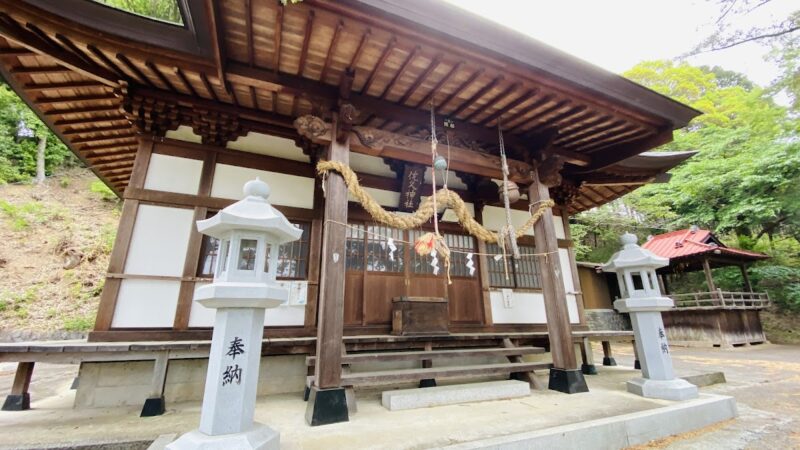
Proceeding straight from the entrance to the shrine grounds, you will see the worship hall. The worship hall is where worshippers offer their prayers, and behind its roof sits the main sanctuary. The main sanctuary is the most sacred place where the enshrined deity is worshipped, and it preserves the traditional style of shrine architecture.
The architectural styles of the worship hall and main sanctuary reflect the characteristics of local shrine architecture and are a testament to the faith that has been carefully preserved by the local people throughout its long history.
Stone Structures on the Shrine Grounds
Several stone shrines and monuments are placed on the shrine grounds, each imbued with history and meaning. These stone structures are precious cultural assets that tell the story of people’s faith across generations.
The pebbles paving the shrine grounds guide visitors into a sacred space. As you walk along the path, step by step, your mind shifts from everyday life to a sacred space.
Atmosphere of the Shrine Grounds
The grounds of Kinzakura Shrine are not vast, but they are enveloped in a tranquil and peaceful atmosphere. Its location, surrounded by farmland, evokes the history of this land intertwined with agriculture since ancient times. Away from the hustle and bustle of the city, it offers an environment where nature and faith harmonize, allowing for peaceful worship.
Etiquette and Manners for Worship
Basic Worship Method
The basic method of worship at a shrine is “two bows, two claps, one bow.”
- Bow before passing through the torii gate.
- Walk along the path, avoiding the center (the center is the path for the gods).
- If there is a purification fountain, cleanse your hands and mouth.
- Place your offering in front of the main hall.
- Bow deeply twice.
- Clap your hands twice.
- Bow deeply once.
- When leaving, turn around and bow once after exiting the torii gate.
Points to Note When Visiting
Kanazakura Shrine is located in a quiet environment surrounded by residential areas and farmland. Please note the following points when visiting.
- Please refrain from loud conversations.
- Please refrain from eating or drinking on the shrine grounds.
- Even if photography is permitted, please be considerate of sacred areas such as the main hall.
- Do not enter surrounding farmland.
- When parking on the street, please be considerate of traffic.
- Please take all your trash with you.
Relationship between Kinzakura Shrine and other shrines with the same name
There are several Kinzakura Shrines (金桜神社) in Yamanashi Prefecture, each deeply connected to the worship of Mount Kinpu.
Kinzakura Shrine in Mitake-cho, Kofu City
The most famous is the Kinzakura Shrine in Mitake-cho, Kofu City, located in Shosenkyo Gorge. This shrine, situated on the main approach to Mount Kinpu, is known for its sacred tree, the “Ukon no Sakura” (turmeric cherry tree), and is widely revered as a shrine for financial fortune.
Kinzakura Shrine in Manriki, Yamanashi City
There is also a Kinzakura Shrine in Manriki, Yamanashi City, which is another shrine overlooking Mount Kinpu.
Kanazakura Shrine in Somaguchi, Makioka-cho, Yamanashi City
Kanazakura Shrine in Somaguchi, Makioka-cho, has long been revered by climbers and worshippers as a local shrine located at the trailhead of Mt. Kinpu.
Respective Roles
While these Kanazakura Shrines share Mt. Kinpu as their sacred mountain, they have each cultivated their own unique history and beliefs in their respective regions. Kanazakura Shrine in Utada, Yamanashi City, is situated in a water-rich area at the confluence of the Shigekawa and Hikawa rivers, and continues to receive fervent devotion from local people as the guardian deity of the region, particularly agriculture.
Nearby Attractions and Tourist Information
Tourist Spots in Yamanashi City
When visiting Kanazakura Shrine, we recommend also visiting other tourist spots in Yamanashi City.
Manriki Park (Manyo no Mori)
This vast natural park, covering approximately 14 hectares, offers enjoyment of seasonal flowers and wild birds. Cherry blossoms are in full bloom in spring, and roses in early summer. Fuefukigawa Fruit Park
A facility where you can learn about the history and culture of fruit cultivation in Yamanashi. The view from the observation deck, which has been selected as one of the New Three Great Night Views of Japan, is spectacular.
Nezu Memorial Hall
The birthplace of Kaichiro Nezu, the founder of Tobu Railway, is open to the public as a memorial hall. You can catch a glimpse of the life of a wealthy farmer in the Meiji era.
Yamanashi’s Specialty Products
The area around Utada in Yamanashi City is a region where fruit cultivation, such as grapes and peaches, is thriving. When visiting the shrine, you can enjoy seasonal fruit picking and shopping at direct sales stores. Especially from summer to autumn, peaches, grapes, and pears are in season, and you can enjoy fresh fruit.
Annual Events and Festivals
Annual Festivals and Shinto Rituals
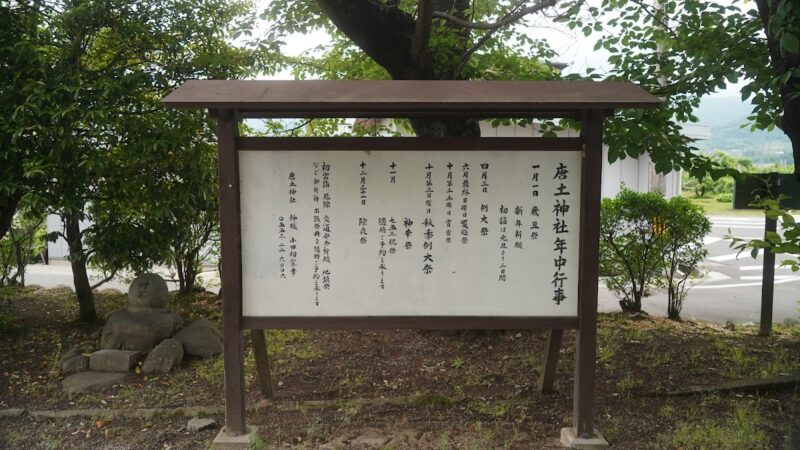
At Kanazakura Shrine, various Shinto rituals and festivals are held throughout the year. Local parishioners and worshippers gather to express gratitude to the gods and pray for the peace and prosperity of the region.
The main annual events include the Spring Grand Festival and the Autumn Grand Festival, which are carefully preserved as traditional local events. For specific dates, it is recommended to check local information and Yamanashi City’s tourist information beforehand.
Connections with the Community
Kanazakura Shrine, as the tutelary shrine of the Utada district, plays a central role in the local community. During festivals, local people cooperate in the preparations, creating a gathering place for multiple generations, from children to the elderly. This strong connection with the community has been the driving force behind the shrine’s long history of preservation.
Suitable Time and Attire for Visiting
Recommended Time to Visit
Kanazakura Shrine is open for visits throughout the year, but each season has its own unique charm.
Spring (March-May): The mild climate is ideal for visiting. The surrounding peach blossoms and fresh green grapevines are beautiful this season.
Summer (June-August): While the season is lush and green, heat protection is necessary during the day. Early morning or evening visits are recommended. Autumn (September-November): This is the grape harvest season, allowing you to feel the bounty of the year. The weather is mild and suitable for visiting the shrine.
Winter (December-February): You can visit the shrine quietly in the crisp air. Be sure to dress warmly.
Clothing and Items to Bring
While no special attire is required for visiting the shrine, please dress in clean clothing that is respectful to the gods. Please note the following:
- Comfortable walking shoes (for walking along the approach to the shrine)
- Hat or parasol (for protection from the summer sun)
- Warm clothing (in winter)
- Drinks (especially in summer)
- Camera (if you want to record the scenery of the shrine grounds)
About Goshuin (Shrine Seals)
Regarding the issuance of Goshuin at Kanazakura Shrine (Utada, Yamanashi City), it is recommended to check in advance as there may not be a permanently staffed shrine office. If you wish to obtain a Goshuin, you should inquire with the Yamanashi City Tourism Association or the Shrine Association.
Other Kanazakura Shrines in Yamanashi Prefecture may offer Goshuin (stamped seals), so a “Kanazakura Shrine pilgrimage” visiting multiple shrines would be an interesting experience.
Deepening Your Feelings Towards Kanazakura Shrine
Inheriting Local Faith
Kanazakura Shrine (Utada, Yamanashi City) is not a flashy tourist destination, but precisely because of this, it is a valuable shrine that conveys the simple form of ancient faith to the present day. It quietly but surely maintains its presence as a place of worship that has been protected by local people for generations.
Significance in Modern Times
In modern society, the existence of such community-rooted shrines teaches us something important. That is, faith is not just about large-scale facilities or extravagant events, but also the importance of giving thanks to the gods in daily life and living together with the local people.
By visiting Kanazakura Shrine, you can escape from your busy daily life and have time to quiet your mind in a space where nature and faith are in harmony. Walk along the approach surrounded by vineyards and offer your prayers in the tranquil grounds. Perhaps the essence of Japanese Shinto faith lies within that simple act.
Summary
Kanazakura Shrine (Utada, Yamanashi City, Yamanashi Prefecture) is a shrine with a long history and deep faith, serving as the lower shrine of a Shikinaisha (a shrine listed in the Engishiki, an ancient Japanese legal text) with Mount Kinpu as its sacred mountain. It enshrines Izanagi-no-Mikoto, Izanami-no-Mikoto, Ōkuninushi-no-Mikoto, and Sukunahikona-no-Mikoto as its principal deities, and continues to receive fervent devotion from the local people.
The unique approach surrounded by vineyards, the tranquil grounds, and the strong ties to the community are the shrine’s unique charms. It’s not a flashy tourist spot, but precisely because of that, it’s a valuable place where you can feel the essential nature of Japanese Shinto faith.
When you visit Yamanashi City, be sure to visit Kanazakura Shrine and feel the breath of faith that has continued since ancient times. The time spent quietly praying amidst the changing seasons will surely be a memorable experience.