Karato Shrine (Yamanashi Prefecture, Yamanashi City) Complete Guide | History, Deities, Access, and Surrounding Information
There are two shrines named “Karato Shrine” in Yamanashi City, Yamanashi Prefecture. This article provides detailed information on the history, deities, cultural properties, and access methods of each shrine. We hope this will be helpful when visiting shrines in Yamanashi City.
What is Karato Shrine? | Why are there two in Yamanashi City?
The name “Karato Shrine” is used for two different shrines within Yamanashi City, Yamanashi Prefecture. One is the Karato Shrine located in Shōtoku-ji, Yamanashi City, and the other is the Karato Shrine located in Narusawa, Makioka-chō, Yamanashi City.
It is unusual for two shrines with the same name to exist within the same city, but this is thought to be related to the history of local beliefs and the boundaries of former municipalities before mergers. Each has been carefully preserved as an independent shrine and as the guardian deity of its region.
Basic Information and History of Karato Shrine (Shōtoku-ji Temple)
Location and Corporate Information
Location: 1569 Shōtoku-ji, Yamanashi City, Yamanashi Prefecture
Postal Code: 405-0032
Corporate Number: 3090005003664
Date of Corporate Number Assignment: October 5, 2015 (Monday)
History and Origin
Karato Shrine, located in Shōtoku-ji, Yamanashi City, has long been revered as the guardian shrine of the Kurashina area. According to shrine tradition, it was founded in 702 AD by imperial decree, making it an ancient shrine with over 1300 years of history.
It is also known as “Karato Daimyōjin” and has been cherished by the local people. There are various theories about the origin of the name “Karato,” but it is thought to be related to ancient China (Tang Dynasty) or derived from a place name.
Deities Enshrined
The main deity enshrined is Susanoo-no-Mikoto. In Japanese mythology, Susanoo-no-Mikoto is known as the brave god who defeated Yamata-no-Orochi (a mythical eight-headed serpent), and is widely worshipped as a god of protection against misfortune and disaster. He also has aspects of a god of agriculture and waka poetry, and has been revered as a god who protects the fertility and peace of the region.
Daidai Kagura (Yamanashi City Intangible Folk Cultural Property)
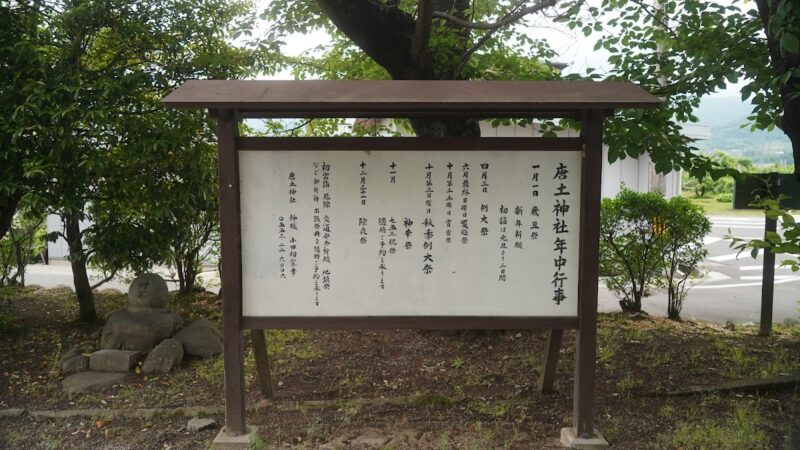
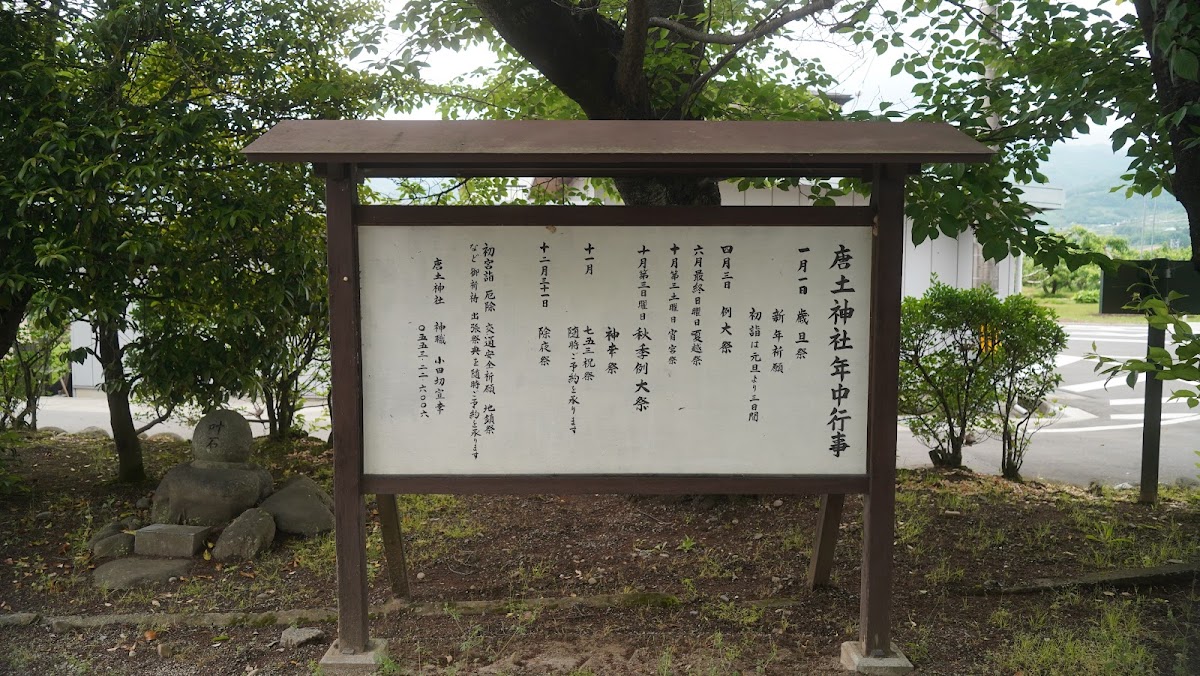
The most distinctive feature of Karato Shrine is the Daidai Kagura, which is performed annually on April 12th. This kagura is designated as an intangible folk cultural property of Yamanashi City and is preserved and passed down as a valuable traditional performing art of the region.
Daidai Kagura is a Shinto ritual in which ancient dances and music are used to appease the gods and pray for a bountiful harvest and peace in the region. This traditional event, passed down through generations by local residents, plays an important role in strengthening the bonds of the local community.
The Shrine Grounds
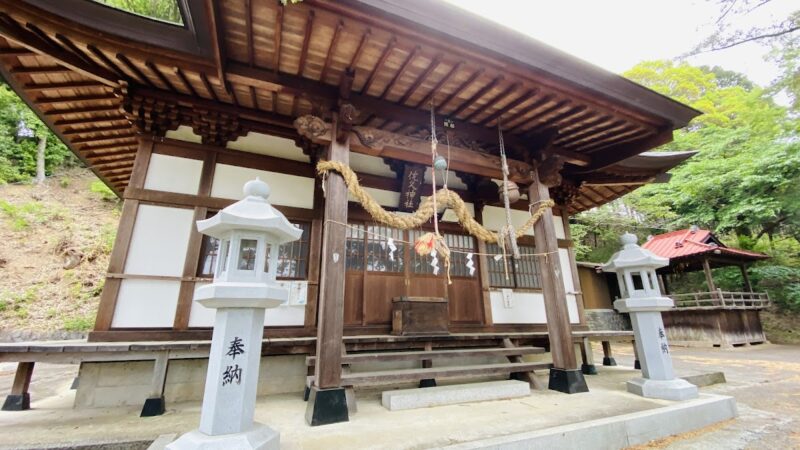
The Karato Shrine of Shōtoku-ji Temple is situated in a quiet environment surrounded by residential areas in Yamanashi City. Within the grounds, in addition to the main hall and worship hall, there are stone monuments and lanterns that evoke the history of the region. The grounds, extending from the approach to the shrine, serve as a place of daily worship for local people, and during festivals, it becomes a bustling place filled with many worshippers.
Basic Information on Karato Shrine (Narizawa, Makioka-cho)
Location and Corporate Information
Location: 1108-1 Narusawa, Makioka-cho, Yamanashi City, Yamanashi Prefecture
Postal Code: 404-0011
Corporate Number: 8090005003668
Date of Corporate Number Assignment: October 5, 2015 (Monday)
Characteristics of the Makioka-cho Area
Makioka-cho is located in the northern part of Yamanashi City. On March 22, 2005, the former Yamanashi City, former Makioka-cho, and former Mitomi Village merged to form the current Yamanashi City. This area is located in a mountainous region and is blessed with a rich natural environment.
Karato Shrine, located in Narusawa, Makioka-cho, has also been revered by local residents as the guardian deity of this mountainous region. It has its own unique history and tradition, distinct from the Karato Shrine at Shōtoku-ji Temple, and functions as a spiritual pillar of the local community.
Role in the Community
Shrines in mountainous areas were especially important to people whose lives were closely tied to nature, such as those engaged in agriculture and forestry. As an object of worship for both the blessings and threats of nature—prayers for bountiful harvests, rain, and safety in the mountains—Karato Shrine played a deeply rooted role in the community.
How to Access Karato Shrine
Access to Karato Shrine (Shōtoku-ji Temple)
Access by Train/Bus:
- Approximately 10 minutes by car from JR Chuo Main Line “Yamanashi-shi Station”
- Taking a taxi from Yamanashi-shi Station is convenient
Access by Car:
- Approximately 20 minutes from Chuo Expressway “Ichinomiya-Misaka IC”
- Approximately 15 minutes from Chuo Expressway “Katsunuma IC”
- Parking: Parking spaces are available on the shrine grounds or nearby (checking on-site is recommended)
Access to Karato Shrine (Makioka-cho Narusawa)
Access by Train/Bus:
- Approximately 30 minutes by car from JR Chuo Main Line “Yamanashi-shi Station”
- Access by public transport is limited, so using a car is recommended
Access by Car:
- Approximately 40 minutes via National Route 140 from Chuo Expressway “Katsunuma IC”
- Head north on National Route 140 from the center of Yamanashi City
- Due to its mountainous location, caution is necessary regarding road conditions during winter.
Shrine Culture in Yamanashi City and Major Shrines in the Surrounding Area
Characteristics of Shrines in Yamanashi City
Yamanashi City is home to numerous shrines, each conveying the history and culture of the region. This area, which flourished as the center of Kai Province, has a long history of shrine worship, with each region’s guardian deity being highly valued.
Sashideiso Otakesan Shrine
Sashideiso Otakesan Shrine is one of Yamanashi City’s representative shrines. Located at 1376-1 Minami, Yamanashi City, it is known for its excellent views. It is believed to bring good fortune in work (financial luck), health, and protection from evil, attracting many worshippers.
Basic Information:
- Location: 1376-1 Minami, Yamanashi City, Yamanashi Prefecture
- Reception Hours: 9:00 AM – 4:00 PM (Closed: Wednesdays)
- Phone: 0553-22-0081
Other Major Shrines in Yamanashi City
- Tenjin Shrine (Daiku, Yamanashi City)
- Hiyoshi Sanno Shrine (Yamanashi City)
- Hakusan Shrine (Yamanashi City)
- Shirahata Shrine (Yamanashi City)
- Hachioji Shrine (Yamanashi City)
These shrines also play important roles in their respective regions, forming the rich shrine culture of Yamanashi City.
Shrine Pilgrimage in Yamanashi Prefecture and Karato Shrine
Major Shrines in Yamanashi Prefecture
Yamanashi Prefecture has numerous historical shrines. When visiting Karato Shrine, it is also recommended to visit other notable shrines in the surrounding area.
Takeda Shrine (Kofu City)
This shrine enshrines Takeda Shingen as its deity and is known for its blessings of victory and good fortune. Located on the site of the Takeda clan’s residence, Tsutsujigasaki-kan, it is a representative shrine of Yamanashi Prefecture, attracting many tourists.
Asama Shrine (Kofu City)
This shrine has long been revered as the Ichinomiya (first-ranked shrine) of Kai Province. It houses treasures associated with Takeda Shingen and possesses numerous cultural properties of high historical value.
Kanazakura Shrine (Kofu City)
This shrine is popular as a power spot for financial luck, and is particularly famous for its crystal amulets. Located near Shosenkyo Gorge, it is situated in a rich natural environment.
Tips for Visiting Shrines
When visiting shrines in Yamanashi Prefecture, keep the following points in mind:
- Consider the season: You can enjoy different scenery depending on the season, such as cherry blossoms in spring and autumn leaves in fall.
- Check the dates of festivals: Visiting on the day of special events, such as the Taiko Kagura at Karato Shrine (April 12th), can be a valuable experience.
- Collect Goshuin (shrine stamps): Collecting Goshuin as a memento of your shrine visit is also popular.
- Learn about local history: Knowing the history of each shrine will give you a deeper understanding and appreciation.
Etiquette and Manners for Visiting Karato Shrine
Basic Etiquette for Visiting Shrines
There are basic etiquette rules for visiting shrines. When visiting Karato Shrine, please follow these steps:
- Bow before passing through the torii gate: This is a greeting before entering the sacred area.
- Purify yourself at the water basin: Purify your left hand, right hand, and mouth in that order.
- Walk along the edge of the path: The center is considered the path of the gods.
- Etiquette in front of the main hall: Two bows, two claps, and one bow are the basics.
Clothing and Items to Bring When Visiting
No special clothing is required, but it is desirable to wear attire that reflects the sacred nature of the place. The following items are also useful:
- Goshuincho (stamp book): If you wish to receive a Goshuin (stamp).
- Offering: It is a good idea to have some small change ready.
- Camera: Photography is often permitted within the shrine grounds, but it may be prohibited inside the main hall.
Yamanashi City Tourism and Karato Shrine
The Charms of Yamanashi City
Yamanashi City is a charming region where rich nature and historical culture harmonize. Known as a fruit-producing region, Yamanashi Prefecture is particularly known for its thriving cultivation of peaches and grapes. It also includes part of the Chichibu-Tama-Kai National Park, offering opportunities for outdoor activities such as mountain climbing and hiking.
Spots to Visit Alongside Karato Shrine
Nishizawa Gorge
This hiking course allows you to enjoy the beautiful gorge scenery, including the Nanatsugama Godan Falls, selected as one of Japan’s Top 100 Waterfalls.
Fuefuki River Fruit Park
A park themed around Yamanashi’s fruits, featuring an observation deck offering panoramic views of the Kofu Basin. It’s also a popular spot for night views.
Hottarakashi Onsen
A popular hot spring facility with an open-air bath offering spectacular views. Bathing while watching the sunrise is a particularly famous experience.
Yamanashi Prefectural Shrine Association and Karato Shrine
About the Yamanashi Prefectural Shrine Association
The Yamanashi Prefectural Shrine Association is an organization that encompasses shrines within Yamanashi Prefecture, engaging in activities such as supporting shrine operations, training Shinto priests, and preserving and passing on traditional culture. As a shrine belonging to the Yamanashi Prefectural Shrine Association, Karato Shrine is properly managed and its traditions are preserved.
Preservation of Shrines and Local Communities
Small local shrines are vulnerable to the effects of depopulation and aging. However, shrines like Karato Shrine, which preserve local traditional events (such as the Taiko Kagura dance), play an important role in strengthening the bonds of the local community.
The maintenance and preservation of the shrine and festivals are supported by the activities of local residents’ parishioner organizations and preservation societies. It is through these local efforts that a shrine with a history of over 1300 years has been passed down to the present day.
Annual Events of Karato Shrine
Main Festivals and Events
Grand Festival (April 12th)
This is the most important festival of Karato Shrine (Shōtoku-ji Temple), where the Taiko Kagura dance is performed. Local people gather to express gratitude to the gods and pray for a bountiful harvest and peace in the community.
New Year’s Visit (January 1st-3rd)
The shrine is bustling with worshippers celebrating the New Year. People visit to pray for safety and happiness throughout the year.
Other Seasonal Events
Depending on the region, seasonal events such as summer festivals and autumn harvest festivals may be held.
Points to Note When Visiting Karato Shrine
Points to Note When Visiting Karato Shrine in Narusawa, Makioka-cho
As it is located in a mountainous area, please note the following:
- Winter Road Conditions: There is a possibility of snow and ice, so prepare winter tires or chains.
- Cell Phone Reception: Reception may be poor in mountainous areas.
- Opening Hours: The shrine office may not always be staffed, so please check in advance if you wish to receive a Goshuin (shrine stamp).
Points to Note When Visiting Karato Shrine at Shōtoku-ji Temple
- Parking Availability: It may be crowded during festivals.
- Consideration for Local Residents: As it is located in a residential area, please be considerate of noise levels.
Future and Prospects of Karato Shrine
Preservation and Transmission of Cultural Properties
The preservation and transmission of intangible folk cultural properties, including the Taiko Kagura, is an important issue for the region. Efforts are underway to pass on skills to younger generations and to preserve records.
Utilization as a Tourism Resource
In promoting tourism in Yamanashi City, historical shrines can be important tourism resources. Appropriately disseminating information about the history and cultural assets of Karato Shrine is expected to increase opportunities for more people to learn about it.
As a Hub for Local Communities
In rural areas experiencing population decline, shrines are becoming increasingly important as spiritual hubs for local communities. They also play a role as places for intergenerational exchange through festivals and cleaning activities.
Summary
The two Karato Shrines located in Yamanashi City, Yamanashi Prefecture, each have a history of over 1000 years and have attracted the faith of local people. The Karato Shrine at Shōtoku-ji Temple enshrines Susanoo-no-Mikoto and preserves the valuable intangible folk cultural asset of Taiko Kagura. The Karato Shrine in Narusawa, Makioka-cho, continues to watch over the region as the guardian deity of the mountainous area.
Neither shrine is widely known as a tourist destination, but both are valuable entities that convey the history and culture of the region to the present day. When you visit Yamanashi City, we hope you will also visit these shrines and feel the weight of history and the depth of faith of the local people in their tranquil grounds.
Visiting a shrine is not merely sightseeing; it is also an opportunity to experience traditional Japanese culture and purify your soul. We hope that through your visit to Karato Shrine, you will feel the rich nature and history of Yamanashi, as well as the warmth of the local people.