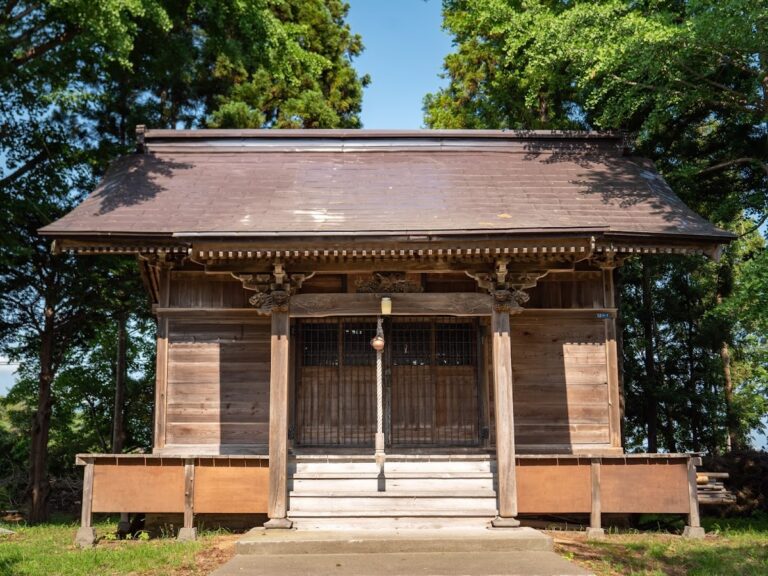
Kawakami Shrine (Hakodate City, Hokkaido) Complete Guide | History, Goshuin (Shrine Seal), and Access Information
Kawakami Shrine, located in Ishikawa-cho, Hakodate City, Hokkaido, is a historical shrine founded in 1562. It enshrines Susanoo-no-Mikoto as its main deity and continues to attract worshippers as a beloved local guardian shrine. This article comprehensively introduces information useful for those considering visiting Kawakami Shrine, including its history, blessings, goshuin information, and access methods.
Basic Information on Kawakami Shrine
Kawakami Shrine is located at 261 Ishikawa-cho, Hakodate City, in a quiet environment surrounded by fields and forests. It is a shrine belonging to the Hokkaido Shrine Association and is protected by 504 local parishioners.
Location: 261 Ishikawa-cho, Hakodate City, Hokkaido
Postal Code: 〒041-0802
Telephone Number: 0138-41-5467 (Kameda Hachimangu Shrine)
Annual Festival Date: July 24th
Deity: Susanoo-no-Mikoto
Shrine Style: Nagare-zukuri
Shrine Area: 11.5 tsubo
Shrine Grounds Area: 433 tsubo
Number of Parishioner Households: 504 households
Corporate Number: 5440005000500
History and Origins of Kawakami Shrine
Founded in Eiroku 5 (1562)
Kawakami Shrine was founded in Eiroku 5 (1562). This period corresponds to the end of the Sengoku period (Warring States period), and in Hokkaido, it was before the establishment of the Matsumae Domain. It is said that the shrine was founded as a guardian deity of the region amidst the development of the area around Ishikawa-cho in Hakodate City.
The reason for choosing Susanoo-no-Mikoto as the enshrined deity is the belief in him as a god of agriculture and protection against disease. The desire of the people in the pioneering areas for abundant harvests and good health became the driving force behind the creation of this shrine.
History of the Merger and Reconstruction at Hichiri Shrine
A significant turning point in the history of Kawakami Shrine was the process of temporary merger and reconstruction. From the Meiji era to the early Showa era, there was a period when shrines were consolidated and merged nationwide. Influenced by this policy, Kawakami Shrine was merged with Hichiri Shrine in the Kikyo district.
However, for the local people, Kawakami Shrine was not merely a religious facility, but the center of the community and a source of spiritual support. Thanks to the enthusiasm and efforts of the parishioners, the shrine building was rebuilt in 1937, and Kawakami Shrine was revived as the guardian shrine of the region.
This history of reconstruction speaks to the depth of the faith of the local residents and the significant social role that the shrine has played. More than 80 years after its reconstruction, Kawakami Shrine continues to function as a spiritual pillar of the community.
The Role of Shrines in Hokkaido’s Development
Many shrines in Hokkaido were founded by immigrants from Honshu who invited deities from their homeland. Kawakami Shrine is also one such shrine, founded by pioneers praying for safety and prosperity in their new land.
The area around Ishikawa-cho in Hakodate City developed as an agricultural region, and Kawakami Shrine has played an important role as a guardian deity of agriculture and as a focal point of the local community. The annual festival on July 24th falls during the summer when farming work intensifies, and it remains a cherished opportunity to pray for a bountiful harvest and deepen community bonds.
About the Deity, Susanoo-no-Mikoto
Susanoo-no-Mikoto, enshrined at Kawakami Shrine, is a deity who holds an important position in Japanese mythology. He appears in the Kojiki and Nihon Shoki and is known as the younger brother of Amaterasu-Omikami.
Divine Aspects of Susanoo-no-Mikoto
Susanoo-no-Mikoto is worshipped as a deity with diverse divine attributes:
God of Agriculture: Due to the legend of obtaining the Kusanagi-no-Tsurugi sword after slaying Yamata-no-Orochi, he is revered as a god of abundant harvests. In Ishikawa-cho, Hakodate City, a pioneering settlement, his worship as a guardian deity of agriculture was a natural choice.
God of Protection Against Misfortune: Due to his bravery in slaying Orochi, he is worshipped as a god with the power to ward off disasters.
God of Matchmaking: Due to the legend of his marriage to Kushinadahime in Izumo, he is also believed to have divine virtues for matchmaking and family harmony. Water God: Also considered a god who controls storms, this deity was particularly important in areas where securing agricultural water was crucial.
Susanoo-no-Mikoto Worship in Hokkaido
Many shrines in Hokkaido enshrine Susanoo-no-Mikoto. This stems from the fact that people who migrated from Honshu during the pioneering era brought with them the Gion and Yasaka faiths of their homeland. Especially in agricultural settlements, this faith spread as a prayer for abundant harvests and protection from disease.
Kawakami Shrine also follows this tradition, and the worship of Susanoo-no-Mikoto as a god protecting the agricultural development of the region and the health of its residents has been passed down.
Benefits of Kawakami Shrine
The benefits believed to be obtained by visiting Kawakami Shrine are diverse:
Abundant Harvests and Agricultural Prosperity
Due to the divine virtues of the enshrined deity, Susanoo-no-Mikoto, many worshippers visit to pray for bountiful harvests. Hakodate City’s Ishikawa-cho is an agricultural area, and this shrine is an important place of prayer for local farmers.
Prayer for Good Health and Protection from Illness
Due to the power of Susanoo-no-Mikoto, the god of warding off epidemics, people visit the shrine to pray for the health of their families and recovery from illness. The number of visitors praying for health increases especially during seasonal changes and times when infectious diseases are a concern.
Protection from Misfortune and Disaster
Because of his bravery in slaying Yamata no Orochi, he is believed to have the power to ward off all kinds of disasters. It is suitable for those in their unlucky years or those reaching a turning point in their lives.
Bringing Good Fortune and Luck
Many people visit for their first shrine visit of the new year and to pray for good fortune at turning points in their lives. As the guardian shrine of the region, it continues to watch over the happiness of its parishioners.
Family Safety and Harmony
From the myth of his marriage to Kushinadahime, he is also believed to have the benefit of deepening family bonds and protecting peace in the home.
Annual Festival and Regular Events
Annual Festival (July 24th)
The most important festival at Kawakami Shrine is the annual festival, held every year on July 24th. This day is considered the most sacred day of the year for the shrine, and the chief representative of the parishioners and other local people gather for the solemn Shinto rituals.
During the festival, Shinto priests recite prayers, offer sacred branches, and perform other rituals to express gratitude for the past year and pray for peace in the future. Because it takes place during the summer when agricultural work is in full swing, it also strongly carries the meaning of praying for a bountiful harvest.
For the local people, it also serves as a once-a-year community event, deepening community bonds through the festival.
Other Annual Events
In addition to the annual festival, Kawakami Shrine holds various Shinto rituals throughout the year:
New Year’s Day Festival: A ritual to pray for happiness and peace in the new year
Setsubun Festival: A ritual to ward off evil spirits on the day before the beginning of spring
Autumn Grand Festival: A ritual to give thanks for the harvest
These events are important opportunities to preserve local traditions and pass them on to future generations.
Goshuin (Shrine Seal) Information
How to Obtain a Goshuin
Goshuin (shrine seals) for Kawakami Shrine can be obtained at Kameda Hachimangu Shrine. Since Kawakami Shrine is an unmanned shrine, goshuin are not issued directly at the shrine.
Location for obtaining Goshuin (temple/shrine stamp): Kameda Hachimangu Shrine (3-2 Hachiman-cho, Hakodate City)
Contact Information: 0138-41-5467
Reception Hours: 9:00 AM – 5:00 PM (approximate)
Those wishing to receive a Goshuin are advised to contact Kameda Hachimangu Shrine in advance to confirm availability. For those visiting shrines throughout Hokkaido, the Goshuin from Kawakami Shrine will be a valuable record.
Etiquette when receiving a Goshuin
A Goshuin is proof of worship, not a stamp rally. Please observe the following etiquette:
- First, visit the shrine before receiving a Goshuin (shrine stamp).
- Prepare a Goshuincho (stamp book) (avoid notebooks or diaries).
- Request using polite language.
- Prepare a donation (around 300-500 yen).
- Wait quietly while the stamp is being written.
Shrine Building and Grounds
Shrine Architecture
The shrine building of Kawakami Shrine is built in the traditional Nagare-zukuri style. Nagare-zukuri is characterized by its long, extended roof, and is one of the most common styles in Japanese shrine architecture.
Although the shrine building is compact at 11.5 tsubo (approximately 38 square meters), it retains its appearance from its reconstruction in 1937 (Showa 12). You can feel the warmth of the wooden architecture and the dignified presence that has endured many years of wind and snow.
Shrine Grounds Environment
The shrine grounds cover 433 tsubo (approximately 1470 square meters) and are surrounded by a forest, creating a tranquil environment. Located in the agricultural area of Ishikawa-cho, Hakodate City, surrounded by fields, this shrine offers a peaceful environment for worship, far removed from the hustle and bustle of the city.
The shrine grounds include a torii gate, a main shrine building, and basic facilities such as a purification fountain. Though small, it is meticulously maintained, reflecting the deep respect and reverence the local community has for the shrine.
Natural Environment and the Four Seasons
The grounds and surrounding area of Kawakami Shrine are a place where you can feel the changing seasons of Hokkaido:
Spring: As the snow melts, new greenery sprouts, a season where you can feel the breath of life.
Summer: During the festival season, the surrounding fields become lush and green, allowing you to feel the agricultural activities.
Autumn: The season of autumn leaves and harvest, a time when feelings of gratitude grow stronger.
Winter: In the silence covered with snow, the sacred atmosphere stands out.
Access Information
Access by Public Transportation
By JR:
- Get off at Goryokaku Station on the JR Hakodate Main Line, approximately 15 minutes by car.
- Get off at Kikyo Station on the JR Hakodate Main Line, approximately 39 minutes on foot (approximately 3.2 km).
By Bus:
- Get off at the “Ishikawa-cho” bus stop on the Hakodate Bus line, then walk for about 9 minutes.
Since it’s a bit of a distance from Kikyo Station, we recommend allowing ample time if you plan to visit on foot.
Access by Car
From Hakodate City Center: Approximately 20 minutes via National Route 5
From Hakodate Airport: Approximately 15 minutes by car
Parking: There is parking space on the shrine grounds, but we recommend checking details in advance.
Notes on Access
Kawakami Shrine is located in a residential and agricultural area, so some surrounding roads are narrow. Please drive carefully when visiting by car. Also, be especially careful during winter due to the possibility of snow and icy roads.
You can confirm the exact location by searching for “Kawakami Shrine, 261 Ishikawa-cho, Hakodate City” on your car navigation system or smartphone map app.
Nearby Tourist Attractions
Here are some nearby spots you might want to visit when you come to Kawakami Shrine.
Hichiri Shrine (Kikyo District)
This shrine was formerly a joint shrine of Kawakami Shrine. Located near Kikyo Station, it’s worth visiting as a shrine where you can feel the historical connection.
Kameda Hachimangu Shrine
This shrine offers the same Goshuin (seal) as Kawakami Shrine. Situated in Hachiman-cho, Hakodate City, it’s a larger shrine attracting many visitors. Be sure to visit it when you’re visiting Kawakami Shrine.
Goryokaku Park
A representative tourist spot in Hakodate, designated as a Special Historic Site. Located about 20 minutes by car from Kawakami Shrine, it’s ideal for a sightseeing route combining historical exploration and shrine visits.
Mount Hakodate
The view from Mount Hakodate, known as one of the world’s three greatest night views, is a must-see. It’s also recommended to visit it as a final stop on your Hakodate sightseeing after visiting Kawakami Shrine.
Manners and Etiquette for Visiting Shrines
Let’s review the basic manners for visiting shrines.
How to Pass Through a Torii Gate
A torii gate is the entrance to a sacred area. Before passing through, bow once. Since the center of the path (the main path) is considered the path of the gods, walk along the sides.
Proper Ritual for Washing Hands
- Hold the ladle in your right hand and wash your left hand.
- Switch the ladle to your left hand and wash your right hand.
- Switch the ladle back to your right hand, receive water in your left hand, and rinse your mouth.
- Wash your left hand again.
- Hold the ladle upright, wash the handle, and return it to its original position.
Proper Ritual for Worshiping at the Shrine
The basic ritual is “two bows, two claps, one bow”:
- Place your offering in the offering box.
- Ring the bell if there is one.
- Bow deeply twice.
- Clap your hands twice at chest height.
- Pray sincerely.
- Finally, bow deeply once.
Clothing and Belongings
No special clothing is required for visiting a shrine, but clean and subdued attire is desirable. Especially when attending Shinto rituals such as annual festivals, formal attire is recommended.
In summer, insect repellent spray is recommended, and in winter, warm clothing will ensure a comfortable visit.
Kawakami Shrine and the Local Community
The Role of the Parishioners’ Organization
Kawakami Shrine is supported by 504 parishioners. Parishioners are people living in the area protected by the shrine, and they are involved in the maintenance and management of the shrine and the operation of festivals.
The parishioners’ organization protects the shrine through various activities such as cleaning the shrine, preparing for the annual festival, and maintaining the shrine grounds. The reconstruction of the shrine building in 1937 was only possible thanks to the enthusiasm of the parishioners.
A Place to Foster Community Bonds
In modern society, the weakening of community ties is a problem, but local shrines like Kawakami Shrine play an important role in connecting people.
Annual events, including the annual festival, provide opportunities for intergenerational exchange and serve as a place to pass on local traditions and culture to the next generation. For children, it is also a valuable experience for fostering attachment to the community.
Depopulation and the Future of Shrines
As population declines in many areas of Hokkaido, maintaining local shrines is a major challenge. Kawakami Shrine is no exception, but thanks to the efforts of its parishioners, it has been preserved to this day.
To preserve shrines for the future, the understanding and cooperation of local residents are essential. It is important for each of us who visit the shrine to recognize its value and support it to the best of our ability.
Hokkaido’s Shrine Culture and Kawakami Shrine
Characteristics of Hokkaido Shrines
Hokkaido shrines have several characteristics compared to those in Honshu:
- Recent Founding Period: While many were founded during the pioneering era after the Meiji Restoration, shrines with a long history, such as Kawakami Shrine, founded in 1562 (Eiroku 5), are rare.
- Pioneer Faith: Many were established by immigrants from Honshu who invited deities from their homelands, resulting in a diverse coexistence of beliefs.
- Spacious Grounds: In Hokkaido, where land is vast, many shrines have relatively large grounds.
- Adaptation to Harsh Climate: Construction and maintenance must be adapted to heavy snowfall and cold climates.
The Position of Kawakami Shrine
Kawakami Shrine, with its long history dating back to 1562 (Eiroku 5), is one of the shrines of high historical value in Hokkaido. It can be considered a valuable site that tells the history of the Japanese settlement in Hokkaido.
Furthermore, its history of being rebuilt through the efforts of local people after being merged with other shrines demonstrates the strong connection between the shrine and the local community.
Precautions When Visiting
Understanding that it is an Unmanned Shrine
Kawakami Shrine is an unmanned shrine without a permanent priest. Therefore, please note the following:
- Goshuin (temple/shrine stamps) are issued at Kameda Hachimangu Shrine.
- Amulets and talismans are also issued at Kameda Hachimangu Shrine.
- If you wish to request a prayer, please contact Kameda Hachimangu Shrine.
- The shrine grounds are maintained by the parishioners, so please keep them clean.
Consideration for the surrounding environment
The area around the shrine consists of residential and agricultural areas. When visiting the shrine, please observe the following:
- Refrain from loud conversations
- Always take your trash with you
- Do not trespass on private property
- Do not touch crops
- When parking, be careful not to inconvenience the surrounding area
Visiting the Shrine in Winter
Hokkaido winters are characterized by heavy snowfall and severe cold, so the following preparations are necessary when visiting the shrine in winter:
- Wear warm clothing
- Wear non-slip shoes
- Plan your visit during daylight hours, as sunset is early
- Check road conditions in advance
Summary: The Charm of Kawakami Shrine
Kawakami Shrine is a historical shrine located in Ishikawa-cho, Hakodate City, founded in 1562 (Eiroku 5). It enshrines Susanoo-no-Mikoto as its deity and is believed to offer blessings for abundant harvests, good health, protection from evil, and good fortune.
The history of Kawakami Shrine, which was once merged with another shrine but was rebuilt in 1937 through the efforts of local people, speaks to the deep bond between the shrine and the local community. Even today, it is carefully preserved by 504 parishioners, and annual events, including the annual festival on July 24th, are held.
Kawakami Shrine, one of the oldest shrines in Hokkaido, is a valuable cultural asset that tells the story of Hakodate’s pioneering history and continues to play an important role as a spiritual pillar of the community.
When you visit Hakodate, we highly recommend visiting Kawakami Shrine and offering a peaceful prayer in its tranquil grounds. You can spend a peaceful time away from the hustle and bustle of everyday life in a space where history and tradition breathe life into.
For those wishing to receive a Goshuin (shrine stamp), please contact Kameda Hachimangu Shrine (0138-41-5467). We hope that your visit to Kawakami Shrine will be a memorable experience as part of your Hokkaido shrine pilgrimage.