Kenshoji Temple (Teine-ku, Sapporo, Hokkaido) Complete Guide | History, Access, Cemeteries, and Memorial Service Information
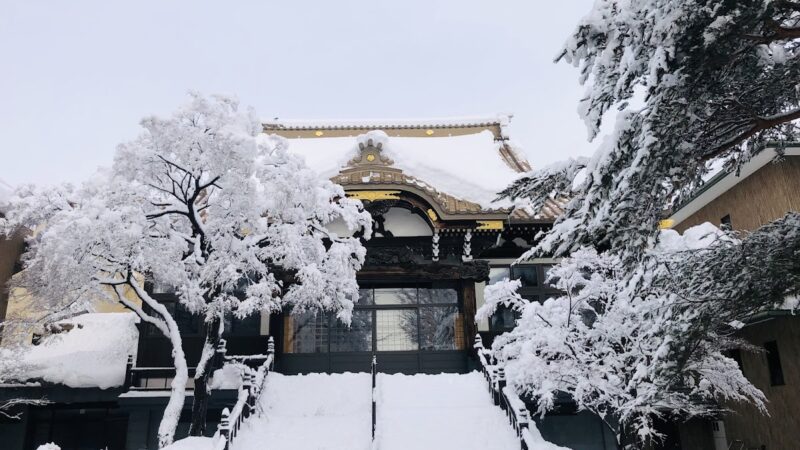
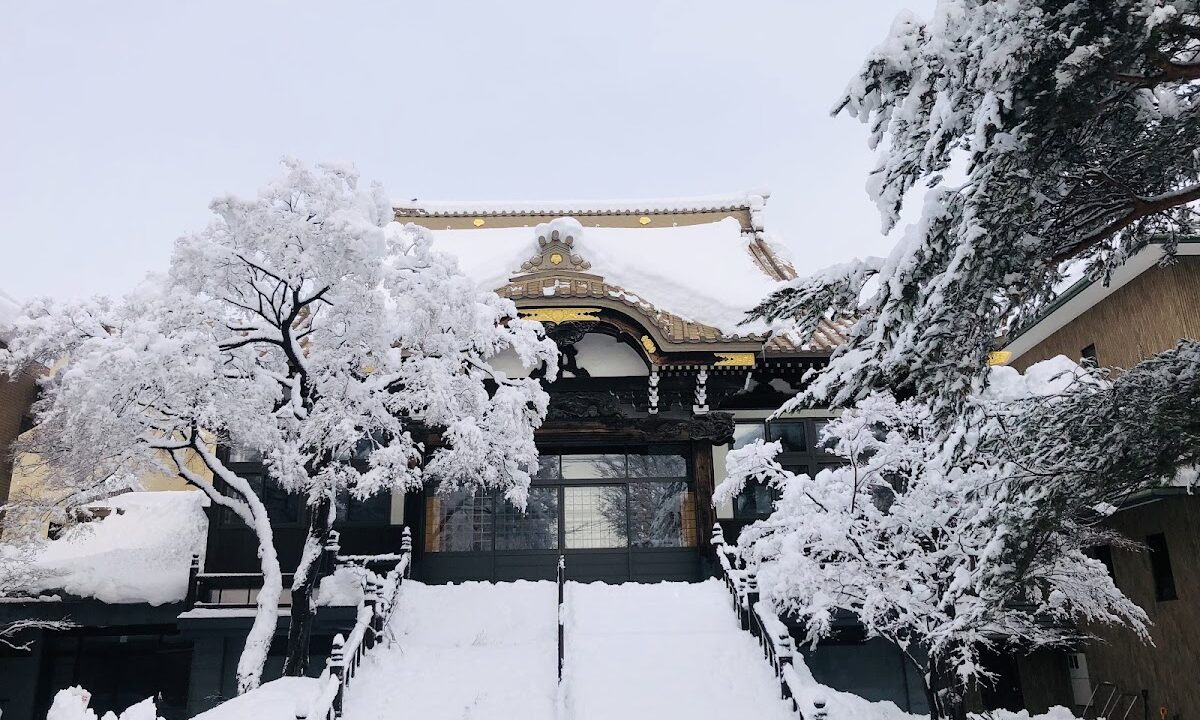
Kenshoji Temple, located in Teine-ku, Sapporo, Hokkaido, is a historic temple that continues to uphold the teachings of Jodo Shinshu Buddhism. It is beloved by many parishioners and visitors for its community-based activities and warm atmosphere. This article provides detailed information about Kenshoji Temple, from its basic information and history to access methods, cemeteries, perpetual memorial services, and funeral and memorial service information.
Basic Information about Kenshoji Temple
Kenshoji Temple is a Buddhist temple located in Teinehoncho, Teine-ku, Sapporo, Hokkaido. Detailed basic information is summarized below.
Location and Contact Information
Address: 8-30, Teinehoncho 2-jo 3-chome, Teine-ku, Sapporo, Hokkaido 006-0022, Japan
Phone Number: 011-681-2377
Located in a quiet residential area of Teinehoncho, it has long been cherished as a spiritual center for the community. Telephone inquiries cover a wide range of matters, including consultations regarding memorial services and graves, and questions about visiting the temple.
Sect and Religious Background
Kenshoji Temple is classified as an independent (Jodo Shinshu Higashi Honganji-ha) temple. Jodo Shinshu Buddhism considers Shinran Shonin as its founder and is based on the teaching of “other-power vow,” which is faith in the original vow of Amida Buddha.
The Jodo Shinshu Higashi Honganji-ha is a sect with Higashi Honganji Temple in Kyoto as its head temple, and it teaches that all people can be saved equally by chanting the Nembutsu, “Namu Amida Butsu.” Kenshoji Temple also carries on this tradition, playing a role in spreading Buddhist teachings to the local community.
Temple Characteristics
Kenshoji Temple is highly regarded as a “bright and clean cemetery,” characterized by its open and friendly atmosphere, unlike the traditional, dimly lit image of cemeteries. The head priest is known for his approachable and easy-to-talk-to nature, creating a comfortable environment where even first-time visitors can feel at ease.
History and Origins of Kenshoji Temple
Hokkaido Development and Temple Establishment
Many temples in Hokkaido were established alongside the development of the region after the Meiji era. Kenshoji Temple is one such temple that has grown alongside the development of the Teine area. Located west of Sapporo, the Teine area saw population growth with the development of agriculture and railways.
During the pioneering period in Hokkaido, people who migrated from Honshu brought their faith from their homeland, leading to the establishment of temples throughout the region. Kenshoji Temple, within this historical context, was established as a spiritual support for the local residents and continues to uphold its Buddhist traditions to this day.
Jodo Shinshu Buddhism and Hokkaido
Jodo Shinshu Buddhism is one of the most widely practiced Buddhist sects in Hokkaido. Many of the settlers were from the Hokuriku and Tohoku regions, where Jodo Shinshu Buddhism was prevalent. Therefore, numerous Jodo Shinshu temples were built throughout Hokkaido, and Kenshoji Temple is one of them, supporting the local faith.
Development of the Teine District and the Role of the Temple
The Teine district rapidly developed as a residential area of Sapporo City from the 1960s onward. In 1989, it became an independent ward, Teine Ward, and currently has a population of approximately 140,000. Kenshoji Temple has played an important role in supporting residents’ ceremonies, including weddings, funerals, and annual events, alongside the development of the area.
Access and Surrounding Environment
Access by Public Transportation
The nearest station to Kenshoji Temple is Teine Station on the JR Hakodate Main Line.
Access from JR Teine Station:
- Approximately 15 minutes on foot from Teine Station
- If using the bus from Teine Station, get off at the “Teine Honcho 2-jo 3-chome” bus stop and walk for approximately 3 minutes.
Teine Station is approximately 15 minutes from Sapporo Station by rapid train and approximately 20 minutes by local train, making it easily accessible from central Sapporo.
Access by Car
From Central Sapporo:
- Approximately 30 minutes west on National Route 5 towards Teine Honcho
- Approximately 10 minutes from the Sapporo-Otaru Expressway “Teine IC”
The temple has a parking lot, and visits by private car are possible for memorial services and worship. Please contact the temple in advance for detailed parking information.
Surrounding Environment and Map Information
Kenshoji Temple is located in a residential area of Teine Honcho 2-jo 3-chome, in a well-developed living environment with schools, shops, and parks nearby. You can worship in a quiet and peaceful environment.
For maps and detailed route guidance, you can find accurate location information and route directions by searching for “Kenshoji Temple, Teine-ku, Sapporo” on online map services such as Google Maps or Yahoo! Maps.
Nearby Cemeteries
The following cemeteries are located near Kenshoji Temple:
- Sapporo Municipal Teine Cemetery: A public cemetery in Teine-ku
- Tomioka Joen: A private cemetery in Tomioka, Teine-ku
- Sapporo Municipal Yamaguchi Cemetery: A public cemetery in Yamaguchi, Teine-ku
These cemeteries are relatively close to Kenshoji Temple, making it possible to visit multiple graves during a visit.
About Cemeteries and Perpetual Memorial Services at Kenshoji Temple
Characteristics of the Cemetery
Kenshoji Temple’s cemetery is highly regarded as a “bright and clean cemetery.” Unlike traditional cemeteries with a dark and closed-off image, it offers an open and well-maintained environment.
The temple manages the cemetery, and regular cleaning and environmental maintenance ensure that visitors can pay their respects at any time.
Perpetual Memorial Services, Tree Burials, and Columbariums
In modern times, the need for perpetual memorial services is increasing for those without successors or those who do not want to burden their descendants with the responsibility of maintaining the grave. Kenshoji Temple also accepts consultations regarding perpetual memorial services.
What is a Perpetual Memorial Service?:
This is a form of memorial service where the temple takes responsibility for providing perpetual memorial services. This can include options such as interring remains in a communal grave without individual graves, or individual interment for a certain period before communal interment.
Tree Burial:
A popular burial method for those who wish to return to nature, where cremated remains are placed under a tree.
Columbarium:
A facility where cremated remains are kept indoors, offering the advantage of being able to visit regardless of the weather.
For specific perpetual memorial service plans and costs at Kenshoji Temple, we recommend contacting the temple directly.
Costs and Consultation Regarding Graves
The costs associated with purchasing a grave and perpetual memorial services vary greatly depending on the cemetery plot, type of tombstone, and form of memorial service. General cost estimates are as follows:
- Cemetery Plot Usage Fee: From several hundred thousand yen, depending on the size and location of the plot.
- Tombstone Cost: Approximately 1 million to 3 million yen, depending on the design and stone material.
- Perpetual Memorial Service Fee: Approximately 100,000 to 500,000 yen (in the case of communal burial).
However, these are general estimates, and the actual costs at Kenshoji Temple should be confirmed directly with the temple.
Support for Grave Closure
More and more people are considering grave closure due to reasons such as living far away or difficulty managing the grave due to old age. Kenshoji Temple accepts consultations regarding grave closure and can provide advice on procedures for reburial and the relocation of remains.
The general process for closing a grave is as follows:
- Consultation and agreement with relatives
- Decision on a new burial site
- Application to the current cemetery administrator
- Application for permission to rebury the remains to the local government
- Removal of remains and removal of the tombstone
- Interment at the new burial site
Funeral and Memorial Service Information
Funeral and Memorial Service
Kenshoji Temple can conduct funerals according to the customs of Jodo Shinshu Buddhism. Jodo Shinshu funerals are positioned as a place to confirm that the deceased has attained rebirth in the Pure Land through the vow of Amida Buddha, and as a place for the bereaved family to encounter Buddhist teachings.
Characteristics of Jodo Shinshu Funerals:
- A ceremony of gratitude to Amida Buddha, rather than a memorial service for the deceased.
- Chanting of sutras centered on the Nembutsu, “Namu Amida Butsu.”
- No purifying salt is used (because Jodo Shinshu does not consider death to be impure).
Regarding the scale and format of the funeral (general funeral, family funeral, direct cremation, etc.), we can discuss options according to the wishes of the bereaved family.
Memorial Services
Kenshoji Temple holds various memorial services.
Main Memorial Services:
- First Seven Days: 7 days after death
- Forty-Ninth Day: 49 days after death (full mourning period)
- First Anniversary: 1 year after death
- Third Anniversary: 2 years after death
- Seventh Anniversary: 6 years after death
- Thirteenth Anniversary: 12 years after death
- Seventeenth, Twenty-Third, Twenty-Seventh, and Thirty-Third Anniversary
In Jodo Shinshu Buddhism, memorial services are not primarily for the purpose of commemorating the deceased, but are considered important as an opportunity for bereaved families to engage with Buddhist teachings and reaffirm the teachings of Amida Buddha.
Obon and Higan Events
Kenshoji Temple holds memorial services and events during the Obon and Higan periods.
Obon:
In Hokkaido, both the first Obon (July) and the old Obon (August) are observed in some areas, but most events are held in accordance with the old Obon, from August 13th to 16th.
Ohigan:
Ohigan is a seven-day period centered around the spring and autumn equinoxes, with three days before and three days after. During this period, people visit graves and hold memorial services at temples.
Annual Events
Jodo Shinshu temples generally observe the following annual events:
- Shushōe: New Year’s memorial service
- Gōtane: Memorial service celebrating the birth of Shinran Shonin (May 21st)
- Obon Memorial Service: Memorial service to remember ancestors
- Hōonkō: Memorial service on the anniversary of Shinran Shonin’s death (around November 28th)
For specific dates of annual events at Kenshōji Temple, please contact the temple directly. ## The Abbot and the Temple’s Atmosphere
The Abbot’s Personality
The abbot of Kenshoji Temple is known for being “approachable and easy to talk to.” Even first-time visitors to the temple or those unfamiliar with Buddhist rituals can feel comfortable seeking advice in a warm and welcoming atmosphere.
He offers a wide range of consultations, including questions about Buddhist rituals and memorial services, advice on graves, and life’s worries, providing spiritual support to the local community.
The Temple’s Atmosphere and Reputation
Visitors have given positive feedback, describing it as a “bright and clean cemetery” and “different from the image of traditional, dimly lit cemeteries.” The open and well-maintained environment provides a peaceful space for visiting graves and attending memorial services.
Points to Note and Manners When Visiting Kenshoji Temple
Manners for Visiting the Temple
When visiting the temple, please observe the following basic manners:
- Dress Code: For memorial services, semi-formal attire is generally appropriate. For regular visits, please wear clean and presentable attire.
- Greetings: Bow and pray quietly in the main hall.
- Photography: Obtain permission beforehand to take photos inside the main hall or in the cemetery.
- Mobile Phones: Set to silent mode and refrain from making calls.
- Garbage: Take your trash home or dispose of it in the designated area.
Customs specific to Jodo Shinshu Buddhism
Jodo Shinshu Buddhism has customs that differ from other sects:
- Incense Offering: Offered once or twice (varies by sect).
- Prayer Beads: Worn on both hands.
- Prayer Hands: Bring fingers together in front of your chest.
- Nembutsu: Chant “Namu Amida Butsu”.
For First-Time Visitors
If you are visiting Kenshoji Temple for the first time, we recommend contacting us by phone in advance. The head priest and temple staff will be happy to assist you, so feel free to ask any questions or express any concerns you may have.
Temple Culture and Community Involvement in Teine Ward
History and Culture of Teine Ward
Teine Ward is located in the western part of Sapporo City, a naturally rich area with Mount Teine as its backdrop. Historically, it was called “Teine” (wet/wetland) in the Ainu language, and it developed through settlement after the Meiji era.
From the 1960s, residential areas expanded as a commuter town for Sapporo, and in 1989, Teine Ward was established by separating from Nishi Ward. Currently, it is the 6th ward of Sapporo City, with a population of approximately 140,000.
The Role of Temples in the Community
Temples in Teine Ward, including Kenshoji Temple, function not merely as religious institutions, but as central figures in the local community. They are involved not only in funerals and memorial services, but also in local events and cultural activities, serving as a spiritual anchor for residents.
Especially in today’s aging society, temples play an important role as places for social interaction among the elderly, who tend to be isolated.
Buddhist Culture in Hokkaido
Hokkaido’s Buddhist culture is characterized by the coexistence of diverse sects brought by immigrants from Honshu. Besides Jodo Shinshu, temples of various other sects such as Soto Zen, Shingon, and Nichiren exist, each supporting local faith.
Buddhist rituals have also developed in ways adapted to Hokkaido’s unique climate and lifestyle. For example, due to the difficulty of visiting graves in winter, some areas focus on the spring equinox.
Frequently Asked Questions (FAQ)
Q1: What sect does Kenshoji Temple belong to?
A1: Kenshoji Temple is an independent temple (Jodo Shinshu Higashi Honganji sect). Jodo Shinshu considers Shinran Shonin as its founder and is based on the teaching of “other-power vow,” believing in the original vow of Amida Buddha.
Q2: Is a reservation necessary for a first visit?
A2: Reservations are not required for regular visits. However, if you wish to meet with the head priest for consultations regarding memorial services or graves, we recommend contacting us by phone (011-681-2377) in advance.
Q3: Is there parking available?
A3: The temple has parking available, but please contact the temple in advance for details on the number of spaces and usage conditions. It may be crowded during memorial services.
Q4: How much does perpetual memorial service cost?
A4: The cost of perpetual memorial service varies depending on the type and duration of the service. Generally, it ranges from 100,000 to 500,000 yen, but please contact Kenshoji Temple directly for specific costs.
Q5: Can I request funeral or memorial services even if I am not a temple parishioner?
A5: Many temples accept requests for funeral and memorial services from non-parishioners. However, conditions and costs may differ, so please consult with the temple in advance.
Q6: I would like to purchase a grave. How do I proceed?
A6: First, please contact the temple (011-681-2377) to check the availability of cemetery plots, costs, and conditions. Afterward, you will visit the site and proceed with the contract procedures.
Q7: How long does it take to get there from Teine Station?
A7: It’s about a 15-minute walk from JR Teine Station. If you take the bus, get off at the “Teine Honmachi 2-jo 3-chome” bus stop and it’s about a 3-minute walk.
Q8: How do Jodo Shinshu funerals differ from those of other sects?
A8: In Jodo Shinshu, funerals are not seen as memorial services for the deceased, but rather as rituals of gratitude to Amida Buddha. Other characteristics include the non-use of purifying salt and the bestowal of a Buddhist name instead of a posthumous Buddhist name.
Summary: Kenshoji Temple is a warm, community-based temple
Kenshoji Temple, located in Teine Ward, Sapporo City, Hokkaido, is a Jodo Shinshu temple that has supported the faith of local people for many years. This temple boasts many attractive features, including a bright and clean cemetery, a friendly and approachable head priest, and convenient access.
As a reliable resource for various life events such as funerals, memorial services, consultations regarding graves, and perpetual memorial services, it will continue to contribute to the community.
If you are considering visiting or consulting with Kenshoji Temple, please feel free to contact us by phone (011-681-2377). They will warmly and courteously address your questions and concerns.
For those seeking a temple in Teine Ward, those interested in learning about the teachings of Jodo Shinshu Buddhism, or those seeking advice on graves and perpetual memorial services, Kenshoji Temple is a trustworthy option.