Complete Guide to Kissho-soji Temple (Gose City, Nara Prefecture) | History and Highlights of the Birthplace of En no Gyoja
Kissho-soji Temple, located in Chihara, Gose City, Nara Prefecture, is an ancient temple of the Honzan Shugendo sect, revered as the birthplace of En no Gyoja (En no Ozunu), known as the founder of Shugendo. Situated at the foot of the Katsuragi Mountains, this temple boasts a history of over 1400 years and remains a sacred site visited by many worshippers.
This article provides detailed information you should know before visiting Kissho-soji Temple, including its history, highlights, annual events, and access methods.
What is Kissho-soji Temple? | An Ancient Temple Built on the Birthplace of Shugendo
Kissho-soji Temple, also known as Chihara-san Kongoju-in, is a temple of the Honzan Shugendo sect, also called “En no Gyoja’s Birthplace.” The Chihara district of Gose City, Nara Prefecture, is considered the birthplace of En no Gyoja Jinben Daibosatsu, the founder of Shugendo (Japanese mountain asceticism), and this temple is said to have been founded by En no Gyoja himself.
Origin of the Temple Name
The temple’s name, “Kichijosoji,” is said to originate from the fact that En no Gyoja built a hermitage using a grass called “Kisshosou” (auspicious grass) and enshrined Buddhist deities there. Kisshosou is considered an auspicious plant in Buddhism and is also known as the grass on which Shakyamuni Buddha sat when he attained enlightenment. The legend that he used this grass to establish his first training ground is passed down as a story symbolizing the origins of Shugendo.
About En no Gyoja (En no Ozunu)
En no Gyoja is a legendary Shugendo practitioner said to have been born in this Chihara area in 634 (the 6th year of Emperor Jomei’s reign) during the Asuka period. His real name was En no Ozunu, and it is said that he underwent rigorous training on Mount Katsuragi and Mount Omine, acquiring magical powers and supernatural abilities.
En no Ozunu established Shugendo, a fusion of mountain worship, Buddhism, and Taoism, and has been revered as the ancestor of later generations of mountain ascetics. His life is shrouded in many legends, and he is said to have possessed superhuman abilities such as flying and commanding demons.
History of Kichijōsōji Temple | 1400 Years of Rise and Fall
Founding and Prosperity
According to temple tradition, Kichijōsōji Temple was founded at the behest of Emperor Jomei. It is said to have been built to commemorate the birth of En no Ozunu and to pass on his miraculous powers to future generations.
From ancient times to the Middle Ages, Kichijōsōji Temple flourished greatly as a sacred site of Shugendo. At its peak, the temple grounds stretched 4 kilometers east to west and 5 kilometers north to south, encompassing 49 temples and bustling with numerous ascetic monks and worshippers. It served as a base for ascetic training in the Katsuragi mountain range and a center of En no Gyoja worship, attracting ascetic monks from all over Japan.
Warfare and Reconstruction during the Nanboku-cho Period
The greatest turning point in the history of Kichijosoji Temple was the warfare during the Nanboku-cho period. In 1349 (Jowa 5), all 49 temples were completely destroyed by fire during a conflict led by the forces of Ko no Moronao.
Reconstruction from this devastating damage took many years. The current main hall was rebuilt during the Oei era (1394-1428) after the war, and is a valuable structure with a history of over 600 years. The main hall and the founder’s hall (Gyoja hall) are built as a single integrated structure, preserving the characteristics of medieval temple architecture.
Kichijōsōji Temple in the Modern Era
Despite the influence of the Meiji-era separation of Shinto and Buddhism and the anti-Buddhist movement, Kichijōsōji Temple has continued to uphold its faith as the birthplace of En no Gyōja. Currently, it belongs to the Honzan Shugendō sect and is also known as a pilgrimage site of the En no Gyōja Sacred Sites Association.
In recent years, while preserving traditional beliefs, it has also undertaken new initiatives, attracting attention for being the first in the world to enshrine a moe character as an object of worship.
Highlights of Kichijōsōji Temple | Main Spots within the Temple Grounds
Main Hall | A Historic Building from the Ōei Era
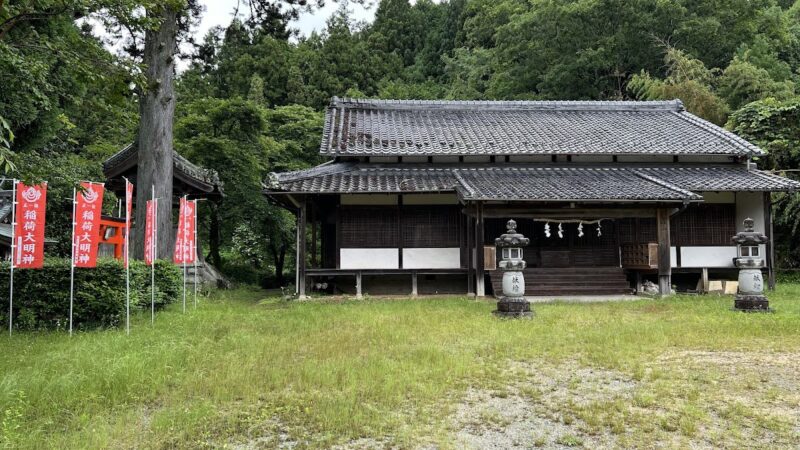
The main hall of Kichijōsōji Temple is a historical building said to have been rebuilt in 1396 (Ōei 3). Its tranquil wooden structure strongly retains the atmosphere of medieval temple architecture.
The main hall enshrines the Five Great Power Deities, centered around Fudo Myoo, as the principal image. The Five Great Powers refer to the five deities Fudo Myoo, Gosanze Myoo, Gundari Myoo, Daiitoku Myoo, and Kongoyasha Myoo, all of whom are believed to possess powerful protective abilities. These deities are highly regarded in Shugendo (Japanese mountain asceticism) and demonstrate a deep connection to En no Gyoja.
Gyoja-do (Founder’s Hall) | Statues of En no Gyoja and His Mother
The Gyoja-do (Founder’s Hall), connected to the main hall, is the most important place of worship at Kissho-soji Temple. Here, a statue believed to have been created by En no Gyoja himself at the age of 32, and a statue of his mother, Shiratoume, are enshrined.
The statue of En no Gyoja himself depicts his rigorous training as a Shugendo practitioner, and his expression is said to embody profound spirituality. The presence of his mother’s statue is interesting as it reveals En no Gyoja’s human side and illustrates the importance of filial piety in Shugendo.
The Well of En no Gyoja’s First Bath
Within the temple grounds remains an ancient well known as the “Well of En no Gyoja’s First Bath.” This well is a sacred spring said to have been used for En no Gyoja’s first bath after his birth.
Nearly 1400 years later, this well still holds water, making it an important historical site indicating the birthplace of En no Gyoja. Many visitors come to this well, reflecting on the moment of En no Gyoja’s birth.
The Sitting Stone
Another historical site associated with En no Gyoja remains within the temple grounds: the “Sitting Stone.” This stone is said to be where the young En no Gyoja rested during breaks in his training.
Although a natural stone, its shape is just right for a person to sit on, and it is carefully preserved as a relic that evokes the days En no Gyoja spent in this place.
Atmosphere of the Temple Grounds
While the grounds of Kichijosoji Temple no longer bear the vestiges of its former vast temple complex, they are enveloped in a tranquil and solemn atmosphere. To the west, the Katsuragi mountain range rises, offering a view of the sacred mountain where the young En no Gyoja trained.
Ancient trees flourish within the grounds, allowing visitors to experience the changing seasons. Many worshippers visit, especially during the cherry blossom season in spring and the autumn foliage season.
Chihara no Otondo | A Representative Fire Festival of Nara Prefecture
The “Chihara no Otondo,” held annually on January 14th at Kichijosoji Temple, is known as a representative traditional event of Nara Prefecture. This fire festival has been passed down since ancient times as a Shinto ritual to predict the year’s harvest.
Overview of the Otondo
At the Chihara no Otondo, two gigantic torches, one male and one female, approximately 5 meters tall, are erected within the temple grounds. The torches are lit, and the way they burn is used to predict the abundance or scarcity of the year’s harvest.
A good burning of the male torch indicates a bountiful harvest, while a good burning of the female torch indicates a poor harvest. Local people intently watch the flames. This divination has long been considered highly accurate and has attracted the faith of those involved in agriculture.
History and Significance of the Event
The origin of the Chihara O-Tondo is uncertain, but it is believed to have developed as a unique event combining Shugendo (mountain asceticism) and agricultural rituals. The purification and pre-celebration rituals using fire are deeply connected to Shugendo practices.
Currently, in addition to its significance as a harvest prediction, it is also a popular event for praying for good health and safety for the family. Many worshippers visit every year to offer their prayers for the new year.
Information on Goshuin (temple stamps) and Visiting Kichijosoji Temple
About Goshuin
Kichijosoji Temple offers Goshuin to visitors. You can also receive a Goshuin (temple stamp) as a pilgrimage site of the En no Gyoja Pilgrimage Association, making it an important stamp for those on a pilgrimage to sacred sites of Shugendo (mountain asceticism).
The Goshuin bears calligraphic inscriptions such as “Birthplace of En no Gyoja” and “Kichihara-san Kichijosoji Temple,” indicating its status as the birthplace of En no Gyoja. Many people receive the Goshuin as a memento of their visit and as proof of their faith.
Manners and Precautions for Visiting
Kichijosoji Temple is a temple that still functions as a place of worship. Please observe the following points when visiting the temple:
- Be quiet within the temple grounds and avoid disturbing other visitors.
- Take photographs only in designated areas (prior confirmation is required for photographing Buddhist statues, etc.).
- Do not touch buildings or historical sites.
- Please take all your trash with you.
Access Information | How to Get to Kichijosoji Temple
Basic Information
Address: 279 Chihara, Gose City, Nara Prefecture 639-2241
Phone: 0745-62-3472
Sect: Honzan Shugendo Sect
Mountain Name: Chihara-san
Temple Name: Kongojuin
Access by Public Transportation
If using JR
Approximately 10 minutes on foot from JR Wakayama Line “Tamate Station”. The route from the station is relatively flat and easy to walk.
If using Kintetsu Railway: From Kintetsu Gosho Station on the Kintetsu Gosho Line, take a Nara Kotsu bus for approximately 8 minutes, get off at the Chihara bus stop, and walk for approximately 2 minutes. Since bus service is limited, it is recommended to check the timetable in advance.
Access by Car
Using the Expressway: Approximately 5 minutes from the Gosho IC on the Keina-Wa Expressway. It is close to the interchange and easily accessible.
Parking: There is parking space for visitors on the temple grounds, but congestion is expected during events such as the O-Tondo festival. Consider using public transportation.
Nearby Tourist Attractions
Many historical temples and shrines of Gosho City are scattered around Kissho-ji Temple.
Kamotsuba Shrine: An ancient shrine known as the guardian shrine of Gosho City. An important shrine for understanding the history of the Katsuragi region.
Koun Zen Temple: A Zen temple located in Gosho City. Zen meditation experiences are offered in the quiet temple grounds. Mount Katsuragi
A sacred mountain where En no Gyoja is said to have trained. There’s a ropeway, and the view from the summit is spectacular.
Visiting these temples and shrines together will allow you to gain a deeper understanding of the history and culture of Gose City.
Nearby Accommodations
When considering accommodation near Kichijosoji Temple, the following options are available:
Kashihara Oak Hotel
A hotel located near Kintetsu Kashihara-jingumae Station. While it’s a bit of a distance from Kichijosoji Temple, it’s convenient as a base for sightseeing in central Nara Prefecture.
Guesthouses and Inns in Gose City
There are also small accommodations in Gose City where you can enjoy dishes made with local ingredients.
Hotels in Nara City
A popular plan is to stay in Nara City and visit Kichijosoji Temple on a day trip. This makes it easy to combine with other tourist attractions such as Nara Park and Todaiji Temple.
Shugendo and Katsuragi Shugendo
Understanding Shugendo and Katsuragi Shugendo is crucial for understanding Kichijosoji Temple.
What is Shugendo?
Shugendo is a unique Japanese religion that originated from the syncretism of ancient Japanese mountain worship with Buddhism, Taoism, and Onmyodo (Japanese esoteric cosmology). It aims to gain spiritual power through rigorous mountain training, and practitioners are called Shugenja or Yamabushi.
En no Gyoja is considered the founder who systematized Shugendo, and Kichijosoji Temple, his birthplace, is a sacred site that can be considered the origin of Shugendo.
The Path of Katsuragi Shugendo
The Katsuragi mountain range is said to be the place where En no Gyoja first trained, and a unique tradition of Shugendo, known as “Katsuragi Shugendo,” was formed there. The training path from Kichijosoji Temple to Mount Katsuragi and then to Mount Kongo remains a sacred site walked by many Shugenja today.
In 2020, “Katsuragi Shugendo: The Birthplace of Shugendo, Preserved and Passed Down with the Villagers” was designated a Japan Heritage site, and Kichijosoji Temple was positioned as one of its constituent cultural properties. This led to a renewed recognition of its value as the birthplace of Shugendo.
Annual Events at Kichijosoji Temple
Besides the Chihara O-Tondo, Kichijosoji Temple holds various annual events.
First Three Days of the New Year
The temple is bustling with New Year’s worshippers, attracting many visitors for their first shrine visit of the year.
January 14th: Chihara O-Tondo
As mentioned above, this is a traditional event to predict the year’s harvest.
Spring and Autumn Memorial Services
Memorial services are held to commemorate En no Gyoja, attracting Shugendo practitioners and believers.
Participating in these events allows for a deeper experience of the faith of Kichijosoji Temple.
Summary | A Recommendation for Visiting Kichijōsōji Temple
Kichijōsōji Temple in Gose City, Nara Prefecture, is a sacred site with over 1400 years of history, marking the birthplace of En no Gyōja, the founder of Shugendō (Japanese mountain asceticism). There are many attractions, including historical sites associated with En no Gyōja, such as the well where he was given his first bath and the stone where he sat, the historic main hall rebuilt during the Ōei era, and the annual Chihara Ōtondō festival held on January 14th.
Its location at the foot of the Katsuragi Mountains is also appealing; the quiet temple grounds, surrounded by nature, are perfect for escaping from daily life and finding peace of mind. It’s a recommended temple not only for those interested in Shugendō and En no Gyōja, but also for those who want to experience the history and culture of Nara Prefecture.
Its convenient access is also a plus, being just a 10-minute walk from JR Tamate Station and a 5-minute drive from the Gose Interchange on the Keina-Wa Expressway. When visiting Nara Prefecture, be sure to visit Kichijōsōji Temple and experience the atmosphere of the birthplace of Shugendō.
Reflecting on the life of En no Gyoja and the history of Shugendo, spending time quietly visiting the temple will surely be a memorable experience.