
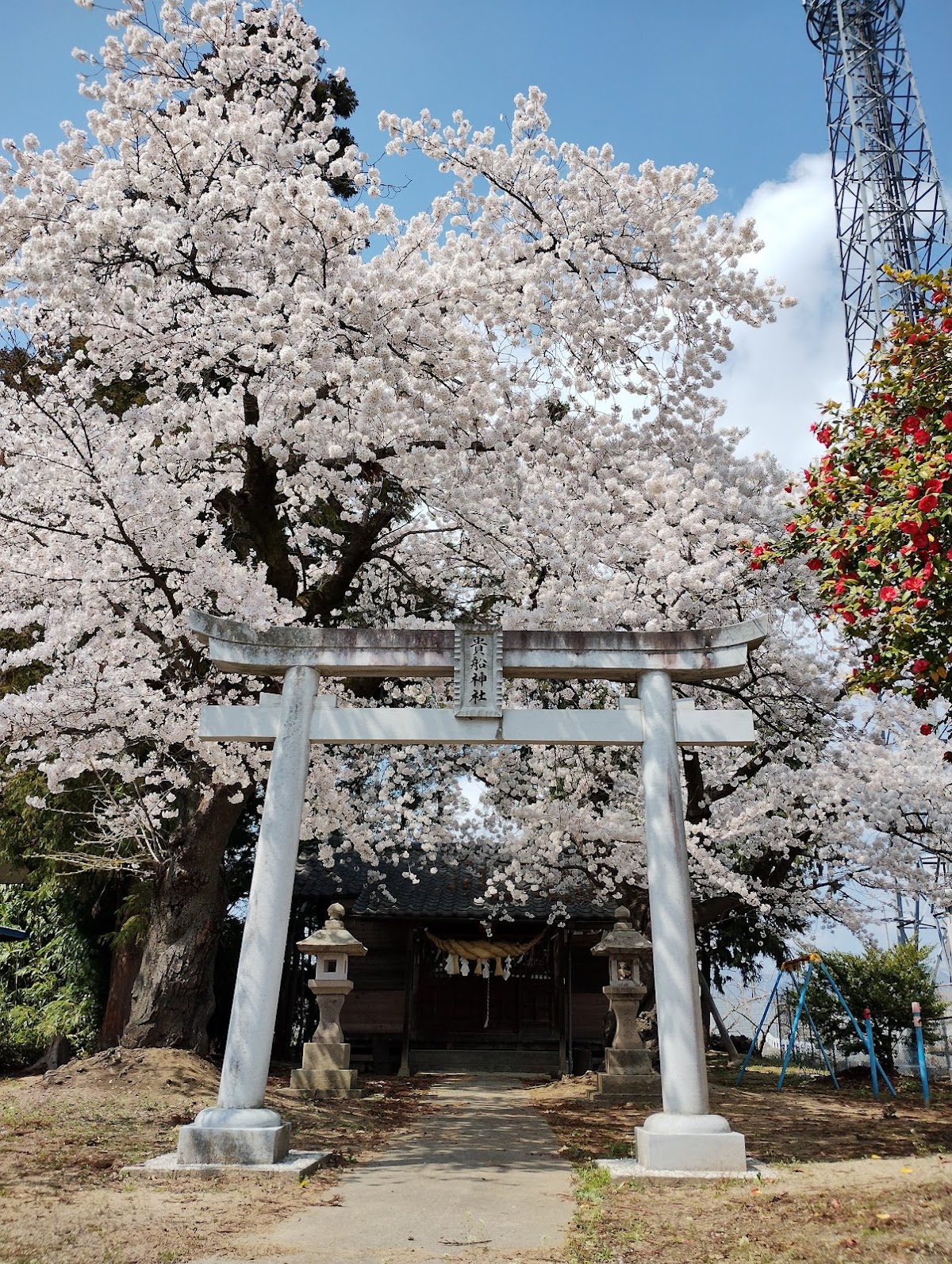
Complete Guide to Kifune Shrine (Takanashi, Okidaka, Fukushima City, Fukushima Prefecture)
Kifune Shrine, located in the Okidaka district in the northern part of Fukushima City, Fukushima Prefecture, is a historical shrine deeply rooted in the local community. As one of the 392 “Kifune Shrines” nationwide, this shrine, which carries on the lineage of water deity worship, provides a detailed explanation from its location and enshrined deities to its history and surrounding information.
Basic Information on Kifune Shrine
Location and Contact Information
Address: 35 Takanashi, Okidaka, Fukushima City, Fukushima Prefecture 960-0114
The Okidaka district, located northeast of the center of Fukushima City, is blessed with the rich natural environment of the Abukuma River system. Kifune Shrine has long been revered as the guardian deity of this region, attracting the faith of local residents.
Corporate Information
- Corporate Number: 5380005000721
- Date of Corporate Number Assignment: October 5, 2015 (Monday)
- Official Name as a Religious Corporation: Kifune Shrine
This corporate number is an official identification number that can be confirmed on the National Tax Agency’s corporate number publication site, and indicates official registration as a religious corporation.
Deities and Beliefs of Kifune Shrine
Lineage of Water Deity Worship
The name Kifune Shrine belongs to the lineage of approximately 392 “Kifune Shrines” throughout Japan. The head shrine of Kifune Shrine is located in Sakyo-ku, Kyoto City, Kyoto Prefecture, and is a central figure in water deity worship, enshrining Takaokami-no-kami as its principal deity.
There are several Kifune Shrines within Fukushima Prefecture, each revered as a deity protecting local water sources and agricultural water. The Kifune Shrine in the Okitaka district is also thought to have functioned as a place to pray for the prosperity of water resources and agriculture in the region.
Divine Status of the Enshrined Deities
In shrines of the Kifune Shrine lineage, the following deities are generally enshrined:
- Takaokami-no-kami: A dragon god who controls the water on the mountains
- Kuraokami-no-kami: A dragon god who controls the water at the bottom of the valleys
- Tamayorihime-no-mikoto: Goddess of water and matchmaking
These deities have been worshipped as gods who grant all kinds of wishes related to water, such as rainfall, cessation of rain, securing water sources, and abundant agricultural harvests.
History and Geography of the Okitaka District, Fukushima City, Fukushima Prefecture
Characteristics of the Okitaka District
The Okitaka district is located in the northern part of Fukushima City and is an agricultural area that spreads along a tributary of the Abukuma River. The place name “Okitaka” suggests a topography that was once a river floodplain, indicating a region deeply connected to water.
The Role of Shrines in the Region
From the Edo period to the Meiji period, the Okitaka area developed as a settlement centered on agriculture. Kifune Shrine played three important roles in this region:
- As the guardian deity, a spiritual pillar for the local residents
- As the water deity, a guardian deity of agricultural water
- As the center of festivals, a point of unity for the local community
Comparison with Kifune Shrines Nationwide
392 Kifune Shrines Nationwide
There are 392 shrines named “Kifune Shrine” throughout Japan. This is a relatively large number among shrine names nationwide, indicating the widespread belief in water deities.
Distribution by Prefecture
Kifune Shrines are distributed throughout all prefectures, but are particularly numerous in the following regions:
- Tohoku Region: Fukushima Prefecture, Miyagi Prefecture, Iwate Prefecture, etc.
- Kanto Region: Ibaraki Prefecture, Tochigi Prefecture, Gunma Prefecture, etc.
- Chubu Region: Niigata Prefecture, Nagano Prefecture, etc.
There are several Kifune Shrines within Fukushima Prefecture, and the Kifune Shrine in Okitaka, Fukushima City, is one of them, continuing the local faith to this day.
Other Kifune Shrines in Fukushima Prefecture
The following Kifune Shrines have been confirmed in Fukushima Prefecture:
- Kifune Shrine in Tsuchifune, Fukushima City (12, Tsuchifune Nitanda, Fukushima City, Fukushima Prefecture 960-2152)
- Kifune Shrine in Kunimi Town, Date District (19, Ashiarai, Izumida, Kunimi Town, Date District, Fukushima Prefecture 969-1782)
- Kifune Shrine in Kitakata City
- Kifune Shrine in Minamisoma City (Said to be related to the Shikinaisha Taka Shrine)
While each of these shrines has its own unique history and beliefs, they share a common foundation: the worship of water deities.
How to Access Kifune Shrines
Access by Car
Access to Kifune Shrine (Takanashi, Okidaka) from central Fukushima City is convenient by car.
Example Route:
- Head north from Fukushima Station on National Route 4
- Take the prefectural road towards the Okitaka area
- Estimated time: Approximately 20-30 minutes (depending on traffic conditions)
Access by Public Transportation
When using public transportation:
- Starting point: JR Fukushima Station
- Use a local bus or taxi
- Estimated time to the Okitaka area: Approximately 30-40 minutes
*Since bus services are limited, it is recommended to check the timetable in advance.
Parking Information
As this is a small shrine, it is recommended to check in advance whether there is a dedicated parking lot. When visiting, please be considerate of the surrounding residents and avoid causing any inconvenience.
Information on Nearby Shrines and Temples
Major Shrines in Fukushima City
There are numerous shrines and temples in Fukushima City. When visiting Kifune Shrine, you can also visit the following shrines:
Fukushima Inari Shrine
- A historic Inari shrine located in the heart of Fukushima City
- Worshipped as the god of business prosperity and abundant harvests
Haguro Shrine
- Known as the guardian shrine of Fukushima City
- A grand annual festival is held every October
Gokoku Shrine
- Located at the foot of Mt. Shinobu
- A shrine dedicated to war dead, attracting many worshippers
Temples and Shrines around the Okitaka District
The Okitaka district is dotted with small, locally rooted temples and shrines. These are valuable resources for understanding the region’s history and culture.
Annual Events and Festivals of Kifune Shrine
Annual Grand Festival
Like many shrines, Kifune Shrine is believed to hold an annual grand festival. Local parishioners and devotees gather, and events such as a portable shrine procession and Kagura (sacred dance) performances are likely to take place.
Water God Festival
As a shrine dedicated to the water god, it’s possible that festivals expressing gratitude for water were held during rice planting and harvest seasons. This was an important event in a community centered on agriculture.
Niiname-sai and Monthly Festivals
Depending on the size of the shrine, Shinto rituals such as the Niiname-sai (November 23rd) and monthly festivals are performed. These are traditional Japanese Shinto rituals that are still passed down today.
Historical Background of Kifune Faith
Relationship with Kyoto Kifune Shrine
Kifune shrines throughout Japan represent a spread of faith with the Kifune Shrine in Sakyo-ku, Kyoto City, Kyoto Prefecture as the head shrine. Kyoto’s Kifune Shrine is:
- Founding: According to shrine tradition, it is believed to have been established during the reign of Emperor Jimmu.
- Engishiki Jinmyocho: Listed as a Myojin Taisha (a major shrine).
- Twenty-Two Shrines: One of the 22 important shrines of the Heian period.
It is a highly prestigious shrine, and its divided spirits were invited to various locations throughout Japan.
Spread to the Tohoku Region
The exact time when Kifune worship spread to the Tohoku region is unclear, but the following factors are considered:
- Heian Period Conquest of the Emishi: The spread of the faith accompanied by the administration of Tohoku by figures such as Sakanoue no Tamuramaro.
- Migration of Samurai Groups in the Medieval Period: The introduction of the faith when members of the Minamoto and Taira clans migrated to Tohoku.
- Early Modern Period Land Development: The need for water deity worship accompanying agricultural land development during the Edo period.
It is presumed that Kifune Shrines in Fukushima Prefecture were also founded within this historical context.
Water Deity Worship and Agricultural Society
Role as a Water Deity
The water deity enshrined at Kifune Shrine was an extremely important figure in agricultural society:
Praying for Rain: Praying for rain during prolonged droughts
Praying to Stop the Rain: Praying to prevent floods caused by prolonged rain
Protection of Water Sources: Ensuring a stable supply of irrigation water
Praying for Abundant Harvest: Praying for a bountiful harvest through moderate rainfall
Significance in Modern Times
Even in modern times, water is essential as the source of life. Amidst the increasing extreme weather events caused by climate change, the worship of water deities is beginning to take on new meaning:
- Environmental Conservation Awareness: Recognition of the importance of water resources
- Coexistence with Nature: Maintaining reverence for nature
- Local Community: Maintaining community bonds centered around the shrine
Shrine Architecture and Grounds
Typical Structure of a Local Shrine
Kifune Shrine in Okitaka is presumed to be a small, community-based shrine. Typical Components of a Local Shrine:
Main Hall: The most sacred building where the enshrined deity is worshipped.
Worship Hall: The building where worshippers perform their prayers.
Torii Gate: The gate marking the entrance to the sacred area.
Water Basin: A place to purify oneself before worship.
Shrine Precincts: Small shrines enshrined in addition to the main hall.
Harmony with the Natural Environment
Many Kifune Shrines are located near water sources or rivers. The Kifune Shrine in Okitaka is also thought to be located in a place deeply connected to the local water resources, and likely possesses an appearance that harmonizes with the surrounding natural environment.
Etiquette and Manners for Visiting a Shrine
Basic Way to Visit a Shrine
Basic etiquette for visiting a shrine:
- Passing through the torii gate: Bow before entering the shrine grounds.
- Purifying yourself at the water basin: Left hand → Right hand → Mouth → Left hand
- In front of the main hall: Place your offering, bow twice, clap twice, and bow once.
- When leaving: After passing through the torii gate, turn around and bow once.
Special Ways to Pray to the Water God
At shrines dedicated to the water god, prayers related to water are offered with particular care:
- Prayers for a bountiful harvest
- Gratitude for the blessings of water
- Protection from floods
- Conservation of water resources
The Local Community and Kifune Shrine
The Parishioner System and Community Bonds
Kifune Shrine has been protected by local residents (parishioners) as the guardian shrine of the Okitaka district. The parishioner system plays a crucial role in the following ways:
- Maintenance and Management of the Shrine: Cleaning, repairs, and operation of festivals
- Passing on Tradition: Passing on the traditions of festivals and religious ceremonies to the next generation
- Community Building: Regional interaction centered around the shrine
Depopulation and the Future of Shrines
Like many rural areas, the Okitaka district may be experiencing population decline and aging. Challenges faced by small shrines:
- Difficulty in maintenance due to a decrease in parishioners
- Simplification or cancellation of festivals
- Deterioration of buildings and securing funds for repairs
However, at the same time, there are movements in various places to protect shrines as a part of the community’s identity.
Shrine Culture in Fukushima Prefecture
Characteristics of Shrines in Fukushima Prefecture
Fukushima Prefecture has over 3,000 shrines, where diverse beliefs coexist:
Isasumi Shrine (Aizumisato Town): The guardian shrine of the Aizu region
Tsutsukowake Shrine (Tanagura Town): The Ichinomiya (first-ranked shrine) of Mutsu Province
Soma Ota Shrine (Soma City): The tutelary shrine of the Soma clan
Differences in Beliefs by Region
Fukushima Prefecture is divided into three regions: Aizu, Nakadori, and Hamadori, each with its own distinct history and culture:
Aizu Region: Shrine culture reflecting the history of the Aizu Domain
Nakadori: The region including Fukushima City, with beliefs centered on agriculture and sericulture
Hamadori: A group of shrines influenced by the Soma clan
Kifune Shrine in Okitaka belongs to the Nakadori region and has developed within an agricultural-centered belief culture.
Kifune Shrine and the Faith of Matchmaking
The Relationship Between Water Deities and Matchmaking
Kifune Shrine in Kyoto is also famous as a “god of matchmaking.” This stems from a legend that Izumi Shikibu, a poet of the Heian period, prayed for reconciliation with her husband and had her wish granted.
Water Fortune Telling Slips
At the head shrine, Kifune Shrine, there is a unique type of fortune-telling slip called “water fortune telling slips,” where characters appear when the slip is floated on water. Whether this custom has spread to other Kifune Shrines varies from shrine to shrine.
Shrine Information in the Digital Age
Online Information Gathering
In modern times, it has become common to search for shrine information on the internet. Regarding Kifune Shrine (Okiko):
- Check basic information on corporate number search sites
- Check location using map apps
- Detailed information on shrine database sites
These are some possibilities.
QR Codes and Smartphone Use
Some shrines have installed QR codes on their grounds, allowing access to detailed information via smartphones. It helps improve convenience for visitors and facilitates information dissemination to younger generations.
Shrine Pilgrimage and Sightseeing
Tourist Spots in Fukushima City
Fukushima City tourist spots to visit in conjunction with a visit to Kifune Shrine:
Hanamiyama Park: A place praised by photographer Shotaro Akiyama as “a paradise in Fukushima,” known for its beautiful spring flowers.
Azuma Skyline: A scenic driving route in the Bandai-Azuma region.
Iizaka Onsen: One of the three famous hot springs of Oshu, a historic hot spring resort.
Fukushima Racecourse: A popular spot for horse racing fans.
How to Enjoy Shrine Pilgrimage
“Shrine pilgrimage,” visiting multiple shrines, has become a popular tourist style in recent years:
- Collecting Goshuin (Shrine Stamps): Obtaining Goshuin stamps at each shrine.
- Power Spot Pilgrimage: Feeling the energy of the shrines.
- Historical Exploration: Learning about the history of the region from the shrines.
- Photography: Photographing the beautiful shrine architecture and nature.
Preservation and Inheritance of Kifune Shrine
Cultural Value
Even small local shrines possess the following cultural value:
- Historical Value: A living document that conveys the history of the region
- Architectural Value: Traditional shrine architecture techniques
- Ethnological Value: A record of local beliefs and customs
- Social Value: The center of the local community
Passing on to the Next Generation
Initiatives to pass on the shrine’s traditions to the next generation:
- Education for Children: Opportunities to learn about local history and traditions
- Promoting Participation in Festivals: Encouraging participation in festivals by younger generations
- Preservation of Records: Recording with photographs and videos
- Information Dissemination: Sharing information through social media and websites
Summary: The Significance of Kifune Shrine (Okidaka)
Kifune Shrine, located at 35 Takanashi, Okidaka, Fukushima City, Fukushima Prefecture, is one of 392 Kifune Shrines nationwide and is an important presence that conveys the local water deity worship to the present day.
Officially registered under corporate number 5380005000721, this shrine, though small, holds great significance as a spiritual haven for local residents and as a place for preserving traditional Japanese religious culture.
Kifune Shrine, located in a community centered on agriculture, has offered prayers and expressed gratitude for the blessings of water. Its history symbolizes the very essence of Japanese culture, where people have lived in harmony with nature and appreciated its bounty.
In modern society, preserving such small shrines and passing them on to future generations has meaning beyond simply maintaining a religious facility. It is about protecting regional identity, remembering reverence for nature, and maintaining community bonds—important values that modern society is losing.
A visit to Kifune Shrine will be a valuable opportunity to experience this traditional Japanese culture and the history of the local community. When you visit Fukushima City, why not stop by Kifune Shrine in Okiko and spend some time in quiet prayer?


