Kitano Shrine (Kurayoshi City, Tottori Prefecture) Complete Guide | History, Deities, and Access Information
Located in Kitano, Kurayoshi City, Tottori Prefecture, Kitano Shrine is a historic shrine dedicated to Sugawara no Michizane, known as the god of learning. A divided spirit was invited from Kitano Tenmangu Shrine in Kyoto, and it has long been revered as a guardian deity of the region. This article comprehensively introduces everything you need to know before visiting Kitano Shrine, including its detailed history, enshrined deities, highlights within the grounds, visiting information, and access methods.
Basic Information about Kitano Shrine
Location: Kitano, Kurayoshi City, Tottori Prefecture (near 42-2 Omiya)
Deity Enshrined: Sugawara no Michizane
Shrine Rank: Former Village Shrine
Founded: Late Heian period to Kamakura period (estimated)
Annual Festival Day: September 25th
Telephone Number: 0858-28-1168 (Kitano Shrine Office)
Kitano Shrine is located in the Nishikurayoshi district of Kurayoshi City, in a quiet environment adjacent to the practice course of the Nishikurayoshi Driving School. It is affectionately known as “Tenjin-san” by local residents, and attracts many worshippers, especially during exam season.
History and Origins of Kitano Shrine
Founding and Establishment
While there are no clear records of the founding date of Kitano Shrine, it is said that in ancient times, a divided spirit of Sugawara no Michizane from Kitano Tenmangu Shrine in Kyoto was invited and enshrined as the guardian deity of the local people. It is estimated to have been founded during the late Heian period to the Kamakura period, a time when Tenjin worship spread throughout Japan.
Sugawara no Michizane was a scholar and politician of the Heian period, and due to his outstanding knowledge and sincere character, he came to be revered as the “god of learning.” In Kurayoshi, Michizane was enshrined with the hope of developing education and culture in the region.
Suffering and Reconstruction During the Sengoku Period
A major turning point in the history of Kitano Shrine was the events of the Sengoku period (Warring States period).
1529 (Kyoroku 2): The shrine suffered a disaster when its buildings were destroyed by a wildfire. This fire is believed to have resulted in the loss of valuable records and shrine buildings.
Tenbun 20 (1551): Sasaki Minbu-no-taifu Amago Haruhisa, a senior retainer of the Amago clan, a powerful daimyo family in Izumo Province during the Sengoku period, rebuilt the shrine buildings. The Amago clan had extended their influence to Hoki Province (present-day central-western Tottori Prefecture) at the time, and it is thought that they focused on the shrine’s restoration as part of their regional control. This restoration allowed Kitano Shrine to survive the turbulent Sengoku period.
Development during the Edo Period
During the Edo period, Kitano Shrine underwent further development.
Genna 2 (1616) September: Satomi Awa-no-kami Tadayoshi, who ruled Kurayoshi, constructed a new worship hall and Kagura hall, and donated several plots of rice fields. Satomi Tadayoshi was a daimyo who, after the Battle of Sekigahara, was transferred from Awa Province (present-day southern Chiba Prefecture) to Kurayoshi in Hoki Province by Tokugawa Ieyasu. The construction and donations by Satomi Tadayoshi marked a crucial turning point, strengthening the economic foundation of Kitano Shrine and stabilizing its maintenance and management. The new construction of the worship hall and Kagura hall created a suitable environment for conducting festivals and religious ceremonies, clearly defining its role as a center of local faith.
The shrine’s layout and ritual forms established during this period formed the foundation of Kitano Shrine and have been passed down to the present day.
Kitano Shrine in the Modern Era
Following the Meiji-era separation of Shinto and Buddhism and the reorganization of the shrine system, Kitano Shrine was designated a village shrine. During the Taisho era, the Tenjin Kōsha (Tenjin Religious Association) was organized, and religious activities by local residents became more active.
Even as times changed through the Showa, Heisei, and Reiwa eras, Kitano Shrine continued to serve as a spiritual pillar of the community and attract the faith of those seeking academic success. Especially during exam season, many students and their parents from both within and outside Kurayoshi City visit to pray for success, demonstrating that the ancient faith continues to thrive today.
About the Deity Enshrined: Sugawara no Michizane
The Life of Sugawara no Michizane
Sugawara no Michizane (845-903) was a scholar, politician, and Chinese poet of the early Heian period. He excelled in academics from a young age, passed the literary examination, and steadily rose through the ranks, eventually becoming Minister of the Right. However, due to slander from his political rival, Fujiwara no Tokihira, he was exiled to Dazaifu in 901, and died there two years later in despair.
After Michizane’s death, Kyoto experienced a series of disasters, including lightning strikes and epidemics, which were feared to be caused by his vengeful spirit. The imperial court restored Michizane’s honor and built Kitano Tenmangu Shrine to appease his spirit. Eventually, Michizane came to be revered as “Tenjin-sama,” and his worship as the god of learning and literature spread throughout the country.
Faith in Sugawara no Michizane as the God of Learning
The reason why Sugawara no Michizane is revered as the god of learning lies in his exceptional scholarship and literary talent. It is said that Michizane excelled in Chinese poetry from a young age, composing his first poem at the age of 11. Furthermore, he was appointed to the position of Professor of Literature at the age of 33, and played an active role as an educator at the highest educational institutions of the time.
Even today, people praying for success in entrance exams, academic achievement, and qualification exams visit Tenjin Shrines and Kitano Shrines throughout Japan. Kitano Shrine in Kurayoshi City is no exception, and is particularly crowded with worshippers during exam season.
Faith Related to Michizane
The following are some beliefs related to Sugawara no Michizane:
- Plum Blossoms: Michizane loved plum blossoms and composed many waka poems about them. The famous poem, “When the east wind blows, send forth your fragrance, plum blossoms; do not forget spring, even though your master is gone,” was composed when he was exiled to Dazaifu.
- Connection to Oxes: Sugawara no Michizane is said to have been born in the Year of the Ox, and there is a legend that when he died in Dazaifu, his tomb was designated at the spot where the ox-drawn cart carrying his body became immobile. Therefore, statues of reclining oxen are often found at Tenjin shrines.
- Aspect as a Thunder God: Because Michizane’s vengeful spirit was feared as a thunder god, he is also worshipped as a god who protects against lightning.
Highlights of the Shrine Grounds
Shrine Architecture
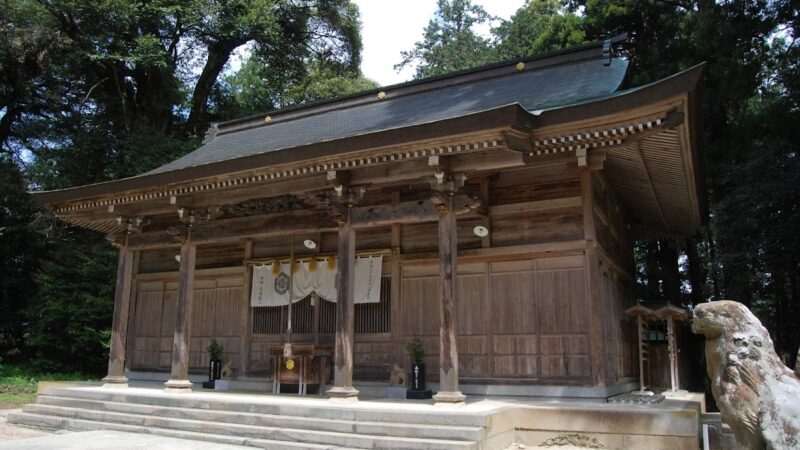
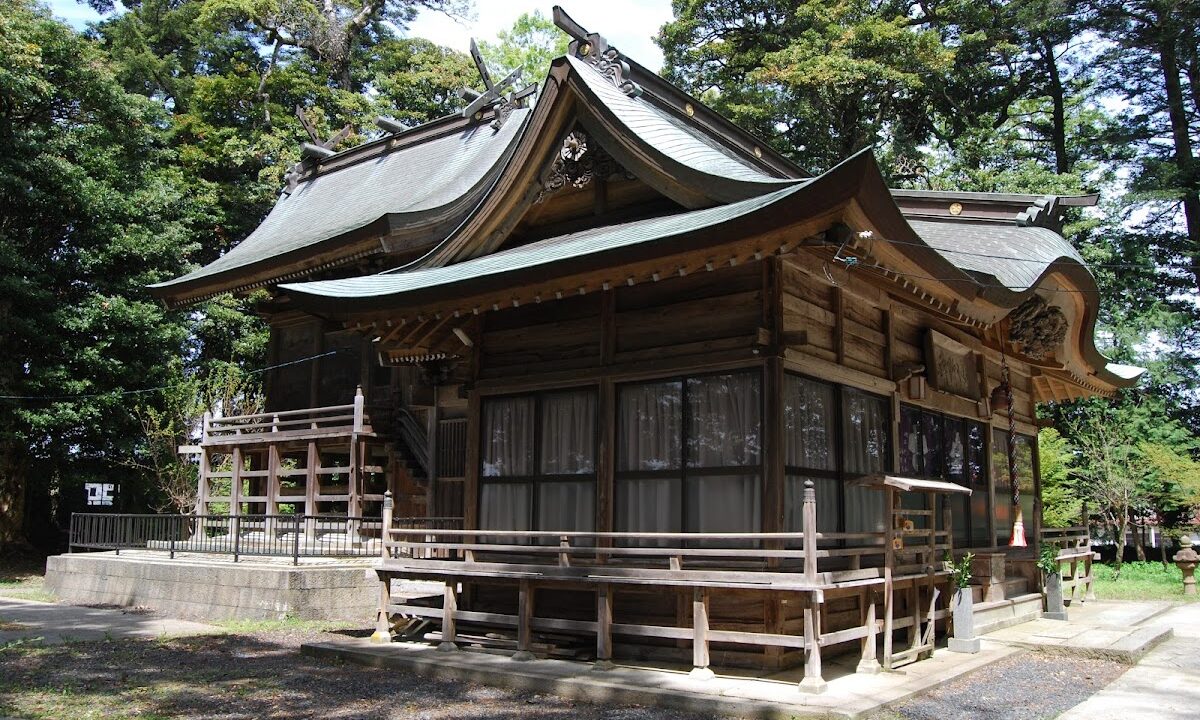
The shrine buildings of Kitano Shrine are based on the worship hall and Kagura hall built by Satomi Tadayoshi in the early Edo period. While repairs and renovations have been carried out throughout its long history, it still preserves the traditional style of shrine architecture.
The main hall is presumed to be in the Nagare-zukuri or Kasuga-zukuri style, and the worship hall functions as a place for worshippers to offer prayers. At the Kagura-den (sacred dance hall), Kagura and other dances are performed during the annual festival, serving as a venue for the preservation of local traditional performing arts.
Atmosphere of the Shrine Grounds
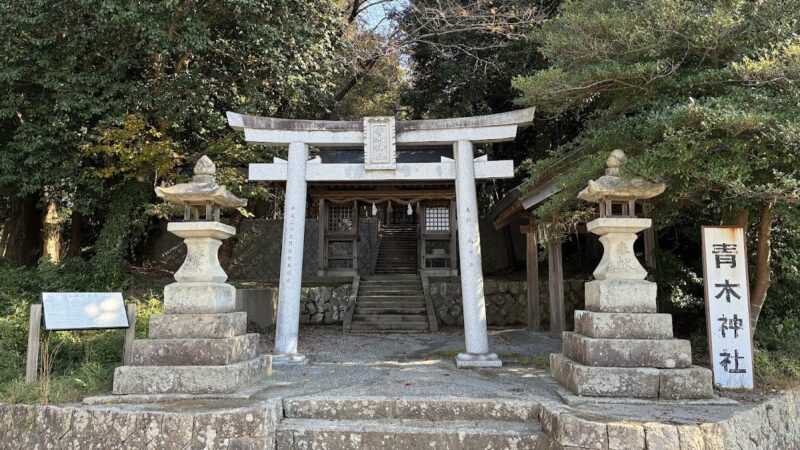
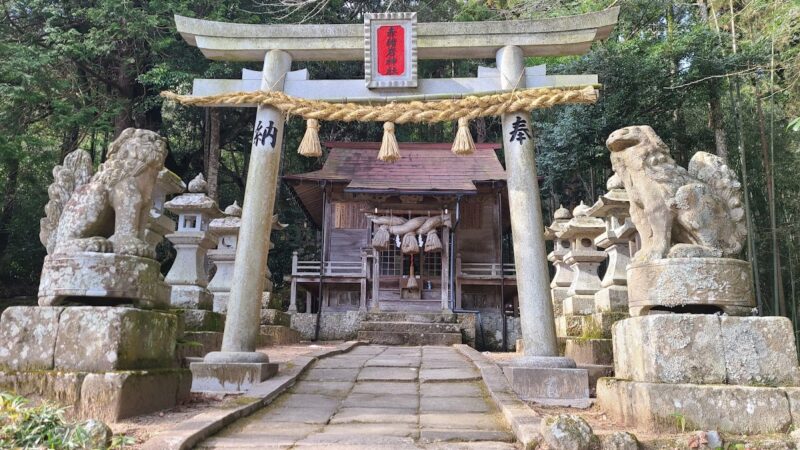
Despite being located in the heart of Kurayoshi city, Kitano Shrine’s grounds are enveloped in a tranquil atmosphere. Passing through the torii gate, trees line both sides of the approach, allowing visitors to enjoy the changing seasons.
Especially in spring, plum blossoms bloom, allowing visitors to admire the plum trees associated with Sugawara no Michizane. In autumn, the vibrant autumn leaves adorn the grounds, soothing the hearts of worshippers. The grounds are meticulously cleaned and maintained by local parishioners, preserving a warm and welcoming atmosphere for visitors.
Stone Monuments and Memorials
Throughout the shrine grounds are stone monuments and memorials that tell the history of Kitano Shrine. These inscribed with the shrine’s history, the names of past donors, and historical events of the region serve as valuable resources for local history research.
Annual Events and Festivals
Annual Festival (September 25th)
The most important festival at Kitano Shrine is the annual festival held on September 25th each year. On this day, prayers are offered to honor the divine virtues of Sugawara no Michizane, for a bountiful harvest, the safety of the community, and the prosperity of the parishioners.
During the annual festival, Shinto priests solemnly perform rituals, with representatives of the parishioners and local residents in attendance. Traditional Kagura and dances are performed in the Kagura Hall, providing an important opportunity to pass on local culture to future generations.
New Year’s Visit (January 1st-3rd)
During the New Year’s visit period, many worshippers visit Kitano Shrine. The shrine grounds are bustling with people praying for good health, family safety, academic success, and other blessings throughout the year. On New Year’s Day, the Saitansai (New Year’s Day Festival) is held to report the start of the new year to the gods.
New Year’s Visit (January 1st-3rd)
During the New Year’s visit period, many worshippers visit Kitano Shrine. The shrine grounds are lively with people praying for good health, family safety, and academic success throughout the year. On New Year’s Day, the Saitansai (New Year’s Day Festival) is held, reporting the start of the new year to the gods. ### Prayers for Success During Exam Season
At Kitano Shrine, which enshrines the god of learning, many students and their parents visit to pray for success in exams, especially during the exam season from January to March. You can see people writing the name of their desired school and their wishes for success on ema (votive tablets) and offering them, or receiving amulets.
Other Annual Events
- Tenjin-ko: Regular religious activities are held by the Tenjin-ko Association, which was organized in 1921 (Taisho 10).
- Natsukoshi no Harae (June 30th): A Shinto ritual to purify oneself of sins and impurities accumulated over the past six months.
- Shichi-Go-San Pilgrimage (around November 15th): A pilgrimage to pray for the healthy growth of children.
Goshuin (Shrine Seals) and Gifts
About Goshuin
Kitano Shrine offers Goshuin (shrine seals). Goshuin (temple/shrine stamps) are cherished by many visitors as proof of their visit and as a tangible representation of their connection with the shrine.
Those wishing to receive a Goshuin should speak to a shrine official at the shrine office. However, since the shrine priest may not always be present, it is recommended to call ahead to confirm availability if you wish to receive a Goshuin.
Amulets and Ema (votive tablets)
Kitano Shrine offers various amulets, primarily for academic success and passing exams:
- Academic Success Amulet: An amulet prayed to for the fruits of daily learning.
- Exam Success Amulet: An essential amulet for students praying for success in their exams.
- Academic Ema: An ema (votive tablet) on which to write the name of your desired school or goal and offer it.
- Traffic Safety Amulet: An amulet to protect the safety of the community.
- Family Safety Amulet: An amulet praying for the happiness and health of your family.
These items are available at the shrine office.
Manners and Etiquette for Visiting a Shrine
Basic Etiquette for Visiting a Shrine
The basic etiquette for visiting a shrine is as follows:
- Bow before passing through the torii gate: Before entering the sacred area, bow to show respect.
- Walking along the approach: The center of the approach is considered the path of the gods, so it is desirable to walk along the edges.
- Purification at the water basin: Purify your hands and mouth at the water basin.
- Hold the ladle in your right hand and purify your left hand.
- Switch the ladle to your left hand and purify your right hand.
- Hold the ladle in your right hand again, receive water in your left hand, and rinse your mouth.
- Finally, stand the ladle upright and purify the handle.
- Worship at the main hall: The basic procedure is “two bows, two claps, one bow.”
- Bow deeply twice.
- Clap your hands twice at chest height.
- Offer your prayers with sincerity.
- Finally, bow deeply once more.
- Upon Exiting: After leaving the torii gate, turn around and bow once.
Precautions During Visit
- The shrine grounds are a sacred place. Please refrain from making loud noises or running around.
- Photography is generally permitted, but please refrain from taking pictures inside the main hall or during rituals.
- Policies regarding bringing pets vary by shrine, so it is recommended to check in advance.
- Please take your trash with you and keep the shrine grounds clean.
Access Information
Location and Map
Address: Kitano, Kurayoshi City, Tottori Prefecture 682-0864 (near 42-2 Omiya)
Kitano Shrine is located in the Nishikurayoshi area of Kurayoshi City, adjacent to the practice course of the Nishikurayoshi Driving School. Using this driving school as a landmark will make it easy to find.
Access by Public Transportation
By Bus from JR Kurayoshi Station:
- Get off at JR San’in Main Line “Kurayoshi Station”
- Take a Nihon Kotsu bus from the bus terminal in front of the station
- Sekigane Line (via City Hall)
- Hirose Line (via City Hall)
- Park Square Line
- Get off at the “City Hall/Utsubuki Park Entrance” bus stop (approx. 11 minutes)
- Approximately 15-20 minutes on foot from the bus stop
Alternatively, it takes about 10 minutes by taxi from Kurayoshi Station.
Access by Car
From Yonago:
- Take National Route 9 towards Tottori
- Enter Kurayoshi city center and take Prefectural Road 313
- Head towards Nishikurayoshi Driving School
From Tottori:
- Take National Route 9 towards Yonago
- Enter Kurayoshi city center and take Prefectural Road 313
- Head towards Nishikurayoshi Driving School
Using Expressways:
- Approximately 1 hour from the Chugoku Expressway “Innosho IC”
- Approximately 40 minutes from the Yonago Expressway “Yuhara IC”
Parking
Kitano Shrine has parking spaces for visitors. However, spaces are limited, so caution is advised during busy periods such as New Year’s visits and festivals. Please park respectfully and avoid inconveniencing nearby residents.
Nearby Tourist Attractions
When visiting Kitano Shrine, we recommend also visiting other tourist attractions in Kurayoshi City.
Utsubuki Park
This park, located at the foot of Mt. Utsubuki, a symbol of Kurayoshi City, is one of Japan’s Top 100 Cherry Blossom Viewing Spots. In spring, approximately 4,000 cherry trees bloom, attracting many visitors. The park also contains historical sites related to the legend of the Utsubuki Celestial Maiden.
White-Walled Storehouse District
This is a representative tourist area of Kurayoshi where buildings from the Edo and Meiji periods still remain. The white-walled storehouses and merchant houses lining the Tamagawa River create an atmosphere that feels like stepping back in time. Shops and cafes converted from breweries for soy sauce and sake are scattered throughout, making it a pleasant place to stroll.
Akagawara (Red Tiles)
This is a group of tourist facilities located in a corner of the White-Walled Storehouse District, characterized by their red Sekishu tile roofs. There are buildings numbered from “Akagawara Building No. 1” to “Akagawara Building No. 14,” each operating as a craft shop, cafe, gallery, etc. You can purchase traditional crafts and local products from Kurayoshi.
Kurayoshi City Museum / Kurayoshi Historical and Folk Museum
This facility allows you to learn about the history and culture of Kurayoshi. Exhibits include materials from ancient times to the modern era, allowing you to learn about the origins and development of Kurayoshi. It is also helpful in understanding the historical background of Kitano Shrine.
Misasa Onsen (Hot Springs)
Located in Misasa Town, adjacent to the south of Kurayoshi City, this hot spring resort is known as one of the world’s leading radium hot springs. It is about a 20-minute drive from Kitano Shrine, making a hot spring tour after visiting the shrine highly recommended.
The Relationship Between Kurayoshi City and Kitano Shrine
History and Culture of Kurayoshi City
Kurayoshi City is located in the central part of Tottori Prefecture and has flourished since ancient times as a transportation hub in the San’in region. During the Edo period, it developed as a jinya town, with thriving commerce and handicrafts. Even today, historical landscapes, exemplified by the white-walled storehouses, remain, and it is sometimes called “Little Kyoto of San’in.” ### As a Center of Local Faith
Kitano Shrine has served as the tutelary shrine of the Kitano district in Kurayoshi City, and has been a central point of faith for the local residents. In the era when agriculture was the main industry, people prayed for abundant harvests, and today, people visit to pray for academic success and family safety.
Through local festivals and events, it also serves as a place for intergenerational exchange, strengthening the bonds of the local community. The shrine’s maintenance and management activities by the parishioners’ organization are an important activity in preserving and passing on local traditions and culture.
Connection to Education
Kitano Shrine, which enshrines the god of learning, has deep ties to the educational culture of Kurayoshi City. Local schools sometimes visit as a school unit to pray for success during exam season. Many families also visit during important milestones in life, such as Shichi-Go-San (a traditional Japanese rite of passage for children) and school entrance/graduation ceremonies.
Guidelines for Visiting Kitano Shrine
Significance of Visiting
Visiting a shrine is not merely a sightseeing or wish-making activity; it’s also an opportunity to express gratitude to the gods and reflect on oneself. At Kitano Shrine, you can experience the divine virtues of Sugawara no Michizane and learn about the importance of diligent study and living honestly.
Continuous Faith
It’s not a one-time visit; regular visits deepen your connection with the gods. It’s also important to offer thanks when your wishes are granted. Furthermore, remembering to be grateful to the gods in your daily life is true faith.
Contribution to the Community
When visiting Kitano Shrine, it’s also important to take an interest in the local history and culture and contribute to the local economy. Shopping at local stores and using local restaurants contributes to the revitalization of the entire community.
Summary
Kitano Shrine in Kurayoshi City, Tottori Prefecture, has a history dating back to the Heian period and has attracted local devotion as the god of learning, enshrining Sugawara no Michizane. Having overcome a turbulent history, including destruction and reconstruction during the Sengoku period and construction by Satomi Tadayoshi during the Edo period, Kitano Shrine is a precious cultural heritage site that has been preserved and passed down to the present day.
As a guardian shrine where people pray for academic success, passing exams, and the safety and prosperity of the region, Kitano Shrine remains a spiritual haven for many. When you visit Kurayoshi, be sure to pay your respects at Kitano Shrine and experience its long history and traditions.
By joining your hands in prayer in the tranquil grounds and experiencing the divine virtues of Sugawara no Michizane, you may gain renewed motivation for learning or new insights into life. Furthermore, visiting nearby tourist spots such as the white-walled storehouse district will allow you to gain a deeper understanding of Kurayoshi’s history and culture.
Kitano Shrine, as a spiritual pillar of the region spanning from the past to the present and into the future, will undoubtedly continue to be cherished by many people.